Category Archives: food recall

USA – FDA Investigating Multistate Outbreak of Salmonella Adelaide Infections Linked to Pre-Cut Melons

FDA 

Fast Facts

  • The FDA, CDC, along with state and local officials are investigating a multi-state outbreak of Salmonella Adelaide infections. CDC reports that fruit salad mixes that include pre-cut melons are a likely source of this outbreak.
  • FDA advises consumers not to eat recalled fresh cut watermelon, honeydew melon, cantaloupe, and fresh-cut fruit medley products containing any of these melons. Products have been distributed in Alabama, Florida, Georgia, Illinois, Indiana, Iowa, Kansas, Kentucky, Maryland, Michigan, Minnesota, Missouri, Nebraska, North Carolina, North Dakota, Ohio, Pennsylvania, South Dakota, Tennessee, Virginia, West Virginia, and Wisconsin. The products were packaged in clear, plastic clamshell containers under several different brands or labels and distributed to Costco, Jay C, Kroger, Payless, Owen’s, Sprouts, Trader Joe’s, Walgreens, Walmart, Whole Foods/Amazon. Other retail locations may be added to the list.
  • Caito Foods, LLC has voluntarily recalled fruit salad mixes that contain pre-cut melons to prevent further distribution of potentially contaminated products.
  • CDC reports that there are 70 cases in seven states. Illnesses occurred from April 30, 2018, to June 3, 2018.
  • Ill people range in age from less than 1 year to 97, with a median age of 67. Sixty-seven percent are female. Out of 63 people with information available, 34 (54%) have been hospitalized. No deaths have been reported.
  • The FDA is working with CDC, along with state partners , to trace back the pre-cut melons to identify the source to determine the full distribution of pre-cut melons, and to learn more about the potential route of contamination.
  • As this is an ongoing investigation, the FDA will update this page as more information becomes available, such as product information, epidemiological results, and recalls.
  • Additional distribution information has been added that identifies retail locations organized by state that received potentially contaminated product. The FDA is advising consumers to discard any recalled products purchased at the listed locations. The FDA is sharing this information with consumers as soon as possible and additional distribution information may be added as it becomes available. It is possible that some stores may be mentioned more than once because they received more than one shipment or more than one product. Consumers may wish to ask a store directly if the recalled product was available for sale.
  • Consumers who have symptoms of Salmonella infection should contact their health care provider to report their symptoms and receive care. Most people infected with Salmonella develop diarrhea, fever, and abdominal cramps. Most infections usually lasts 4 to 7 days and most people recover without treatment, however some people develop diarrhea so severe that they need to be hospitalized.

France – France E. coli O26 outbreak update

Outbreak News Today

In a follow-up on the Escherichia coli O26 outbreak in France, between February and May 2018, several children with Hemolytic Uremic Syndrome (HUS), some of whom were infected with Escherichia coli (E. coli) O26 bacteria with the same characteristics, were identified by the National Center for reference E. coli and its associated laboratory (Institut Pasteur, Paris, and Microbiology Laboratory of Robert Debré Hospital, Paris).

The investigations carried out by Santé Publique France have confirmed an epidemiological link between these cases and the consumption of raw milk reblochons produced at the Cruseilles (Haute-Savoie) site of Chabert.

These investigations led to the withdrawal of the sale and the recall of all raw milk reblochons manufactured on the Cruseilles site.

As of June 15, 2018, 15 children aged one to five years are included in the investigation of this outbreak. The fifteen children consumed Reblochon as part of the suspect lots. Among them :

  • Twelve were affected by the same strain of E. coli O26;
  • Of these 12 children, one had diarrhea and 11 had an HUS, one of whom died;
  • Of the other three children, two are infected with an E. coli strain O26 different from that of the other 12 children, and for one child no strain could be isolated.

USA – Health officials investigating increase in Cyclospora infections in state

MDH State

The Minnesota Department of Health (MDH) is investigating an increase in Cyclospora infections within the last month. To date, state health officials have identified two outbreaks together involving at least three dozen Minnesotans.

One outbreak has been identified among people who ate at Sonora Grill in Minneapolis in mid-May. To date, 17 patrons have reported illness. The restaurant is fully cooperating with the investigation, and investigators say they do not have any indication that there is an ongoing risk to patrons.

To better identify the source of infection, MDH investigators want to speak with people who ate at Sonora Grill over the weekend of May 18-May 20, regardless of whether they became ill.

“Even if you have not been sick, your information can help us identify what may have caused these illnesses and prevent future illnesses,” said Trisha Robinson, an epidemiologist supervisor with MDH. “If you ate at Sonora Grill during that weekend of May 18-20, please contact the Minnesota Department of Health Waterborne Diseases Unit at 651-201-4891.”

Infection with Cyclospora, known as cyclosporiasis, is caused by the parasite Cyclospora and is spread through consumption of imported fresh produce; it is not spread person-to-person. Washing of imported produce, or routine chemical disinfection or sanitizing methods, are unlikely to kill Cyclospora. Symptoms typically include watery diarrhea, stomach cramps, nausea, loss of appetite and weight loss. People typically become ill about a week after exposure, but this period can range from 2-14 days. Diarrhea can last several weeks or longer if not treated.

A second outbreak has been linked to Del Monte vegetable trays purchased at Kwik Trip locations. To date, 20 cases have been identified among Minnesotans in this outbreak. Cases report purchasing the vegetable trays at various Kwik Trip locations around the state. Kwik Trip is cooperating with the investigation and voluntarily removed the vegetable trays from their shelves. Consumers should not eat the following products:

  • Del Monte Vegetable Tray, containing broccoli, cauliflower, carrots and dill dip, 6 oz.
  • Del Monte Vegetable Tray, containing broccoli, cauliflower, carrots and dill dip, 12 oz.

MDH investigators are working with the Minneapolis Health Department and the Minnesota Department of Agriculture (MDA) on the Sonora Grill outbreak and with MDA and other states on the Kwik Trip outbreak.

“We do not have any indication at this time that the two outbreaks are related,” Robinson said. “Besides these outbreak cases, there are other cases of cyclosporiasis that do not appear to be related to either of these outbreaks, which is not unexpected for this time of year. We typically see increases in Cyclospora infections from May through August.”

Health officials encourage anyone experiencing the symptoms of cyclosporiasis, particularly if they consumed a vegetable tray purchased at Kwik Trip or dined at Sonora Grill, to contact their health care provider.

-MDH-

FDA – FDA Investigates Multistate Outbreak of Cyclospora illnesses linked to Del Monte Vegetable Trays

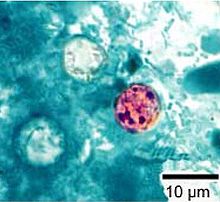
FDA 220px-Cyclospora_cayetanensis_stained

What is the Problem and What is Being Done About It?

FDA, CDC, state, and local partners are currently investigating several Cyclospora illnesses associated with recalled Del Monte 6oz and 12oz vegetable trays containing broccoli, cauliflower, carrots and dill dip that were sold by Kwik Trip/Kwik Star locations in IA, IN, MI, MN, and WI. Additionally, Del Monte is recalling “small veggie trays,” which are 28oz and include broccoli, cauliflower, carrots, celery and dill dip that were distributed to Illinois and Indiana.

As of June 15, 2018, CDC has reported 78 laboratory-confirmed cases of cyclosporiasis in persons from IA, MN, WI and MI who reportedly consumed the vegetable trays. The two cases from Michigan reportedly purchased the vegetable tray in Wisconsin and therefore Michigan is not impacted from this outbreak.

On June 8, 2018, Del Monte withdrew their 6oz and 12oz vegetable trays from retail market locations, and they are not currently available for purchase. However, consumers who purchased these trays before the withdrawal may still have product in their homes since the expiration date is June 17, 2018 or earlier. The 28oz vegetable trays that were distributed to IL and IN are being recalled as of June 15, 2018. Del Monte reports the recalled products were distributed to: Kwik Trip, Kwik Star, Demond’s, Sentry, Potash, Meehan’s, Country Market, FoodMax Supermarket and Peapod in Illinois, Indiana, Iowa, Michigan, Minnesota, and Wisconsin and have “Best If Enjoyed By” date of June 17, 2018 or earlier.

FDA has not identified which of the ingredients is the vehicle for this outbreak; each component of these vegetable trays is under consideration. FDA is currently reviewing distribution and supplier information related to the vegetable trays; the investigation is ongoing.

What is Cyclospora?

Cyclospora cayetanensis is a microscopic parasite of humans. This parasite, when it contaminates food or water and is then ingested, can cause an intestinal illness called cyclosporiasis.

The Cyclospora parasite needs time (days to weeks) after being passed in a bowel movement to become infectious for another person. Therefore, it is unlikely that cyclosporiasis is passed directly from one person to another.

For more information on Cyclospora: http://www.cdc.gov/parasites/cyclosporiasis/ 

Canada – Food Recall Warning – Now Real Food brand Zesty Sprouting Mix recalled due to Salmonella

CFIA 


Recall details

Ottawa, June 15, 2018 – Puresource Inc. is recalling Now Real Food brand Zesty Sprouting Mix from the marketplace due to possible Salmonella contamination. Consumers should not consume the recalled product described below.

Recalled products

Brand Name Common Name Size Code(s) on Product UPC
Now Real Food Zesty Sprouting Mix – Clover, Fenugreek and Radish Seeds 454 g Lot #3031259 and
Lot #3038165
7 33739 07271 9

USA – FDA Investigating Multistate Outbreak of Salmonella Mbandaka Infections Likely Linked to Kellogg’s Honey Smacks Cereal

FDA 


June 15, 2018 Update

The FDA is advising consumers to not eat and to discard any Kellogg’s Honey Smacks cereal. This is regardless of size or “best if used by” dates. The recall notice accounts for all of the product that is on the market within the cereal’s estimated one year shelf-life. However, Honey Smacks products with earlier dates could also potentially be contaminated.

The FDA is also disclosing a more detailed list of foreign countries to which the Kellogg’s Honey Smacks cereal was distributed. Here is the list of the foreign countries:

Aruba/Curaçao/Saint Maarten (Netherlands Antilles), the Bahamas, Barbados, Tortola (British Virgin Islands), Costa Rica, Guatemala, Haiti, Mexico, Panama, and Tahiti (French Polynesia).

USA – FDA Investigated Multistate Outbreak of Salmonella Braenderup Linked to Shell Eggs from Rose Acre Farms – Appears to be Over.

FDA 

Fast Facts

  • The FDA advised consumers not to eat recalled eggs produced by Rose Acre Farms’ Hyde County farm. According to Rose Acre Farms’ recall notice and the subsequent recall from Cal-Maine Foods, Inc., these eggs are sold under multiple brand names, including Coburn Farms, Country Daybreak, Food Lion, Glenview, Great Value, Nelms, Sunshine Farms, Publix, and Sunups. Recalled eggs were also sold to restaurants.
  • CDC reported 45 cases in 10 states with 11 hospitalizations and no deaths.
  • After learning that all of the people who became ill ate eggs or egg dishes, the FDA was able to trace back the source of some of the eggs to the Rose Acre Farms’ Hyde County farm. FDA investigators then inspected the farm and collected samples for testing. FDA analysis of the samples revealed that the same strain of Salmonella Braenderup that caused the illnesses was present at the Hyde County Egg facility, tying the facility to the outbreak.
  • As a result of the findings and discussions between the FDA and the firm, Rose Acre Farms voluntarily recalled eggs from the farm in Hyde County, North Carolina. Following Rose Acre Farms’ recall, Cal-Maine Foods, Inc. voluntarily recalled eggs purchased from Rose Acre Farms and produced at the Hyde County facility.

RASFF Alerts – Salmonella – Sesame Seeds – Mechanically Separated Poultry Meat – Ppoultry Meat Products – Chilled Chicken Breast – Frozen Wildboar Meat – Chilled Turkey Mincedmeat – Poultry Meat

kswfoodworld food safety poisoning

RASFF-Salmonella (presence /25g) in sesame seeds from Ethiopia in Greece

RASFF-Salmonella (presence /25g) in sesame seeds from Sudan in Greece

RASFF-Salmonella (presence /25g) in sesame seeds from Nigeria in Greece

RASFF-Salmonella (presence /25g) in sesame seeds from Sudan in Greece

RASFF-Salmonella enterica ser. Infantis (presence /10g) in frozen mechanically separated poultry meat from the Czech Republic in Slovakia

RASFF-Salmonella in frozen poultry meat product from the Netherlands in the Netherlands

RASFF-Salmonella enterica ser. Typhimurium (presence /25g) in chilled chicken breasts from France in France

RASFF-Salmonella enterica ser. Munchen (present /25g) and Salmonella enterica ser. Saintpaul (present /25g) in frozen wildboar meat from the United States in Germany

RASFF-Salmonella enterica ser. Enteritidis (presence /25g) in chilled and frozen poultry meat from Poland in Poland

RASFF-Salmonella (presence /25g) in chilled broiler chicken fillet from Poland in Lithuania

RASFF-Salmonella enterica ser. Typhimurium (presence in 2 out 5 samples /25g) in chilled poultry meat from Poland in Poland

RASFF-Salmonella (1,3,19:z27 /25g) in hulled sesame seeds from India in France

RASFF-Salmonella enterica ser. Enteritidis (presence /25g) in frozen poultry meat from Poland in Italy

RASFF-Salmonella (presence /25g) in chilled turkey minced meat from Poland in Latvia

RASFF-Salmonella (presence /25g) in sesame seeds from India in the Netherlands

RASFF-Salmonella enterica ser. Orion (presence /25g) and Salmonella enterica ser. Tennessee (presence /25g) in sesame seeds from Sudan, via the United Kingdom in Greece

RASFF-Salmonella (presence /25g) in sesame seeds from Nigeria in Poland

RASFF Alert – Hepatitis A – Frozen Strawberries

kswfoodworld food safety poisoning

RASFF-hepatitis A virus in frozen strawberries from Egypt in Greece

RASFF Alert – Histamine – Chilled Mackerel

kswfoodworld food safety poisoning

RASFF-histamine (1500 mg/kg – ppm) in chilled mackerel (Scomber scombrus) from France in Belgium