Category Archives: Food Poisoning

USA -Cyclospora – Unwashed produce ?? – Drying May Help

Food Posioning Bulletin

Is the source of a multi-state Cyclopora outbreak restaurant lettuce salad? Health officials in at least six states are working in collaboration with the Centers for Disease Control and Prevention to divine the food source that has infected hundreds of people with a rare parasite.

The bug is so rare that it is not included in the standard parasite screening which looks for Giardia and Cryptosporidium, said David Warshauer, deputy director of communicable disease at the Wisconsin State Laboratory of Hygiene (WSLH). And once it’s confirmed with a special lab test, sub-typing is generally not performed.

With common bacterial food poisoning outbreaks, including those caused by E.coli, Salmonella, Listeria or Campylobacter, subtyping, often done with Pulsed Field Gel Electrophoresis (PFGE), is performed to find the bacteria’s “genetic fingerprint.” This allows health officials to see how many people have been sickened by the same source.

Food Poisoning Bulletin

If you’re like most people, you wash your produce before eating it. But do you dry it?  You should, according to the U.S. Food and Drug Administration (FDA).

Hundreds of people in six states; Illinois, Iowa, Kansas, Nebraska, Texas and Wisconsin have been sickened by a single-cell parasite called Cyclospora. To reduce your risk of food poisoning form fresh produce the FDA recommends the following produce-washing tips. Before you begin, wash your hands with hot, soapy water for 20 seconds, or long enough to sing Happy Birthday twice. Wash produce under cool, running water. Do not use soap or commercial washes. Scrub firm produce such as melons, cucumbers and potatoes with a brush. Dry the produce with a clean cloth or paper towel. Following these recommendations will reduce but not completely eliminate the risk of food poisoning from bacteria or parasites.

People become infected with Cyclospora when they eat or drink food or water that is contaminated with microscopic amounts of fecal matter containing the parasite. Cyclospora is most commonly found in tropical climates but imported foods including mesclun lettuce, basil, snow peas, and raspberries have been the source of a number of U.S. outbreaks in recent years.

USA – Legionella Outbreak

Food Posioning BulletinLegionella_Plate_01

Legionnaire’s outbreaks in Wisconsin and Ohio have sickened dozens of people, health authorities say. At least 20 people in Milwaukee County have  been diagnosed with the disease since June 1, 2013. Of those, 14 are from  the city of Milwaukee. Four people remain hospitalized. Wisconsin health authorities are looking for the source or sources of the outbreak

In Franklin County, Ohio, 22 illnesses have been associated with the Wesley Ridge Retirement Community in Reynoldsburg. Those sickened include visitors, residents and employees. Two of them have died. Franklin County Public Health,  the Ohio Department of Health and the Centers for Disease Control and Prevention (CDC) are working together to determine the source of the outbreak

USA – More Cyclospora and Hepatitis A Cases

Food Poisoning Bulletin

The Cyclospora outbreak that has been reported by health departments in several midwestern states may have sickened as many as 183 people. The Iowa Department of Public Health released new information today saying their case count is up to 87. In Nebraska, 54 people are sick, and Texas has 37 cases of the parasitic disease so far this year; of those, 29 in north Texas were reported just this week.

Food Poisoning Bulletin

As of July 17, 2013, 149 people are now sick in the hepatitis A outbreak linked to Townsend Farms Organic Antioxidant Blend frozen berry and pomegranate mix. Sixty-five people have been hospitalized in this outbreak with acute hepatitis A. No deaths have been reported.

RASFF Alerts – Aflatoxins – Groundnuts – Listeria monocytogenes – Smoked Salmon – Salmonella – Frozen Chicken

RASFF – Aflatoxins (B1 = 49; Tot. = 60 µg/kg – ppb) in groundnuts from Brazil in the Netherlands

RASFF – Aflatoxins (B1 = 18; Tot. = 21 µg/kg – ppb) in groundnuts from Brazil in the Netherlands

RASFF – Listeria monocytogenes (<10; 110; <10; 91; 131 CFU/g) in chilled smoked salmon from France in Italy

RASFF – Salmonella spp. (presence /25g) in frozen chicken meat from Brazil in Spain

RASFF – Salmonella enteritidis (present in 5 out of 5 samples /25g) in chilled chicken quarters from Slovakia, with raw material from Poland in Slovakia


USA – FDA – Recall Pet Food – Possible Salmonella

FDA

Natura Pet Products is voluntarily recalling specific lots of dry pet food because it has the potential to be contaminated with Salmonella.

Salmonella can affect animals eating the products and there is risk to humans from handling contaminated pet products, especially if they have not thoroughly washed their hands after having contact with the products or any surfaces exposed to these products.

Healthy people infected with Salmonella should monitor themselves for some or all of the following symptoms: nausea, vomiting, diarrhea or bloody diarrhea, abdominal cramping and fever. Rarely, Salmonella can result in more serious ailments, including arterial infections, endocarditis, arthritis, muscle pain, eye irritation, and urinary tract symptoms. Consumers exhibiting these signs after having contact with this product should contact their healthcare providers.

Pets with Salmonella infections may be lethargic and have diarrhea or bloody diarrhea, fever, and vomiting. Some pets will have only decreased appetite, fever and abdominal pain. Infected but otherwise healthy pets can be carriers and infect other animals or humans. If your pet has consumed the recalled product and has these symptoms, please contact your veterinarian.

These products were packaged in a single production facility. During routine FDA testing, a single lot tested positive for the presence of Salmonella. There have been no reports of pet or human illness associated with this product. In an abundance of caution, Natura is voluntarily recalling all products with expiration dates prior to June 10, 2014.

The affected products are sold in bags through veterinary clinics, select pet specialty retailers, and online in the United States and Canada. No canned wet food is affected by this announcement.

Canada – Recall Gorgonzola Cheese – Listeria monocytogenes

CFIA

The Canadian Food Inspection Agency (CFIA) and Agropur are warning the public not to consume the Il Villaggio brand Gorgonzola Dolce Cheese described in the link above because it may be contaminated with Listeria monocytogenes.

There have been no reported illnesses  associated with the consumption of this product.

The importer, Agropur, St-Hubert, Quebec, is voluntarily recalling the affected product from the marketplace.  The CFIA is monitoring the effectiveness of the recall.

Research – Campylobacter Antibiotic Resistance is Increasing

Food Poisoning BulletinCampylobacter_jejuni_01

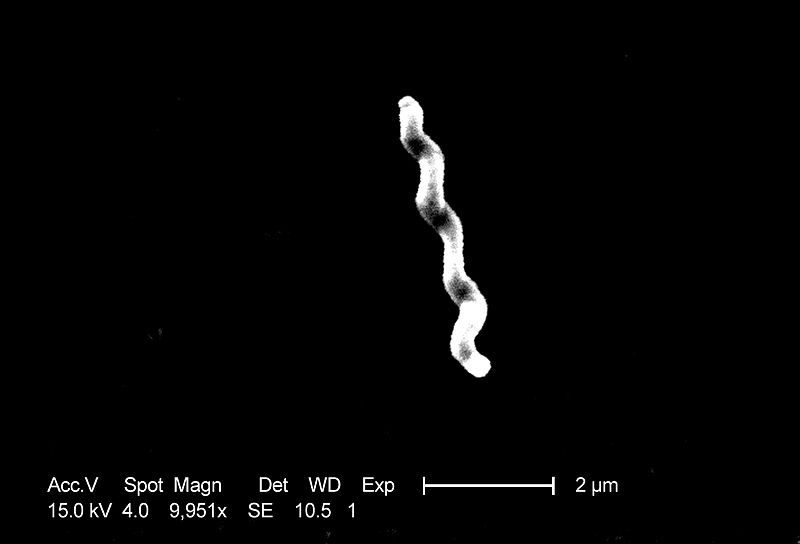
Antibiotic resistance in Campylobacter is on the rise, according to a new study appearing in the July 7 edition of Emerging Infectious Disease. Researchers from the National Institute of Cholera and Enteric Diseases, Kolkata, India, where Campylobacter rates remain steady throughout the year, tested 142 samples and found that all of them were resistant to trimethoprim–sulfamethoxazole, (Septra, Bactrim) and 97 percent were resistant to quinolone (nalidixic acid) and fluoroquinolones (norfloxacin, ciprofloxacin, and ofloxacin). and erythromycin, azithromycin, gentamicin, furazolidone, and chloramphenicol. Multi-drug resistance was also high.

USA – Cyclospora Outbreak Update

BarfBlog 220px-Cyclospora_cayetanensis_stained

Authorities suspect that fresh vegetables are the source of a rare parasite sickening dozens of Iowans.

The Iowa Department of Public Health reported this morning that 45 cyclospora infections have been confirmed in the state in the past few weeks.

That’s up from 22 cases earlier this week.

Only 10 such cases had been reported in the state in the past 20 years. The parasite is usually transmitted by tainted produce or water. It can cause weeks of severe diarrhea.

Federal experts are helping to trace the cause. Officials are urging everyone to wash their produce carefully … though they note that Cyclospora can be difficult to wash off.

Investigators who interviewed the patients believe the outbreak started in tainted vegetables, not fruit.

Food Poisoning Journal – Cyclospora What You Need to Know

The Iowa Department of Public Health, CDC and local public health agencies are investigating an outbreak of an intestinal illness caused by Cyclospora (a rare parasite). As of July 12, 45 cases of Cyclospora infections have been reported in Iowa with dozens more in Nebraska and other Midwestern states. It appears linked to eating fresh vegetables.

Research – Norovirus Transmission

Cambridge Journals OnlineNorwalk_Caspid

Causal mechanisms of norovirus outbreaks are often not revealed. Understanding the transmission route (e.g. foodborne, waterborne, or environmental) and vehicle (e.g. shellfish or recreational water) of a norovirus outbreak, however, is of great public health importance; this information can facilitate interventions for an ongoing outbreak and regulatory action to limit future outbreaks. Towards this goal, we conducted a systematic review to examine whether published outbreak information was associated with the implicated transmission route or vehicle. Genogroup distribution was associated with transmission route and food vehicle, but attack rate and the presence of GII.4 strain were not associated with transmission route, food vehicle, or water vehicle. Attack rate, genogroup distribution, and GII.4 strain distribution also varied by other outbreak characteristics (e.g. setting, season, hemisphere). These relationships suggest that different genogroups exploit different environmental conditions and thereby can be used to predict the likelihood of various transmission routes or vehicles

Cambridge Journals Online

USA – FDA – Pistachio’s – Salmonella

FDASalmonella

Torn and Glasser, Inc of Los Angeles, CA  90021 is voluntarily recalling some packaged Pistachios because it has the potential to be contaminated with Salmonella, an organism which can cause serious and sometimes fatal infections in young children, frail or elderly people, and others with weakened immune systems. Healthy persons infected with Salmonella often experience fever, diarrhea (which may be bloody), nausea, vomiting and abdominal pain. In rare circumstances, infection with Salmonella can result in the organism getting into the bloodstream and producing more severe illnesses such as arterial infections (i.e., infected aneurysms), endocarditis and arthritis.

This decision to recall was made due to the expanded recall of pistachio products by ARO pistachio (Upgraded from a Class II to a Class I) due to the potential of contamination with Salmonella.  The Torn and Glasser recalled products contain pistachios supplied by the ARO processing plant located in Terra Bella Ca 93270.

The recalled product was distributed from February 21, 2012 to April 29, 2013 in CA, AZ, and HI.