Category Archives: Food Poisoning

USA – Raw Milk Listeria monocytogenes

Food Poisoning BulletinimagesCAZ9J1WP

Raw milk from Green Acres Jersey Farm, 725 Prescott Road, Lebanon, Pennsylvania may be contaminated with Listeria monocytogenes and should be discarded, Pennsylvania Department of Agriculture officials warn. The potentially contaminated milk was sold with the Green Acres Jersey Farm label in plastic gallon and half gallon containers labeled “raw milk” directly to consumers and in an on-farm retail store.

The problem was discovered during required routine testing  The farm’s owner, Jonathan Smoker, has been  ordered to stop all raw milk sales until further notice. Followup testing is required. Before sales can resume, two samples, taken at least 24 hours apart, must test negative

USA – Norovirus Restaurant Outbreak ?

Food Safety News

Grant County Health Department officials are waiting on state lab test results to determine whether norovirus was behind the outbreak of more than two dozen people who were sickened in John Day, OR, this past week.

According to an Aug. 5 story in the Blue Mountain Eagle, health officials suspected that the illness could have been transmitted between July 27 and Aug. 3 at the Snaffle Bit Restaurant. The owner of the restaurant was reportedly cooperating with the county and taking steps to prevent any other illness outbreaks.

USA – E.coli Outbreak at an Arizona Restaurant

E.coli BlogEcoli Istock

As of August 6, 2013, at least 33 people who ate at the Federico’s Mexican Restaurant in the West Valley outside of Phoenix, Arizona have fallen ill with E. coli infections. According to news reports, 15 cases were hospitalised.

Research – Listeria monocytogenes – Inhibition – Prevalence

Ingenta Connect

The objective of this study was to identify ingredients that inhibit Listeria monocytogenes in natural, organic, or clean-label ready-to-eat meat and poultry products. Fourteen ingredients were screened in uncured (no-nitrate-or-nitrite-added), traditional-cured (156 ppm of purified sodium nitrite), cultured (alternative cured, natural nitrate source, and Staphylococcus carnosus), or preconverted (alternative cured, natural nitrite source) turkey slurries. Slurries were cooked, cooled, inoculated to yield 3 log CFU/ml L. monocytogenes, stored at 4°C, and tested weekly for 4 weeks. Three antimicrobial ingredients, 1.5 % vinegar-lemon-cherry powder blend, 2.5 % buffered vinegar, and 3.0 % cultured sugar-vinegar blend, were incorporated into alternative-cured ham and uncured roast beef and deli-style turkey breast. Controls included all three meat products without antimicrobial ingredients and a traditional-cured ham with 2.8 % sodium lactate-diacetate. Cooked, sliced products were inoculated with 3 log CFU/g L. monocytogenes, vacuum packed, and stored at 4 or 7°C, for up to 12 weeks. For control products without antimicrobial agents stored at 4°C, a 2-log L. monocytogenes increase was observed at 2 weeks for ham and turkey and at 4 weeks for roast beef. Growth (>1-log increase) in the sodium lactate-diacetate was delayed until week 6. Compared with the control, the addition of either vinegar-lemon-cherry powder blend or buffered vinegar delayed L. monocytogenes growth for an additional 2 weeks, while the addition of cultured sugar-vinegar blend delayed growth for an additional 4 weeks for both ham and turkey. The greatest L. monocytogenes delay was observed in roast beef containing any of the three antimicrobial ingredients, with no growth detected through 12 weeks at 4°C for all the treatments. As expected, L. monocytogenes grew substantially faster in products stored at 7°C than at 4°C. These data suggest that antimicrobial ingredients from a natural source can enhance the safety of ready-to-eat meat and poultry products, but their efficacy is improved in products containing nitrite and with lower moisture and pH.

Science Direct

The aim of this study was to obtain data from refrigerated ready-to-eat seafood products at retail in Spain (young eels, crabstick and smoked salmon), regarding prevalence and levels of Listeria monocytogenes, storage temperatures and the impact of transport conditions (type of bag) on the temperature of the product. The one-year surveillance period was carried out according to the EC Regulation No. 2073/2005, taking 5 units/batch and analyzing 250 samples following ISO 11290-1/A1 and ISO 11290-2/A methodologies. Low prevalence of L. monocytogenes was observed in surimi products, while 4.8% of smoked salmon samples were positive for Listeria with low levels (<10 cfu/g) and uneven pathogen distribution. A single company was responsible for 80% of the positive lots. All purchased products showed values higher than 4 °C at retail and an average increase of 2.5 °C or up to 6.2 °C was recorded when isothermal or plastic shopping bags were used for transport, respectively. To avoid noncompliance of the Food Safety Objective for L. monocytogenes in seafood RTE products more efforts from all stakeholders are needed, with special attention so as to improve control and maintenance of refrigerators at retail and to enhance consumer education regarding food safety practices.

USA – Cyclospora Updates – Salad Mix the Source

Food Poisoning BulletinEurofins Food Testing UK

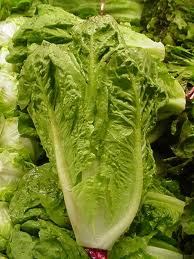
Taylor Farms de Mexico food service salad served at Olive Garden and Red Lobster restaurants is the source of the Cyclospora outbreak that sickened at least 232 people in Iowa and Nebraska. Health officials from those states announced July 30 that a salad mix containing iceberg and romaine lettuces, carrots and red cabbage was the source of the illnesses, but did not release the name of the company that produced it as the tainted salad was no longer in circulation in those states.

CDC

Food Poisoning Bulletin

Cyclospora illnesses that have sickened more than 400 people across the country in an outbreak have been linked to packaged salad greens. These products have been linked to many outbreaks over the years.

In fact, a study conducted by the Centers for Disease Control and Prevention (CDC), released in January of this year, said that leafy greens were responsible for the majority of foodborne illness outbreaks from 1998 to 2008. Last year, the seventh largest food poisoning outbreak in the U.S. was linked to a spinach and spring mix.

FDA Investigation

On July 30, 2013, the states of Iowa1 disclaimer icon 2 and Nebraska3 announced that their analysis indicated that the outbreak in those states was linked to a salad mix. In follow-up to that announcement, the U.S. Food and Drug Administration is providing an update on its investigation.

The FDA traceback investigation has confirmed that the salad mix identified by Iowa and Nebraska as being linked to the outbreak of cyclosporiasis in those states was supplied to restaurants in those states by Taylor Farms de Mexico, S. de R.L. de C.V., a processor of foodservice salads.    The FDA traceback investigation found  that illness clusters at restaurants were traced to a common supplier,  Taylor Farms de Mexico, S. de R.L. de C.V. The restaurants in Iowa and Nebraska include Olive Garden and Red Lobster, both of which are owned by Darden Restaurants.

FDA’s investigation has not implicated consumer packages sold in grocery stores.


USA – Cyclospora Outbreak Still Going Up

Food Poisoning Journal

  • As of July 29, 2013 (5pm EDT), CDC has been notified of 372 cases of Cyclospora infection from the following 16 health departments: Iowa, Texas, Nebraska, Florida, Wisconsin, Illinois, New York City, Georgia, Missouri, Arkansas, Connecticut, Kansas, Minnesota, New Jersey, New York, and Ohio.
  • Most of the illness onset dates have ranged from mid-June through early July.
  • At least 21 persons reportedly have been hospitalized in three states

Food Posioning Journal

Lincoln – Prepackaged salad mix is the source of the state’s cyclospora outbreak which has sickened 78 Nebraskans since mid-June according to the Nebraska Department of Health and Human Services. Cyclospora is a rare parasite that causes a lengthy gastrointestinal illness.

“Our goal is to protect Nebraskans, pinpoint the source of the illness and make sure the risk is eliminated,” said Dr. Joseph Acierno, Chief Medical Officer and Director of Public Health for DHHS. “Our investigation implicated prepackaged, prewashed, salad mix as the cause of this outbreak.”

DHHS’ investigation also shows the salad mix which includes iceberg and romaine lettuce along with red cabbage and carrots came through national distribution channels. Locally grown produce is not part of this outbreak.

DHHS and local health departments are currently working with the U.S. Food and Drug Administration to identify exactly where the contamination came from along the food production chain and where the product was distributed. Nebraska public health officials believe the bulk of the contaminated salad mix already worked its way through the system due to limited shelf life.

Fresh vegetables and fruit are usually associated with cyclospora outbreaks. People become sick when they consume food contaminated with the parasite. Washing fruits and vegetables is always recommended but it can be difficult to wash cyclospora off all types of produce.


USA – Salmonella Outbreak in Iowa – Poultry or Eggs

Food Poisoning Bulletin

Mason City, Iowa, is the center of a Salmonella outbreak investigation that preceded a wider outbreak notice announced Friday by the Iowa Department of Public Health. Mason City is the seat of government for Cerro Gordo County, which leads all 19 Iowa counties in the number of illnesses associated with an outbreak of salmonellosis that may be linked to poultry or egg

USA – Hepatitis and Cyclospora Updates

Food Posioning Bulletin

The multi-state hepatitis A outbreak linked to Townsend Farms Organic Antioxidant Blend frozen berry and pomegranate mix sold at Costco stores has grown to include 151 sickened. Sixty-six people have been hospitalized in this outbreak. No deaths have been reported.

Food Poisoning Bulletin

A multi-state Cyclospora outbreak has sickened at least 267 people and hospitalized eight of them, according to federal and state health authorities involved in a collaborative investigation. The rare parasite has infected at least 127 people Iowa, 68 people in Nebraska, 65 people in Texas, 4 people in Wisconsin, 2 people in Illinois and 1 person in Kansas.

Research – Practical Considerations for the Interpretation of Microbial Testing Results Based on Small Numbers of Samples

Liebert Online

While adequate, statistically designed sampling plans should be used whenever feasible, inference about the presence of pathogens in food occasionally has to be made based on smaller numbers of samples. To help the interpretation of such results, we reviewed the impact of small sample sizes on pathogen detection and prevalence estimation. In particular, we evaluated four situations commonly encountered in practice. The first two examples evaluate the combined impact of sample size and pathogen prevalence (i.e., fraction of contaminated food items in a given lot) on pathogen detection and prevalence estimation. The latter two examples extend the previous example to consider the impact of pathogen concentration and imperfect test sensitivity. The provided examples highlight the difficulties of making inference based on small numbers of samples, and emphasize the importance of using appropriate statistical sampling designs whenever possible.

Italy – Recall Pesto – Botulism Poisoning

Italia and Mondo

Twenty people have been hospitalized in the emergency room of three hospitals int the Genoese area are under observation for suspected botulism poisoning.

They ate pesto of the company that has withdrawn a batch of jars and showed symptoms consistent with a possible poisoning. Two patients have already been discharged.