Category Archives: Food Pathogen

Africa – A look at how Africa is tackling foodborne illness

DW.COM

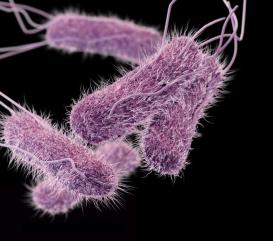
CDC E.coli

Image CDC


Contaminated food poses a major health and economic threat to sub-Saharan Africa. While efforts are taken to provide safe food for exports, governments are reijigging the system to do more for domestic markets.

Small flies can be seen buzzing around many food markets. But the threat they bring is not visible to the naked eye.

Houseflies, infected with salmonella, E. coli and other bacteria, can contaminate food and cause serious gastro-intestinal illnesses. In Uganda’s popular pork snack bars, for example, one-third of raw pork sampled for a study by the International Livestock Research Institute tested positive for salmonella.

Foodborne diseases, either caused by pests, pesticides or improper storage, pose a major health threat to sub-Saharan Africa, which suffers the highest levels of foodborne illness anywhere in the world.

More than 91 million people in the region fall ill every year from eating contaminated food and 137,000 die as a result, according to the World Health Organization.


Research – Zoonotic Source Attribution of Salmonella enterica Serotype Typhimurium Using Genomic Surveillance Data, United States

CDC

Salmonellaa

Image CDC

Increasingly, routine surveillance and monitoring of foodborne pathogens using whole-genome sequencing is creating opportunities to study foodborne illness epidemiology beyond routine outbreak investigations and case–control studies. Using a global phylogeny of Salmonella entericaserotype Typhimurium, we found that major livestock sources of the pathogen in the United States can be predicted through whole-genome sequencing data. Relatively steady rates of sequence divergence in livestock lineages enabled the inference of their recent origins. Elevated accumulation of lineage-specific pseudogenes after divergence from generalist populations and possible metabolic acclimation in a representative swine isolate indicates possible emergence of host adaptation. We developed and retrospectively applied a machine learning Random Forest classifier for genomic source prediction of Salmonella Typhimurium that correctly attributed 7 of 8 major zoonotic outbreaks in the United States during 1998–2013. We further identified 50 key genetic features that were sufficient for robust livestock source prediction.

Australia -Maleny Herb and Garlic Feta – E.coli

FSANZ

Maleny Cheese is conducting a recall of the above product. The product has been available for sale at Market Stall, IGA, Fruit and Veg Stores and Dairy Stores in QLD.

Problem: The recall is due to microbial (E.coli) contamination.

Food safety hazard: Food products contaminated with E.coli may cause illness if consumed.

Country of origin: Australia

What to do: Any consumers concerned about their health should seek medical advice and should return the product to the place of purchase for a full refund. For further information please contact:

Maleny Cheese
07 5494 2207

Research – Prevalence of Salmonella Dublin in veal liver in Québec, Canada from a public health perspective

IJID

Purpose: Salmonella enterica is one of the principal causes of foodborne zoonotic enteritis. Among the different serovars, Dublin (S. Dublin) is of particular importance due to its propensity to progress to an invasive infection in humans and due to the high proportion of multi-drug resistant strains in Canada. Cattle are considered as the main reservoir of S. Dublin. This serotype has emerged since 2011 in the province of Quebec, Canada, in both cattle and human populations. First animal cases have been reported in calf production. White veal are valued for the quality of their meat, offal and liver. The liver is usually consumed mildly cooked and is considered as a probable source of foodborne exposure to S. Dublin in humans. The objective of this study was to estimate the prevalence of S. Dublin positive liver after slaughtering and the seroprevalence against S. Dublin at the calf level.

Methods & Materials: Samples were collected from 75 batches in two slaughterhouses from August 2016 to October 2017. For each batch, a liver sample was collected from 8 calves after evisceration and additionally, a blood sample from 15 calves. Liver samples were screened by PCR and then cultured, and serums were tested using an indirect ELISA (PrioCHECK® Salmonella Ab bovine Dublin).

Results: Salmonella was detected by PCR in 20 of the 547 veal livers. Typical isolates were obtained from 14 livers; all were serotyped and identified as S. Dublin, for a prevalence estimate of 3.1% (IC95%: 0.0%-7.45%). At least one seropositive calf was detected in 128 (24%) of the 75 batches. At the calf level, seroprevalence was estimated at 6.97% (IC95%: 2.83%-11.11%). S. Dublin was detected in liver of 14.0% of seropositive calves compared to 1.2% of seronegative ones (p < 0.001).

Conclusion: Our results show that veal liver can be a source of foodborne exposure to S. Dublin in humans, especially when veal liver is consumed mildly cooked. Surveillance and prevention measures associated with calf production and veal meat, including cooking recommendations could help reduce the burden associated with S. Dublin in humans. Serology could be potentially used in surveillance effort as an indicator to assess the risk of contamination.

USA – Do You Have These Nut Butters in Your Pantry? – Listeria monocytogenes

Food Poisoning Bulletin listeria

Recently there has been a spate of nut butter recalls for Listeria monocytogenes. These products usually have a very long shelf life, so there’s a good chance that some of these products are in pantries around the country. There is zero tolerance for Listeria contamination in ready to eat products because the bacteria cause such serious illness, and because the consumer doesn’t heat the product, which would kill the pathogens, before eating.

USA – Hepatitis A Exposure At Kentucky Ave. Burger King in Indianapolis

Food Poisoning Bulletin

A worker at the Burger King at 3311 South Kentucky Avenue, near Mann Road in Indianapolis has been diagnosed with hepatitis A. Anyone who ate at that facility from January 21 through January 24, 2019 may have been exposed to the pathogenic virus.

The Marion Countuy Public Health Department is hating a special clinic on Monday, February 4, 2019, from 11:00 am to 7:00 pm at its South District Health Office at 7551 South Shelby Street. Anyone who visited that restaurant on the above dates can get a vaccination. People who ate there on January 21 have until today to get a shot, since the vaccine is only effective if given within two weeks of exposure. You can also get the shot at doctor’s offices.

The Burger King restaurant management is cooperating with public health officials and is cleaning the restaurant. The restaurant is remaining open while the investigation is ongoing.

USA – Norovirus Outbreak Associated with La Fuente in Renton, WA

Food Poisoning Bulletin Eurofins

A possible norovirus outbreak has been associated with La Fuente restaurant, located at 14400 South East Petrovitsky Road in Renton, Washington, according to a press release by the King County Public Health Department. Twenty-eight people are sick after eating food and drinking beverages there on January 25, 2019. The 28 people were all from one party.

Australia – Mungalli Creek Kefir 1 Litre BB Date 22/2/2019 No other products affected – E.coli

FSAU

Mungalli Creek Dairy would like to alert their Cairns and Townsville customers that the above item has been recalled. Please do not consume and return the product to your place of purchase for a full refund. We have already retrieved 95% of stock prior to sale and are asking for your assistance in retrieving the remaining 5% of stock.

Problem: The recall is due to testing showing the possible presence of E.coli

Food Safety Hazard: Food products contaminated with E. coli may cause illness if consumed

Country of origin: Australia

What to do: Any consumers concerned about their health should seek medical advice. Customers should return the product to the place of purchase for a full cash refund. No other products are affected and this is the only batch of Kefir affected. All new batches will have additional testing to ensure product integrity. We thank you for your assistance and apologise for any inconvenience.
For further information contact Michelle Bell-Turner on 0438 171 248​

Research – Growth and Survival of Listeria monocytogenes and Salmonella on Whole and Sliced Cucumbers

Journal of Food Protection cucumber
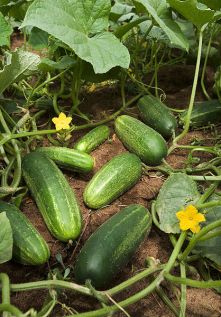
Cucumbers were associated with four multistate outbreaks of Salmonella in the United States between 2013 and 2016. This study evaluated the fate of Listeria monocytogenes and Salmonella on whole and sliced cucumbers at various storage temperatures. Cucumbers were inoculated with five-strain cocktails of L. monocytogenes or Salmonella, air dried, and stored at 23 ± 2, 4 ± 2, and −18 ± 2°C. Whole and sliced cucumber samples were enumerated on nonselective and selective media at 0, 0.21, 1, 2, 3, and 4 days (23 ± 2°C); 0, 1, 2, 3, 7, 14, and 21 days (4 ± 2°C); and 0, 7, 28, 60, 90, and 120 days (−18 ± 2°C). For Salmonella, additional time points were added at 8 and 17 h (23 ± 2°C) and at 17 h (4 ± 2°C). Population levels were calculated for whole (CFU per cucumber) and sliced (CFU per gram) cucumbers. Both pathogens grew on whole and sliced cucumbers held at ambient temperatures. At 23 ± 2°C, L. monocytogenes and Salmonella populations significantly increased on whole (2.3 and 3.4 log CFU per cucumber, respectively) and sliced (1.7 and 3.2 log CFU/g, respectively) cucumbers within 1 day. Salmonella populations significantly increased on whole and sliced cucumbers after only 5 h (2.1 log CFU per cucumber and 1.5 log CFU/g, respectively), whereas L. monocytogenes populations were not significantly different on whole and sliced cucumbers at 5 h. L. monocytogenes and Salmonella populations survived up to 21 days on refrigerated whole and sliced cucumbers. At 4 ± 2°C, L. monocytogenes populations significantly increased on whole (2.8 log CFU per cucumber) and sliced (2.9 log CFU/g) cucumbers, whereas Salmonella populations significantly decreased on whole (0.6 log CFU per cucumber) and sliced (1.3 log CFU/g) cucumbers over 21 days. Both pathogens survived on frozen whole and sliced cucumbers for at least 120 days. The ability of L. monocytogenes and Salmonella to grow on whole and sliced cucumbers in short amounts of time at ambient temperatures, and to survive on whole and sliced cucumbers past the recommended shelf life at refrigeration temperatures, highlights the need to reduce the likelihood of contamination events throughout the cucumber supply chain.

Canada – Raw Chicken Salmonella Outbreak in Canada Grows to 529 Sick

Food Poisoning Bulletin


A raw chicken Salmonella outbreak in Canada has grown to include 529 laboratory-confirmed illnesses. Ninety people have been hospitalized, and three people have died. However, Salmonella was not the case of death for two of those patients, and it was not determined whether this illness contributed to the death of the third person.