Category Archives: Food Pathogen

Canada -Health unit pinpoints bacteria in Strathroy Portuguese Club food poisoning -Clostridium perfringens

Global News

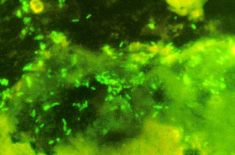
CDC Clost perf

Image CDC

The investigation gathered food samples from the event and stool samples from those who attended.

In lab reports, Clostridium perfringens enterotoxin turned up in two stool samples and Clostridium perfringens was found in a sample of roast beef — the former is what the latter bacteria turns into once digested.

“We did take other food samples… it was only the roast beef that came back growing bacteria,” said Mary Lou Albanese, the manager of infectious disease for the MLHU.

Albanese added that the bacteria is quick-moving, often making people ill within 12 hours after ingesting.


France – Two sick in France from Listeria in cheese

Food Safety News

Two people in France are seriously ill with listeriosis after eating contaminated cheese, according to the public health agency.

A spokeswoman for Santé publique France told Food Safety News that both cases of listeriosis occurred in early March and two women were seriously ill.

“Investigations into two cases of listeriosis that occurred in March 2019 made it possible to identify the consumption of cheeses produced by Société Fromagère de la Brie as a source of contamination for these cases,” she said.

The spokeswoman said as part of national listeriosis surveillance both cases were reported to the agency.

“Strains of Listeria monocytogenes isolated from the two patients were sent to the Centre National de Référence des Listeria (Institut Pasteur de Paris) for molecular typing. These analyses showed that strains isolated from these two individuals had the same microbiological characteristics,” she said.

“Food samples taken at a patient’s home showed the presence of Listeria monocytogenes in a cheese produced by Société Fromagère de la Brie. Additional microbiological analyzes have confirmed the link between strains isolated from patients and strains found within the company.”

USA- CDC suspects ground beef is the source of recent E. coli outbreak

CNBC ecoli

The Centers for Disease Control and Prevention is homing in on ground beef as the source of the latest E. coli outbreak in the U.S., the agency said Friday, citing preliminary findings in its ongoing investigation.

“Traceback investigations are ongoing to determine the source of ground beef supplied to grocery stores and restaurant locations where ill people ate,” said the CDC.

The agency is looking at the grocery stores and restaurants where people said they ate beef just before they fell ill, it said. It hasn’t narrowed in on a specific supplier, distributor or brand of ground beef yet.

As of Friday, 109 people from six states have been infected with the strain of E. coli implicated in the latest outbreak, federal health officials said. The last reported illness began on March 26.

USA – Salmonella Carrau Outbreak Linked to Caito Foods Precut Melons

Food Poisoning Bulletin

A Salmonella Carrau outbreak is linked to Caito Foods precut melons, and has sickened at least 93 people in 9 states, according to the Centers for Disease Control and Prevention (CDC). Twenty-three people are hospitalized because their illnesses are so severe.

Salmonella Carrau Caito Foods Melon Outbreak 41219

The patient case count by state is: Alabama (1), Illinois (5), Indiana (18), Kentucky (16), Michigan (19), Minnesota (3), Missouri (3), Ohio (27), and Wisconsin (1). Illness onset dates range from March 4, 2019 to March 31, 2019. The patient age range is from less than one to 98. No deaths have been reported in this outbreak.

Canada- Food Recall Warning – Feeding Change brand Young Thai Coconut Meat recalled due to Salmonella

CFIA

Recall details

Ottawa, April 14, 2019 – FeedingChange Canada is recalling Feeding Change brand Young Thai Coconut Meat from the marketplace due to possible Salmonella contamination. Consumers should not consume the recalled product described below.

Recalled products

Brand Name Common Name Size Code(s) on Product UPC
Feeding Change Young Thai Coconut Meat 454 g Best By : May 28 2020
CM 148181A
0 91037 12927 7


Research – Bacteria flip an electric switch to worsen food poisoning

Science Daily

Salmonella bacteria flip an electric switch as they hitch a ride inside immune cells, causing the cells to migrate out of the gut toward other parts of the body, according to a new study publishing on April 9 in the open-access journal PLOS Biology by Yaohui Sun and Alex Mogilner of New York University and colleagues. The discovery reveals a new mechanism underlying the toxicity of this common food-borne pathogen.

Salmonella are among the commonest, and deadliest, causes of food poisoning, causing over 400,000 deaths every year. Many of those deaths result when the bacteria escape the gut inside immune cells called macrophages. Macrophages are drawn to bacteria in the gut by a variety of signals, most prominently chemicals released from the site of infection. Once there, they engulf the bacteria as a regular part of their infection-fighting job. However, rather than remaining there, bacteria-laden macrophages often leave the site and enter the bloodstream, disseminating the bacteria and greatly increasing the gravity of the infection.

Tissues such as the gut often generate small electrical fields across their outer surfaces, and these electrical fields have been known to drive migration of cells, including macrophages. In the new study, the authors first showed that the lining of the mouse cecum (the equivalent of the human appendix) maintains a cross-membrane electrical field, and that Salmonella infection altered this field and contributed to the attraction of macrophages. Measurements of the polarity of the local charge indicated that the macrophages were attracted to the anode, or positively charged pole within the field. Once they engulfed bacteria, however, they became attracted to the cathode and reversed their migratory direction, moving away from the gut lining, toward vessels of the circulatory system. This switch was driven by a in the composition of certain charged surface proteins on the macrophages; the mechanism by which bacterial engulfment triggers this change is still under investigation.

“Dissemination, rather than localized infection, is the greatest cause of mortality from Salmonella (and other food-borne bacteria), and so understanding more about this polarity switch is likely to help develop new treatments to reduce deaths from food-borne bacterial infections,” said Mogilner.

USA – Norovirus Outbreak Associated with Dave and Buster’s in Auburn, WA

Food Poisoning Bulletin norovirus-1080x655

A norovirus outbreak associated with Dave and Buster’s restaurant at 1101 Outlet Collection Way SW, Suite 1057, in Auburn, Washington has sickened at least 12 people, according to King County Public Health. Since April 5, 2019, five people from a single party reported illnesses after eating at that facility on March 31, 2019.

USA – E. coli O103 Outbreak Sickens 96 in 5 States; No Source Found

Food Poisoning Bulletin

An E. coli O103 outbreak sickens 96 in 5 states, according to the CDC. The outbreak was first announced less than two weeks ago and the number of patients has more than quadrupled in 10 days. Eleven people have been hospitalized. No one has developed hemolytic uremic syndrome (HUS), a type of kidney failure that is a complication of this illness

E. coli O103 Outbreak KY GA TN VA OH

Canada – Salmonella Enteritidis Outbreak in Canada Sickens 63; No Source Found

Food Poisoning Bulletin

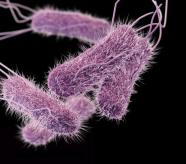
Salmonellaa

Image CDC

A Salmonella Enteritidis outbreak in Canada has sickened at least 63 people in six provinces, but public health officials have not identified a source of the pathogen. Officials are sharing this information to inform consumers how to avoid Salmonella infections. There is another Salmonella outbreak in that country that has sickened more than 500 people. That outbreak is linked to frozen breaded raw chicken and other raw chicken products.

RASFF Alerts – Listeria monocytogenes – Chilled Smoked Salmon- Cheese – Brie -Raw Milk Cheese – Sheep Cheese

RASFF-Logo

RASFF – Listeria monocytogenes (presence /25g) in chilled smoked salmon from Belarus in Poland

RASFF – Listeria monocytogenes (present) in various cheeses from France in Belgium

RASFF – Listeria monocytogenes in brie from France in Belgium

RASFF – Listeria monocytogenes in raw milk cheese (Brie de Meaux) from France in Luxembourg

RASFF – Listeria monocytogenes (presence /25g) in sheep cheese from Slovakia in Slovakia