Category Archives: Food Pathogen

France – Product recall: Honey heart-shaped goat cheese from FROMACOEUR – Listeria monocytogenes

Oulah

wow, product recall, product recall, consumption, consumer, danger, health, product safety

ENCOUNTERED PROBLEM

Potential presence of listeria monocytogenes

PROPOSED SOLUTION

People who hold this product are asked not to consume it and to return it to the point of sale where it was purchased.

People who have consumed this product and who have a fever, isolated or accompanied by headaches, are invited to consult their doctor by reporting this consumption.
Pregnant women should be especially attentive to these symptoms, as well as the immunocompromised and the elderly. These symptoms may suggest listeriosis, a disease which can be serious and which can take up to eight weeks to incubate.

FURTHER INFORMATION

▸ Packaging
Tray of 18 marbles “Goat heart honey balls” 90g

▸ Lot and DLC
• Lot: S20-119 DLC: 07/06/2020
• Lot: S20-125 DLC: 13/06/2020
• Lot: S20-127 DLC: 15/06/2020
• Lot: S20-128 DLC : 16/06/2020

▸ Barcode
3760064261454

▸ Health
stamp FR 16.292.066 CE

▸ Contact customer service
For any further information, you can contact FROMACOEUR on 05 45 29 61 00 or at info@fromacoeur.com.

▸ Source
https://www.auchan.fr/
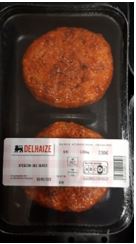
Luxembourg – AMERICAN BBQ BURGER OF THE DELHAIZE BRAND – POSSIBLE PRESENCE OF SALMONELLA

Securite Alimentaire Salmonella kswfoodworld

Source of information: Notification by the company Delhaize

Distribution in Luxembourg: Delhaize

The Luxembourg food safety authorities inform about the following recall:

Danger : possible presence of Salmonella

Last name AMERICAN BBQ BURGER
Mark Delhaize
Barcode 220569xxxxxxx
Use by date (DLC) 05/09/2020
Lot 618

Finland – Suspicion of Salmonella in Fresh Baby Spinach

Ruokavirasto

Satotukku Oy has announced that it has withdrawn one batch of fresh baby spinach from sale. Preliminary studies have identified salmonella in the product and, as a precautionary measure, Satotukku withdraws the remaining products in the batch from the stores and also advises consumers to dispose of the product. The doubt concerns only the lot with the symbol LOT: 121 . The babypinate under the brand name Semprefresco is packed in a 70 gram box and has been on sale in 19 S Group stores during the week.

Further information: Satotukku Oy: Johanna Timonen, tel. +358 40 451 6221, johanna.timonen@satotukku.fi

The matter is handled by the Inspector General of the Finnish Food Safety Authority Paula Hietanen, tel. +358 50 596 9637,  firstname.lastname@ruokavirasto.fi .


Product image:

Baby spinach in a plastic package.

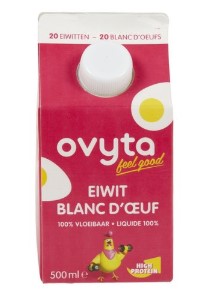
Luxembourg -OVYTA BRAND LIQUID EGG WHITE – PRESENCE OF SALMONELLA

Securite Alimetaire

Source of information: Notification by the companies Euro Ei BV and Lodewijckx NV  

Distribution in Luxembourg: offered for sale by Colruyt

The Luxembourg food safety authorities inform about the following recall:

Danger / Non-Compliance  : presence of Salmonella

Last name Liquid egg white
Mark Ovyta
Unit 500 milliliters
Barcode 05412671117904
Use by date (DLC) 09/21/2020
Lot 20183

France – Salmonella prompts recall of more than half a million eggs

Food Safety News

A number of supermarkets in France have recalled eggs sold under different brand names due to possible Salmonella contamination.

According to the French magazine 60 Millions de Consommateurs the recall covers more than 500,000 eggs but there have been no official communications from authorities and no reported illnesses.

Carrefour has issued three recalls. The first involved the company Arradoy and the other two the firm Matines.

The Arradoy recall was for packages of 20 large standard eggs with dates on the boxes of April 27 to May 18. The implicated eggs are marked with lot number 3FRMDB678 and lot 06 on the box.

The Matines recalls involve packs of 10 and 30 medium sized shell eggs with recommended use-by dates from April 26 to May 14. The code on the eggs is 3FRMDB08 and FR 32 066 020 is on the boxes.

USA – Ravioli with E. coli recalled

Food Poison Journal

The U.S. Department of Agriculture’s Food Safety and Inspection Service (FSIS) is issuing a public health alert because approximately 70 pounds of raw beef ravioli products, produced by P&S Ravioli Company, a Philadelphia, Pa. establishment, may be contaminated with E. coli O157:H7. A recall was not requested because the affected product is no longer available for purchase.


USA – Wild Harvest® Basil Recalled for Cyclospora Parasite Contamination

Daily Hornet cardcyclosporasme

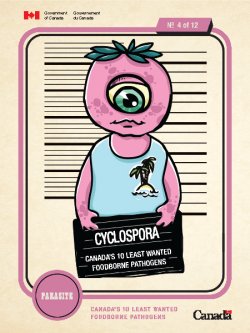
United Natural Foods, Inc. (UNFI) recalled Wild Harvest® Organic Basil that was distributed from a facility in Hopkins, Minnesota, because it may be contaminated with Cyclospora parasites.

No illnesses or allergic reactions involving this product have been reported. It was distributed by SuperValu Inc., a subsidiary of UNFI.

The recall involves Wild Harvest® Organic Fresh Basil products sold in .25oz, .75oz, 2oz, and 4oz plastic clam shell containers (UPCs: 0071153550450, 0071153550322, 0071153550762, 0071153550323).

The product can be identified by a white sticker with black ink on the back of the container stating: “Product of Colombia” and “112.”

UNFI issued the recall voluntarily after the Cyclospora cayetanensis parasite was detected during routine sampling.

Infections with this parasite can cause a gastrointestinal illness called cyclosporoasis that is not usually life-threatening, according to the U.S. Centers for Disease Control and Prevention (CDC).

The symptoms may include watery diarrhea, loss of appetite, weight loss, cramping, bloating, increased gas, nausea or fatigue. Less common symptoms include vomiting and a low-grade fever.


Switzerland – Hospital Listeria cases linked to cheese in Switzerland; one death reported

Food Safety News

Four patients have been infected by Listeria and one has died after eating potentially contaminated cheese at a hospital in Switzerland.

During an internal check, Käserei Vogel AG, based in Steinerberg, found Listeria in semi-hard cheese and at its production site. The company issued a recall and informed its buyers to remove the products from shelves.

One of the buyers is a supplier to the Center Hospitalier du Valais Romand (CHVR). This supplier told the CHVR purchasing manager on April 30 about the problem. He instructed the immediate withdrawal of implicated cheeses. The last delivery was April 8, but it has not been ruled out that previous lots were also contaminated.

Belgium – Salmonella – Euro Ei BV recalled Product: Ovyta brand liquid egg white

AFSCA

During an internal control, the presence of Salmonella was noted in the liquid white egg product bearing the expiry date of 21/09/2020 .

In consultation with the AFSCA, the manufacturer therefore decided to withdraw the product concerned from sale and to recall it to consumers.

Customers who bought this product are advised not to consume it and bring it back to the store, where it will be refunded. In the meantime, all stores have removed the affected products from the shelves.

PRODUCT DESCRIPTION

  • Name: Ovyta liquid egg white (500ml)
  • Use by date (DLC): 09/21/2020
  • Sales period: from 7/05/2020 to 11/05/2020 included
  • Item number: 18961
  • Lot number: 20183
  • Barcode: 05412671117904

This product was offered for sale via the following stores: Colruyt, Okay and Okay Compact.


Research – Pet ownership and pet type and their implications for food safety in the home: Evidence from a national survey

Journal of Food Protection

Physical contact between humans and their pets increases the potential for zoonotic disease transmission. This study used the 2016 FDA Food Safety Survey to compare the food handling behaviors of pet owners and non-pet owners, since poor food handling and hygiene habits can increase the likelihood of disease transmission from animals to humans. Results show that both pet ownership and pet type were important in predicting food safety behaviors. After controlling for sociodemographic factors included in this study (gender, age, household income, household size, and race/ethnicity), pet ownership was significantly associated with overall food safety practices, and more specifically with better handwashing behaviors, kitchen cleaning, and ownership and use of a food thermometer, as well as a greater awareness of foodborne pathogens. Cat owners and cat/dog owners had better overall food safety practices and better handwashing compared to dog owners. After controlling for sociodemographic variables, there were no significant associations between pet ownership and perception of risks associated with unsafe food handling practices.