Category Archives: Food Pathogen

Belgium – Geay brand oysters – Norovirus

AFSCA

Product: Geay brand oysters.
Problem: presence of Norovirus.
Following a notification via the RASFF system (European Food and Feed Rapid Alert System), the presence of Norovirus was detected in oysters (12 or 24 pieces) of the Geay brand.

The FASFC has therefore decided to withdraw this product from sale and to recall it from consumers.

The AFSCA asks not to consume this product and to bring it back to the point of sale where it was purchased.

Product Description :

– Product: Oysters (12 or 24 pieces)
– Brand: Geay
– Batch numbers/product code: 21/02/2022 to 28/02/2022

The product was distributed via several points of sale in Belgium.

For any additional information, you can contact the FASFC contact point for consumers: 0800/13.550 or pointdecontact@afsca.be .

Belgium – White log from the Le Pic brand Goat Cheese – Listeria monocytogenes

AFSCA

Recall from Le Marché des Chefs
Product: white log from the Le Pic brand.
Problem: presence of Listeria monocytogenes.

In agreement with the FASFC, Le Marché des Chefs is withdrawing the “bûchette blanche” goat cheese from the Le Pic brand from sale and recalling it from consumers due to the presence of Listeria monocytogenes.

The Marché des Chefs asks its customers not to consume this product and to return it to the point of sale where it was purchased against reimbursement.

Description of the product

– Product name: white log of raw milk goat cheese
– Brand: Le Pic
– Expiry date (DDM): 03/26/22
– Batch number: 18012224
– Sale period: from 02/11/2022 to 02/28/2022
– Type of packaging: wooden box
– Weight: 150g each

The product was distributed by the store Le Marché des Chefs (Lensstraat 38, 1050 Brussels).

For any additional information , contact:

Mesdames Christelle Delbart and Valérie Mailian
02 647 40 50
marchedeschefs@skynet.be

Italy – Vannamei Shrimp – Listeria monocytogenes

Salute

Brand : SHIRAKIKU

Name : Vannamei Shrimp – SUSHI EBI 4L – Frozen tropical shrimp –

Reason for reporting : Recall due to microbiological risk

Publication date : 4 March 2022

Click to access C_17_PubblicazioneRichiami_1667_azione_itemAzione0_files_itemFiles0_fileAzione.pdf

USA – Boyd Specialties, LLC Recalls Jerky Products Due to Possible Listeria Contamination

FSIS USDA

WASHINGTON, March 4, 2022 – Boyd Specialties, LLC, a Colton, Calif. establishment, is recalling approximately 1,634 pounds of ready-to-eat (RTE) jerky products that may be adulterated with Listeria monocytogenes, the U.S. Department of Agriculture’s Food Safety and Inspection Service (FSIS) announced today.

The multiple jerky products were produced on February 23, 2022. The products subject to the recall can be found here, and the labels can be found here.

The products subject to recall bear establishment number “EST. 40269” inside the USDA mark of inspection. These items were shipped to retail locations in Alabama, California, Connecticut, Michigan, New Jersey, North Carolina, Pennsylvania, and Texas.

The problem was discovered by FSIS during follow-up procedures after a routine FSIS product sample confirmed positive for Listeria monocytogenes.

There have been no confirmed reports of adverse reactions due to consumption of these products. Anyone concerned about an injury or illness should contact a healthcare provider.

Consumption of food contaminated with Listeria monocytogenes can cause listeriosis, a serious infection that primarily affects older adults, persons with weakened immune systems, and pregnant women and their newborns. Less commonly, persons outside these risk groups are affected.

Listeriosis can cause fever, muscle aches, headache, stiff neck, confusion, loss of balance and convulsions sometimes preceded by diarrhea or other gastrointestinal symptoms. An invasive infection spreads beyond the gastrointestinal tract. In pregnant women, the infection can cause miscarriages, stillbirths, premature delivery or life-threatening infection of the newborn. In addition, serious and sometimes fatal infections in older adults and persons with weakened immune systems. Listeriosis is treated with antibiotics. Persons in the higher-risk categories who experience flu-like symptoms within two months after eating contaminated food should seek medical care and tell the health care provider about eating the contaminated food.

FSIS is concerned that some product may be in consumers’ pantries. These products should be thrown away or returned to the place of purchase.

FSIS routinely conducts recall effectiveness checks to verify recalling firms notify their customers of the recall and that steps are taken to make certain that the product is no longer available to consumers. When available, the retail distribution list(s) will be posted on the FSIS website at www.fsis.usda.gov/recalls.

Media and consumers with questions regarding the recall can contact Anthony Middleton, Production Manager at Boyd Specialties, at (909) 219-5120.

Consumers with food safety questions can call the toll-free USDA Meat and Poultry Hotline at 888-MPHotline (888-674-6854) or live chat via Ask USDA from 10 a.m. to 6 p.m. (Eastern Time) Monday through Friday. Consumers can also browse food safety messages at Ask USDA or send a question via email to MPHotline@usda.gov. For consumers that need to report a problem with a meat, poultry, or egg product, the online Electronic Consumer Complaint Monitoring System can be accessed 24 hours a day at https://foodcomplaint.fsis.usda.gov/eCCF/.

Company Information

Colton, CA

ESTABLISHMENT ID

M40269+P40269+V40269

PROCESSING CATEGORY

Heat Treated – Shelf Stable

Company Contact Information

COMPANY MEDIA CONTACT
Boyd Specialties
Anthony Middleton, Production Manager

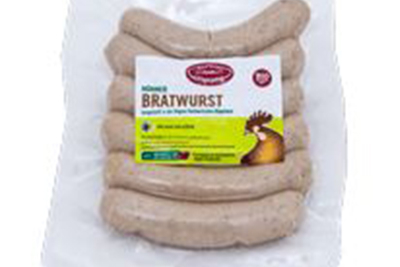
Austria – ZZU BIO Mini Poultry Sausages – Listeria monocytogenes

AGES

Pack of fried sausages

AGES informs about a recall of the company HOFER KG. On March 5th, 2022, the company recalled the product ZZU BIO Mini Poultry Bratwurst:

Product recall
ZZU BIO Mini Poultry Bratwurst Type of
chicken bratwurst

Dear customers,

The article ZZU BIO Mini Poultry Bratwurst – Chicken Bratwurst variety from the supplier LUGITSCH U.SOEHNE GMBH is being recalled by the supplier and HOFER KG for reasons of precautionary consumer protection.

Listeria was detected in a sample of the article mentioned. The product must not be consumed. Listeria can cause gastrointestinal diseases and flu-like symptoms. Serious illnesses can occur as a result of consumption, especially in pregnant women, small children and people with a weakened immune system.

We would like to point out that other varieties and other products from the supplier are not affected.

The product was on sale in HOFER branches in parts of Vienna, Lower Austria, Burgenland, Styria, Salzburg and Upper Austria. The sale stopped immediately.

The affected product can be returned to all HOFER branches. Of course, customers will also be reimbursed the purchase price without proof of purchase. This warning does not imply that the hazard was caused by the producer, manufacturer or distributor.

If you have any questions, the HOFER customer service center can be reached by telephone on (+43) 5 70 30 355 00 (Mon-Fri 7:15 a.m. to 8:00 p.m. and Sat 7:15 a.m. to 6:00 p.m.).

original recall

Taiwan – Norovirus on the rise in Taiwan

Outbreak News Today

The Taiwan Centers for Disease Control and Prevention (CDC) reported Thursday that the number of hospital visits for diarrhea in the country has increased recently, and the pathogens detected in cluster incidents are mainly norovirus.

The public is advised to pay attention to food safety and hand hygiene. Seek medical attention as soon as possible and take rest at home if you are sick; catering and accommodation operators must strengthen environmental hygiene management and pay attention to the health status of employees. If you have suspected symptoms, please suspend work immediately to reduce the risk of virus transmission.

According to the monitoring data of the CDC, there were a total of 110,783 outpatient and emergency visits for diarrhea in Taiwan last week (February 20 to February 26), a slight increase from the number of visits in the past two weeks (109,522 in the 7th and 6th weeks, 109,289), but lower than the same period in recent years. In previous years, the number of patients with diarrhea was likely to increase after consecutive holidays. In the past four weeks (weeks 5 to 8), a total of 83 diarrhea cluster reports were received across the country. There were 49 positive cases of pathogen detection, mainly norovirus (46 cases, accounting for 94%).

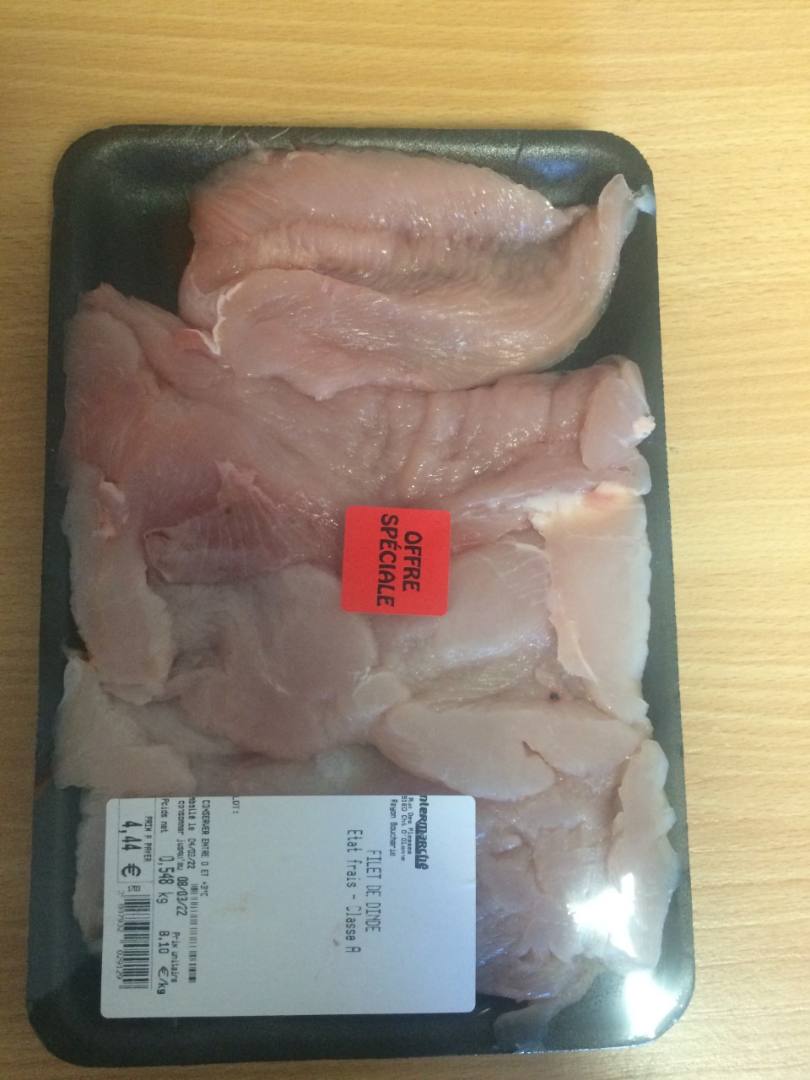
France – Turkey fillet – Salmonella

Gov france

Identification information of the recalled product

  • Product category Food
  • Product subcategory Meats
  • Product brand name come
  • Model names or references traditional turkey fillet or in a tray with the Intermarché logo
  • Identification of products
    Lot Dated
    050460472212 Use-by date 02/24/2022
    050460472212 Use-by date 02/25/2022
    050460472212 Use-by date 02/26/2022
    050460472212 Use-by date 02/27/2022
    050460472212 Use-by date 02/28/2022
    050460472212 Use-by date 03/01/2022
  • Packaging by the cup or in a tray
  • Marketing start/end date From 02/22/2022 to 03/01/2022
  • Storage temperature Product to be stored in the refrigerator
  • Geographic area of ​​sale Whole France
  • Distributors Intermarché

Practical information regarding the recall

  • Reason for recall presence of salmonella
  • Risks incurred by the consumer Salmonella spp (causative agent of salmonellosis)

Research – Distribution and Characteristics of Listeria spp. in Pigs and Pork Production Chains in Germany

MDPI

Listeria (L.) monocytogenes is a foodborne pathogen that can cause disease, mainly in elderly, pregnant or immunocompromised persons through consumption of contaminated food, including pork products. It is widespread in the environment and can also be found in asymptomatic carrier animals, for example, in different tissues of pigs. To learn more about their nature, 16 Listeria spp. isolates found in tonsils and intestinal content of pigs and 13 isolates from the slaughterhouse environment were characterized using next-generation sequencing (NGS). A wide distribution of clonal complexes was observed in pigs, as well as in the pork production chain, suggesting multiple sources of entry. Hypervirulent clones were found in pig tonsils, showing the potential risk of pigs as source of isolates causing human disease. The presence of closely related isolates along the production chain suggests a cross-contamination in the slaughterhouse or recontamination from the same source, strengthening the importance of efficient cleaning and disinfection procedures. The phenotypical antimicrobial resistance status of L. monocytogenes isolates was examined via broth microdilution and revealed a low resistance level. Nevertheless, genotypical resistance data suggested multiple resistances in some non-pathogenic L. innocua isolates from pig samples, which might pose a risk of spreading resistances to pathogenic species. View Full-Text

Research – Genetic Diversity and Relationships of Listeria monocytogenes Serogroup IIa Isolated in Poland

MDPI

In the present study, 100 L. monocytogenes isolates of serogroup IIa from food and food production environments in Poland were characterized towards the presence of virulence, resistance, and stress response genes using whole-genome sequencing (WGS). The strains were also molecularly typed and compared with multi-locus sequence typing (MLST) and core genome MLST analyses. The present isolates were grouped into 6 sublineages (SLs), with the most prevalent SL155 (33 isolates), SL121 (32 isolates), and SL8 (28 isolates) and classified into six clonal complexes, with the most prevalent CC155 (33 strains), CC121 (32 isolates), and CC8 (28 strains). Furthermore, the strains were grouped to eight sequence types, with the most prevalent ST155 (33 strains), ST121 (30 isolates), and ST8 (28; strains) followed by 60 cgMLST types (CTs). WGS data showed the presence of several virulence genes or putative molecular markers playing a role in pathogenesis of listeriosis and involved in survival of L. monocytogenes in adverse environmental conditions. Some of the present strains were molecularly closely related to L. monocytogenes previously isolated in Poland. The results of the study showed that food and food production environments may be a source of L. monocytogenes of serogroup IIa with pathogenic potential.

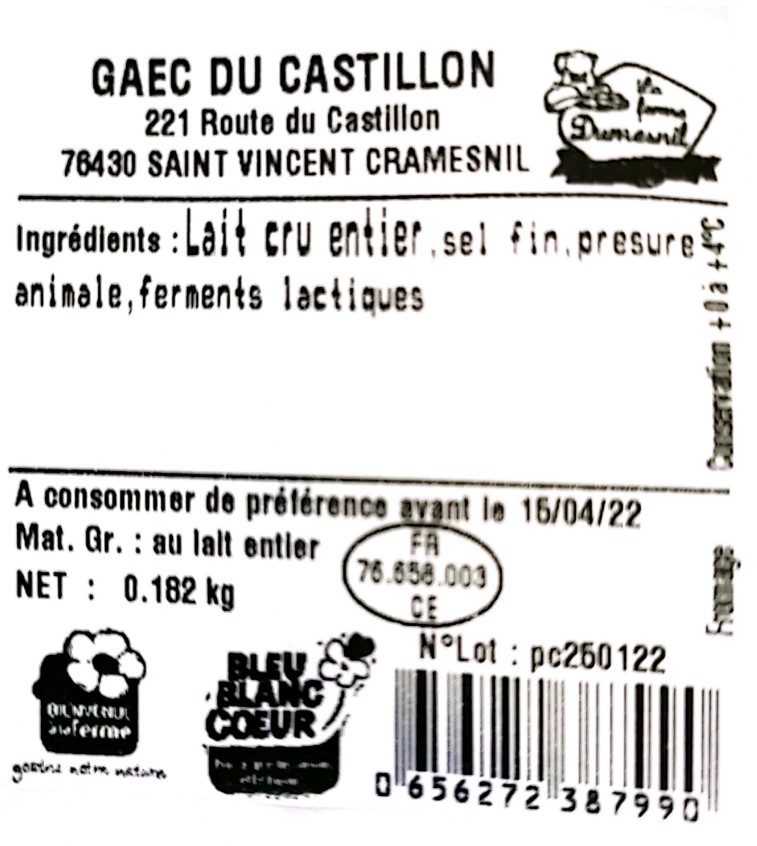
France – Little Brie Normand Cheese – Salmonella

Gov france

Identification information of the recalled product

  • Product category Food
  • Product subcategory Milk and dairy products
  • Product brand name THE FARM DUMESNIL
  • Model names or references P’tit brie normand, creamy & powerful, with whole raw milk
  • Identification of products
    GTIN Lot Date
    0656272387990 batch number: pc250122 for the whole brie Use-by date 04/15/2022
    0656272387990 batch number: pc250122 for the brie in part Use-by date 02/19/2022
    0656272387990 batch number: pc250122 for the brie in part Use-by date 02/26/2022
  • Packaging Whole Brie packed with micro-perforated packaging part of about 200g wrapped in cellophane film with DLC
  • Marketing start/end date From 07/02/2022 to 14/03/2022
  • Storage temperature Product to be stored in the refrigerator
  • Health mark FR 76,658,003 CE
  • Geographic area of ​​sale Regions: Normandy
  • Distributors See table List of points of sale below
  • List of points of saletraceability_of_brie_normand_du_25.01.22.pdf

Practical information regarding the recall

  • Reason for recall  presence of Salmonella
  • Risks incurred by the consumer Salmonella spp (causative agent of salmonellosis)