Category Archives: Food Microbiology Research

Hong Kong – CFS actively follows up on food poisoning clusters involving lava cake

CFS

kswfoodworld.com

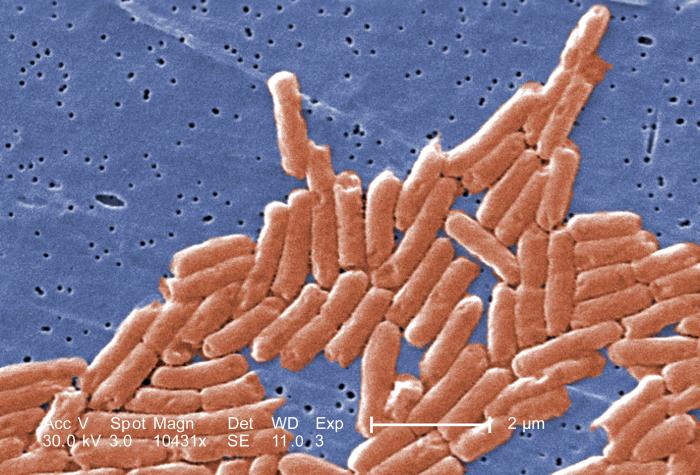
The Centre for Food Safety (CFS) of the Food and Environmental Hygiene Department said today (November 29) that it is actively following up on four food poisoning clusters involving lava cake, including inspecting the restaurant concerned. A sample of lava cake collected from the restaurant was found to contain a pathogen, Group D Salmonella. The CFS is following up on the case.

“Upon notification by the Centre for Health Protection of the Department of Health earlier, the CFS immediately sent staff to the restaurant concerned in Tsim Sha Tsui to conduct investigation and take food and environmental samples for testing. The test result showed the presence of Salmonella in 25 grams of the lava cake sample, exceeding the criterion of the Microbiological Guidelines for Food which states that Salmonella should not be detected in 25g of a ready-to-eat food sample,” a CFS spokesman said.

The CFS has informed the restaurant concerned of the irregularity. The restaurant has already stopped selling and discarded the affected product according to the CFS’s advice. The CFS has also provided health education on food safety and hygiene to the person-in-charge and staff of the restaurant, and requested it to review and improve the food production process and carry out thorough cleaning and disinfection. Prosecution will be instituted should there be sufficient evidence.

According to section 54 of the Public Health and Municipal Services Ordinance (Cap.132), all food available for sale in Hong Kong, imported or locally produced, should be fit for human consumption. An offender is subject to a maximum fine of $50,000 and imprisonment for six months upon conviction.

“Salmonella infection may cause fever and gastrointestinal upset such as vomiting, abdominal pain and diarrhoea. The effects on infants, young children, the elderly and persons with a weak immune system could be more severe and may even lead to death,” the spokesman said.

The CFS will continue to follow up on the incident and take appropriate action to safeguard food safety and public health.

USA – FDA Core Outbreak Table – Investigations of Foodborne Illness Outbreaks

FDA

What’s New

  • For the outbreak of Listeria monocytogenes (reference #1127) linked to enoki mushrooms, FDA has initiated sample collection and analysis.
  • For the outbreak of Salmonella Typhimurium (reference #1113) in an unidentified product, one additional case has been added for a total case count of 270 cases and the outbreak has ended.

More information on the table at the link above.

USA – Norovirus likely cause of 155 ill at Monical’s Pizza

Food Poison Journal

Norovirus Food Safety kswfoodworld

Monical’s Pizza at 6 Cherry Tree Shopping center in Washington, Illinois is currently closed due to an outbreak of an illness.

According to the Tazewell County Health Department, Monical’s was temporarily closed by the Illinois Department of Public Health (IDPH) due to an outbreak of a currently unknown foodborne illness. IDPH is currently working with the Tazewell County Health Department to identify the source.

155 people have currently reached out to the Tazewell County Health Department and reported symptoms of diarrhea and vomiting lasting 12 to 24 hours.

The health department is encouraging everyone to wash their hands and use hand sanitizer currently.

Anyone who ate at Monical’s since November 21st, and is experiencing symptoms, is encouraged to complete an online form.

Major E. coli, and Salmonella outbreaks highlighted at a conference; investigations ongoing

Food Safety News

Two major foodborne outbreaks have recently been highlighted at a European conference on infectious diseases.

Presentations at the European Scientific Conference on Applied Infectious Disease Epidemiology (ESCAIDE) covered an E. coli outbreak from Nestlé pizzas in France and a multi-country monophasic Salmonella Typhimurium outbreak due to Ferrero chocolate.

In February 2022, Santé Publique France identified more cases of the pediatric hemolytic uremic syndrome (HUS) than usual with eight infections. Cases were positive for Shiga toxin-producing E. coli (STEC) O26:H11 or O103:H2 identified by whole genome sequencing (WGS). Only two people were sick from E. coli O103.

USA – Enoki Mushrooms are the Most Recalled Food of 2022

Food Poisoning Bulletin

With one month to go before the end of the year, there have already been 11 Listeria recalls for enoki mushrooms, making them the food most recalled for bacterial contamination in 2022. It wasn’t a close contest. Any commodity vying for the distant second-place finish  -cheese, leafy greens, ground beef, has had fewer than half as many recalls so far this year.

And there’s a decent chance that, before the year’s end, there will be a 12th enoki mushroom recall. That’s because no recall has been issued in connection with an ongoing enoki mushroom Listeria outbreak.

Research – Annual report on the food safety situation in Catalonia, 2020

ACSA

Based on the available data collected in the 2020 Report, we can conclude that the situation in this matter remains, in general terms, stable. However, the COVID-19 pandemic has generated significant deviations in some parameters such as, for example, food poisoning outbreaks that have deviated widely from the usual data of the historical series of the last twenty years with a drop of more than 50% compared to previous years.

Click to access Memoria-anual-seguretat-alimentaria_2020-Final1.docx.pdf

USA – Holiday Reminder: Raw Dough Can Contain Dangerous Pathogens

Food Poisoning Bulletin

It’s time for the annual holiday reminder: raw dough can contain dangerous pathogens. While most people know that eating raw eggs is risky, fewer know that uncooked flour is also a potential hazard.

The FDA has been warning consumers about the potential dangers of raw eggs for decades. Eggs can carry Salmonella bacteria not only on the shell, but inside the egg itself. Hens can carry the pathogen in their ovaries, so the eggs are then contaminated from the inside out. Always handle raw eggs as if they are contaminated. Cook them thoroughly, and avoid recipes that use raw eggs. Eggs that are pasteurized are safe to eat raw, as long as you follow expiration dates.

There have been outbreaks linked to raw, or uncooked flour, in the past few years. Flour is a raw agricultural product and can be contaminated just like cantaloupe and romaine lettuce.

So when you are baking this holiday season, there are some things to remember. Follow package directions on baking mixes and four containers. Keep flour and eggs away from foods that are eaten uncooked. Refrigerate cookie and pastry dough if you aren’t going to be baking immediately.

Never eat or taste raw dough or cake batter unless it is made with pasteurized eggs and commercial heat-treated flour. Do not make play dough out of raw flour. Don’t use cake mixes to make milkshakes. While there are instructions for heat-treating your flour at home, the FDA doesn’t recommend it, since these treatments may not kill all pathogens. There are several brands of commercial heat-treated flour you can buy. Don’t use raw cookie dough in ice cream.

Sweden provides detail on outbreaks in 2021

Food Safety News

Sweden has noted an increase in foodborne outbreaks and illnesses in 2021 but levels were still below pre-COVID-19 pandemic figures.

The number of outbreaks reported to the Swedish Food Agency (Livsmedelsverket) in 2020 and 2021 was affected by measures taken during the pandemic.

There were 251 reports of suspected or confirmed food poisoning outbreaks with 1,467 illnesses. Both the number of reports and the number of cases increased compared to 160 outbreaks and 1,314 cases in 2020 but are still lower than the historical average.

When several Coronavirus-related restrictions were lifted in the autumn of 2021, the number of cases increased. Sixteen major outbreaks occurred during this season.

Eleven people have been hospitalized in seven outbreaks and one person died during a Campylobacter epidemic which infected eight people.

Slovenia – Salmonella outbreak in Slovenia, Steak tartare linked as possible source

Outbreak News Today

kswfoodworld salmonella

The Administration for Safe Food, Veterinary Medicine and Plant Protection (UVHVVR) together with the National Institute of Public Health (NIJZ) is investigating the increased number of reported cases of salmonella infections in Slovenia, which are being handled by the regional units of the NIJZ Ravne na Koroškem, Murska Sobota, Celje and Ljubljana. On the basis of the information received from the epidemiological service of the NIJZ, the UVHVVR started inquiries and inspections.

The epidemiological investigation showed that there were mostly unrelated cases, but the probability of consuming the same food stood out.

Research -Application of a novel phage ZPAH7 for controlling multidrug-resistant Aeromonas hydrophila on lettuce and reducing biofilms

Science Direct

Abstract

Aeromonas hydrophila is an important pathogenic bacterium that causes foodborne illness worldwide. In this study, virulent phages from the sediment of a fish farm were propagated and isolated on a multidrug-resistant strain of A. hydrophila, ZYAH75. One phage, designated as ZPAH7, featured a unique turbid halo around a clear plaque on the bacterial lawn (indicative of potential depolymerase activity), and was selected for further analysis. ZPAH7 was classified as podophage by morphological and genomic methods. Further comparisons of genome nucleotide similarity, ratios of homologous proteins and phylogenetic relatedness among the terminase large subunit and major capsid proteins of similar phage deposited in GENBANK, led us to propose a new genus, ZPAH7virus, in the Autographivirinae subfamily of Podoviridae. ZPAH7 had an adsorption rate of 79% in 5 min, an eclipse period of 15 min, a latent period of 25 min, and a burst size of 148 ± 9 PFU/cell. Antimicrobial application experiments showed that ZPAH7 lead to significantly reduction on A. hydrophila on lettuce. Additionally, ZPAH7 was able to inhibit biofilm formation, as well as degrade and kill bacteria in established biofilms. Furthermore, lytic activity of ZPAH7 remained stable across a wide range of temperatures and pH measurements. These results suggest ZPAH7 could be used as a potential biological control agent against A. hydrophila on food and/or biofilms on food contact surfaces.