Category Archives: Food Micro Blog

France – Chicken thighs 500g – Listeria monocytogenes

Gov france

  • Product category Food
  • Product subcategory Meats
  • Product brand name Gallic
  • Model names or references Tray under protective atmosphere 500g
  • Product identification
    GTIN Batch Date
    3266980890971 3013018241 Use-by date 08/21/2023
    3266980890971 3013018241 Use-by date 08/20/2023
  • Packaging Tray under protective atmosphere 500g
  • Start/end date of marketing From 08/09/2023 to 08/21/2023
  • Storage temperature Product to keep in the refrigerator
  • Health mark FR 72 264 002 CE
  • Geographical sales area Whole France
  • Distributors Intermarché, Leclerc, Système U

UK – Lidl recalls McEnnedy Corn Dogs because of the presence of Listeria monocytogenes

Gov UK

Lidl is recalling McEnnedy Corn Dogs because Listeria monocytogenes has been found in the product and accompanying sauce.

Product details

McEnnedy Corn Dogs
Pack size 530g
Best before 28 April 2024, 10 June 2024 and 10 August 2024

Risk statement

The presence of Listeria monocytogenes in the above product.

Symptoms caused by this organism can be similar to flu and include high temperature, muscle ache or pain, chills, feeling or being sick and diarrhoea. However, in rare cases, the infection can be more severe, causing serious complications, such as meningitis.

Some people are more vulnerable to listeria infections, including those over 65 years of age, pregnant women and their unborn babies, babies less than one month old and people with weakened immune systems.

Action taken by the company

Lidl is recalling the above product. Point-of-sale notices will be displayed where the product was sold. These notices explain to customers why the product is being recalled and tell them what to do if they have bought the product. Please see the attached notices.

Our advice to consumers

If you have bought the above product do not eat it. Instead, return the product to where it was bought for a full refund. For further information contact Lidl Customer Care at 0203 966 5566 or email customer.care@lidl.co.uk

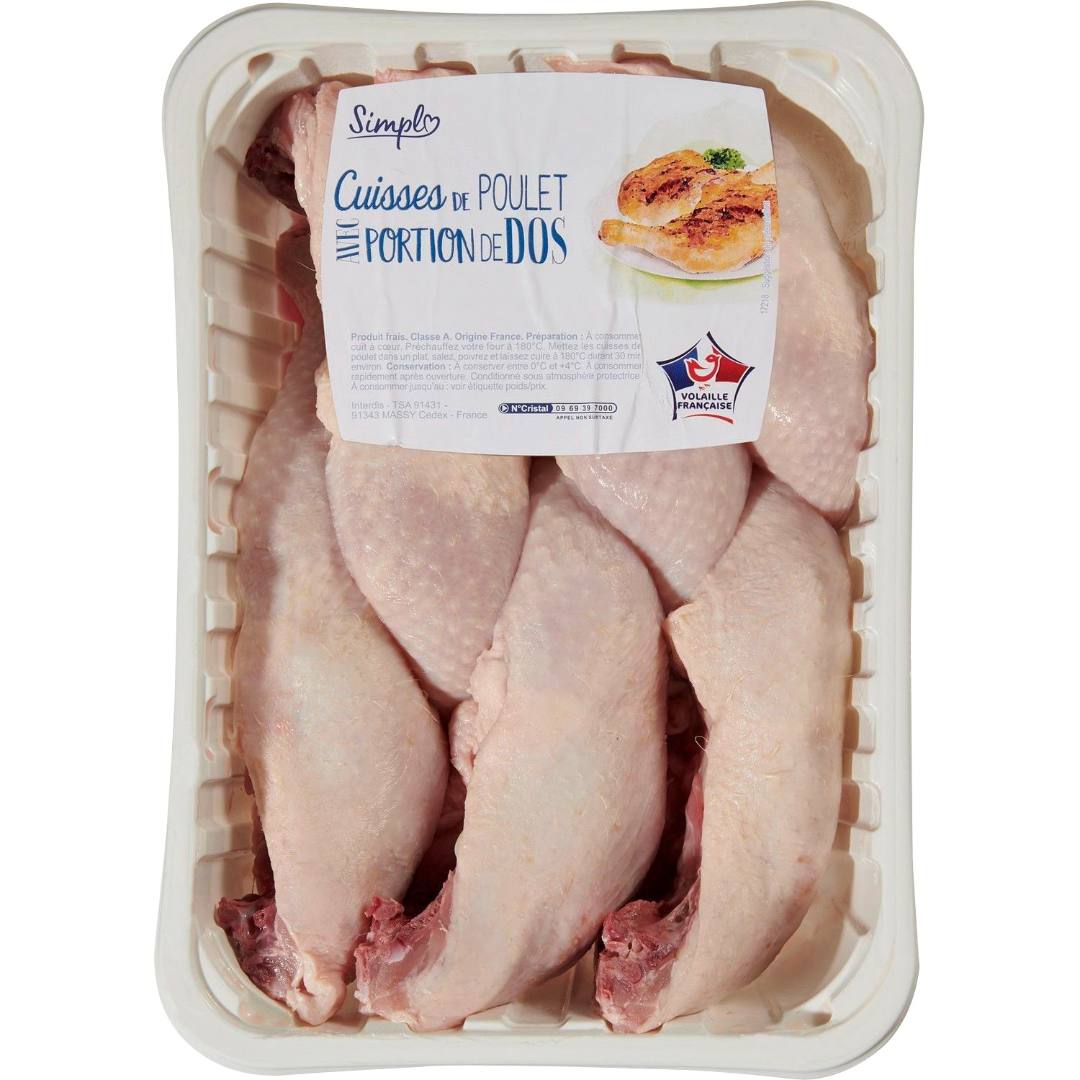
France -WHITE CHICKEN LEGS WITH BACK PORTION X6 – Listeria monocytogenes

Gov france

  • Product category Food
  • Product subcategory Meats
  • Product brand name simplicity
  • Model names or references WHITE CHICKEN LEGS WITH BACK PORTION
  • Product identification
    GTIN Lot Date
    3560070456987 3013018251 Use-by date 08/19/2023
    3560070456987 3013018251 Use-by date 08/20/2023
  • Packaging X6 thighs packaged in trays under modified atmosphere
  • Start/end date of marketing From 08/09/2023 to 08/20/2023
  • Storage temperature Product to keep in the refrigerator
  • Health mark FR 72.264.002 CE
  • Further information Product in shared market; only products with the FR 72.264.002 CE stamp and in X6 format are concerned
  • Geographical sales area Whole France
  • Distributors Carrefour

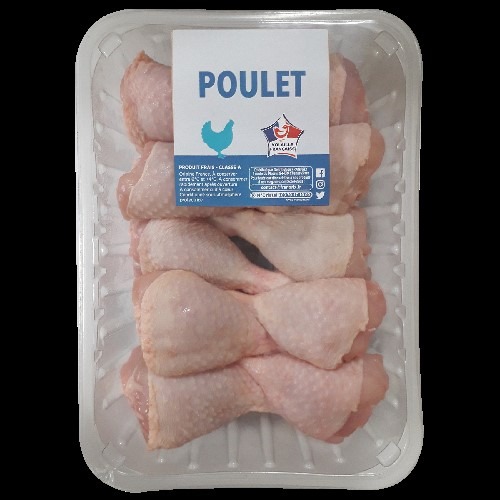
France – White chicken drumsticks 1 kg – Listeria monocytogenes

Gov france

  • Product category Food
  • Product subcategory Meats
  • Product brand name unbranded
  • Model names or references 1Kg
  • Product identification
    GTIN Lot Date
    3263859236113 3013018133 Use-by date 08/19/2023
    3263859236113 3013018133 Use-by date 08/20/2023
    3263859236113 3013018133 Use-by date 08/21/2023
    3263859236113 3013018133 Use-by date 08/22/2023
  • Start/end date of marketing From 08/08/2023 to 08/22/2023
  • Storage temperature Product to keep in the refrigerator
  • Health mark FR 72.264.002 CE
  • Geographical sales area Whole France
  • Distributors Franprix and Franprix distribution network

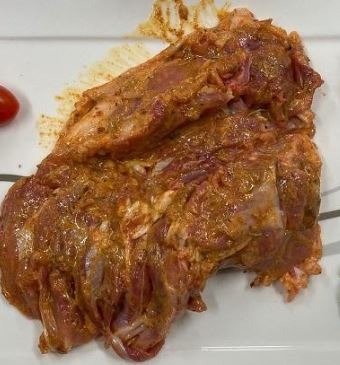
France – Marinated boneless chicken thigh – Salmonella

Gov france

  • Product category Food
  • Product subcategory Meats
  • Product brand name PPNP (Prepared by us)
  • Model names or references product sold in the traditional butcher section
  • Product identification
    Lot
    product sold in the traditional butcher section
  • Packaging SOLD ON SHELF LATE
  • Start/end date of marketing From 08/25/2023 to 08/31/2023
  • Storage temperature Product to keep in the refrigerator
  • Further information PRODUCT SOLD IN THE TRADITIONAL BUTCHER DEPARTMENT
  • Geographical sales area SUPERMARCHE MATCH THANN
  • Distributors SUPERMARCHE MATCH THANN

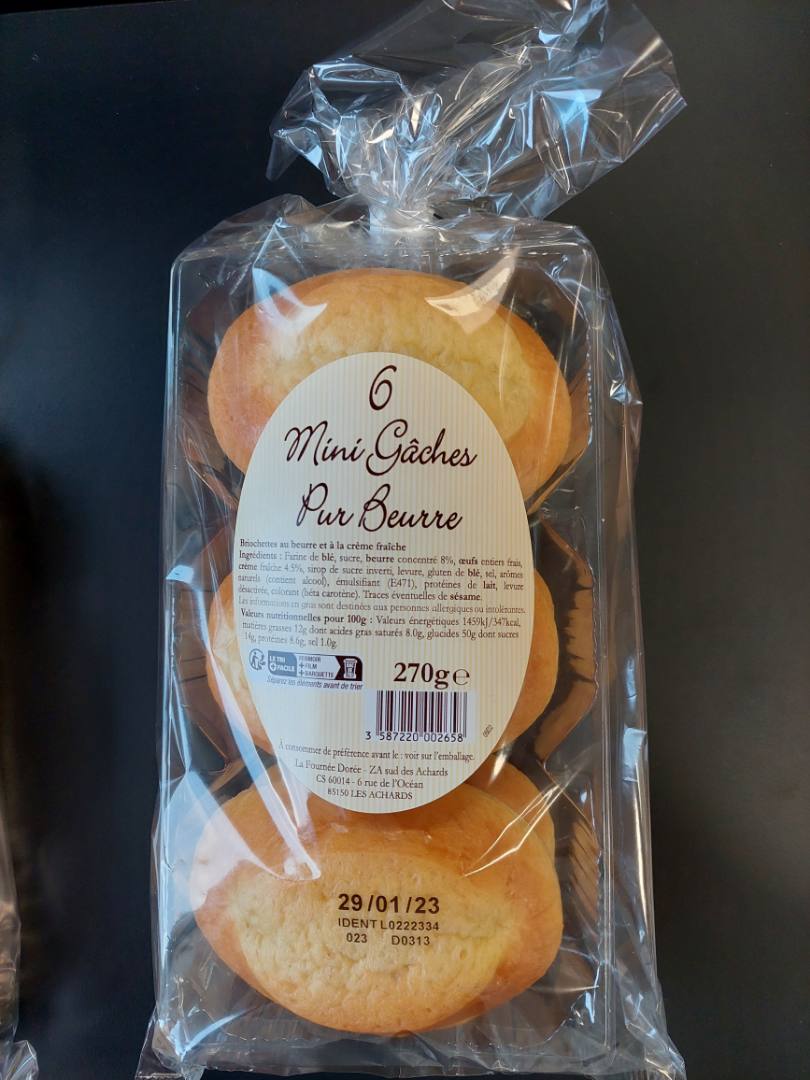
France – Mini pure butter strikers – Mold/Mould

Gov france

  • Product category Food
  • Product subcategory Cereals and bakery products
  • Product brand name NO NAME
  • Model names or references Mini pure butter strikers
  • Product identification
    GTIN Lot Date
    358722000658 L0223193 023 D0030 Recommended consumption date 09/10/2023
  • Packaging x6
  • Start/end date of marketing From 07/17/2023 to 09/01/2023
  • Storage temperature Product to be stored at room temperature
  • Geographical sales area Whole France
  • Distributor NORMA SARL

France – Milk/Dairy Product – He gets involved – Listeria monocytogenes

Gov france

  • Product category Food
  • Product subcategory Milk and dairy products
  • Product brand name La ferme de Miri’bêle
  • Model names or referencesBelfond
  • Product identification
    Lot Date
    1506 Minimum durability date 10/15/2023
  • Packaging Bulk (whole or cut)
  • Start/end date of marketing From 07/24/2023 to 08/22/2023
  • Storage temperature Product to keep in the refrigerator
  • Health mark Exemption from approval
  • Further information Uncooked pressed cheese made from raw sheep’s milk
  • Geographical sales area Departments: ISERE (38), SAVOIE (73)
  • Distributors La SICA du Granier (store 73 + markets 38)

Research – Essential Oils and Their Combination with Lactic Acid Bacteria and Bacteriocins to Improve the Safety and Shelf Life of Foods: A Review

MDPI

Abstract

The use of plant extracts (e.g., essential oils and their active compounds) represents an interesting alternative to chemical additives and preservatives applied to delay the alteration and oxidation of foods during their storage. Essential oils (EO) are nowadays considered valuable sources of food preservatives as they provide a healthier alternative to synthetic chemicals while serving the same purpose without affecting food quality parameters. The natural antimicrobial molecules found in medicinal plants represent a possible solution against drug-resistant bacteria, which represent a global health problem, especially for foodborne infections. Several solutions related to their application on food have been described, such as incorporation in active packaging or edible film and direct encapsulation. However, the use of bioactive concentrations of plant derivatives may negatively impact the sensorial characteristics of the final product, and to solve this problem, their application has been proposed in combination with other hurdles, including biocontrol agents. Biocontrol agents are microbial cultures capable of producing natural antimicrobials, including bacteriocins, organic acids, volatile organic compounds, and hydrolytic enzymes. The major effect of bacteriocins or bacteriocin-producing LAB (lactic acid bacteria) on food is obtained when their use is combined with other preservation methods. The combined use of EOs and biocontrol agents in fruit and vegetables, meat, and dairy products is becoming more and more important due to growing concerns about potentially dangerous and toxic synthetic additives. The combination of these two hurdles can improve the safety and shelf life (inactivation of spoilage or pathogenic microorganisms) of the final products while maintaining or stabilizing their sensory and nutritional quality. This review critically describes and collects the most updated works regarding the application of EOs in different food sectors and their combination with biocontrol agents and bacteriocins.

Research – Evaluation of Hygiene Practice for Reducing Campylobacter Contamination on Cutting Boards and Risks Associated with Chicken Handling in Kitchen Environment

MDPI

Abstract

Campylobacter kswfoodworld

Cutting boards can serve as potential carriers for the cross-contamination of pathogens from chicken to other surfaces. This study aimed to assess chefs’ handling practices of cutting boards across five provinces in China and identify the key factors contributing to unsafe cutting board usage, including cleaning methods and handling practices. Handling practices associated with cutting boards were examined through a web-based survey (N = 154), while kitchen environment tests were conducted to investigate the splashing or survival of Campylobacter, inoculated in chicken or on cutting boards, to mimic the practices of chefs. Among chefs in the five provinces of China, wood and plastic cutting boards were the most commonly used for preparing chicken meat. Approximately 33.7% of chefs washed boards with running tap water, 31.17% of chefs washed boards with detergent, and 24.03% of chefs cleaned boards by scraping them with a knife after preparing other meats or chicken. The study tested 23 cutting boards from commercial kitchens for Campylobacter presence before and after chicken preparation and cleaning. Among these, 17 were cleaned with a knife, 5 with running tap water, and only 1 with disinfectant. Results showed that cleaning with a knife significantly reduced Campylobacter presence on cutting boards (p < 0.05), while the three main cleaning methods were inadequate in eliminating contamination to a safe level. In kitchen environment tests, contaminated chicken was chopped on cutting boards, with a maximum distance of 60 cm for low contamination, and 120 cm for medium and high contamination levels. This suggested a contamination risk exposure area ranging from 60 cm to 120 cm. Campylobacter survival on surfaces of wood, plastic, and stainless steel was also tested, with plastic surfaces showing the longest survival time (4.5 h at 15 °C and 3.5 h at 25 °C) In comparison, survival time on stainless steel or wood surfaces was only 3 h, implying a cross-contamination risk exposure period of 3 to 4.5 h after chicken preparation. In conclusion, based on the current study data, the practices employed by chefs play an important role in Campylobacter transfer in the kitchen environment. The presence of Campylobacter on cutting boards even after wiping or droplet splashing highlights its potential as a source of cross-contamination in the kitchen environment. So, chefs in China should reinforce their hygiene culture and adopt effective cutting board cleaning practices to prevent pathogen contamination.

Research – Utilization of Algae Extracts as Natural Antibacterial and Antioxidants for Controlling Foodborne Bacteria in Meat Products

MDPI

Abstract

Padina pavonicaHormophysa cuneiformis, and Corallina officinalis are three types of algae that are assumed to be used as antibacterial agents. Our study’s goal was to look into algal extracts’ potential to be used as food preservative agents and to evaluate their ability to inhibit pathogenic bacteria in several meat products (pastirma, beef burger, luncheon, minced meat, and kofta) from the local markets in Alexandria, Egypt. By testing their antibacterial activity, results demonstrated that Padina pavonica showed the highest antibacterial activity towards Bacillus cereusStaphylococcus aureusEscherichia coliStreptococcus pyogenesSalmonella spp., and Klebsiella pneumoniaePadina pavonica extract also possesses most phenolic and flavonoid content overall. It has 24 mg gallic acid equivalent/g and 7.04 mg catechol equivalent/g, respectively. Moreover, the algae extracts were tested for their antioxidant activity, and the findings were measured using ascorbic acid as a benchmark. The IC50 of ascorbic acid was found to be 25.09 μg/mL, while Padina pavonica exhibited an IC50 value of 267.49 μg/mL, Corallina officinalis 305.01 μg/mL, and Hormophysa cuneiformis 325.23 μg/mL. In this study, Padina pavonica extract was utilized in three different concentrations (Treatment 1 g/100 g, Treatment 2 g/100 g, and Treatment 3 g/100 g) on beef burger as a model. The results showed that as the concentration of the extract increased, the bacterial inhibition increased over time. Bacillus cereus was found to be the most susceptible to the extract, while Streptococcus pyogenes was the least. In addition, Padina pavonica was confirmed to be a safe compound through cytotoxicity testing. After conducting a sensory evaluation test, it was confirmed that Padina pavonica in meat products proved to be a satisfactory product.