Category Archives: Food Inspections

US Picnic 36 Sick – E.coli O157

E.coli Blog

As a result of eating food at a picnic at Neff’s Lawn Care in Germantown, at least 36 individuals have become ill. Of those, 9 have been hospitalized. Public Health – Dayton & Montgomery County is continuing an investigation into the cause of the foodborne outbreak. Estimates are that as many as 200-300 people may have attended an annual customer appreciation picnic.

Public Health is continuing to gather information through interviews with those who became ill and those who prepared the food. Investigators are also looking at food sources, food handling and storage practices, food temperature controls, and the potential of cross contamination of the food.

USDA – Recall Ready to Eat Meat Products – Listeria monocytogenes

USDA

WASHINGTON, July 7, 2012 – Buona Vita, Inc., a Bridgeton, N.J. establishment, is recalling approximately 324,770 pounds of various frozen, ready-to-eat meat and poultry products due to possible contamination with Listeria monocytogenes, the U.S. Department of Agriculture’s Food Safety and Inspection Service (FSIS) announced today.
The packages bear the establishment number “P-954” or “Est. 954” inside the USDA mark of inspection. The products were sold to distribution facilities nationwide. When available, the retail distribution list will be posted on FSIS’ website at www.fsis.usda.gov/FSIS_Recalls/
Open_Federal_Cases/index.asp
.

The problem was discovered through microbiological testing by FSIS and the Ohio Department of Agriculture (ODA). FSIS, ODA, and the company have not received reports of illesses due to consumption of these products. Anyone concerned about an illness should contact a healthcare provider.

US FDA – Recall More Romaine Lettuce – Salmonella

FDA

Pacific International Marketing (“Pacific”) is voluntarily recalling 19 cases of bulk Romaine Lettuce sold at Vons and Pavilions stores in California and Nevada due to potential Salmonellacontamination. The bulk Romaine Lettuce was sold in bulk produce bins from July 2, 2012 through July 4, 2012. The lettuce heads are banded with a red twist tie marked “Safeway.”

Consumers who may have purchased this product should discard it or return it to the place of purchase for a full refund. No Illnesses have been reported to date.   This recall is being conducted out of an abundance of caution. The recall is the result of a positive Salmonella test taken at the field level.  The source of contamination is unknown.

Salmonella is an organism which can cause serious and sometimes fatal infections in young children, frail or elderly people, and others with weakened immune systems. Healthy persons infected with Salmonella often experience fever, diarrhea (which may be bloody), nausea, vomiting and abdominal pain. In rare circumstances, infection with Salmonella can result in the organism getting into the bloodstream and producing more severe illnesses such as arterial infections (i.e., infected aneurysms), endocarditis and arthritis.

UK – Deli Closed – Listeria monocytogenes

Wirral Globe

A WIRRAL supermarket delicatessen was closed down after a potentially life-threatening disease was found.

Sainsbury’s store at Upton shut its deli counter after environmental health officers discovered listeria in foods.

Listeria, which is most common in soft cheeses, cold cuts of meat and pates, is a rare infection causing flu-like symptoms and vomiting.

CIFA – Recall Fresh Shelled Peas – Listeria monocytogenes

CIFA

The Canadian Food Inspection Agency (CFIA) and Thomas Bros. Farm Market are warning the public not to consume the fresh shelled peas described below because the product may be contaminated with Listeria monocytogenes.

The affected product, fresh shelled peas, was sold from Thomas Bros. Farm Market located at 5856 Colonel Talbot Road, London, Ontario on June 27, 2012. The packages do not bear a label identifying the store name and other information.

Consumers who have this fresh product in their homes or may have frozen it are advised not to consume it.

There have been no reported illnesses associated with the consumption of this product.

RASFF and Other Alerts – Mould, Listeria, Salmonella,Aflatoxins, STEC, Campylobacter

RASFF – Mould in Cheddar Cheese in Denmark sourced in the UK.

RASFF – Salmonella in Roasted Soya Beans in Belgium.

RASFF – Campylobacter in Fresh Whole Chicken in Denmark sourced in Germany.

RASFF – Salmonella in Galacto Oligosaccharide in Netherlands sourced in South Korea

RASFF – STEC E.coli Bovine Meat in Belgium

RASFF – Aflatoxins in Groundnuts in Netherlands sourced in Nicaragua.

Denmark – Undesirable bacteria in Yoghurt

Denmark – Mould on Cheese products.

Germany – Salmonella in Teewurst Sausage

China Vows to Stamp Out Food Safety Scandals

The Telegraph 

China has vowed to stamp out major food safety scandals in three years after fears surfaced that athletes might underperform at the Olympics because they were avoiding eating potentially contaminated meat.

Reports about shocking and often bizarre cases of contamination or adulteration appear in the Chinese media on an almost daily basis.

On Tuesday the Legal Daily newspaper reported that police in northeast China had arrested 6 people behind a £1.3m “fake beer” racket. Police claim the gang used hydrochloric acid and formaldehyde to produce counterfeit beer, including the country’s flagship Tsingtao lager.

The Telegraph China’s Top 10 Food Safety Scandals

Australia – Sour Cream Recall – E.coli

FSANZ

Coles Supermarkets have recalled Coles Lite Sour Cream (300ml) from its stores in WA due to E.coli contamination. Food contaminated with E.coli may cause illness if consumed. Consumers should not eat this product and should return it to the place of purchase for a full refund. Any consumers concerned about their health should seek medical advice.


CIFA – Cheese Curds Recall – Staph Toxin

CIFA

The Canadian Food Inspection Agency (CFIA) and Fromagerie St-Fidèle Inc. are warning the public not to consume the St-Fidèle brand cheese curds described below because they may be contaminated with Staphylococcustoxin.

The following St-Fidèle brand products are affected by this alert:

Product Size UPC Codes Best Before date
Cheddar Cheese (package contains cheese curds) Variable None 3959
Made on 12JUN19 or 12JUN20
12JUL19 or 12JUL20
Cheddar Cheese (package contains BBQ-flavoured cheese curds) Variable None 3959
Made on 12JUN19 or 12JUN20
12JUL19 or 12JUL20
Cheddar Cheese Curd 85 g 0 55038 06020 5 3959
Made on 12JUN20
12JUL20
Cheddar Cheese Curd 200 g 0 55038 06022 9 3959
Made on 12JUN20
12JUL20
Cheddar Cheese Curd 400 g 0 55038 06021 2 3959
Made on 12JUN20
12JUL20
Cheddar Cheese Curd 2.5 kg None 3959
Made on 12JUN20
12JUL20

These products have been distributed in Quebec.

There have been no reported illnesses associated with the consumption of these products.

Brussels Carrefour Recall Sardines – Histamine

DHBE

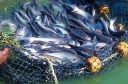
BRUSSELS Carrefour is recalling sardines in olive oil of the Carrefour brand, “as a precautionary measure and following the potential presence of histamine,” announced Tuesday the supply chain. . “This is part of standard methods of control implemented by the sign that the potential presence of histamine has been demonstrated,” said Carrefour in a statement.

The recall affects the following product: Sardines in olive oil 120 g, Carrefour brand, barcode: 3560070017522. These lots range BJL001F and BLJ043F.

Scombroid (histamine) food poisoning is a foodborne illness that results from eating spoiled (decayed) fish. However it is often missed because it resembles an allergic reaction. It is most commonly reported with mackerel, tuna, bluefish, mahi-mahi, bonito, sardines, anchovies, and related species of fish that were inadequately refrigerated or preserved after being caught. The syndrome derived its name because early descriptions of the illness noted an association with Scombroidea fish (e.g., large dark meat marine tuna, albacore, mackerel); however, the Centers for Disease Control and Prevention (CDC) have identified the largest vector to be non-scombroid fish, such as mahi-mahi and amberjack. Scombroid syndrome can result from inappropriate handling of fish during storage or processing. One of the toxic agents implicated in scombroid poisoning is histamine. Other chemicals have been found in decaying fish flesh, but their association with scombroid fish poisoning has not been clearly established.