Category Archives: Food Hygiene

UK and Canada – Deaths and Illness in Hospitals due to Listeria Sandwiches in Britain and Canada

Food Poison Journal

Three people have died recently in England from listeriosis with a link to eating pre-made sandwiches and at least three others have been sickened by the deadly bacteria. The patients died at Manchester University NHS Foundation Trust and Aintree University Hospital NHS Foundation Trust in Liverpool.

Cases of Listeria infection have been reported in six hospital patients in England. Sandwiches and salads linked to the sick people have been withdrawn and the supplier, The Good Food Chain, has voluntarily ceased production while the investigation continues.

USA – Public Health Alert Concerning Hepatitis A Virus Contamination of Kroger Brand Frozen Blackberries

FDA

The FDA is alerting consumers to a hepatitis A virus (HAV) contamination of frozen blackberries under the Kroger grocery store “Private Selection” brand. This contamination was discovered by the FDA as a part of an ongoing frozen berry sampling assignment. The FDA is advising consumers not to eat and to throw away frozen fruit purchased from Kroger and other retail locations packaged under Kroger’s “Private Selection” brand. Here are the recalled products:

  • PRIVATE SELECTION FROZEN TRIPLE BERRY MEDLEY, 48 OZ (BEST BY: 07-07-20; UPC: 0001111079120);
  • PRIVATE SELECTION FROZEN TRIPLE BERRY MEDLEY, 16 OZ (BEST BY: 06-19-20; UPC: 0001111087808);
  • PRIVATE SELECTION FROZEN BLACKBERRIES, 16 OZ (BEST BY: 06-19-20, 07-02-20; UPC: 0001111087809)
Kroger Brand Frozen Blackberries

These products are available at Kroger and other retail locations and have a two-year shelf life. The FDA is working with the manufacturer on this matter. This posting will be updated with new information as it becomes available. The FDA is continuing to investigate to determine whether there are other implicated products.

At this time, the FDA and the Centers for Disease Control and Prevention (CDC) are not aware of any cases of hepatitis A linked to the consumption of Kroger Private Selection brand frozen blackberries. Hepatitis A virus (HAV) can result in a liver infection that may be inapparent. However, when symptoms occur, they can range in severity from a mild illness lasting a few weeks to a severe illness lasting several months. HAV is found in the stool and blood of people who are infected. HAV is spread when someone ingests the virus, usually through person-to-person contact or from eating contaminated food or drink. Contamination of food with the hepatitis A virus can happen at any point: growing, harvesting, processing, handling, and even after cooking.

Research – Listeria monocytogenes risk associated with chicken at slaughter and biocontrol with three new bacteriophages

Wiley Online

Listeria kswfoodworld food safety food poisoning

Image CDC


Abstract

The aim of this study was to isolate Listeria monocytogenes from chicken neck skins and lytic bacteriophages from poultry slaughterhouse wastewaters, and following the characterization of the isolates, biocontrol of L. monocytogenes was investigated on chicken drumsticks with the isolated phages. L. monocytogenes prevalence was detected 12.3% in the chicken samples and the dominant serotype was determined as 1/2a (92.5%). Expression levels of major virulence genes were revealed by real‐time RT‐PCR. Ten different DNA profiles were detected by ERIC‐PCR fingerprinting. According to the MIC results, LM‐P75 was defined as MDR by showing resistance to antibiotics in six different groups. Besides, five lytic listeriophages were isolated from wastewaters and treated with Cla1 and Sac1. Taking EoP, TEM, in vitro, and in vivo analyses results into consideration, three bacteriophages were used for the biocontrol assay. The application of the bacteriophages on drumsticks achieved a reduction up to 3.3 log CFU/ml in L. monocytogenes count in 3 hr of incubation at 4°C.

Practical applications

Our results showed that in spite of the developments in hygiene practices during slaughtering, chicken meat is still a potential source for L. monocytogenes. On the other hand, the phage cocktail that used in this study can be an effective tool to reduce L. monocytogenes in chicken carcasses at final wash or at cooling step in poultry slaughtering process, as well as in decontamination of chicken meat parts.

Canada- Ground spice from Nigeria under recall; no codes on product labels – Salmonella

Food Safety News

A spice product imported into Canada from Nigeria is under recall because government testing showed possible contamination with Salmonella bacteria.

MyChopChop, which has offices in Ontario, sold the recalled “Grounded Peper” to consumers nationwide via the internet, according to a recall notice posted by the Canadian Food Inspection Agency. The agency reported that as of the posting of the notice no reports of confirmed illnesses had been reported in connection with the recalled product.

Because of the long shelf life of dry spices, public health officials are concerned there may be consumers who have the recalled spice product in their homes. Anyone who has such spice in their homes that is not still in its original package should discard it because they won’t be able to determine whether it is the recalled product.

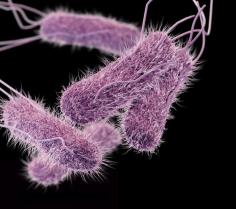
USA – Salmonella Outbreak at Elite Childcare Academy in Omaha, NE

Food Poisoning Bulletin

Salmonellaa

Image CDC

A possible Salmonella outbreak at Elite Childcare Academy in Omaha, Nebraska may have sickened an unknown number of children, according to news reports. The Douglas County Health Department is investigating. One hundred children are enrolled.

USA – Side Hill Acres Raw Goat Milk Recalled For Possible Listeria Monocytogenes

Food Poisoning Bulletin

he New York Department of Agriculture and Markets is warning consumers that Side Hill Acres raw goat milk may be contaminated with Listeria monocytogenes bacteria. Some of the milk tested positive for the pathogen.

RASFF Alerts – Salmonella – Salted Chicken Breasts – Duck Inner Fillets – Chilled Chicken – Sesame Seeds – Whitish Sesame Seeds – Betel Leaves – Chicken Drumsticks – Chilli Powder – Herb Mix

RASFF-Logo

RASFF – Salmonella (presence /25g) in frozen salted chicken half breasts from Brazil in the UK

RASFF – Salmonella (presence /25g) in frozen duck inner fillets from Hungary in Italy

RASFF – Salmonella enterica ser. Münster (present in 1out of 5 samples /25g) in chilled chicken from Poland in the Czech Republic

RASFF – Salmonella (presence /25g) in sesame seeds from Uganda in Germany

RASFF – Salmonella (presence /25g) in frozen half chicken breast from Brazil, via the Netherlands in the UK

RASFF – Salmonella (in 1 out of 5 samples /25g) in organic sesame seeds from Uganda in the Netherlands

RASFF – Salmonella (in 1 out of 5 samples /25g) in whitish sesame seeds from Sudan in Greece

RASFF – Salmonella (in 2 out of 5 samples /25g) in whitish sesame seeds from Sudan in Greece

RASFF – Salmonella (presence /25g) in betel leaves from Malaysia in the UK

RASFF – Salmonella (in 1 out of 5 samples /25g) in white sesame seeds from Nigeria in Poland

RASFF – Salmonella (presence /25g) in sesame seeds from Uganda in the Netherlands

RASFF – Salmonella (presence /25g) and high count of Escherichia coli (7.8×10*3 CFU/g) in betel Leaves from Malaysia in the UK

RASFF – Salmonella (presence /25g) in sesame seeds from Sudan in Greece

RASFF – Salmonella enterica ser. Infantis (presence /25g) in chilled chicken breast fillet from Poland in the Czech Republic

RASFF – Salmonella (presence /25g) in sesame seeds from Sudan in Greece

RASFF – Salmonella (presence /25g) in sesame seeds from Sudan in Greece

RASFF – Salmonella enterica ser. Newport (presence /25g) in chilled chicken breast fillets from Poland in the Czech Republic

RASFF – Salmonella (presence /25g) in chicken drumsticks from the Netherlands in the Netherlands

RASFF – Salmonella (presence /25g) and Salmonella enterica ser. Newport (presence /25g) in chilli powder from India in Finland

RASFF – Salmonella enterica ser. Agona (presence /25g) in herbs mix for meat preparation from the Netherlands in the Netherlands

RASFF Alerts -E.coli – Live Venus Clams – Betel Leaves – Herbal Infusion

RASFF-Logo

RASFF – too high count of Escherichia coli (330; 230; 130; 700; 490 MPN/100g) in live venus clams (Chamelea gallina) from Italy in Spain

RASFF – high count of Escherichia coli (presence /25g) in betel leaves from Malaysia in the UK

RASFF – high count of Escherichia coli (8.2 x 10*3 CFU/g) in betel leaves from Malaysia in the UK

RASFF – high count of Escherichia coli (9 x 10*3 CFU/g) in betel leaves from Malaysia in the UK

RASFF – high count of Escherichia coli in herbal infusion from Italy, produced in Spain, with raw material from Germany in Italy

RASFF Alerts – Aflatoxins – Seasoning Mix Chicken Tikka – Pistachios – Groundnuts

RASFF-Logo

RASFF – aflatoxins (B1 = 16.2; Tot. = 16.9 µg/kg – ppb) in seasoning mix chicken tikka from Pakistan in Ireland

RASFF – aflatoxins (B1 = 14.44; Tot. = 22.46 µg/kg – ppb) in pistachios from Turkey in Germany

RASFF – aflatoxins (B1 = 22; Tot. = 27.3 µg/kg – ppb) in groundnuts in shell from China in Portugal

RASFF Alerts – DSP – Live Clams – Cockles

RASFF-Logo

RASFF – Diarrhoeic Shellfish Poisoning (DSP) toxins (407.1 µg/kg – ppb) in live saltwater clams (Donax spp.) from France in France

RASFF – Diarrhoeic Shellfish Poisoning (DSP) toxins (270 µg/kg – ppb) in cockles from France in France

RASFF – Diarrhoeic Shellfish Poisoning (DSP) toxins (388.3 µg/kg – ppb) in live clams from France in France