Crown eggs recall eggs from Danaeg’s packing plant with plant number DK7003. The recall only applies to eggs with these 6 digits stamped after DK on the egg: 081131.
Click to access f-40-52-skabelon-tilbagekalds-dokument-kronägg_se.pdf

Crown eggs recall eggs from Danaeg’s packing plant with plant number DK7003. The recall only applies to eggs with these 6 digits stamped after DK on the egg: 081131.
Click to access f-40-52-skabelon-tilbagekalds-dokument-kronägg_se.pdf
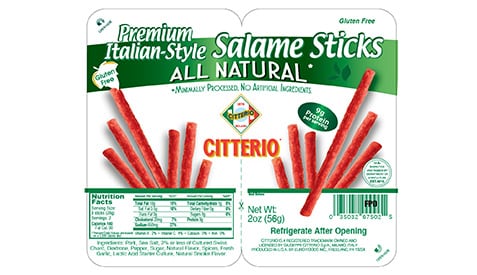
WASHINGTON, Oct. 29, 2021 – The U.S. Department of Agriculture’s Food Safety and Inspection Service (FSIS) is issuing a public health alert because Euro Foods, a Freeland, Penn. establishment, produced ready-to-eat (RTE) Italian-style salame stick products that may be contaminated with Salmonella. A recall was not requested because FSIS has not identified a specific contaminated lot or lots, and it is believed that potentially affected products are no longer available to be directly purchased by retail consumers.
The Italian-style salame stick items were produced prior to October 25, 2021. The following product is subject to the public health alert.
FSIS has been working with the Centers for Disease Control and Prevention (CDC) and state public health partners to investigate a multistate outbreak of 21 Salmonella I 4,[5],12:i:- illnesses in eight states with onset dates ranging from September 18, 2021 through October 3, 2021. The epidemiologic and traceback investigation identified that ill people consumed Citterio Italian-style Salame Sticks produced by Euro Foods Inc. FSIS continues to work with federal and state public health partners to determine if there are additional illnesses linked to these products.
Posted in food bourne outbreak, food contamination, food handler, Food Hazard, Food Hygiene, Food Illness, Food Inspections, Food Micro Blog, Food Microbiology, Food Microbiology Blog, Food Microbiology Testing, Food Pathogen, food recall, Food Safety, Food Safety Alert, Food Testing, foodborne outbreak, foodbourne outbreak, outbreak, Salmonella
This afternoon, the Roanoke City and Alleghany Health Districts (RCAHD) announced that they learned that a third adult who was hospitalized with complications has died from hepatitis A. The RCAHD will disclose no further information about the individual to protect privacy and out of respect for the family.
“It is always with extreme sadness that we report the death of an individual,” said RCAHD health director, Cynthia Morrow, MD, MPH. “This heartbreaking loss of life illustrates how serious this outbreak is. Unfortunately, in this situation, we have seen many individuals experiencing severe disease, and in some cases, their symptoms have continued to progress over weeks.”
Hepatitis A is a preventable disease. RCAHD urges everyone to consistently practice good hand washing and to consider getting vaccinated, especially if they fall into a high-risk population.
At this time, RCAHD staff have identified a total of 49 confirmed primary cases, including 31 hospitalizations. A small number of cases are still under investigation. No new cases have been reported to RCAHD this week.
Posted in food bourne outbreak, food contamination, food death, food handler, Food Hazard, Food Hygiene, Food Illness, Food Inspections, Food Micro Blog, Food Microbiology, Food Microbiology Blog, Food Microbiology Testing, Food Pathogen, food recall, Food Safety, Food Safety Alert, Food Testing, Food Virus, foodborne outbreak, foodbourne outbreak, Hepatitis A, outbreak, Virus
Ottawa, October 29, 2021 – The food recall warning issued on October 28, 2021 has been amended to correctly identify the affected products. The corrections for these products are marked by an asterisk (*). This additional information was identified during the Canadian Food Inspection Agency’s (CFIA) food safety investigation.
Industry is recalling Dorsey brand, MVP brand, Pier-C brand, and Riga Farms brand Onions, Product of Mexico from the marketplace due to possible Salmonella contamination. Consumers should not consume the recalled products described below or foods containing these raw onions. Retailers, distributors, manufacturers, and food service establishments such as hotels, restaurants, cafeterias, hospitals, and nursing homes should not serve, use, or sell the recalled products described below.
The following products have been sold in Ontario, Quebec, Nova Scotia, and may have been distributed in other provinces and territories.
These products may also have been sold in bulk or in smaller packages with or without a label and may not bear the same brand or product names as described below. The CFIA will continue its investigation into other possible importers and additional recalls may follow.
| Brand | Product | Size | UPC | Codes | Additional information |
|---|---|---|---|---|---|
| Dorsey | Yellow Onions | Mesh sacks: 10 lb / 4.54 kg |
0 33383 60004 8* | None – all products sold between July 7, 2021 and October 28, 2021, inclusively. | Product of Mexico |
| MVP | Yellow Onions | 50 lb / 22.7 kg | None | 197* 208* 221* |
Product of Mexico |
| Pier-C | White Onions | 2 lb / 0.907 kg | 0 33383 60051 2 | 203* 209* 218* 228* |
Product of Mexico. These onions may have been sold loose. |
| Pier-C | White Onions | 25 lb | 0 33383 45101 5* | 214* 215* 217* 221* 223* 224* 228* |
Product of Mexico. These onions may have been sold loose. |
| Pier-C | Yellow Onions | 25 lb | 0 33383 45095 7* | 204* 210* |
Product of Mexico. These onions may have been sold loose. |
| Pier-C | Yellow Onions | 40 lb /18.15 kg | None | 204* 208* 209* 210* |
Product of Mexico. These onions may have been sold loose. |
| Riga Farms | Yellow Onions | 3 lbs / 1.36 kg | 0 33383 60002 4 | 321621 323521 323621* |
Product is labelled as Product of USA, although the onions are Product of Mexico |
If you think you became sick from consuming a recalled product, call your doctor.
Check to see if you have the recalled products in your home or establishment. Recalled products should be thrown out or returned to the location where they were purchased. If you are unsure of the identity of the onions in your possession, check with your place of purchase.
This recall was triggered by recalls in another country by Prosource Produce LLC of Hailey, Idaho and by Keeler Family Farms of Deming, NM. The CFIA is conducting a food safety investigation, which may lead to the recall of other products. If other high-risk products are recalled, the CFIA will notify the public through updated Food Recall Warnings.
The CFIA is verifying that industry is removing the recalled products from the marketplace.
There have been no reported illnesses in Canada associated with the consumption of these products.
Posted in CFIA, food bourne outbreak, food contamination, food handler, Food Hazard, Food Hygiene, Food Illness, Food Inspections, Food Micro Blog, Food Microbiology, Food Microbiology Blog, Food Microbiology Testing, Food Pathogen, food recall, Food Safety, Food Safety Alert, Food Testing, Foodborne Illness, foodborne outbreak, foodbourne outbreak, outbreak, Salmonella, Salmonella in Onions

| GTIN | Lot | Dated |
|---|---|---|
| 3324031661014 | 2128741 | Use-by date 11/28/2021 |

Fratelli Beretta brand prepackaged Uncured Antipasto trays
Products have the establishment number “EST. 7543B” inside the U.S. Department of Agriculture’s mark of inspection. See recall noticeexternal icon for more details.
Additionally, CDC continues to advise people not to eat any Fratelli Beretta brand Uncured Antipasto trays with “best by” dates on or before February 11, 2022.
Check your fridge for recalled products or any other Fratelli Beretta brand Uncured Antipasto trays with “best by” dates on or before February 11, 2022. If you have any left:
Always follow these four food safety steps to prevent getting sick from Salmonella:
Fast Facts
Posted in food bourne outbreak, food contamination, food handler, Food Hygiene, Food Illness, Food Inspections, Food Micro Blog, Food Microbiology, Food Microbiology Blog, Food Microbiology Testing, Food Pathogen, food recall, Food Safety, Food Safety Alert, Food Testing, foodborne outbreak, foodbourne outbreak, outbreak, Salmonella
Do not eat, sell, or serve Citterio brand Premium Italian-Style Salame Sticks. They were sold at Trader Joe’s and Wegmans and may be sold at other grocery stores. This outbreak is especially concerning because most of the sick people are younger than 18.
Fast Facts
Contaminated Food
Citterio brand Premium Italian-Style Salame Sticks
Fifteen people were interviewed about foods they ate before getting sick, and fourteen (93%) reported eating or maybe eating this product. Investigators are still working to determine if additional products may be contaminated.What You Should Do
What Businesses Should Do
Symptoms of Salmonella
Posted in food bourne outbreak, food contamination, food handler, Food Hazard, Food Hygiene, Food Illness, Food Micro Blog, Food Microbiology, Food Microbiology Blog, Food Microbiology Testing, Food Pathogen, food recall, Food Safety, Food Safety Alert, Food Testing, foodborne outbreak, foodbourne outbreak, outbreak, Salmonella, Uncategorized

ReformKontor GmbH & Co. KG
Distributor: ReformKontor GmbH & Co. KG, Ernst-Litfaß-Str. 16, 19246 Zarrentin
Detection of Salmonella spp.
Salmonella disease manifests itself within a few days after infection with diarrhea, abdominal pain and occasionally vomiting and a slight fever. The symptoms usually subside on their own after several days. Infants, toddlers, the elderly and people with a weakened immune system in particular can develop more severe disease processes. People who have eaten this food and develop severe or persistent symptoms should seek medical attention and advise them of a possible salmonella infection. Seeking preventive medical treatment without symptoms does not make sense.
A case of listeriosis occurred in a hospitalised patient in England in July 2017. Analysis by whole genome sequencing of the Listeria monocytogenes from the patient’s blood culture was identified as clonal complex (CC) 121. This culture was indistinguishable to isolates from sandwiches, salads and the maufacturing environment of Company X which supplied these products widely to the National Health Service. Whilst an inpatient, the case was served sandwiches produced by this company on 12 occasions. No other cases infected by this type were detected in the UK between 2016 and 2020. Between 2016 and 2020, more than 3000 samples of food, food ingredients and environmental swabs from this company were tested. Listeria monocytogenes contamination rates declined after July 2017 from 31% to 0.3% for salads and 3% to 0% for sandwiches. A monophyletic group of 127 L. monocytogenes CC121 isolates was recovered during 2016–2019 and was used to estimate the time of the most recent common ancestor as 2014 (95% CI of between 2012 and 2016). These results represent persistent contamination of equipment, food contact surfaces and foods at a food manufacturer by a single L. monocytogenes strain. Colonisation and persistent contamination of food and production environments are risks for public health.
Posted in food bourne outbreak, food contamination, food handler, Food Hazard, Food Hygiene, Food Inspections, Food Micro Blog, Food Microbiology, Food Microbiology Blog, Food Microbiology Research, Food Microbiology Testing, Food Pathogen, food recall, Food Safety, Food Safety Alert, Food Testing, foodborne outbreak, foodbourne outbreak, Listeria, Listeria monocytogenes, outbreak, Research
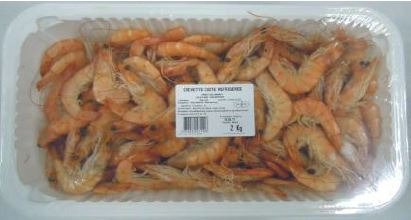
| GTIN | Lot | Dated |
|---|---|---|
| 3760082430665 | 9212920478 | Use-by date 10/29/2021 |
Posted in food contamination, food handler, Food Hazard, Food Hygiene, Food Inspections, Food Micro Blog, Food Microbiology, Food Microbiology Blog, Food Microbiology Research, Food Microbiology Testing, Food Pathogen, food recall, Food Safety, Food Safety Alert, Food Testing, Listeria, Listeria monocytogenes


