Category Archives: food death

South Africa – One Year Ago – Tiger Brands polony linked to South Africa Listeria outbreak

Food Safety News

Food Safety News Article on the outbreak.


Research – Study: Food-borne diseases cost India $15 billion a year

Times of India

NEW DELHI: Unsafe food still costs India as high as $15 billion annually, even though it has almost halved from $28  billion estimated last year, a recent World Bank report says underlining the “unnecessarily high” economic burden caused by food borne diseases.


India – Food poisoning: One dead, 9 serious

The Daily Pioneer

A person died and nine others were taken ill reportedly due to food poisoning at Nuagaon village under Patana block of Keonjhar district on Tuesday night.

The victims complained of uneasiness after having their dinner, following which they were initially admitted to the District Headquarters Hospital and later shifted to the SCB Medical College Hospital in Cuttack. However, one of them died on the way to Cuttack. The deceased was identified as 22-year-old Manas Nayak of the village.

Sources said eight of the victims had been engaged in decoration work of a wedding ceremony in a family, which was scheduled to take place on Wednesday. Three members of the concerned family are also undergoing treatment at the hospital after consuming the food. Police started investigation into the matter.

USA- Outbreak of Multidrug-Resistant Salmonella Infections Linked to Raw Chicken Products Final Update

CDC

Final Outbreak Information
At A Glance
  • As of February 21, 2019 this investigation is over.
  • A total of 129 people infected with the outbreak strain of Salmonella Infantis were reported from 32 states.
    • Twenty-five people were hospitalized. One death was reported from New York.
  • Epidemiologic and laboratory evidence indicated that many types of raw chicken products from a variety of sources are contaminated with Salmonella Infantis and are making people sick.
    • In interviews, ill people reported eating different types and brands of chicken products purchased from many different locations.
    • The outbreak strain was identified in samples taken from raw chicken products, raw chicken pet food, and live chickens.
  • Antibiotic resistance testing conducted by CDC on Salmonella bacteria isolated from ill people showed that the outbreak strain is resistant to multiple antibiotics. For more information read the advice to clinicians.
  • A single, common supplier of raw chicken products or of live chickens was not identified.
  • The outbreak strain of Salmonella Infantis is present in live chickens and in many types of raw chicken products, indicating it might be widespread in the chicken industry. CDC and USDA-FSIS shared this information with representatives from the chicken industry and requested that they take steps to reduce Salmonella contamination.

Spain – Investigation opens into Michelin restaurant death and food poisonings

The Guardian

A Spanish judge has launched an investigation into the death of a woman who had eaten at a Michelin-starred restaurant now at the centre of a major food poisoning outbreak.

The 46-year-old woman, who has not been named, died in the early hours of Sunday after having a meal with her husband and son at the Riff restaurant in the eastern city of Valencia.

Regional health authorities say 30 people – including the woman, her husband and son – fell ill with food poisoning after eating at Riff between 13 and 16 February. The woman’s husband and son are recovering.

A judge in Valencia has opened an inquiry into the death and is awaiting the results of a postmortem and an analysis of samples taken from the restaurant.

The regional high court told the Europa Press news agency that no individuals were currently under investigation.

Australia – Elderly woman dies of Listeria infection as authorities warn thousands at risk

The Age

A woman has died and thousands of people are at risk of listeria infection after the bacteria was detected in food from a south-east Melbourne catering company that supplies food to hospitals, aged care homes and Meals on Wheels.

The catering service I Cook Foods has been shut down after the woman, who was aged in her 80s and from the eastern suburbs, died in Knox Private Hospital on February 4.

The woman contracted a listeria-related illness while in hospital after being admitted for an unrelated condition in late January, a health department spokesman said.

Six positive samples of listeria were found at the company’s Dandenong South kitchen during an investigation into the cause of the woman’s death over the past two weeks.

USA – Raw Turkey Salmonella Reading Outbreak Grows to 279 Sick

Food Poisoning Bulletin Salm2

The raw turkey Salmonella Reading outbreak has grown to include 279 sick people, according to an update by the Centers for Disease Control and Prevention (CDC). Of those patients, 107 people have been hospitalized, and one person who lived in California has died.

That’s an addition of 63 more people from 24 states and the District of Columbia. Illness onset dates range form November 20, 2017 to January 29, 2019. The patient age range is from less than 1 year to 101. Forty-eight percent of patients have been hospitalized.

RASFF Alerts – Listeria monocytogenes – Cheese Spread with Pesto and Old Grinded Cheese -Chilled Beef -Chilled Smoked Salmon

RASFF-Logo

RASFF – Listeria monocytogenes (presence /25g) in cheese spread with pesto and old grinded cheese from Belgium in Belgium

RASFF – Listeria monocytogenes (present /25g) in chuck tender devesa – chilled beef from Argentina, via Italy in the Netherlands

RASFF – Listeria monocytogenes (<25 CFU/g) in beef from Uruguay in the Netherlands

RASFF – Listeria monocytogenes (<10 CFU/g) in chilled smoked salmon from Latvia, via Denmark in Italy

RASFF – Listeria monocytogenes (<10 CFU/g) in chilled sliced smoked salmon from Denmark in Italy

RASFF – Listeria in chilled beef from Uruguay, processed in Italy in the Netherlands


Research – Differences Among Incidence Rates of Invasive Listeriosis in the U.S. FoodNet Population by Age, Sex, Race/Ethnicity, and Pregnancy Status, 2008–2016

Mary Ann Leibert listeria

Listeria monocytogenes is a foodborne pathogen that disproportionally affects pregnant females, older adults, and immunocompromised individuals. Using U.S. Foodborne Diseases Active Surveillance Network (FoodNet) surveillance data, we examined listeriosis incidence rates and rate ratios (RRs) by age, sex, race/ethnicity, and pregnancy status across three periods from 2008 to 2016, as recent incidence trends in U.S. subgroups had not been evaluated. The invasive listeriosis annual incidence rate per 100,000 for 2008–2016 was 0.28 cases among the general population (excluding pregnant females), and 3.73 cases among pregnant females. For adults ≥70 years, the annual incidence rate per 100,000 was 1.33 cases. No significant change in estimated listeriosis incidence was found over the 2008–2016 period, except for a small, but significantly lower pregnancy-associated rate in 2011–2013 when compared with 2008–2010. Among the nonpregnancy-associated cases, RRs increased with age from 0.43 (95% confidence interval: 0.25–0.73) for 0- to 14-year olds to 44.9 (33.5–60.0) for ≥85-year olds, compared with 15- to 44-year olds. Males had an incidence of 1.28 (1.12–1.45) times that of females. Compared with non-Hispanic whites, the incidence was 1.57 (1.18–1.20) times higher among non-Hispanic Asians, 1.49 (1.22–1.83) among non-Hispanic blacks, and 1.73 (1.15–2.62) among Hispanics. Among females of childbearing age, non-Hispanic Asian females had 2.72 (1.51–4.89) and Hispanic females 3.13 (2.12–4.89) times higher incidence than non-Hispanic whites. We observed a higher percentage of deaths among older patient groups compared with 15- to 44-year olds. This study is the first characterizing higher RRs for listeriosis in the United States among non-Hispanic blacks and Asians compared with non-Hispanic whites. This information for public health risk managers may spur further research to understand if differences in listeriosis rates relate to differences in consumption patterns of foods with higher contamination levels, food handling practices, comorbidities, immunodeficiencies, health care access, or other factors.

Information – How Is HUS Diagnosed After an E. coli Infection?

Food Poisoning Bulletin

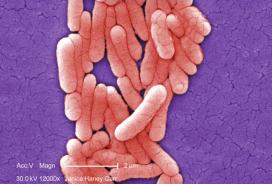
CDC E.coli

Image CDC

Hemolytic uremic syndrome, or HUS, is one of the most serious complications of any foodborne illness infection. It is caused by misshapen red blood cells that are created when Shiga toxins produced by E. coli bacteria travel through the bloodstream to the kidneys.

The destroyed blood cells clog the glomeruli, which are tiny tubes in the kidneys. The kidneys can shut down, and some patients experience kidney failure.

One of the worst things about this complication is that most patients are children under the age of 5, who have no choice in what they are given to eat or drink.

Symptoms of HUS include little to no urine output (oligoanuria), lethargy, pale skin, a skin rash, and bleeding from the nose or mouth. If someone is experiencing these symptoms, it’s critical that they are taken to a doctor immediately. Many of these patients are hospitalized for palliative and supportive care.

Hemolytic uremic syndrome is often diagnosed by these symptoms and the timing of symptoms. An E. coli infection usually starts three to four days after exposure to the pathogen. HUS symptoms usually begin about four days after E. coli infection symptom onset.