Category Archives: food contamination

USA – FSIS Issues Public Health Alert for Empire Kosher Poultry, Inc. Raw Chicken Products due to Possible Salmonella Contamination

USDA USDA

WASHINGTON, August 24, 2018 – The U.S. Department of Agriculture’s Food Safety and Inspection Service (FSIS) and Empire Kosher Poultry, Inc. are issuing a public health alert out of an abundance of caution due to concerns about Salmonella illnesses reported in the northeastern and mid-Atlantic United States that may be associated with raw chicken products.

The Empire Kosher brand raw chicken items, which may include raw whole chicken, raw chicken parts, were produced and sold to consumers from September 2017 to June 2018.

On June 18, 2018, FSIS was notified of multiple Salmonella I 4,[5],12:i:- illnesses within the northeastern  and mid-Atlantic United States. Working in conjunction with public health partners, FSIS determined that there is a potential link between Empire Kosher brand raw chicken products and this illness cluster. Based on available epidemiological information, multiple case-patients have been identified in the northeastern and mid-Atlantic United States, many of whom reported consumption of Empire Kosher brand chicken products. Approximately half of affected case-patients have been hospitalized due to illness with illness onset dates ranging from September 2017 to June 2018. FSIS continues to work with the company and public health partners and will provide updated information should it become available.
Canada – Food Recall Warning – Certain Greenbelt Microgreens brand microgreens recalled due to Listeria monocytogenes

CFIA

Recall details

Ottawa, August 25, 2018 – Greenbelt Greenhouse Ltd. is recalling certain Greenbelt Microgreens brand microgreens from the marketplace due to possible Listeria monocytogenes contamination. Consumers should not consume the recalled products described below.

Recalled products

Brand Name Common Name Size Code(s) on Product UPC
Greenbelt Microgreens Broccoli Microgreens 75 g best before
08/26/18
8 90082 00016 2
Greenbelt Microgreens Spicy Microgreen Mix 75 g best before
08/28/18
8 90082 00000 1

Canada – Updated Food Recall Warning – Randsland brand Super Salad Kit recalled due to Listeria monocytogenes

CFIA

Recall details

Ottawa, August 26, 2018 – The food recall warning issued on August 16, 2018 has been updated to include additional product information. This additional information was identified during the Canadian Food Inspection Agency’s (CFIA) food safety investigation.

Randsland Farms Inc. is recalling Randsland brand Super Salad Kit from the marketplace due to Listeria monocytogenes. Consumers should not consume the recalled product described below.

Recalled products

Brand Name Common Name Size Code(s) on Product UPC
Randsland Super Salad Kit 454 g 083118 0 57225 00005 6

UK – Diamond Food Sales recalls frozen Indian mackerel due to presence of Histamine

FSA

Diamond Food Sales Ltd is recalling batches of frozen Indian mackerel due to the presence of Histamine.

Product details

FROZEN INDIAN MACKEREL WHOLE ROUND

Pack size Net Weight 630g Gross Weight 700 g
Batch code 7224208000553 (Barcode)
Best before FEBRUARY 2020
FROZEN MACKEREL HEADLESS 2 FOR 5.50

Pack size Net Weight 630g Gross Weight 700g
Batch code 7224209187499 (Barcode)
Best before 10 AUG 2019
INDIAN MACKEREL WHOLE 2 FOR £5

Pack size Net Weight 630g Gross Weight 700g
Batch code 7224209000927 (Barcode)
Best before 10 DEC 2019

No other Diamond Food Sales products are known to be affected.

Risk statement

High levels of Histamine can cause Scombrotoxin poisoning with symptoms resembling an allergic reaction, nausea, headache, vomiting, diarrhoea, itching, oral burning sensation, red rash, flushing of the face and hypotension.

Research – Multilocus Sequence Subtypes of Campylobacter Detected on the Surface and from Internal Tissues of Retail Chicken Livers

Journal of Food Protection 

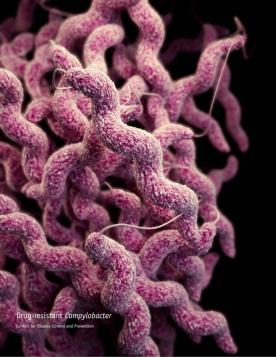
campy2

Foodborne campylobacteriosis has been traced to undercooked chicken liver. The objectives of this study were to determine the prevalence of Campylobacter associated with chicken livers at retail and to determine which subtypes are detected on the surface and in the internal tissues of the livers. Fifteen packages of fresh chicken livers, each representing a unique combination of processing plant and sell-by date, were collected at each of three retail grocery stores in Georgia. Three intact, undamaged livers per container (n = 45) were selected and sampled using each three methods: outside swab, inside swab accessed by pressing through a heat-sterilized outer surface, and whole liver blended in enrichment broth. Each liver sample with 0.1 mL of exudate from packages was cultured for Campylobacter by plating on Campy-Cefex agar. The most prevalent Campylobacter colony type from each positive sample was subjected to whole genome sequencing and multilocus sequence typing. Campylobacter was detected in at least one sample from every package. Surface swabs were positive for 29 of 45 livers, but significantly fewer swabs of internal tissue were positive, 14 of 45 (P < 0.01). Campylobacter was detected in 30 of 45 blended whole liver samples. Multiple subtypes were detected from eight livers. In four livers, a different subtype was dominant on the surface than was dominant internally. In one liver, three subtypes were detected. Various subtypes of Campylobacter can be readily isolated from fresh retail chicken livers; therefore, undercooked chicken livers pose a food safety risk.

Research – Fungal diversity and frequency carried by housefly (Musca domestica L.) and their relation with stored grains in rural areas of Pakistan

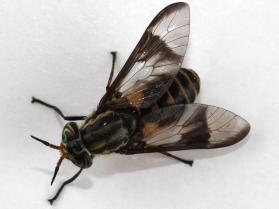
Wiley Online fly

Abstract

Housefly (Musca domestica L.) contaminates food by transferring microbes. Fungi carried by houseflies cause postharvest losses by food spoilage produce mycotoxins and spread various infectious diseases in human beings and animals. This study was planned to determine the diversity and frequency of fungal species carried by houseflies and their relation with stored grains. Houseflies in the vicinity of stored wheat and rice grains were collected from the rural areas of four districts of Pakistan. Overall, 897, 631, and 687 fungal species were isolated from houseflies, rice, and wheat grains, respectively. Aspergillus and Fusarium species followed by Alternaria and Penicillium species were found dominant in houseflies, rice, and wheat grains. Correlation analyses revealed a significant association between most of the fungal species isolated from houseflies, wheat, and rice grains. The study concludes that a strong correlation of fungi exists between stored grains and houseflies around the unhygienic storage places.

Practical applications

It is highly important to understand the role of houseflies in spreading various fungal species to stored grains, particularly in our persisting rural grain storage system. Our study is first of its kind in which we have studied the correlation of fungal diversity and abundance between houseflies, wheat, and rice grains stored in the same vicinity/place/house. Our findings show a strong correlation in fungal diversity and abundance, isolated from flies and stored grains. This study demonstrates the role of houseflies in the dispersal of various fungal species to contaminate the stored grains. Therefore, appropriate measures should be taken to control the houseflies or their entrance to store houses. There is a strong need to give awareness and improve the grain storage system in houses, especially in rural areas, by food regulating authorities.

Sweden – E. coli update: 80 confirmed cases

Outbreak News Today 


CDC E.coliIn a follow-up on the E. coli O157:H7  outbreak  in Sweden,  the Norwegian Public Health Authority  is now reporting 80 confirmed cases and approximately 50 suspect cases to date, according to a Folkhalsomyndigheten news release this week (computer translated).

The cases have been reported from several counties, but mostly from Uppsala and Västra Götaland.

RASFF Alerts – Salmonella – Cardomon Powder – Chicken Meat – Sesame Seeds – White Sesame Seeds – Anise Powder – Gelatine – Chicken Legs – Turkey Breast Fillets – Liquid Eggs – Raw Eggs

kswfoodworld food safety poisoning

RASFF-Salmonella enterica ser. Agona (present /25g) in fresh and frozen chicken meat from Lithuania in Lithuania

RASFF-Salmonella (presence /25g) in sesame seeds from Uganda in Germany

RASFF-Salmonella (presence /25g) in sesame seeds from Uganda in Germany

RASFF-Salmonella (presence /25g) in white sesame seeds from Nigeria in Poland

RASFF-Salmonella (present /25g) in anise powder from Spain in Germany

RASFF-Salmonella enterica ser. Typhimurium (presence /25g) in gelatine from Germany, packaged in Italy in Italy

RASFF-Salmonella (presence /25g) in sesame seeds from Uganda in Germany

RASFF-Salmonella enterica ser. Enteritidis (presence /25g) in frozen boneless chicken legs from Poland in Croatia

RASFF-Salmonella enterica ser. Typhimurium monophasic (1 ,4, [5], 12:i:-) (presence /25g) in chilled turkey breast fillets from Poland in Belgium

RASFF-Salmonella group D (1out of 5 samples /25g) in liquid eggs from the Netherlands in the Netherlands

RASFF-Salmonella (presence /25g) in white sesame seeds from Nigeria, via Lebanon in Poland

RASFF-Salmonella enterica ser. Enteritidis (present /25g) in raw eggs from Malta in Malta

RASFF-Salmonella in organic cardamom powder from Guatemala in the Netherlands

RASFF Alerts – Listeria monocytogenes – Cooked Prawns – Smoked Salmon – Cooked Falafel – Bacon

kswfoodworld food safety poisoning

RASFF-Listeria monocytogenes (presence /25g) in cooked prawns from Spain in Croatia

RASFF-Listeria monocytogenes (present /25g) in smoked Norwegian salmon from the Netherlands in the Netherlands

RASFF-Listeria monocytogenes (> 1500 CFU/g) in chilled pre-cooked falafel from France in France

RASFF-Listeria monocytogenes (<10 CFU/g) in bacon from Italy in France

RASFF Alert- Ochratoxin A – Organic Oats

kswfoodworld food safety poisoning

RASFF-ochratoxin A (69 µg/kg – ppb) in organic oats from the Czech Republic in Germany