Category Archives: escherichia coli

RASFF Alerts – STEC E.coli – Reblochon Cheese- Veal Meat – Lamb Loins

RASFF

Escherichia coli shiga toxin-producing in Reblochon cheese from France in Austria and Germany

RASFF

E.coli STEC (Stx+) in veal meat from Belgium, Czech Republic, Germany, Greece, Hungary, Italy, Portugal, Slovenia and Spain.

RASFF

Escherichia coli (STEC) in frozen lamb loins from New Zealand in Italy

Research – Effects of Combined Aerosolization with Ultraviolet C Light-Emitting Diode on Enterohemorrhagic Escherichia coli and Staphylococcus aureus Attached to Soft Fresh Produce

MDPI

Washing soft fresh produce such as strawberries, baby leaves, and sliced onions with sanitizing agents is challenging due to their fragile texture. Thus, treatments like aerosolization using slightly acidic electrolyzed water (SAEW) and ultraviolet C light-emitting diode (UVC LED) irradiation may be good alternatives. In the present study, the reduction effects of a combined treatment of aerosolization using SAEW and UVC LED irradiation on enterohemorrhagic Escherichia coli (EHEC) and Staphylococcus aureus attached to strawberries, baby leaves, and sliced onions were investigated. The behaviours of EHEC and S. aureus, moisture loss, colour measurement, and visual appearance were also analyzed at 10 and 15 °C for 7 days. The reduction effect of the combined treatment with 100 SAEW and UVC LED was higher (0.53–0.92 log CFU g−1) than a single aerosolization treatment (0.11–0.41 log CFU g−1), regardless of samples or pathogens. A greater effect on EHEC and S. aureus reduction was observed in strawberries (0.74 and 0.92 log CFU g−1) than in baby leaves (0.62 and 0.53 log CFU g−1) and sliced onions (0.55 and 0.62 log CFU g−1). The combined treatment further reduced the EHEC and S. aureus populations in strawberries during 7 days of storage at 10 and 15 °C. However, the EHEC and S. aureus populations were maintained in baby leaves and sliced onions at 10 °C for 7 days. Additionally, the greatest effect on the maintenance of colour and appearance was obtained in the combined treatment. Since the combined treatment reduces EHEC and S. aureus populations and preserves visual quality, it could be expected to extend the shelf life of soft fresh produce at the retailer stage of the supply chain. View Full-Text

Research – Interaction of Escherichia coli with growing salad spinach plants

PubMed

In this study, the interaction of a bioluminescence-labeled Escherichia coli strain with growing spinach plants was assessed. Through bioluminescence profiles, the direct visualization of E. coli growing around the roots of developing seedlings was accomplished. Subsequent in situ glucuronidase (GUS) staining of seedlings confirmed that E. coli had become internalized within root tissue and, to a limited extent, within hypocotyls. When inoculated seeds were sown in soil microcosms and cultivated for 42 days, E. coli was recovered from the external surfaces of spinach roots and leaves as well as from surface-sterilized roots. When 20-day-old spinach seedlings (from uninoculated seeds) were transferred to soil inoculated with E. coli, the bacterium became established on the plant surface, but internalization into the inner root tissue was restricted. However, for seedlings transferred to a hydroponic system containing 10(2) or 10(3) CFU of E. coli per ml of the circulating nutrient solution, the bacterium was recovered from surface-sterilized roots, indicating that it had been internalized. Differences between E. coli interactions in the soil and those in the hydroponic system may be attributed to greater accessibility of the roots in the latter model. Alternatively, the presence of a competitive microflora in soil may have restricted root colonization by E. coli. The implications of this study’s findings with regard to the microbiological safety of minimally processed vegetables are discussed.

RASFF Alert – E.coli – Mussels

RASFF

E.coli in live mussels from France in Austria and Germany

USA – Portillo’s in Glendale Heights linked to E. coli outbreak

Food Poison Journal

The Chicago Tribune reported todays that the Illinois Department of Public Health is looking into whether a recent E. coli outbreak is linked to a Portillo’s in Glendale Heights, authorities said Friday.

Four cases of a toxin producing the bacteria and one case of a resultant blood syndrome stemmed from customers eating at the Portillo’s at 235 E. North Ave. in Glendale Heights on July 16 and 17, IDPH wrote in a health alert.

The “possible issue” came from four customers during that time period, Portillo’s spokeswoman Sara Wirth wrote in a Saturday statement. She said the company reexamined its food safety protocols after learning of the outbreak.

USA – FDA begins testing cake mixes in search of specific product in E. coli outbreak

Food Safety News

They have not yet named any specific brands or flavors of cake mix related to an outbreak of E. coli infections, but federal officials have begun product testing in relation to the illnesses.

Sixteen people across 12 states have been confirmed as being infected, with seven requiring hospitalization, according to the Centers for Disease Control and Prevention. Illnesses began Feb. 26 with the most recent one beginning June 21. 

More patients will likely be identified, according to federal officials because of the long shelf life of cake mixes and the time lag between when a person becomes ill and when the illness is confirmed and reported to the CDC.

The Food and Drug Administration has been working with the CDC on the outbreak investigation and reported on Aug. 4 that the agency has begun product testing. The FDA has also initiated traceback efforts and onsite inspections. However no producer or specific products have been named by the FDA or CDC.

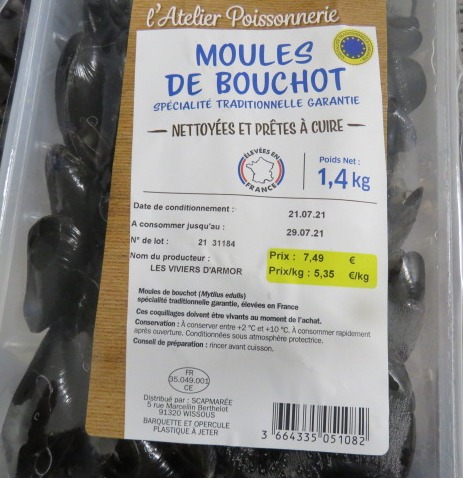
France – Mussels BOUCHOT ATELIER EL / FR 1.4K – E.coli

Gov france

Identifying information for the recalled product

  • Product category Food
  • Product sub-category Fishery and aquaculture products
  • Product brand name Private label L’ATELIER POISSONNERIE
  • Names of models or references FISH WORKSHOP
  • Product identification
    GTIN Lot Dated
    3664335051082 21 31251 Use-by date 08/04/2021
  • Packaging UVC 1.4KG
  • Start date / End of marketing From 07/29/2021 to 08/02/2021
  • Storage temperature Product to be stored in the refrigerator
  • Further information Moules de Bouchot Atelier from Viviers d’Armor
  • Geographical sales area Whole France
  • Distributors Scapmaree E.LECLER
  • List of points of saleSelling_points_liste.pdf

Practical information regarding the recall

  • Reason for recall E. coli non-compliant
  • Risks incurred by the consumer Escherichia coli
  • Consumer behaviour Stop consuming
    Contact the point of sale
  • Sanitary recommendation Escherichia coli can cause within 3 days of consumption, gastroenteritis marked by abdominal pain and diarrhoea (possibly accompanied by blood), with or without fever. People who have consumed the products mentioned above and who present this type of symptoms are invited to consult their doctor without delay, informing him of this consumption and the nature of the contaminating germ.
  • Contact number0299895686
  • Compensation modalities Repayment
  • End date of the recall procedure Tuesday, August 17, 2021

Germany – Camembert de Normandie AOP Marie Harel au lait cru, 250 g Trademark: Marie Harel -STEC E.coli

LMW

Warning type: Food
Date of first publication: 08/04/2021
Product name:

Camembert de Normandie AOP Marie Harel au lait cru, 250 g Trademark: Marie Harel

Product pictures:

Unnamed.PNG

Gillot SAS

Manufacturer (distributor): Gillot SAS company
Reason for warning:

due to suspected contamination with undesired bacteria (Escherichia coli, STX1-Gen, STEC) these products will be withdrawn from sale

Packaging Unit: 250 g
Durability: 08/07/2021
Lot identification: Batch number: 161311
Additional Information: Reference is made to the company’s customer information sheet attached.
Contact to the responsible authorities:

Baden-Württemberg: poststelle@mlr.bwl.de

Bavaria: poststelle@lgl.bayern.de
Brandenburg:Konsumenterschutz@Msgiv.Brandenburg.de
Hamburg:poststelle@justiz.hamburg.de
Hesse:Schnellwarnung@rpda.hessen.de
Mecklenburg-Western Pomerania:poststelle@lm.mv-regierung.de
Rhineland-Palatinate:Poststelle.Referat22@lua.rlp.de
Saxony-Anhalt:poststelle@ms.sachsen-anhalt.de
Press releases and information
title Attachment or web link
Customer information

Belgium – Bouchot mussels from the “Les Viviers d’Armor” brand – E.coli

AFSCA

Recall of Cora
Product: Bouchot mussels from the “Les Viviers d’Armor” brand.
Problem: Presence of Escherichia Coli.

As part of a check carried out by our supplier, the presence of Escherichia coli was detected in the Bouchot mussels of the “Les Viviers d’Armor” brand.

Health stamp: FR 35.049.001 CE
Brand: Les viviers d’Armor
Batch number: 21-31251 Use-by
date (DLC): 04/08/2021
Weight: 1.4 kg

The product has been distributed via Cora La Louvière (7100), Châtelineau (6200), Hornu (7301), Rocourt (4000).

CORA has decided, in agreement with the AFSCA (Federal Agency for the Safety of the Food Chain), to withdraw this product from sale. Customers who have purchased this product are asked not to consume it and return it to the point of sale, where they will be reimbursed.

People who have consumed the above-mentioned product and who present symptoms of gastrointestinal disorders are invited to consult their doctor, notifying him of this consumption as well as the place and date of purchase.

In the meantime, the product has been removed from the shelves of all stores and a ‘Customer reminder’ poster is displayed in our points of sale.

We sincerely apologize to our customers for this inconvenience and assure them that the most effective measures will be taken to avoid this type of incident.

Les Viviers d’Armor remains available to provide you with any additional information if necessary, by email to qualite@kerber.fr or by phone at +33 (0) 2.99.89.56.86

Research – Characterisation of multidrug resistant Escherichia coli isolated from two commercial lettuce and spinach supply chains

Journal of Food Protection

ABSTRACT Leafy green vegetables have increasingly been reported as a reservoir of multidrug-resistant pathogenic Enterobacteriaceae; with Shiga toxin- producing Escherichia coli frequently implicated in disease outbreaks worldwide.  This study aimed to determine the presence and characteristics of antibiotic resistance, diarrheagenic virulence genes and phylogenetic groupings of E. coli isolates (n=51) from commercially produced lettuce and spinach from the farm, through processing and at the point of sale.  Multidrug resistance was observed in 33 of the 51 E. coli isolates (64.7%); with 35.7% (n=10/28) being generic and 100% (n=23/23) Extended Spectrum β-lactamase/AmpC- producing.  Resistance of E. coli isolates was observed against neomycin (100%; n=51/51), ampicillin (70.6%; n=36/51), amoxycilin (68.6%; n=35/51), tetracycline (45%; n=23/51), trimethoprim/ sulfamethoxazole (43%; n=22/51), chloramphenicol (25.5%; n=13/51), augmentin (11.8%; n=6/51) and gentamicin (7.8%; n=4/51); with 100% (n=51/51) susceptibility to imipenem. Virulence gene eae was detected in two E. coli isolates from irrigation water sources only, while none of the other virulence genes tested for were detected.   Most of the E. coli strains belonged to phylogenetic group B2 (25.5%; n=13), B1 (19.6%; n=10) and A (17.6%; n=9); with D (5.9%; n=3) less distributed. Although diarrheagenic E. coli were not detected, antibiotic resistance in E. coli prevalent in the supply chain was evident. Additionally, a clear link between E. coli isolates from irrigation water sources and leafy green vegetables through DNA fingerprinting was established which indicates the potential transfer of E. coli from irrigation water to minimally processed leafy green vegetables.