Category Archives: E.coli

RASFF Alert- E.coli – Live Clams

RASFF

E.coli in live clams from Italy in Spain

New Zealand- Cheeses recalled due to possible presence of E. coli

MPI

New Zealand Food Safety is supporting Waimata Cheese Company Limited in its recall of a specific batch of its Camembert and Brie Cheeses due to the possible presence of E. coli.

The following products with batch number 8367 and a best before date of 28/02/24 are affected by this recall:

  • Waimata Cheese brand Camembert
  • Longbush Camembert
  • Longbush Brie.

Up-to-date details of products affected by the recall, including photographs, are available on our food recall page.

“The concern with these cheeses is that there may be E. coli bacteria present,” says New Zealand Food Safety’s acting deputy director general Jenny Bishop.

“Symptoms of sickness caused by E. coli include stomach cramps and diarrhoea. Some people feel sick and vomit.

“Most people get better within 5 to 7 days, but the effects can be serious for people with weakened immune systems, including the very young, frail older people, people with weakened immune systems and pregnant people.

E. coli can travel easily and fast from person to person if infected people do not wash their hands properly.

“If you have consumed any of this product and are concerned for your health, contact your health professional, or call Healthline on 0800 61 11 16.

“Affected product should not be eaten. It can be returned to the place of purchase for a refund. Should you be unable to do this, throw it out.”

The recalled products are being removed from shelves at stores nationwide.

E. coli was discovered as a result of routine testing. New Zealand Food Safety has not received any notification of associated illness.

“As is our usual practice, New Zealand Food Safety will be working with Waimata Cheese Company Limited to understand how the contamination occurred and prevent its recurrence,” Ms Bishop said.

For further information and general enquiries, call Ministry for Primary Industries (MPI) on 0800 00 83 33 or email info@mpi.govt.nz

For media enquiries, contact the media team on 029 894 0328.

UK – Könecke Sp. Z.o.o recalls Yayla Sucuk (sausage) because of contamination with E. coli

FSA

Könecke Sp. Z.o.o is recalling Yayla Sucuk (sausage) because Shiga toxin-producing E. coli has been found in a batch of this product.

Product details

: Yayla Sucuk (sausage)
Pack size 200g
Batch code 10865984
Best before 14 January 2024, 26 January 2024, 23 February 2024 and 01 March 2024

Risk statement

Shiga toxin-producing E. coli has been found in a batch of the product listed above.

Symptoms caused by STEC organisms include severe diarrhoea (including bloody diarrhoea), abdominal pain, and sometimes haemolytic uremic syndrome, (HUS), a serious condition that can lead to kidney failure and can be fatal.

Action taken by the company

Könecke Sp. Z.o.o is recalling the above product. Point of sale notices will be displayed in stores where the product was sold. These notices explain to customers why the product is being recalled and tell them what to do if they have bought the product. Please see the attached photo of the product.

Our advice to consumers

If you have bought the above product do not eat it. Instead return it to the store from where it was bought for a full refund.

RASFF Alert- E.coli – Mussels

RASFF

Escherichia coli beyond limits (790MPN) in mussels (Mytilus galloprovincialis) from Italy in the UAE

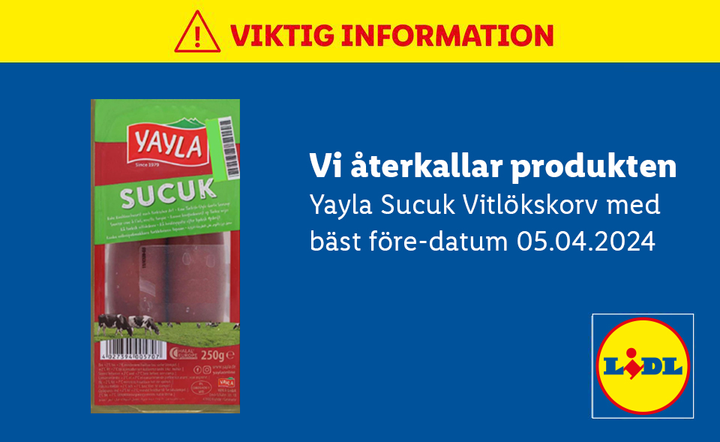
Lidl Sweden recalls Yayla Sucuk Garlic Sausage – risk of E-coli bacteria

Lidl

Lidl Sweden is recalling Yayla Sucuk Garlic Sausage

Lidl Sweden is recalling the branded product Yayla Suckuk Garlic Sausage. The supplier discovered during a routine check that the product may contain toxin-producing Escherichia coli (E-coli). The product may therefore pose a health risk and should not be consumed. The recall only affects Yayla Sucuk Garlic Sausage with a best before date: 05-04-2024.

Research – Most major pathogens see an increase in Ireland

Food Safety News

The number of E. coli, Salmonella, Campylobacter, and Listeria infections has gone up in Ireland, according to 2022 data from the Health Protection Surveillance Centre (HPSC).

During the COVID-19 pandemic, reporting rates for giardiasis, listeriosis, norovirus, rotavirus, salmonellosis, shigellosis, and toxoplasmosis in Ireland decreased compared to pre-pandemic levels. Still, rates for campylobacteriosis, cryptosporidiosis, E. coli, and yersiniosis increased or remained unchanged. In 2022, most of these diseases returned to or remained at pre-pandemic levels.

A 2021 cyber-attack at the Health Service Executive (HSE) also affected data validation and collection, reporting of enhanced data variables, and outbreak notification.

Research – Sporadic Shiga Toxin-Producing Escherichia coli-Associated Paediatric Haemolytic Uraemic Syndrome, France, 2012–2021

Sante Publique

Shiga toxin-producing Escherichia coli (STEC) bacteria cause a variety of symptoms, ranging from simple diarrhoea to bloody diarrhoea, and expose patients to an increased risk of serious complications, including haemolytic uraemic syndrome (HUS). HUS due to STEC infection can occur at any age, although it mainly affects children under the age of 5 and the elderly. Over the past decade, several outbreaks of food-borne STEC-HUS have received wide media coverage. For children, this illness remains a significant public health risk in France. Although ruminants (cows, sheep, goats, etc.) are the main reservoir of STEC bacteria, it is difficult to determine the source of contamination in sporadic infections due to the multiple possible modes of contamination (consumption of contaminated food or water, contact with ruminants or their contaminated environment, contact with an infected person, etc.).

Identifying geographic areas where there is a higher risk of sporadic STEC-HUS will help to improve our knowledge of the environmental risk factors associated with the geographic disparities. This was the objective of the study carried out by Santé publique France, in partnership with the National Reference Centre (Centre national de référence, CNR) for E. coli, at the Institut Pasteur, and its associated laboratory at the Robert Debré Teaching Hospital (Centre Hospitalier Universitaire Robert Debré), which was recently published in the journal Emerging Infectious Diseases.

CDC

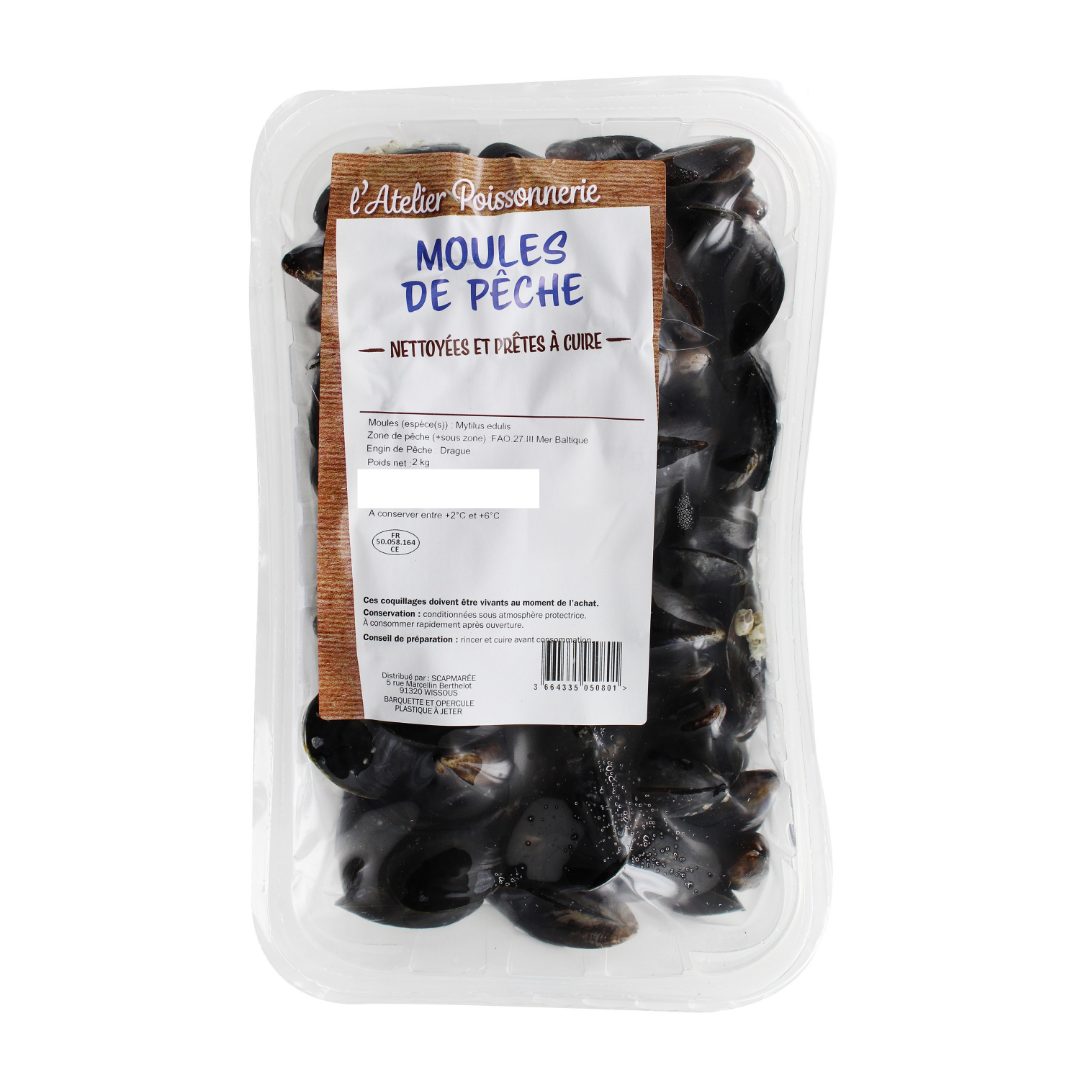
France – Mussels – FISHING MOLD FISH WORKSHOP P/ANE X2KG 6UVC PFX – E.coli

Gov France

Product category
Food
Product subcategory
Fishing and aquaculture products
Product brand name
FISH WORKSHOP
Model names or references
FISHING MOLD FISH WORKSHOP P/ANE X2KG 6UVC PFX
Product identification
GTIN Batch Date
3664335050801 J02SEA Use-by date 01/23/2024
Packaging
2KG tray
Start/end date of marketing
From 01/18/2024 to 01/23/2024
Storage temperature
Product to keep in the refrigerator
Health mark
FR 50.058.164 CE
Geographical sales area
Whole France
Distributors
E. Leclerc
List of points of sale
Store_list.pdf

Research – The Role of Flagellum and Flagellum-Based Motility on Salmonella Enteritidis and Escherichia coli Biofilm Formation

MDPI

Abstract

Flagellum-mediated motility has been suggested to contribute to virulence by allowing bacteria to colonize and spread to new surfaces. In Salmonella enterica and Escherichia coli species, mutants affected by their flagellar motility have shown a reduced ability to form biofilms. While it is known that some species might act as co-aggregation factors for bacterial adhesion, studies of food-related biofilms have been limited to single-species biofilms and short biofilm formation periods. To assess the contribution of flagella and flagellum-based motility to adhesion and biofilm formation, two Salmonella and E. coli mutants with different flagellar phenotypes were produced: the fliC mutants, which do not produce flagella, and the motAB mutants, which are non-motile. The ability of wild-type and mutant strains to form biofilms was compared, and their relative fitness was determined in two-species biofilms with other foodborne pathogens. Our results showed a defective and significant behavior of E. coli in initial surface colonization (p < 0.05), which delayed single-species biofilm formation. Salmonella mutants were not affected by the ability to form biofilm (p > 0.05). Regarding the effect of motility/flagellum absence on bacterial fitness, none of the mutant strains seems to have their relative fitness affected in the presence of a competing species. Although the absence of motility may eventually delay initial colonization, this study suggests that motility is not essential for biofilm formation and does not have a strong impact on bacteria’s fitness when a competing species is present.

Research – Antimicrobial Resistance in E. coli: A Growing Concern in Nile Tilapia Consumption

BNN Breaking

A recent study has found a high prevalence and alarming levels of antimicrobial resistance (AMR) in Escherichia coli (E. coli) found in Nile tilapia, a commonly consumed fish. The research analyzed 828 samples from different parts of the fish, including the flesh, liver, kidney, and intestine. Across the samples, high occurrences of fecal coliforms (61.6%) and E. coli (53.0%) were detected. The intestine samples showed the highest prevalence of E. coli at 71.4%, while the liver and kidney samples had a prevalence of 45.7%.