Category Archives: E.coli

Japan – 28 suffer food poisoning at MOS Burger restaurants E.coli O121

Mainichi 

CDC E.coli

TOKYO (Kyodo) — A total of 28 people have suffered food poisoning after dining at MOS Burger restaurants in Tokyo and other locations in Japan, the operator and other sources said.

Twelve of the 28 were infected with the same O-121 strain of E. coli bacteria, the Ministry of Health, Labor and Welfare said Friday.

Those affected had dined at 19 restaurants in eight prefectures in eastern and central Japan between Aug. 10 and 23, the operator, MOS Food Services Inc., said.

One of the restaurants in Ueda, Nagano Prefecture, suspended operations for three days through last Wednesday following an order from a local public health office, the company said.

“It is highly likely that (the illness) was caused by foodstuffs supplied (to the restaurants) by the headquarters of the chain,” it said.

Research – Escherichia coli ST131-H22 as a Foodborne Uropathogen

MBIO

ABSTRACT

Escherichia coli sequence type 131 (ST131) has emerged rapidly to become the most prevalent extraintestinal pathogenic E. coli clones in circulation today. Previous investigations appeared to exonerate retail meat as a source of human exposure to ST131; however, these studies focused mainly on extensively multidrug-resistant ST131 strains, which typically carry allele 30 of the fimH type 1 fimbrial adhesin gene (ST131-H30). To estimate the frequency of extraintestinal human infections arising from foodborne ST131 strains without bias toward particular sublineages or phenotypes, we conducted a 1-year prospective study of E. coli from meat products and clinical cultures in Flagstaff, Arizona. We characterized all isolates by multilocus sequence typing, fimH typing, and core genome phylogenetic analyses, and we screened isolates for avian-associated ColV plasmids as an indication of poultry adaptation. E. coli was isolated from 79.8% of the 2,452 meat samples and 72.4% of the 1,735 culture-positive clinical samples. Twenty-seven meat isolates were ST131 and belonged almost exclusively (n = 25) to the ST131-H22 lineage. All but 1 of the 25 H22 meat isolates were from poultry products, and all but 2 carried poultry-associated ColV plasmids. Of the 1,188 contemporaneous human clinical E. coli isolates, 24 were ST131-H22, one-quarter of which occurred in the same high-resolution phylogenetic clades as the ST131-H22 meat isolates and carried ColV plasmids. Molecular clock analysis of an international ST131-H22 genome collection suggested that ColV plasmids have been acquired at least six times since the 1940s and that poultry-to-human transmission is not limited to the United States.

IMPORTANCE E. coli ST131 is an important extraintestinal pathogen that can colonize the gastrointestinal tracts of humans and food animals. Here, we combined detection of accessory traits associated with avian adaptation (ColV plasmids) with high-resolution phylogenetics to quantify the portion of human infections caused by ST131 strains of food animal origin. Our results suggest that one ST131 sublineage—ST131-H22—has become established in poultry populations around the world and that meat may serve as a vehicle for human exposure and infection. ST131-H22 is just one of many E. coli lineages that may be transmitted from food animals to humans. Additional studies that combine detection of host-associated accessory elements with phylogenetics may allow us to quantify the total fraction of human extraintestinal infections attributable to food animal E. coli strains.

RASFF Alert – E.coli – Chilled Mussels

RASFF-Logo

RASFF-too high count of Escherichia coli (up to 1300 MPN/100g) in chilled mussels from Italy in Italy

UK – Egypt – E. coli ’caused Egypt hotel couple’s deaths’

BBC News

E. coli caused the deaths of a British couple who died after falling ill at a holiday resort in Egypt, the country’s authorities have said.

John Cooper, 69, and his wife Susan, 63, from Burnley, died in the Red Sea city of Hurghada on 21 August .

In an official statement, the Egyptian general prosecutor said post-mortem examinations showed E. coli bacteria was a factor in both deaths.

But the couple’s daughter described the findings as “absolute rubbish”.

Kelly Ormerod, who was at the Steigenberger Aqua Magic hotel with her parents, told the BBC she did not believe the symptoms her parents showed were consistent with E. coli infection .

She added further post-mortem examinations of her parents’ bodies would be carried out in the UK, on direction from the Home Office.

Research – USA – Microbiological Testing Program for Escherichia coli O157:H7 and non-O157 Shiga toxin-producing Escherichia coli (STEC)

FSIS USDA USDA

FSIS considers raw, non-intact beef products or the components of these products found to have six Shiga toxin-producing Escherichia coli (STEC) to be adulterated, in addition to E. coli O157:H7. (Refer to the Federal Register notice Shiga Toxin-Producing Escherichia coli in Certain Raw Beef Products | PDF). These six non-O157 STECs are O26, O45, O103, O111, O121, and O145.

On June 4, 2012, FSIS began verification testing for these non-O157 STEC in domestic and imported beef manufacturing trimmings from cattle slaughtered on or after June 4, 2012. Beef manufacturing trimmings collected from cattle slaughtered before June 4, 2012, or that contain other components such as cheek meat are analyzed for E. coli O157:H7 only.

USA – E. coli Outbreak Linked to WA Dungeness Valley Creamery Raw Milk Sickens Two

Food Poisoning Bulletin Raw Milk Food Safety KSW Foodworld

An E. coli outbreak that sickened a child under the age of 5 and a person in their 70s is linked to raw milk from Dungeness Valley Creamery raw milk in Olympia, Washington. The child lives in Island county and the older adult lives in Clallam County. The press release from the Washington State Department of Health states that they got sick “with an E. coli infection after drinking Dungeness Valley Creamery raw milk.”

Dr. Scott Lindquist, Washington state communicable disease epidemiologist, said in a statement, “Raw milk doesn’t go through the pasteurization process where harmful germs and bacteria are destroyed. This puts infants, young children, the elderly, pregnant women and those with a weakened immune system at a greater risk of illness when they drink it.”

UK – Scotland – FSS Statement regarding Errington Cheese Ltd

FSA

Food Standards Scotland is aware of ongoing commentary around the Errington Cheese Ltd case. Food Standards Scotland is – rightly – publically accountable, and accountable to Parliament. Our duty is to protect public health. We believe it is in the public interest for FSS to address the inaccuracies being reported.

First, Food Standards Scotland does not act alone during a major food incident. In this instance, we were one of several agencies and 60 individuals representing Health Protection Scotland, NHS Health Boards, South Lanarkshire Council and other Local Authorities. Setting up an Incident Management team during an incident is standard practice to ensure a range of experts are involved.

Secondly, extensive investigations into the possible cause of the E.coli O157 outbreak of 2016 were undertaken – not just looking at a range of possible food sources, but also at possible factors common to all of the patients interviewed, such as recent travel, environmental factors etc. These investigations were extensive and exhaustive, and led the Incident Management Team to Dunsyre Blue cheese, produced by Errington Cheese Ltd, as the source of the outbreak.

This conclusion of the Incident Management Team report is not being legally challenged. The recent Sheriff Court proceedings did not relate to Dunsyre Blue cheese and therefore the Court did not have the opportunity to review the large body of evidence considered by the Incident Management Team during the outbreak. The Court condemned some batches of Corra Linn and Lanark Blue cheese because they failed to comply with food safety requirements, and released others.

Thirdly, the epidemiology (the spread of the disease and identification of the source) is being challenged in a report by Professor Norman Noah which we understand was prepared for the purpose of defending litigation against Errington Cheese Ltd by a third party. Neither Food Standards Scotland nor Health Protection Scotland have had sight of this report, despite requests, and so have had no opportunity to respond to its conclusions.

Further, there are calls for an independent review of Food Standards Scotland’s actions and decision – which, to reiterate, were not taken in isolation. An independent review has already been undertaken under a co-operative agreement between the central food authorities of New Zealand and those of the United Kingdom, which we have published on our website.

The Government of New Zealand’s Ministry for Primary Industries evaluated the decisions that were taken regarding the recall of products from Errington Cheese Ltd during the E.coli O157 outbreak of 2016.

The reviewers in New Zealand were presented with extensive documentation which we will also be releasing. The evaluation was based on international good practice, New Zealand regulatory requirements and expectations that would be applied in a similar scenario, as well as the Ministry for Primary Industries’ specialist scientific evidence.

The New Zealand government reviewers “find the risk management decisions made and actions taken by the Competent Authorities SLC [South Lanarkshire Council] and FSS are reasonable and proportionate in regard to protecting public health.”

Research – Sick pets as potential reservoirs of antibiotic-resistant bacteria in Singapore

BiomedCentral 


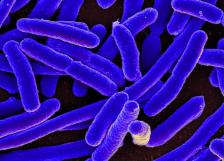
An analysis of 186 diagnostic reports collected from a veterinary clinic in Singapore between 2014 to 2016 showed that sick companion animals can carry bacteria that are of significance to human health. Among the 186 specimens submitted, 82 showed polymicrobial growth (45%, 82/186) and in total, 359 bacteria were isolated. Of the 359 bacteria reported, 45% (162/359) were multi-drug resistant and 18% (66/359) were extended-spectrum-beta-lactamase species. Resistance to broad-spectrum antibiotics were also observed among individual species. Namely, methicillin-resistance among Staphylococcus pseudintermedius (63%, 32/51) and Staphylococcus aureus (50%, 4/8); fluoroquinolone-resistance among Escherichia coli (40%, 17/42) and carbapenem-resistance among Klebsiella pneumoniae (7%, 2/30) were noted. Our analysis suggests that sick pets may contribute to the pool of clinically relevant antibiotic-resistant bacteria and play a role in the spread of antibiotic resistance in Singapore. A more extensive study to better understand the extent of distribution and the factors affecting transmission of antibiotic-resistant bacteria to and from pets is necessary.

RASFF Alerts- STEC E.coli – Raw Milk Goats Cheese – Boneless Beef – Roe Deer Meat – VP Beef

RASFF-Logo

RASFF-shigatoxin-producing Escherichia coli (O103:H2 stx1+, eae+) in raw milk goat’s cheese from France in France

RASFF-shigatoxin-producing Escherichia coli in frozen boneless beef from Brazil in Italy

RASFF-shigatoxin-producing Escherichia coli (stx1+ /25g) in frozen roe deer meat from the United Kingdom in Italy

RASFF-shigatoxin-producing Escherichia coli (stx2+ /25g) in chilled vacuum packed beef from Argentina in the Netherlands

RASFF Alert -E.coli – Live Mussels

RASFF-Logo

RASFF-too high count of Escherichia coli (2400 /100g) in live mussels from France in France