Category Archives: Decontamination Microbial

UK – UK establishes new food safety network

EFOOD ALERT

The United Kingdom’s Food Standards Agency (FSA) has entered into a partnership with the country’s Biotechnology and Biological Sciences Research Council (BBSRC) and the Quadram Institute, a private non-profit company, to form a new Food Safety Research Network.

The FSA and BBSRC have invested a combined £1.6 million in the network, which will be hosted by Quadram.

Quadram describes itself as a state-of-the-art facility for bioscience and clinical research.

“[T]he network will ensure that the FSA is well-placed to tackle the challenges of foodborne illnesses by bringing together experts from government, industry and academia to address current and emerging issues of food safety in the UK,” said the FSA’s Chief Scientific Adviser, Professor Robin May.

According to the FSA, there are an estimated 2.4 million cases of foodborne illness a year in the UK, or roughly 35 cases per 1000 population. The annual cost of these illnesses is estimated to be £9 billion (with £6 billion from unknown causes).

Research – A bacteriological survey of fresh minced beef on sale at retail outlets in Scotland in 2019: three food-borne pathogens, hygiene process indicators and phenotypic antimicrobial resistance.

Journal of Food Protection

The health and economic burden of foodborne illness is high, with approximately 2.4 million cases occurring annually in the United Kingdom. A survey to understand the baseline microbial quality and prevalence of food-related hazards of fresh beef mince on retail sale could inform risk assessment, management and communication to ensure the safety of this commodity. In such a survey, a two-stage sampling design was used to reflect variations in population density and the market share of five categories of retail outlets in Scotland.  From January to December 2019, 1009 fresh minced beef samples were collected from 15 Geographic Areas. The microbial quality of each sample was assessed using Aerobic Colony Count (ACC) and generic E. coli count. Samples were cultured for Campylobacter and Salmonella and PCR was used to detect target genes (stx1 all variants, stx2 a-g, and rfbO157) for Shiga toxin-producing Escherichia coli (STEC). The presence of viable E. coli O157 and STEC in samples with a positive PCR signal was confirmed via culture and isolation. Phenotypic antimicrobial sensitivity patterns of cultured pathogens and 100 generic E. coli isolates were determined, mostly via disc diffusion. The median ACC and generic E. coli counts were 6.4 x 10⁵ (Inter-quartile range (IQR):6.9 x 10⁴ to 9.6 x 10⁶) and <10 cfu per gram (IQR:<10 to 10) of minced beef respectively. The prevalence was 0.1% (95% confidence interval C.I. 0 to 0.7%) for Campylobacter, 0.3% (95% C.I. 0 to 1%) for Salmonella, 22% (95% C.I. 20% to 25%) for PCR positive STEC and 4% (95% C.I. 2 to 5%) for culture positive STEC. The evidence for phenotypic antimicrobial resistance (AMR) detected did not give cause for concern, mainly occurring in a few generic E. coli isolates as single non-susceptibilities to first-line active substances. The low prevalence of pathogens and phenotypic AMR is encouraging but ongoing consumer food-safety education is necessary to mitigate the residual public health risk.

Russia – Food poisoning outbreak linked to sushi rolls sickens 38 in Samara

Outbreak News Today

Russia: Food poisoning outbreak linked to sushi rolls sickens 38 in Samara

The number of people poisoned by rolls in the Samara region has grown to 38 people, according to Russian media. 

25 people were hospitalized in the Togliatti City Clinical Hospital No. 5 , including four children. The rest are being treated on an outpatient basis.

All patients were diagnosed with signs of food poisoning. Investigators examined the food point, identified food suppliers, and also interrogated the director of the restaurant, the investigative department said.

The mass poisoning became known on June 6 . Initially, it was reported that 22 people turned to doctors for help. According to a 63.RU source familiar with the situation, they all ordered rolls from the Kusai delivery service located in the Central District of Tolyatti. The power point has been suspended . Employees of Rospotrebnadzor, prosecutors and investigators were involved in the proceedings.

Quebec – Notice not to consume mixed mangoes, packaged in glass jars and sold by the company TNT Palace – Food Safety

Quebec

Mango mix (CNW Group/Ministry of Agriculture, Fisheries and Food)

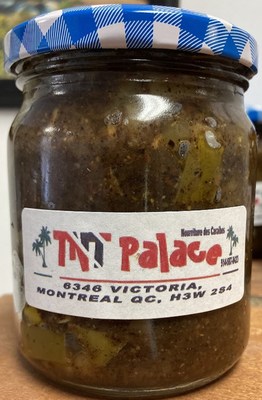
The Ministry of Agriculture, Fisheries and Food (MAPAQ), in collaboration with the Food Inspection Division of the City of Montreal and the company TNT Palace, located at 6346 Victoria Avenue , Montreal, is warning the public not to consume the product listed in the table below because it has not been packaged in a way to ensure its safety.

Product name     

Format  

Affected batch

 Mix of mangoes      

Unity  

Units sold until
June 9, 2022

The product that is the subject of this warning was offered for sale until June 9, 2022 at the establishment named above. The product was packaged in glass jars with blue and white lids and sold at room temperature. The product label bears the words ‘TNT Palace’ and ‘Caribbean Food’.

The operator is voluntarily recalling the product in question. It has agreed with MAPAQ and the Food Inspection Division of the City of Montreal to distribute this warning as a precautionary measure. In addition, people who have this product in their possession are advised not to consume it. They must return it to the establishment where they bought it or throw it away. Even if the affected product shows no signs of tampering or suspicious odors, its consumption may represent a health risk. It should be noted that no case of illness associated with the consumption of this food has been reported to MAPAQ to date.

Libya – 53 cases of food poisoning arrive at Kufra Teaching Hospital

Libya Observer

The emergency department of Kufra Teaching Hospital received 53 cases of food poisoning on Saturday, including women and children, due to eating rotten food in a restaurant in the city.

Patients have received the necessary treatment, awaiting to for the preliminary results of the laboratory, the hospital’s media office said, adding that all measures will be taken towards the responsible party.

Quebec – Lack of information necessary for the safe consumption of maple-smoked salmon sold by Buffet Maison, the Orléans caterer

Quebec

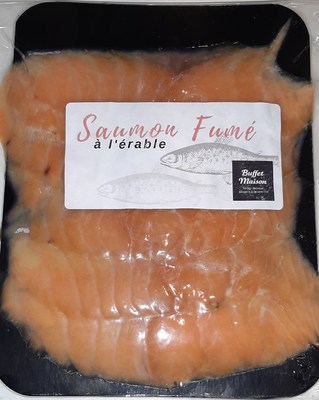
QUEBEC CITY , June 7, 2022 /CNW Telbec/ – The Ministry of Agriculture, Fisheries and Food (MAPAQ), in collaboration with Buffet Maison, the Orleans caterer, located at 995, route Prévost , in Saint-Pierre -de-l’Île-d’Orléans, advises the public not to consume the product indicated in the table below if it has not been kept in the freezer at all times since the time of procurement. Indeed, the product label does not include the information necessary for its safe consumption, namely the statement “Keep frozen until use” which is required.

Product name

Format

Affected lot

“Maple Smoked Salmon”

Variable

Units sold until June 7, 2022

The product that is the subject of this warning was offered for sale until June 7, 2022 inclusively, and only at the establishment designated above. It was placed on a black cardboard tray covered with transparent film and sold frozen. The product label includes, in addition to its name, the words “Buffet Maison”.

The operator is voluntarily recalling the product in question. It has agreed with MAPAQ to issue this warning as a precautionary measure. Persons who have this product in their possession and have not kept it in the freezer at all times since the time of purchase are advised not to consume it. They must either return it to the establishment where they bought it or throw it away. Even if the affected product shows no signs of tampering or suspicious odors, its consumption may represent a health risk. It should be noted that no case of illness associated with the consumption of this food has been reported to MAPAQ to date.

Additional information

The Ministry publishes various information documents concerning food safety. Interested persons can consult them in the “Food Consumption” section of the MAPAQ website: www.mapaq.gouv.qc.ca/consommation  . They also have the possibility of registering online by visiting www.mapaq.gouv.qc.ca/rappelsfoods  to receive, by e-mail, the food recall press releases published by the Ministry. Finally, it is possible to follow “MAPAQfoods” on Twitter at the following address: www.twitter.com/MAPAQfoods  .

maple smoked salmon (CNW Group/Ministry of Agriculture, Fisheries and Food) 


Hazard Classification: Class 1 
Reference Number: 4560

Source: 
Media relations 
Direction des communications 
Ministry of Agriculture, Fisheries and Food 
Tel. : 418 380-2100, extension 3512 
www.mapaq.gouv.qc.ca  

QuoteConsult the original content to download the multimedia: http://www.newswire.ca/fr/releases/archive/June2022/07/c5522.html


USA – Mystery 2021 Pennsylvania Pool E. coli and C. difficile Outbreak Finally Explained – 15 Sickened

Food Poison Journal

On June 7, 2021, the Pennsylvania Department of Health (PADOH) received multiple complaints of gastrointestinal illness from patrons of a community swimming pool. Two patrons reported positive Shiga toxin-producing Escherichia coli (STEC) and Clostridioides difficile from stool specimens. PADOH issued pool closure orders and initiated an outbreak response to identify a source and prevent additional illnesses.

Confirmed cases were defined as isolation of E. coli O157:H7 or detection of Shiga toxin or Shiga toxin genes from stool specimens of persons who visited the pool during May 31–June 7, 2021. Probable cases were defined as three or more loose stools in 24 hours with nausea, vomiting, fever, or cramps in persons who visited the pool during the same time frame. C. difficile results were deemed incidental upon consultation with experts (LC McDonald, MD, CDC, personal communication, June 2021) and were not included in the case definition.

Fifteen cases (nine confirmed, six probable) in persons aged 4–14 years were identified; 10 patients were male. All persons reported swimming at the pool on May 31, 2021, the seasonal opening date, and had no other common exposures. The total number of pool visitors on this date is unknown. Symptom onsets occurred during June 2–June 4, 2021. Thirteen patients sought medical evaluation, and six were hospitalized. Four received antibiotics for C. difficile. None developed hemolytic uremic syndrome.

Early findings suggested an unusual association between exposure to a chlorinated swimming pool and infections caused by two pathogens susceptible to chlorine. Pool inspection revealed an automatic chlorinator malfunction. Record-keeping was inconsistent with local requirements, and the few available records demonstrated at least one instance of no detectable chlorine. The pool reopened following chlorinator repair, after which no additional cases were identified.

Research – Outbreak of Salmonella Newport linked to imported frozen cooked crayfish in dill brine, Sweden, July to November 2019

Eurosurveillance

Salmonellosis is the second most commonly reported bacterial gastro-intestinal infection after campylobacteriosis in the European Union (EU) and European Economic Area (EEA). In the EU/EEA, the yearly notification rate of salmonellosis has been around 20 cases per 100,000 individuals in the period from 2015 to 2019 [1]. In 2020, the notification rate decreased to 14 cases per 100,000 individuals; the decline is considered to be an effect of the COVID-19 pandemic [2].  serotype Newport was the fifth most common serotype in the EU/EEA in 2019, accounting for 1.1% of reported serotypes from human salmonellosis cases [1]. In Sweden, human salmonellosis is notifiable by law. The average yearly notification rate of salmonellosis in Sweden between 2015 and 2019 was 21.5 cases per 100,000 individuals, with the majority of cases being infected abroad [3]. In 2019,  Newport was the fifth most common serotype also in Sweden and accounted for 5% of the reported serotypes [3].

Salmonellosis is a bacterial zoonosis. Humans get infected by contaminated foods, through contact with infected animals or humans or via the environment [4]. In recent years, egg and egg products, bakery products and pork and pork products have been the most common food vehicles in food-borne salmonellosis outbreaks reported in EU countries [1].  Newport has previously been linked to outbreaks caused by vehicles of both animal and vegetable origin, for example beef, watermelon and mung bean sprouts [58].  Newport have also been detected in fish and different shellfish and in fresh herbs [911].

In late September 2019, the Public Health Agency of Sweden (PHAS) identified a cluster of nine cases with  Newport sequence type (ST) 46. The cluster was detected as part of the routine microbial surveillance programme where isolates of  from domestic infections are sent to PHAS for typing using whole genome sequencing (WGS). The cluster was put under observation; it evolved slowly and on 23 October, the cluster consisted of 25 cases. The cases were geographically spread across the country and all but one case were adults. The onset of disease ranged from 16 August to 12 October 2019. The spread of cases, geographically and in time, indicated that the infection source was a contaminated food that was distributed nation-wide and could still be on the market. A national outbreak was declared and an outbreak investigation was initiated with the objectives to describe the outbreak and identify the source in order to prevent further cases.

The outbreak team included investigators from PHAS, the Swedish Food Agency (SFA) and the affected regional Departments of Communicable Disease Control and Prevention (CDC department).

Here we report an investigation of a national outbreak of  Newport in Sweden, with the aim of describing the actions that led to the identification and recall of the source of the infection.

Research – International outbreak of salmonellosis in young children linked to the consumption of Kinder brand products. Update in France as of June 2, 2022.

Sante Publique

Following the investigations carried out by the Belgian health authorities, together with their English, European and in particular French counterparts, the company Ferrero proceeded on April 5, 2022 to the recall of several Kinder range products manufactured in a factory in Belgium due to suspected contamination by Salmonella Typhimurium . On April 8, 2022, the recall finally affected all Kinder products from this factory, regardless of their expiry date. On April 14, 2022, an update of the recalled products, including the 2021 Christmas Advent Calendars, was released.

Case of salmonellosis in France: update on June 2, 2022

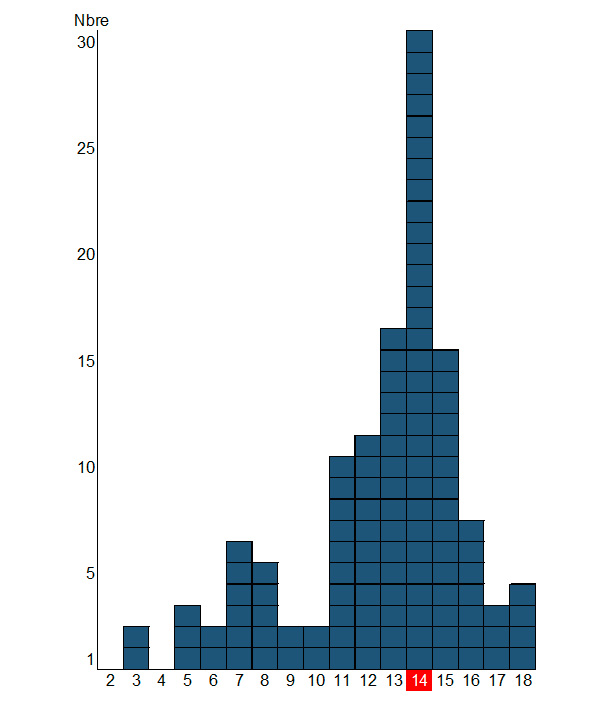
In total, as of 02/06/2022: 118 cases of salmonellosis with a strain belonging to the epidemic have been identified by the National Reference Center (CNR) for salmonella at the Institut Pasteur in France (figure 1) .

Figure 1 – Epidemic curve: number of confirmed cases of salmonellosis caused by Salmonella Typhimurium, monophasic variant (cluster 1 HC5_296366 and cluster 2 HC5_298160), by week of isolation (with in red the week corresponding to the recall of products from the production plant) ‘Arlon in Belgium) – Metropolitan France, weeks 2 to 18, 2022 (N=118)
Figure 1 - Epidemic curve: number of confirmed cases of salmonellosis caused by Salmonella Typhimurium, monophasic variant (cluster 1 HC5_296366 and cluster 2 HC5_298160), by week of isolation (with in red the week corresponding to the recall of products from the production plant) 'Arlon in Belgium) - Metropolitan France, weeks 2 to 18, 2022 (N=118)

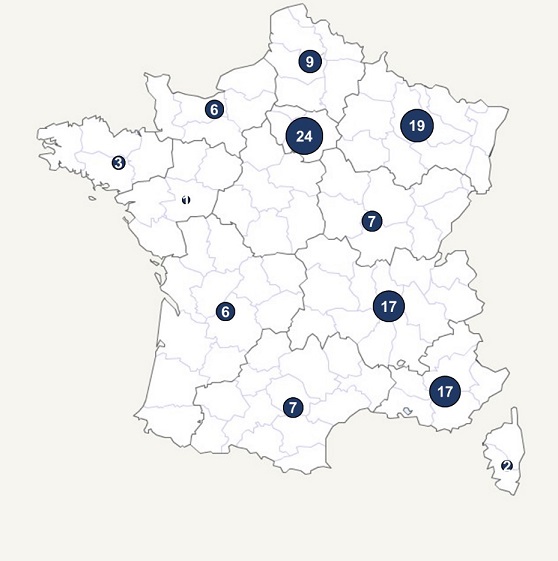
The 118 cases are spread over 12 metropolitan regions (Ile-de-France (24 cases), Grand-Est (19 cases), Auvergne-Rhône-Alpes (17 cases), Provence-Alpes-Côte d’Azur (17 cases) , Hauts-de-France (9 cases), Bourgogne-Franche-Comté (7 cases), Occitanie (7 cases), Normandy (6 cases), New Aquitaine (6 cases), Brittany (3 cases), Corsica (2 cases) and Pays de la Loire (1 case)) with a median age of 4 years, and concern 57 girls and 61 boys.

Figure 2 – Geographical distribution of confirmed cases of salmonellosis due to Salmonella Typhimurium, monophasic variant (cluster 1 HC5_296366 and cluster 2 HC5_298160), by region of residence – metropolitan France, weeks 2 to 18, 2022
Figure 2 - Geographical distribution of confirmed cases of salmonellosis due to Salmonella Typhimurium, monophasic variant (cluster 1 HC5_296366 and cluster 2 HC5_298160), by region of residence - metropolitan France, weeks 2 to 18, 2022

Fifty-one cases were questioned by Public Health France. All the cases, except 1, report, before the onset of their symptoms (which occurred between 20/01 and 04/04/2022), the consumption of chocolates of the brand cited here.

Twenty-two people were hospitalized for their salmonellosis, all since discharged. No deaths were reported.

The foods in question having been identified and the management measures taken, the weekly situation updates are drawn up. Public Health France continues to monitor the reporting of cases by the NR, which are expected due to the different delays inherent in monitoring ( see the infographic dedicated to food alerts ).

The successive withdrawals and recalls of the Kinder brand products concerned, produced by the Belgian factory with its closure by the Belgian authorities, should limit the occurrence in France of new cases of salmonellosis in connection with these chocolates.

The possible identification of new cases with dates of isolation at a distance from the recall withdrawal measures will be the subject of investigations if necessary.

To find out the list of products concerned by the withdrawal-recall: https://rappel.conso.gouv.fr/

People who have consumed the products mentioned above and who present symptoms (gastrointestinal disorders, fever within 72 hours of consumption), are invited to consult their doctor without delay, notifying him of this consumption.

In order to limit person-to-person transmission (especially in households with young children), it is recommended to wash your hands well with soap and water after using the toilet, after changing your child, and before to cook.

USA – CDC – Food Safety Materials

CDC

CDC offers many free educational resources about preventing food poisoning. Read feature stories to learn more, share infographics and videos on social media, and syndicate our web pages on your site to help educate others.