Category Archives: Contaminated water

What is ACOP L8 & What Does It Say About Controlling Legionella?

Legionella Control

The Health and Safety Executive Approved Code of Practice L8 (ACOP L8) is a key document, offering essential direction and guidance to help business owners and those responsible for workplace safety manage the risks associated with legionella and Legionnaires’ disease.

In this guide the water safety specialists at Legionella Control International help to demystify the ACOP L8 to explain what it is, its special legal status, how to interpret it, and the role of the duty holder and responsible person.

A version of this guide to the HSEs ACOP L8 and how to interpret it first appeared in Legionella Control International’s newsletter. To get it in your inbox, sign up for free here.

Research -Preliminary investigation of a significant national Cryptosporidium exceedance in the United Kingdom, August 2023 and ongoing

Eurosurveillance

Across the UK, routine surveillance of cryptosporidiosis relies on mandatory laboratory notification. Since the International Organization for Standardization (ISO) week 33 2023 (starting on 14 August), and as at week 39 2023 (ending on 1 October), the combined weekly number of laboratory notifications of  spp. detections in England, Wales and Northern Ireland has exceeded the expected upper threshold (Figure); an exceedance in Scotland has only been present since ISO week 39.

Figure.Laboratory notifications of  species in England, Wales and Northern Ireland, by week of specimen, 2023
Figure

Observed case numbers are compared to an exceedance threshold as derived from the Farrington Flexible algorithm, using published methodology [10]; the model can account for seasonal effects and changing trends. The upper threshold limit reflects the 99.5% percentile of a negative binomial distribution for the expected case frequency.

Given the scale and geographical spread of the exceedance across regions and nations of the UK, a single local exposure is an unlikely cause.

In England, local practice varies in the routine collection of exposure information in cryptosporidiosis cases. To allow for consistent capture of information as part of this investigation, a standardised electronic questionnaire was deployed. This includes questions on foreign travel, food and water exposures and interaction with animals. Data collection through this method has been ongoing since ISO week 38 (and in retrospect), for cases meeting the following definition: any person resident in England, with a clinical specimen dated 14 August 2023 or later, positive for  (any species). In Wales, a standard questionnaire for gastrointestinal disease has been in place since before the exceedance.

Israel – Following abnormal microbial results received as part of a routine sampling, the Ministry of Health informs of the need to boil water in Kibbutz Ginosar

GovIL

Following abnormal microbial results obtained as part of a routine sampling of the drinking water, the Ministry of Health announces the obligation to boil water before drinking, cooking, preparing food, preparing medicine and brushing teeth in Kibbutz Ginosar.

Ireland – Nearly 7,000 Limerick people impacted by boil water notice that has been in place since May

Independant

Nearly 7,000 Limerick residents have been impacted by a boil water notice since last May.

A boil water notice was issued back on May 13 2023 for all Limerick residents supplied by the Foynes/Shannon Estuary Public Water Supply.

Uisce Éireann explained that the notice was issued to protect the health of the public as the water served by Foynes/Shannon Estuary PWS has been described as potentially unsafe to drink due to the detection of cryptosporidium.

The areas impacted are Askeaton, Foynes, Ballyhahill, Loghill, Ballysteen, Pallaskenry, Kildimo and Shanagolden and surrounding areas, for an estimated residential population of 6,986 people.

What actions should be taken: Use water prepared for drinking when preparing foods that will not be cooked (e.g. washing salads); water can be used for personal hygiene, bathing and flushing of toilets but not for brushing teeth or gargling. Boil water by bringing to a vigorous, rolling boil (e.g. with an automatic kettle) and allow to cool. Cover and store in a refrigerator or cold place. Water from the hot tap is not safe to drink. Domestic water filters will not render water safe to drink. Caution should be taken when bathing children to ensure that they do not swallow the bathing water.

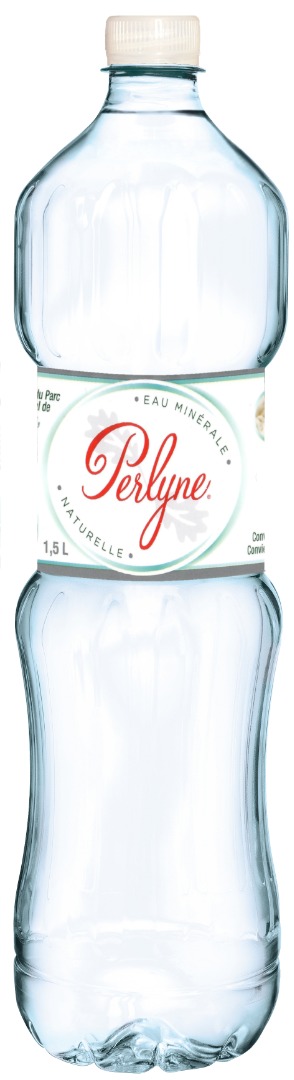
France – natural mineral water – Pseudomonas

Gov france

  • Product category Food
  • Product subcategory Waters
  • Product brand name PERLYNE
  • Model names or references PERLYNE BOTTLE 1.5L
  • Product identification
    GTIN Batch Date
    3770004468003 L23271-1 Use-by date 09/28/2025
  • Packaging 6 x 1.5 liters
  • Start/end date of marketing From 03/10/2023 to 07/10/2023
  • Storage temperature Product to be stored at room temperature
  • Geographical sales areaWhole France
  • Distributors Match Bavay Intermarché Le Cateau Carrefour Gommegnies

Research – ‘Overlooked’ problem of bacteria in fast-food soda fountains. How risky is that drink?

USA Today

Scientists in Southern California are asking the kind of questions that make soda drinkers uneasy after a recent study that found fast-food soda fountains were serving up high levels of bacteria along with self-serve drinks.

Researchers from Loma Linda University found bacteria levels that surpassed U.S. Environmental Protection Agency regulations for drinking water at fast-food restaurants in the eastern Coachella Valley, where largely low-income, Latino farmworker families have struggled with accessing potable water.

The study, published in August in the journal Drinking Water, found more than 40% of water samples from fast-food soda fountains had coliforms present, an indicator of contamination. The study calls into question the sanitation and maintenance of water from soda fountains, which rely on government and manufacturer standards.

Spain – Hundreds sickened in Spain by water contaminated with parasite

Food Safety News

More than 450 people have been sickened in a Spanish town after drinking and using contaminated water.

Public health officials in Tarazona, in the province of Zaragoza, reported 452 illnesses since early September. Most patients have had a mild illness with symptoms including diarrhea, sometimes vomiting, and a fever.

Analyzes commissioned by Tarazona Council from independent laboratories confirmed the presence of the Cryptosporidium parasite in the Queiles River. Cryptosporidium has also been found in patient samples.

Council staff and public health authorities are trying to find the source, as well as how and where water contamination occurred, so that they can eliminate the problem. At least 45,000 liters of bottled water have been distributed to residents and schools.

Research -Seafood-Associated Outbreak of ctx-Negative Vibrio mimicus Causing Cholera-Like Illness, Florida, USA

CDC

Vibrio mimicus caused a seafood-associated outbreak in Florida, USA, in which 4 of 6 case-patients were hospitalized; 1 required intensive care for severe diarrhea. Strains were ctx-negative but carried genes for other virulence determinants (hemolysin, proteases, and types I–IV and VI secretion systems). Cholera toxin–negative bacterial strains can cause cholera-like disease.

Vibrio mimicus, named because of its close metabolic and genetic similarity to V. cholerae, is recognized globally as a cause of foodborne and waterborne diarrheal disease (14). Limited data indicate that V. mimicus incidence is lower than that reported for V. parahaemolyticus and non-O1/non-O139 V. cholerae but comparable to that of V. fluvialis (3,4). Although some V. mimicus strains produce cholera toxin (CTX) or a cholera-like toxin or have genes from the ctx complex, most do not (1,5). Nonetheless, V. mimicus can cause severe, cholera-like illness; the hospitalization rate among case-patients reported in 2014 (the most recent year for which data are available) to the Centers for Disease Control and Prevention is 57% (3). We report a seafood-associated outbreak caused by V. mimicus in Florida, USA, in which 4 of 6 patients required hospitalization

USA – Man dies after contracting Vibrio vulnificus bacteria from fresh oysters in Texas restaurant

Detroit Free Press

Food Illness

The consumption of raw oysters at a Texas restaurant led to the untimely death of a relatively healthy man in his 30s.

The man, contracted a bacterial infection known as Vibrio vulnificus that thrives in warm coastal waters. Bacterial infections like this one are on the rise as water temperature continues to increase in response to climate change.

Vibrio vulnificus bacteria can be found in raw or undercooked seafood, but also naturally occurs in saltwater and brackish water.

You can be infected with Vibrio when an open wound comes into contact with raw or undercooked seafood, its juices, or its drippings or with saltwater or brackish water, the CDC reported.

USA- Ruby Mountain Spring Water recalled after testing finds Coliforms

Food Safety News

Ruby Mountain Spring Water of Winnemucca, NV, is recalling their brand of 3 and 5-gallon plastic water jugs because the firm’s sample revealed positive findings for coliforms.

According to the details posted online by the FDA, the recall was initiated on Aug. 1, 2023, and is ongoing.

The recalled products were distributed in Nevada.

Recalled product:

  • Ruby Mountain Spring Water 3 and 5-gallon plastic water jugs
  • Product Quantity: 1,350 bottles

Anyone who purchased the recalled product should immediately dispose of it and not consume it.