Author Archives: KSW

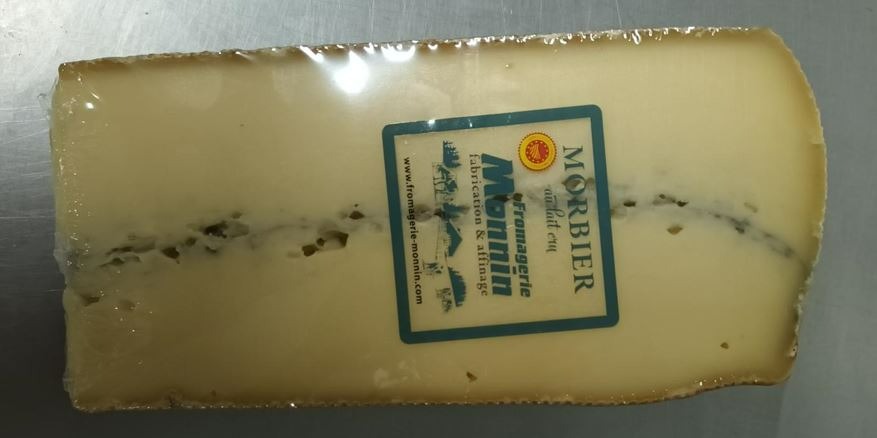
France- MORBIER AOP RAW MILK PORTION 2/300 G PP – Listeria monocytogenes

Gov France

Product category
Food
Product subcategory
Milk and dairy products
Product brand name
Monnin cheese shop
Model names or references
MORBIER AOP RAW MILK PORTION 2/300 G PP
Product identification
GTIN Batch Date
3428450204224 025 08 Minimum durability date 02/15/2024
Start/end date of marketing
From 01/26/2024 to 01/29/2024
Storage temperature
Product to keep in the refrigerator
Health mark
FR 25-120-001 CE
Geographical sales area
Whole France
Distributors
Colruyt France

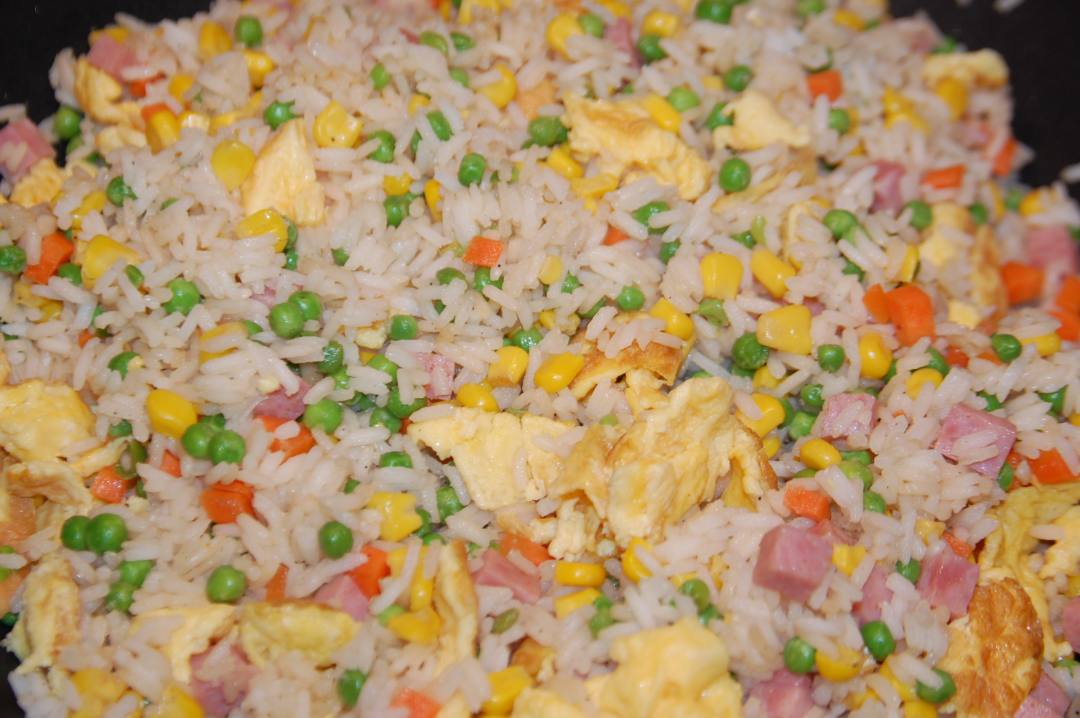
France – Cantonese rice – Listeria monocytogenes

Gov France

Product category
Food
Product subcategory
Prepared meals and snacks
Product brand name
Caterer Leclerc Enval
Model names or references
sold by weight in the traditional catering section
Product identification
GTIN Batch
00000000 All lots
Packaging
trays of different sizes depending on the quantity desired by the customer
Start/end date of marketing
From 01/25/2024 to 01/27/2024
Storage temperature
Product to keep in the refrigerator
Further information
product sold by weight in the traditional catering section from 01/25/24 to 01/27/24
Geographical sales area
Enval (63) and its surroundings
Distributors
E. Leclerc Enval

Hong Kong – Poon Choi and Food Safety

CFS

“Poon Choi”, which comprises a great variety of food, involves a number of processing steps, which demands meticulous attention during preparation.

People should order their “Poon Choi” from reputable and licensed food suppliers. If they want to make their own, they should maintain good personal and food hygiene to prevent cross contamination.

To enjoy a delicious and healthy meal, people should pay particular attention to food safety.

Here are some safety tips for enjoying “Poon Choi”:

When purchasing “Poon Choi”:

  • Order from reputable licensed suppliers
  • Hot “Poon Choi” should be kept at 60℃ or above and chilled “Poon Choi” should be kept at 4℃ or below to prevent growth of bacteria
  • Ask for the reheating instruction for the “Poon Choi”. For example, does the “Poon Choi” have to be reheated before consumption and if so, how and for how long? And is it possible to reheat it in its original container?
  • Notify the supplier of the time you collect the “Poon Choi”. It is best to collect it half an hour to one hour before consumption
  • Return home immediately after collecting the “Poon Choi”. Avoid keeping it for a prolonged period of time at room temperature
  • Keep chilled “Poon Choi” at 4℃ or below to minimise its exposure to the temperature danger zone of 4 to 60℃

When preparing “Poon Choi” at home:

  • Buy ingredients from reputable retailers
  • Plan the work schedule ahead of time, with consideration to ingredients involved. Don’t start cooking too early
  • Defrost frozen food inside the chilled compartment of a refrigerator or under cool running water
  • Cook high risk food such as poached chicken and seafood like fresh oysters thoroughly
  • Raw and cooked food should be covered and stored separately to prevent cross contamination
  • If the ingredients need to be stored after cooking, they should either be kept chilled at 4℃ or below, or kept warm at 60℃ or over
  • Cover food properly to prevent cross contamination
  • Since lots of ingredients and cooking utensils are involved in the course of preparing “Poon Choi”, a well-organised work schedule can help prevent cross contamination
  • Before preparing “Poon Choi”, thoroughly clean and sterilize cutting boards, knives, containers and other cooking utensils
  • Maintain good personal hygiene. Wash hands with liquid soap before handling food and after using the toilet

When consuming “Poon Choi”:

  • Consume the “Poon Choi” as soon as possible after it is collected or cooked. Don’t keep it under room temperature for more than two hours
  • As “Poon Choi” is generally served in a large pot, a longer period of time is required to reheat it thoroughly
  • When eating “Poon Choi” in a restaurant, pay attention to its serving temperature. When in doubt, stop eating and inform the caterer in charge
  • Use communal chopsticks and spoons when consuming “Poon Choi”
  • Consume “Poon Choi” in one go

USA – Conoco View Dairy Raw Milk Campylobacter Outbreak in PA

Food Poisoning Bulletin

A Conoco View Dairy raw milk Campylobacter outbreak in Pennsylvania has sickened at least 11 people, according to the Pennsylvania Department of Agriculture. Officials are warning consumers to immediately discard all of this milk.

The Department ran tests after 11 reports of illness in December 2023 and January 2024 were received. Campylobacter contamination was confirmed in the dairy’s products.

The press release states that, “While the source of the bacteria is clear, every specific production date could not be pinpointed. All products, including those in consumers’ freezers, should be discarded.”

USA – Update: Quaker Issues Revised Recall Notice With Additional Product Due to Possible Health Risk – Salmonella

FDA

January 31, 2024 – An additional granola bar has been added to the U.S. Recalled Products list as indicated on the first row of the chart below. This product was discontinued in September 2023 and has “Best Before” dates of February 10 or 11, 2024. Consumers should check their pantries and dispose of the product.

A previous press release was issued on 12/15/2023.

CHICAGO, Illinois – January 11, 2024 – The Quaker Oats Company today announced an expansion of the December 15, 2023, recall to include additional cereals, bars and snacks listed below because they have the potential to be contaminated with Salmonella, an organism which can cause serious and sometimes fatal infections in young children, frail or elderly people, and others with weakened immune systems. Healthy persons infected with Salmonella often experience fever, diarrhea (which may be bloody), nausea, vomiting and abdominal pain. In rare circumstances, infection with Salmonella can result in the organism getting into the bloodstream and producing more severe illnesses such as arterial infections (i.e., infected aneurysms), endocarditis and arthritis.

The products listed below are sold throughout the 50 United States, Puerto Rico, Guam and Saipan. Consumers should check their pantries for any of the products listed below and dispose of them. Additionally, consumers with any product noted below can contact Quaker Consumer Relations (9 a.m. – 4:30 p.m. CST, Mon.-Fri.) at 1-800-492-9322 or visit www.QuakerRecallUSA.comExternal Link Disclaimer for additional information or product reimbursement.

Consumers can scan the SmartLabel QR code on the product package to determine if it has been recalled. Click here for information on how to use SmartLabel.

Quaker has informed the FDA of our actions.

This recall applies to the specific products listed below, in addition to the products announced on December 15, 2023. A combined list of recalled products is available on www.QuakerRecallUSA.comExternal Link Disclaimer.

Complete List of Quaker Products.

Link to 1st Expanded Press Release

Link to Initial Press Release


Company Contact Information

Consumers:
Quaker Consumer Relations
 1-800-492-9322

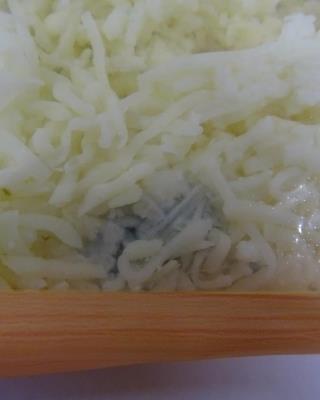
Czech Republic – Pilos Eidam grated, 200g – Visible Mold/Mould

Potravinynapranyri

Illustrative photo #4

Place of inspection:
Veselí nad Moravou ( class Masarykova 170, 698 01 Veselí nad Moravou )
ID: 26178541
Food group: Milk and milk products Cheese

Pilos Eidam grated, 200g
Category: Dangerous foods
Invalid parameter:

fungi visible to the eye

In some of the inspected packages, the occurrence of mold was detected on the food under the intact packaging. Food is not considered safe if it shows signs of spoilage.

Unsuitable storage temperatures of this product were not detected during the inspection. The food did not have an expired minimum durability date.

Batch: DMT: 12/01/2024
Best before date: 12/01/2024
Packaging: plastic bag printed, sealed
Quantity of the product in the package: 200 g
Manufacturer: Milchwerke Oberfranken West eG, Sulzdorfer Straße 7, 96484 Meeder, Germany
Date of sample collection: 12/12/2023
Reference number: 24-000056-SZPI-CZ
The sample was detected by the official control of the State Agricultural and Food Inspection.

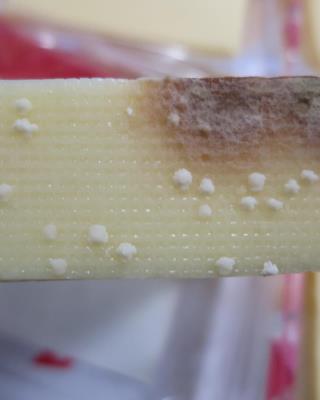
Czech Republic – K CLASSIC fine-aromatischer Edamer am Stück – Visible Mould/Mold

Potravinynapranyri

Illustrative photo #5

Place of inspection:
Brno ( Řípská 1476/27, 627 00 Brno )
ID: 25110161
Food group: Milk and milk products Cheese

K CLASSIC fine-aromatischer Edamer am Stück
Category: Dangerous foods
Invalid parameter:

fungi visible to the eye

In some of the inspected packages, mold colonies were present on the surface of the cheese under the intact packaging. Food is not considered safe if it shows signs of spoilage.

Unsuitable storage temperatures of this product were not detected during the inspection. The food did not have an expired minimum durability date.

Best before date: 07/02/2024
Packaging: PET/PE
Quantity of the product in the package: 0.25 kg
Distributor: supplier: Milkpol spol. sro, Reinerova 1657/23, 163 00, Prague 6
Country of origin:  Czechia
Date of sample collection: 20/12/2023
Reference number: 24-000055-SZPI-CZ
The sample was detected by the official control of the State Agricultural and Food Inspection.

Research -EFSA – Persistence of microbiological hazards in food and feed production and processing environments

EFSA

Listeria monocytogenes (in the meat, fish and seafood, dairy and fruit and vegetable sectors), Salmonella enterica (in the feed, meat, egg and low moisture food sectors) and Cronobacter sakazakii (in the low moisture food sector) were identified as the bacterial food safety hazards most relevant to public health that are associated with persistence in the food and feed processing environment (FFPE). There is a wide range of subtypes of these hazards involved in persistence in the FFPE. While some specific subtypes are more commonly reported as persistent, it is currently not possible to identify universal markers (i.e. genetic determinants) for this trait. Common risk factors for persistence in the FFPE are inadequate zoning and hygiene barriers; lack of hygienic design of equipment and machines; and inadequate cleaning and disinfection. A well‐designed environmental sampling and testing programme is the most effective strategy to identify contamination sources and detect potentially persistent hazards. The establishment of hygienic barriers and measures within the food safety management system, during implementation of hazard analysis and critical control points, is key to prevent and/or control bacterial persistence in the FFPE. Once persistence is suspected in a plant, a ‘seek‐and‐destroy’ approach is frequently recommended, including intensified monitoring, the introduction of control measures and the continuation of the intensified monitoring. Successful actions triggered by persistence of L. monocytogenes are described, as well as interventions with direct bactericidal activity. These interventions could be efficient if properly validated, correctly applied and verified under industrial conditions. Perspectives are provided for performing a risk assessment for relevant combinations of hazard and food sector to assess the relative public health risk that can be associated with persistence, based on bottom‐up and top‐down approaches. Knowledge gaps related to bacterial food safety hazards associated with persistence in the FFPE and priorities for future research are provided.

Czech Republic – MÚÚÚ FARMERS SPECÁCKY 600 g, HEAT PROCESSED MEAT PRODUCT – Visible Mould/Mold

Potravinynapranyri

Illustrative photo #4

Place of inspection:
Doksy ( Zámecká 186, 47201 Doksy )
ID: 26178541
Food group: Meat and meat products Heat-treated perishable products

MÚÚÚ FARMERS SPECÁCKY 600 g, HEAT PROCESSED MEAT PRODUCT
Category: Dangerous foods
Invalid parameter:

fungi visible to the eye
surface appearance

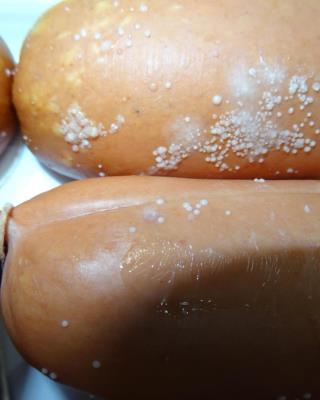
Colonies of mold were present on the surface of the food under the intact packaging. Food is not considered safe if it shows signs of spoilage. 

Unsuitable storage temperatures of this product were not detected during the inspection. The food did not have an expiration date.

Batch: L590060126
Expiration date: 14/12/2023
Packaging: PE tub with pap. data label
Quantity of the product in the package: 600 g
Manufacturer: MASO UZENINY PÍSEK, as, Novodvorská 1062/12, 142 00 Prague 4
Country of origin:  Czechia
Date of sample collection: 12/12/2023
Reference number: 24-000054-SZPI-CZ
The sample was detected by the official control of the State Agricultural and Food Inspection.

UK – Research – Risk assessment for vulnerable consumers from Listeria monocytogenes in blue cheese

FSA

This risk assessment was commissioned to assess the risk to vulnerable groups in the UK from blue cheese contaminated with Listeria monocytogenes. Blue cheese is defined as cheese internally ripened with Penicillium mould.

Listeria monocytogenes are bacteria that cause listeriosis, a disease which is very severe in vulnerable people. Vulnerable people include pregnant women, people over 65 years of age, infants, and those with a weakened immune system. While most semi-soft cheeses do not let L. monocytogenes grow, blue cheeses may be an exception, and pose a risk to vulnerable groups.

L. monocytogenes is widespread in the environment and can grow at refrigeration temperatures. This makes it a particular problem in ready-to-eat foods such as cheese. It can also remain in the environment in food factories for several years as it can be difficult to remove.

Foodborne listeriosis is a relatively rare illness in comparison to other foodborne diseases. A search found two potential listeriosis outbreaks and one individual case may have been caused by blue cheese worldwide. No listeriosis illnesses due to blue cheese were identified in the UK.

Blue cheese is not frequently consumed by vulnerable consumers. When consumed, it is usually in low amounts.

Published data from Scottish local authorities and the Food Standards Agency suggest that overall percentage of blue cheeses contaminated with L. monocytogenes in the UK is low. A search of the scientific literature on contamination in blue cheese from European countries found that most of these studies examined Gorgonzola cheese. The rinds of Gorgonzola were much more likely to be contaminated than the centre of the cheese. Research also shows that the acidic levels and levels of moisture in blue cheese can support L. monocytogenes growth. Most of these studies showed only a small amount of bacterial growth in the centre of the cheese.

Outcome

The risk assessment concludes that the severity of Listeria monocytogenes infection in vulnerable people is high (severe illness: causing life-threatening or substantial chronic complications or illness of long duration), with a significant mortality rate. There is a low level of uncertainty due to the strong evidence.

The frequency of occurrence of listeriosis in vulnerable people from consumption of blue cheese is considered very low (very rare but cannot be excluded), based on the evidence gathered for blue cheese including outbreaks, typical L. monocytogenes contamination levels, typical consumption levels and typical L. monocytogenes growth. The uncertainty of occurrence is considered to be medium.