Monthly Archives: August 2024

France – Sour cream – Listeria monocytogenes

Gov France

Product Category
Food
Product subcategory
Milk and dairy products
Product brand name
GAEC of Hameau Pillet
Model names or references
Pot of cream 250gr or 500gr
Product identification
Batch
Lot number 80
Lot number 81
Lot number 82
Packaging
250gr 500gr
Start/End of marketing date
From 08/08/2024 to 11/08/2024
Storage temperature
Product to be kept in the refrigerator
Geographic area of ​​sale
Pays d’Auge
Distributors
GAEC of Hameau Pillet

France – Cooked beef – Listeria monocytogenes

Gov France

Product Category
Food
Product subcategory
Meats
Product brand name
GINE TRANOR
Model names or references
Cooked beef
Product identification
GTIN Batch Date
0202052000000 301218 Expiry date 06/09/2024
Start/End of marketing date
From 08/09/2024 to 08/21/2024
Storage temperature
Product to be kept in the refrigerator
Health mark
FR 61.278.009 CE
Geographic area of ​​sale
Whole France
Distributors
Leclerc Incarville

Canada – Malpeque brand Large Standard Oysters recalled due to generic E. coli

CFIA

Product
Large Standard Oysters
Issue
Food – Microbial Contamination – E. Coli – non-pathogenic
What to do

Do not use, sell, serve or distribute the affected product.

Audience
Retail
Distribution
Prince Edward Island

Issue

Malpeque brand Large Standard Oysters recalled due to generic E. coli.

France – Dry ham without nitrite and nitrate -Listeria monocytogenes

Gov France

Product Category
Food
Product subcategory
Meats
Product brand name
CRUDODOLCE
Model names or references
Dry ham without nitrite and nitrate
Product identification
GTIN Batch Date
2000365056009 D2424035 Minimum durability date 12/29/2024
List of products
POSTER_DRY_HAM.pdfAttachment
Packaging
Under a vacuum
Start/End of marketing date
From 08/15/2024 to 08/26/2024
Storage temperature
Product to be kept in the refrigerator
Health mark
ITB714TCE
Additional information
The product was sold in the delicatessen section by the cut (slices at the customer’s request)
Geographic area of ​​sale
Whole France
Distributors
E. Leclerc
List of points of sale
LIST_POINT_OF_SALE.pdf

Italy – MUESLI ALLA FRUTTA BIO VIVEREVERDE COOP BOX g. 375 – Ochratoxin A

Salute

Brand : COOP Italia

Name : MUESLI ALLA FRUTTA BIO VIVEREVERDE COOP BOX g. 375

Reason for reporting : Recall due to chemical risk

Publication date : 27 August 2024

Documentation

Documentation

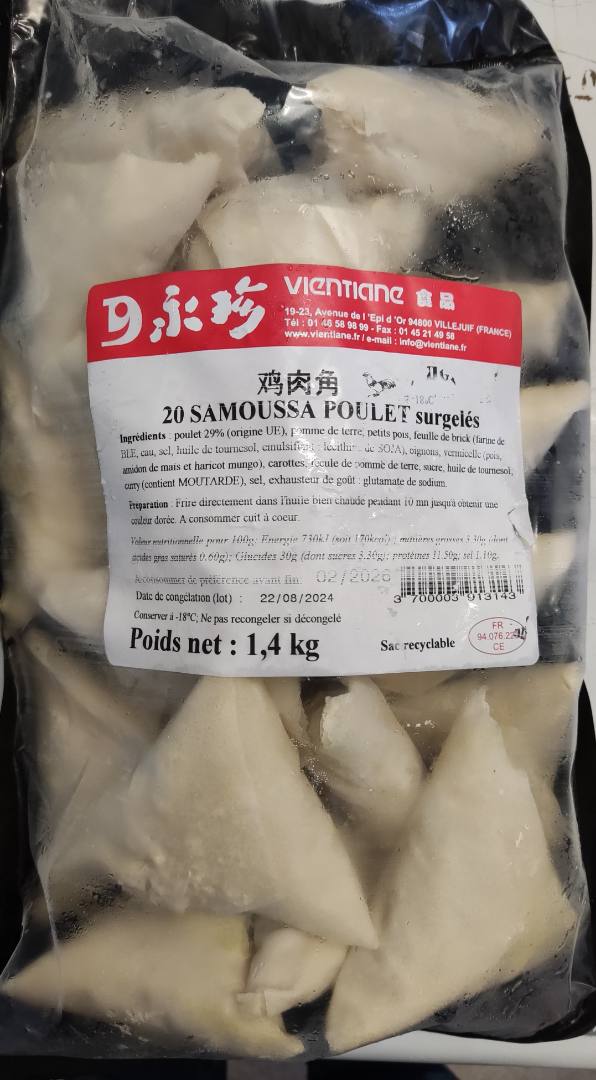
France – Frozen Raw Chicken Samosa – Salmonella

Gov France

Product Category
Food
Product subcategory
Meats
Product brand name
VIENTIANE
Model names or references
20 Frozen Chicken Samosas
Product identification
GTIN Batch Date
37000003913143 06/17/2024 Expiry date 01/17/2026
Packaging
9 bags of 20 pieces per carton
Start/End of marketing date
From 06/17/2024 to 01/17/2026
Storage temperature
Product to be stored in the freezer
Geographic area of ​​sale
Whole France
Distributors
Jean PHILIPON THAI MARCEAU HONG XIN

Holiday Updates

Sorry for all the posts today just catching up after holidays 🙂

Research – Systematic risk ranking of microbiological hazards in infant foods

Science Direct

Abstract

Ensuring food safety, particularly for vulnerable groups, like infants and young children, requires identifying and prioritizing potential hazards in food chains. We previously developed a web-based decision support system (DSS) to identify specific microbiological hazards (MHs) in infant and toddler foods through a structured five-step process. This study takes the framework further by introducing systematic risk ranking (RR) steps to rank MH risks with seven criteria: process survival, recontamination, growth opportunity, meal preparation, hazard-food association evidence, food consumption habits of infants and toddlers in the EU, and MH severity. Each criterion is given a semi-quantitative or quantitative score or risk value, contributing to the final MH risk calculation via three aggregation methods: semi-quantitative risk scoring, semi-quantitative risk value, and outranking multi-criteria decision analysis (MCDA). To validate the criteria and ranking approaches, we conducted a case study to rank MH risks in infant formula, compared the results of the three risk ranking methods, and additionally evaluated the ranking results against expert opinions to ensure their accuracy. The results showed strong agreement among the three methods, consistently ranking Salmonella non-Typhi and Cronobacter spp. and Shiga-toxin-producing Escherichia coli as the top MH risks in infant formulae, with minor deviations. When MHs were ranked after an initial hazard identification step, all three methods produced nearly identical MH rankings, reinforcing the reliability of the ranking steps and the selected criteria. Notably, the risk value and MCDA methods provided more informative MH rankings compared to the risk scoring method. The risk value and risk scoring methods were implemented into an online tool, called the MIcrobiological hazards risk RAnking decision support system (Mira-DSS), available at https://foodmicrobiologywur.shinyapps.io/MIcrobial_hazards_RAnking/. In conclusion, our framework enables the ranking of MH risks, facilitating intervention comparisons and resource allocations to mitigate MH risks in infant foods, with potential applicability to broader food categories.

Research – Report on the establishment of the safe shelf life of certain ready-to-eat, sliced and pre-packaged foods in the retail trade in relation to the risk of Listeria monocytogenes

Wiley Online

Report on the establishment of the safe shelf life of certain ready-to-eat, sliced and pre-packaged foods in the retail trade in relation to the risk of Listeria monocytogenes
Abstract
The Barcelona Public Health Agency (ASPB) asked the Scientific Advisory Committee on Food Safety for an opinion on the safe shelf life of Listeria monocytogenes in certain products (cheeses, cooked meats, including pâtés, and cured meats) sliced and pre-packaged prior to retail sale.
In order to assess in which cases or under which conditions ready-to-eat foods under study may promote the growth of pathogenic microorganisms during their shelf life the methodology proposed by EFSA (2020) was used. In addition, the predictive model of growth / non-growth boundaries, based on the gamma concept approach, was applied.
To carry out this assessment, the ASPB provided a total of 90 samples (32 in 2020
and 58 in 2021) divided into 4 categories of ready-to-eat foods: cheese, cooked ham, pâté / foie and cured ham. In all cases, the food was sliced or cut into portions in retail establishments of the city of Barcelona, and packaged in different formats: vacuum-packed, in a heat-sealed or shrink-wrapped tray, or wrapped in film.
The results of the evaluation indicated that the ready-to-eat pre-packaged foods evaluated for the group of cheeses, cooked ham, pâtés and foie required the indication of “use by” date, as the handling conditions expose the product to a potential L. monocytogenes contamination and the pH and aw (water activity) characteristics associated with these products support its growth.
Considering a reasonably foreseeable scenario in relation to storage temperature
conditions in retail (2 days at 5 °C) and in a domestic refrigerator (5 days at 9.5 °C), the safe shelf life of the products that more would favor the growth of L. monocytogenes would be between 4.5 and 4.9 days (corresponding to the 5th and 10th percentile, respectively). This estimate is the result of a conservative approach that provides a margin of safety to the outcome of the evaluation.

Research – Mycotoxin control in cereals: safe guarding food

Safe Food Net

The aim of this research was to review (and where possible improve/refine
current rapid screening methods for the mycotoxin T-2 and its metabolites in
cereals for human consumption.
Researchers engaged with the relevant sector of the cereal processing industry in
Ireland and the UK, and the relevant primary production sector, to gain detailed,
valuable information.
The research conducted was designed to clarify deficits in T-2 toxin control in the
relevant processing and primary production sectors, evaluate the robustness of
current analytical detection and control methods therein, augment same if deemed
necessary, and implement workable T-2 toxin control solutions at sectoral level.
Objectives
The specific objectives of the research project were to:
• Conduct a literature review of the most up-to-date scientific and
regulatory data for T-2 toxin and its metabolites, the specific environmental conditions required for their production, and the impact of climate change on their occurrence and distribution.
• Undertake a thorough analysis of the currently available commercial rapid analytical techniques for the screening of T-2 and HT-2 toxins in cereals for direct human consumption.
• Undertake a survey of the relevant processing and primary production sectors to determine what testing they currently conduct for mycotoxins, to fully understand the shortfalls in relation to mycotoxin monitoring and control within the industry.
Conduct a survey of oats and barley (n≥100) using mass spectrometry to identify contamination levels of, not only the mycotoxins of interest, i.e., T-2 and HT-2, but also all other regulated mycotoxins including aflatoxins, deoxynivalenol, zearalenone, fumonisins and ochratoxin A.
• Perform a thorough evaluation of a selected number of rapid test kits to ascertain fitness for purpose and determine how to adapt the most robust methods for better performance. If required, undertake a training workshop on the use of the best performing rapid testing kits.
• Engage with stakeholders to discuss the implications of the findings of
the project and produce a series of conclusions and recommendations
for stakeholders on the island of Ireland.