Monthly Archives: May 2023

USA – Raw Milk recalled over Listeria Risk

Food Poison Journal

IZJ6MVJCTBDQ5GY2G2HMZLMHBY

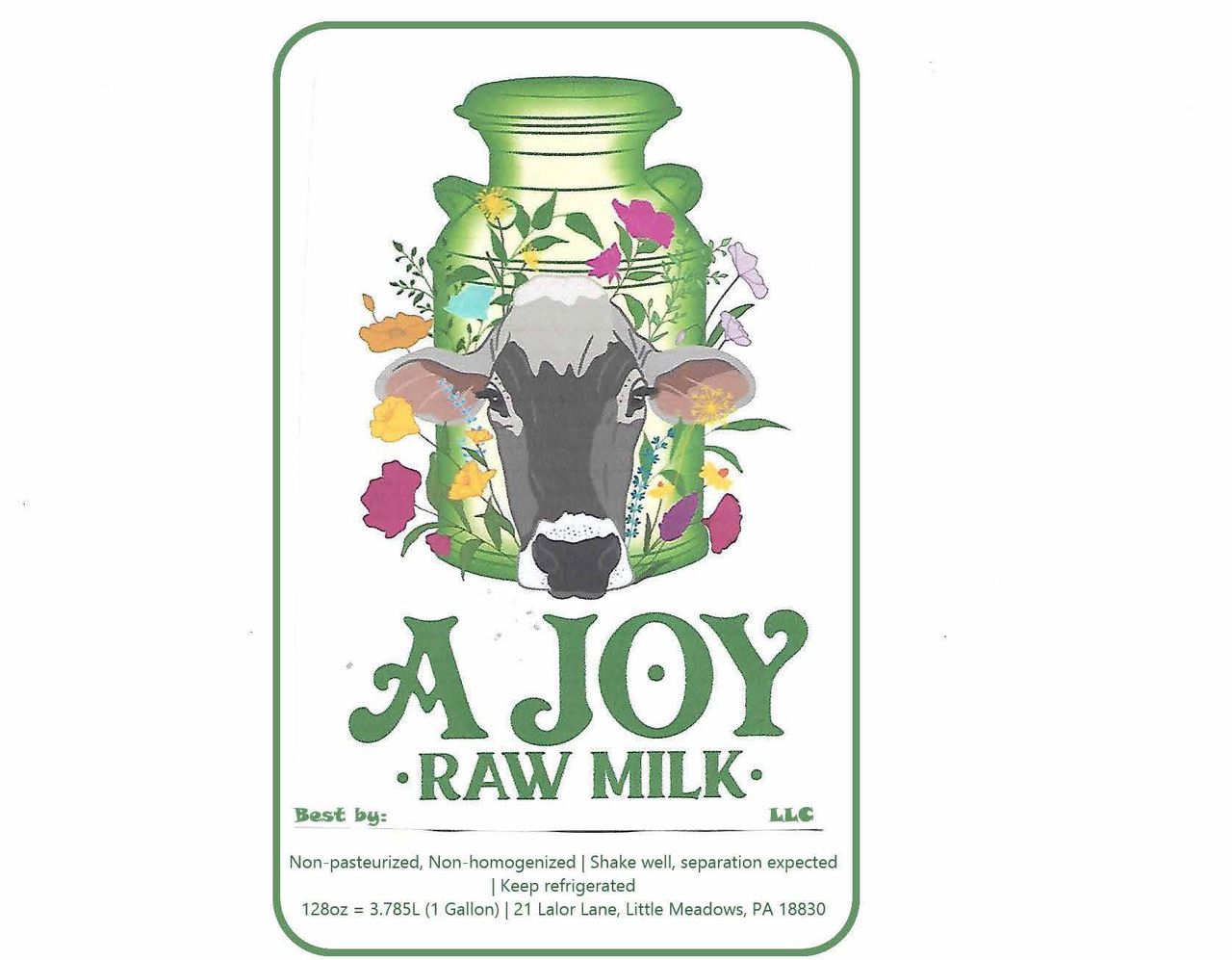
The Pennsylvania Department of Agriculture warns that consumers should immediately discard “A Joy” brand raw milk products sold in Susquehanna County. Tests following a report of potential bacteria contamination confirmed the presence of listeria monocytogenes bacteria in half gallon and gallon plastic jugs at the A Joy Farm store at 21 Lalor Lane in Little Meadows, Susquehanna County.

The tainted raw milk may be unlabeled and undated, or may bear the A Joy label and A2 or “A2/A2” product description. The producer refused to issue a recall, post a notice, or supply a customer list for direct notification.

Listeria monocytogenes can cause listeriosis, an illness which has symptoms including fever, muscle aches, nausea, and diarrhea. Listeriosis mainly affects pregnant women, newborns, the elderly, and adults with impaired immune systems. Listeriosis in pregnant women can result in miscarriage, premature delivery, serious infection of the newborn, or stillbirth.

No reported illnesses have been attributed to the product, but people who consumed the milk should consult their physicians if they become ill.

Research – Salmonella Outbreaks Associated with Not Ready-to-Eat Breaded, Stuffed Chicken Products — United States, 1998–2022

CDC

Not ready-to-eat (NRTE) breaded, stuffed chicken products (e.g., chicken stuffed with broccoli and cheese) typically have a crispy, browned exterior that can make them appear cooked. These products have been repeatedly linked to U.S. salmonellosis outbreaks, despite changes to packaging initiated in 2006 to identify the products as raw and warn against preparing them in a microwave oven (microwave) (14). On April 28, 2023, the U.S. Department of Agriculture proposed to declare Salmonella an adulterant* at levels of one colony forming unit per gram or higher in these products (5). Salmonella outbreaks associated with NRTE breaded, stuffed chicken products during 1998–2022 were summarized using reports in CDC’s Foodborne Disease Outbreak Surveillance System (FDOSS), outbreak questionnaires, web postings, and data from the Minnesota Department of Health (MDH) and the U.S. Department of Agriculture’s Food Safety and Inspection Service (FSIS). Eleven outbreaks were identified in FDOSS. Among cultured samples from products obtained from patients’ homes and from retail stores during 10 outbreaks, a median of 57% of cultures per outbreak yielded Salmonella. The NRTE breaded, stuffed chicken products were produced in at least three establishments.§ In the seven most recent outbreaks, 0%–75% of ill respondents reported cooking the product in a microwave and reported that they thought the product was sold fully cooked or did not know whether it was sold raw or fully cooked. Outbreaks associated with these products have occurred despite changes to product labels that better inform consumers that the products are raw and provide instructions on safe preparation, indicating that consumer-targeted interventions are not sufficient. Additional Salmonella controls at the manufacturer level to reduce contamination in ingredients might reduce illnesses attributable to NRTE breaded, stuffed chicken products.

Australia – Korea Connections Enoki Mushrooms – Listeria monocytogenes

FSANZ​​​

​Date published: 09/05/2023

Product information

Korea Connections is conducting a recall of Enoki Mushrooms 300G. The product has been available for sale at independent/Asian grocery stores in WA.​

Date markings

Best Before 17.08.2023

Problem

The recall is due to the contamination of Listeria monocytogenes and no instructions to cook the product prior to consumption.

Food safety hazard

Listeria monocytogenes may cause severe illness in pregnant women, unborn babies, neonates, the elderly, and individuals who are immunocompromised. The general population can also become ill from consuming food contaminated with Listeria monocytogenes.

For more information about Listeria monocytogenes and enoki mushrooms please visit Listeria monocytogenes and imported fresh enoki mushrooms (foodstandards.gov.au).

Country of origin

South Korea

What to do​

Consumers should not eat this product. Any consumers concerned about their health should seek medical advice and should return the product to the place of purchase for a full refund.
For further information contact:
Korea Connections (WA)
Ph: 0433 888 639​

​​​​

Related links:

USA – Lancaster Foods Announces Voluntary Recall of Various Expired Kale, Spinach and Collard Green Products Due to Potential Health Risk – Listeria monocytogenes

FDA

Company Announcement

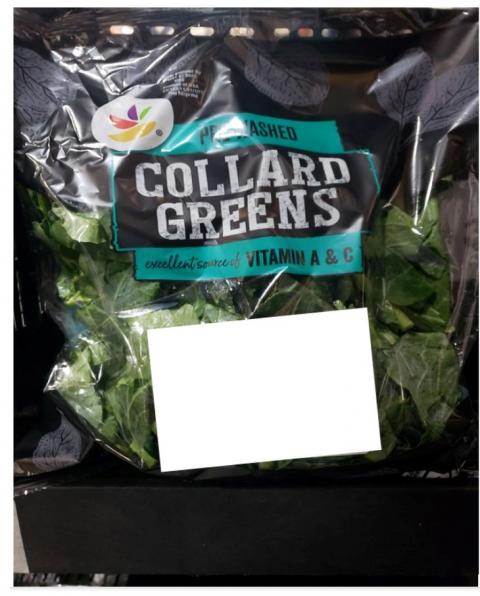
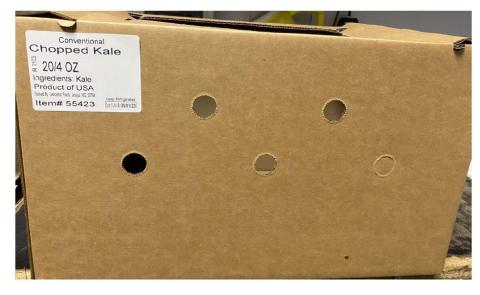
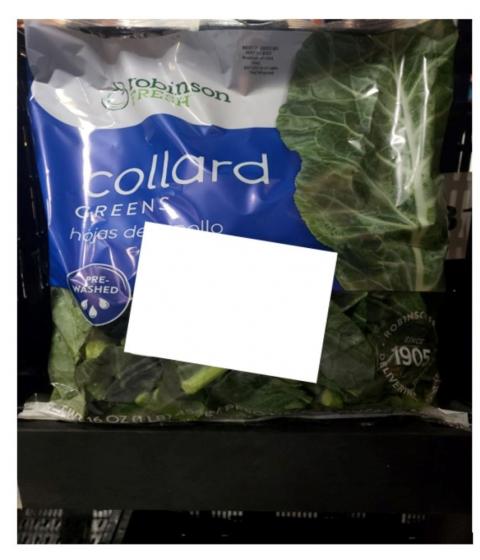
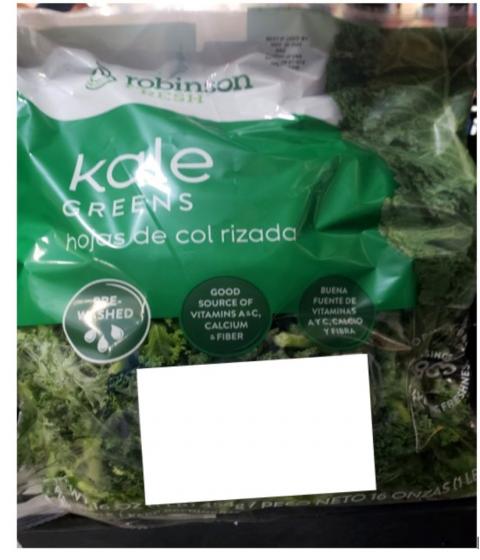
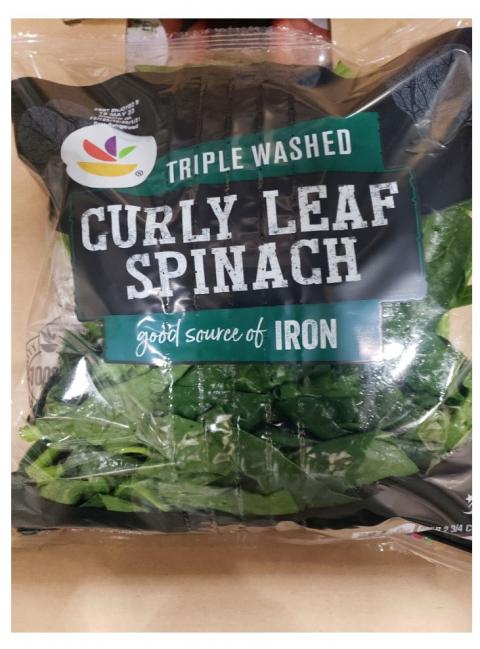
Lancaster Foods is voluntarily recalling a limited quantity of 3 brands of already-expired Robinson Fresh, Lancaster, and Giant brand Kale, Spinach and Collard Green products produced at the company’s Jessup, Maryland facility. This recall is due to a possible health risk from Listeria monocytogenes. No related illnesses have been reported to date. The recalled products are beyond their “Best If Used By Date”.

Listeria monocytogenes can cause serious and sometimes fatal infections in young children, frail or elderly people and others with weakened immune systems. Although healthy individuals may suffer short-term symptoms such as high fever, severe headache, stiffness, nausea, abdominal pain and diarrhea, Listeria infection can cause miscarriages and stillbirths among pregnant women. Consumers with these symptoms should immediately consult their health care provider.

The recall was initiated after notification that a random sample of a single bag of Chopped Kale Greens product with a “BEST IF USED BY May 1 2023” date collected by the New York Agriculture and Markets Food Safety Division tested positive for the Listeria pathogen.

A listing of products subject to this recall are summarized at the end of this announcement. Products can be identified by using the UPC or Item Number codes and the Best if Used by Dates outlined in the table below. These products were distributed through retailers and distributors in the states of Maryland, Massachusetts, New Jersey, New York, Virginia, and Pennsylvania. Retailers and distributors have been instructed to ensure the recalled products are removed from all inventories. Consumers who might still have the recalled products in their refrigerators should discard the items and they should not be consumed.

No other products distributed by Lancaster Foods have been recalled. Lancaster Foods is working collaboratively with the U.S. Food and Drug Administration on this recall.

The safety and integrity of products distributed by Lancaster Foods are a top priority and taken very seriously. Lancaster Foods regrets any inconvenience and concern this recall may cause.

Customers who have any questions about the recall may contact Lancaster Foods Customer Service at 877-844-3441 Monday through Friday 8:30 AM to 4:00 PM EDT.

AFFECTED PRODUCT:

Item Number Brand Pack/Size UPC Codes Description Best If Used By Date
00682 ROBINSON FRESH 8/16 OZ 0-95829-60015-9 KALE GREENS May 01 2023
00619 ROBINSON FRESH 6/32 OZ 0-95829-60016-6 KALE GREENS May 01 2023
55423 LANCASTER 20/4 OZ N/A CHOPPED KALE May 01 2023
78983 GIANT 12/8 OZ 6-88267-09813-0 CURLY LEAF SPINACH April 29 2023
00684 ROBINSON FRESH 8/16 OZ 0-95829-60006-7 COLLARD GREENS May 01 2023
01907 GIANT 8/16 OZ 6-88267-05311-5 COLLARD GREENS May 01 2023

Company Contact Information

Consumers:
Lancaster Foods Customer Service
 877-844-3441

Product Photos

USA – Chang Farm Recalls Mung Bean Sprouts Because of Possible Health Risk

FDA

Company Announcement

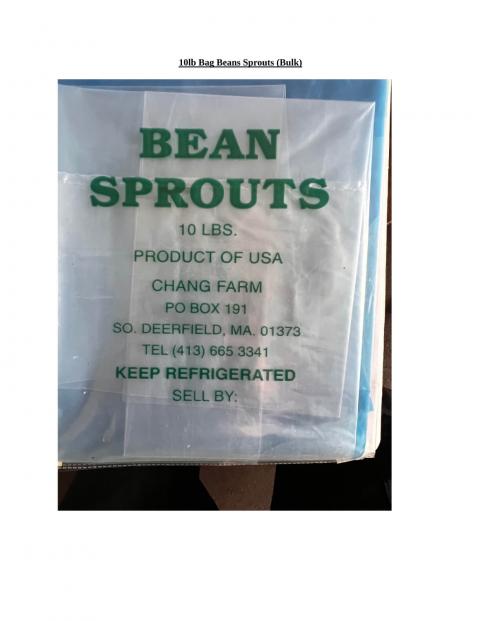
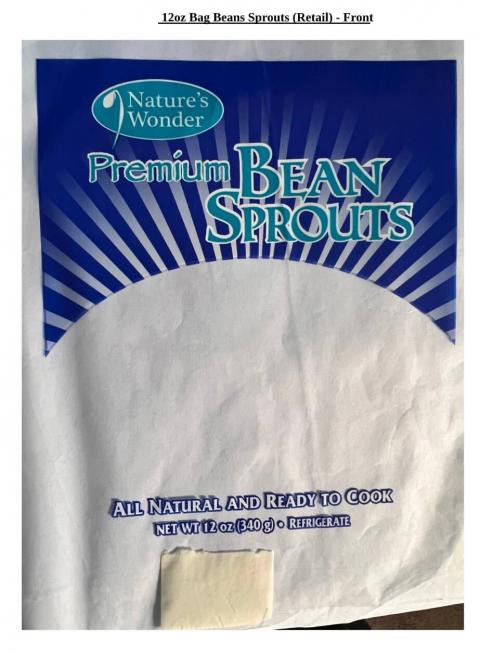
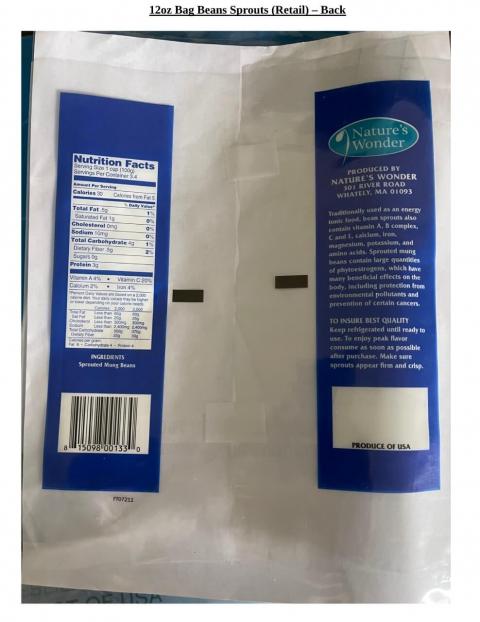
Chang Farm, 301 River Road, Whatley, MA is issuing a voluntary recall of Mung Bean Sprouts; all 10lb bags (as some bags may not have sell-by dates), as well as 12 oz retail bags, both packaged on April 23rd, 2023 (distributed on April 24th, 2023), produced by Chang Farm, with the specific sell-by date of May 7th, 2023 because of the possible presence of Listeria monocytogenes (L. Monocytogenes) contamination. Listeria monocytogenes, an organism which can cause serious and sometimes fatal infections in young children, frail or elderly people, and others with weakened immune systems. Although healthy individuals may suffer only short-term symptoms such as high fever, severe headaches, stiffness, nausea, abdominal pain and diarrhea, Listeria infection can cause miscarriages and stillbirths among pregnant women.

The affected product is packaged in 10 lb bags (bulk) with no specified “Sell By” dates and 12 oz plastic bags (retail), labeled under the Chang Farm Brand as Premium Bean Sprouts and have a “Sell By” date of May 7th, 2023.

The product has been distributed to retail stores and wholesalers throughout MA, CT, NY and NJ.

No illnesses have been reported to date.

Sample analysis by New York State Department of Agriculture and Markets’ (NYSDAM) Division of Food Safety and Inspection confirmed Listeria Monocytogenes.

All retail stores and wholesalers who have this lot in MA, CT, NY and NJ should remove this product from their shelves. Consumers should not consume the products and should discard this product or return them to the place of purchase for a full refund.

Consumers should contact their healthcare provider with any illness concerns. Consumers with questions about the warning may contact Chang Farm at 413-522-0234 or 413-222-5519 which will be monitored 24 hours EST from Monday – Sunday.


Company Contact Information

Consumers:
Chang Farm
 413-522-0234 or 413-222-5519
Media:
Sidney Chang
 413-522-0234

Product Photos

France – Garlic Prefou – Listeria monocytogenes

Gov france

Identification information of the recalled product

  • Product category Feed
  • Product subcategory Others
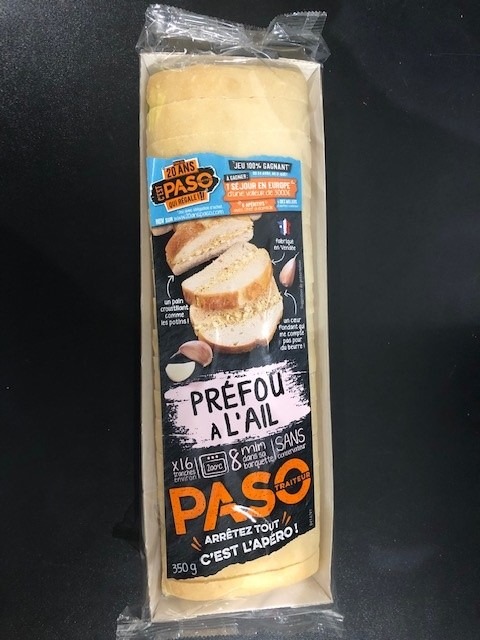
  • Product brand name PASO
  • Model names or references Garlic Prefou 350g
  • Identification of products
    GTIN Batch Date
    3760114570062 131220017 Use-by date 05/28/2023
  • Packaging 350g
  • Marketing start/end date From 03/05/2023 to 28/05/2023
  • Storage temperature Product to be stored in the refrigerator
  • Geographic area of ​​sale Whole France
  • Distributors CocciMarket, Auchan, Cora, Match, Intermarché, System U, Leclerc, Casino

Practical information regarding the recall

  • Reason for recall Suspicion of Listeria monocytogenes
  • Risks incurred by the consumer Listeria monocytogenes (causative agent of listeriosis)

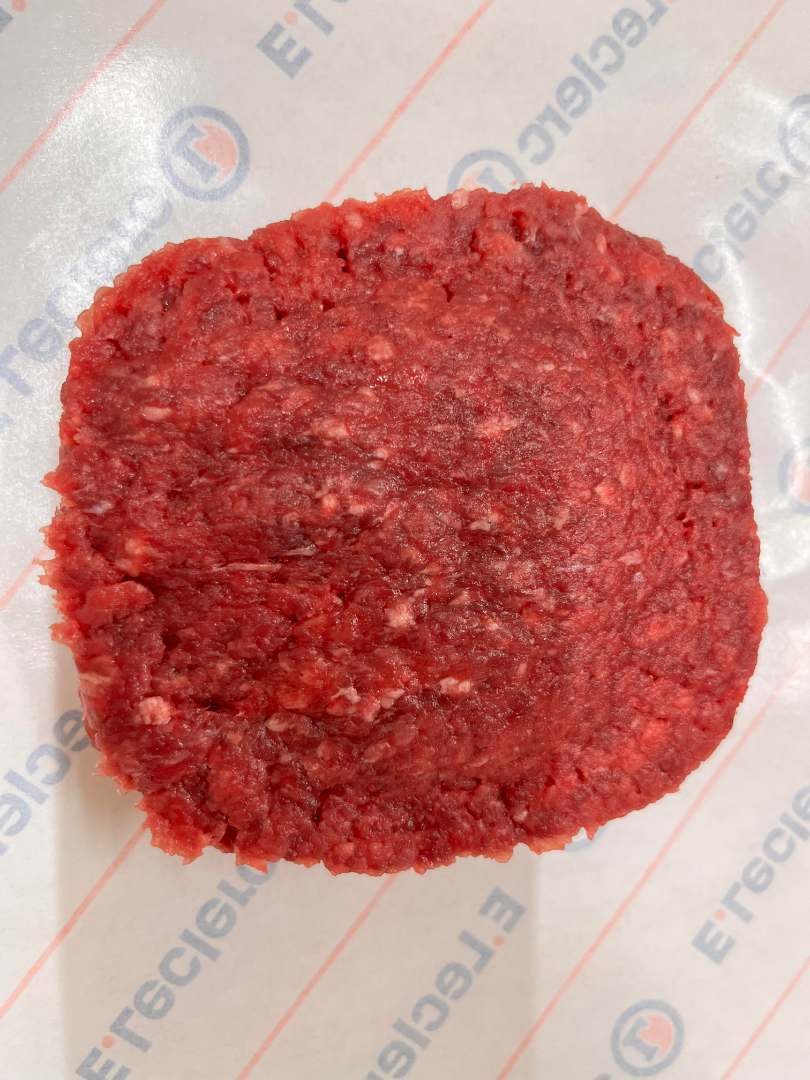
France – Bulk minced meat on demand traditional butchery department – Salmonella

Gov france

Identification information of the recalled product

  • Product category Feed
  • Product subcategory Meats
  • Product brand name Unbranded
  • Model names or references Bulk
  • Identification of products
    Lot Date
    41/223110707 Use-by date 05/17/2023
  • Marketing start/end date From 04/18/2023 to 04/22/2023
  • Storage temperature Product to be stored in the refrigerator
  • Health mark SOMEVIA
  • Geographic area of ​​sale E. Leclerc Amboise
  • Distributors E. Leclerc Amboise

Practical information regarding the recall

  • Reason for recall Demonstration of the presence of salmonella during a microbiological control
  • Risks incurred by the consumer Salmonella spp (causative agent of salmonellosis)

Research – Study looks at Listeria contamination patterns in processors

CPS

While several studies have examined Listeria monocytogenes (Lm) prevalence in dairy and meat processing facilities, few have looked at Lm contamination patterns and related sanitation programs in produce processing facilities.
But Ana Allende, Ph.D., and her team from the CEBAS-CSIC research institute in Spain, hope their two-year CPS-funded research will change that. The project is designed to yield practical data about produce facilities’ environmental monitoring plans as well as the efficacy of sanitation programs.

Key Take-Aways

• Project looked at Listeria contamination patterns in three produce processing facilities.
• Whole genome sequencing, a type of genetic fingerprinting, helped link positive Lm samples to possible sources.
• Researchers tested biocides against resident Lm populations to gauge efficacy and potential loss of sensitivity.
“We started to become interested in the role of environmental contamination following years of attending the CPS Symposium where some researchers, such as Dr. Martin Wiedmann and Dr. Laura Strawn, focused on Listeria control in produce packinghouses and processing facilities,” she said. “We’re trying to bring our experiences from another point of view. The facilities we’re able to sample here could also help us understand the significance of this problem.”
Joining her as co-principal investigators were Mabel Gil, Ph.D., and Pilar Truchado, Ph.D., both from the CEBAS-CSIC.
As part of the project, the researchers enlisted the cooperation of three processing plants: one with a cut iceberg lettuce line, one with a cut fruit line and one with a salad bowl line.
While the U.S. Food and Drug Administration has zero tolerance for Lm in processed produce samples, the European Commission has set a threshold of up to 100 colony-forming units per gram.
Read More at the Link Above

Research – Demystifying Cronobacter and Actions FDA is Taking to Keep the Food Supply Safe

FDA

Last year, following the February Abbott recall and subsequent shortage of infant formula, many households across the U.S. heard about a pathogen (bacterium) for the first time called Cronobacter sakazakii. This pathogen isn’t new to the food industry but is not well-known among the general public, so I thought I would catch up with you on some basics about Cronobacter.

What We Know about Cronobacter

Cronobacter is found naturally in the environment – for example, in our yards, kitchens, and living rooms. It can live on surfaces like kitchen counters, sinks, or also on food facility manufacturing equipment. While Cronobacter is harmless for most people, it can cause life threatening infections in infants, particularly those who are younger than two months old, premature, immunocompromised, or of low birth weight.

Evidence has pointed to Cronobacter contamination occurring both in the food facility manufacturing environment and in the home, as demonstrated in the CDC’s recent Morbidity and Mortality Weekly Report (MMWR). Because this pathogen is so ubiquitous in the environment, public health officials stress the importance of safe preparation and storage of powdered infant formula to avoid contamination at home, and the FDA sets certain requirements to help control for it in the manufacturing environment. As part of our work here at the agency to continue to enhance safety in the infant formula manufacturing environment, the FDA recently sent a letter to industry with recommendations for improvements that can be made industry wide.

Research – Meat Microflora and the Quality of Meat Products

MDPI

Meat and meat products are not only a source of nutrients for humans [1,2], but also an excellent substrate for the development of many microorganisms [3]. Fresh meat is always exposed to the action of many species of microorganisms, causing deterioration of its sensory quality and limiting its usefulness, both culinary and technological. The microbiological quality of meat is important both for consumers and from a safety point of view. Meat can be a habitat for saprophytic and pathogenic microorganisms that can deteriorate its quality or threaten the safety of consumers [1,4].
However, microorganisms present in meat products are not always a threat. Such microorganisms include lactic acid bacteria present in meat, which ferment sugars into lactic acid. This has a positive effect on the durability of the manufactured products. The presence and growth of lactic acid bacteria under controlled conditions have long been used in meat processing [5]. This enables the production of products with characteristic and desirable quality features, and at the same time with an extended shelf life. Running lactic acid fermentation processes in optimal conditions, however, often requires the use of highly selected microorganisms with precisely defined and stable characteristics. Such microorganisms are then deliberately introduced into meat in a certain amount during technological processes [5].
Due to the role played by starter cultures in meat products, they can be divided into the following groups: acidifying cultures, cultures supporting the curing process (denitrifying cultures) and stabilizing the curing color, cultures flavoring meat products and cultures stabilizing microbiological products (extending shelf life) [5,6].
A less durable raw material than the meat of animals is fish meat, which deteriorates faster and therefore should be frozen and stored at −20 °C. The cause of spoilage is most often psychrophilic microorganisms that develop at temperatures close to 0 °C. One way to improve the freshness and extend the shelf life of fish is multifunctional composite coatings. They are an interesting alternative to preserve the quality of fish fillets, but also to improve the quality of meat [7].
Appropriate use of selected strains of lactic acid bacteria may be useful in improving the microbiological quality of meat and meat products during storage. The purpose of this Special Issue was to compile original research and review papers covering various aspects of the impact of meat microflora on the quality characteristics and safety of meat and meat products.