Monthly Archives: October 2019

Canada – Updated Food Recall Warning – Parent’s Choice brand Infant Formula for Babies Sensitive to Lactose recalled due to Cronobacter spp.

CFIA

Recall details

Ottawa, October 30, 2019 – The food recall warning issued on October 25, 2019 has been updated to include additional product information. This additional information was identified during the Canadian Food Inspection Agency’s (CFIA) food safety investigation.

Walmart Canada Corp. is recalling Parent’s Choice brand Infant Formula for Babies Sensitive to Lactose from the marketplace due to possible Cronobacter spp. contamination. Consumers should not consume the recalled product described below.

The following product has been sold nationally.

Recalled product

Brand Product Size UPC Codes
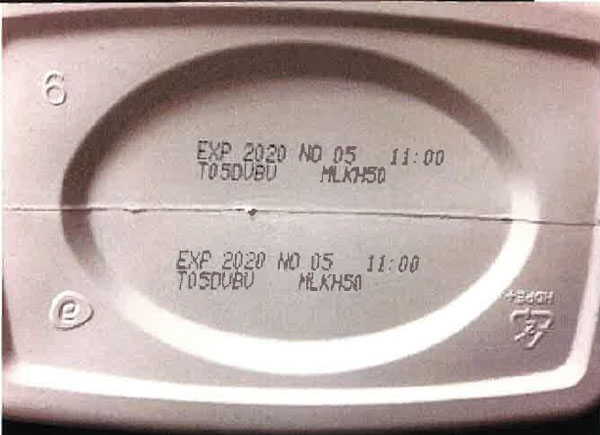
Parent’s Choice Infant Formula for Babies Sensitive to Lactose 638 g 6 28915 09517 3 EXP 2020 NO 05
T05DVBV

Background

This recall was triggered by CFIA test results. The CFIA is conducting a food safety investigation, which may lead to the recall of other products. If other high-risk products are recalled, the CFIA will notify the public through updated Food Recall Warnings.

The CFIA is verifying that industry is removing the recalled product from the marketplace.

Illnesses

There have been no reported illnesses associated with the consumption of this product.

Product photos

Printer ready version of photos
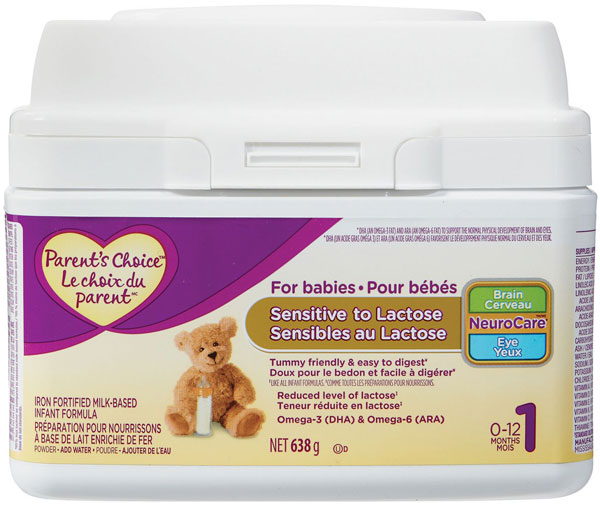
  • Parent's Choice – Infant Formula for Babies Sensitive to Lactose – 638 grams (front)
  • Parent's Choice – Infant Formula for Babies Sensitive to Lactose – 638 grams (lot code)

Canada -Beef recall No. 21 and counting in Canada

Food Safety News

As government officials remain mum on details, they have posted the 21st in a string of beef recalls related to an ongoing E. coli investigation. The newest does not name a recalling company. It says “industry” is recalling the products.

Just as with the previous ones, the Oct. 29 recall reports that it was “triggered by the CFIA’s inspection activities.” The Canadian Food Inspection Agency (CFIA) has not reported what the specific inspection trigger was.

“Consumers should not consume and distributors, retailers and food service establishments such as hotels, restaurants, cafeterias, hospitals and nursing homes should not sell or use the recalled products described in the link above,”according to the recall notice dated Oct. 29

USA – Moby Dick House of Kabob Salmonella Outbreak Sickens 33 in MD, VA, and DC

Food Poisoning Bulletin

The Moby Dick House of Kabob Salmonella outbreak has sickened 33 people in two states and the District of Columbia. This outbreak was first announced on September 26, 2019 by the Maryland Department of Health. There are no notices of the outbreak on the Virginia Department of Heath or the Washington, D.C. Department of Health Websites.

Australia – Australia reports record high number of recalls

Food Safety News

A record-high level of food incidents and recalls have been recorded in Australia, according to the annual report of Food Standards Australia New Zealand.

The food safety team at Food Standards Australia New Zealand (FSANZ) coordinated 106 incidents and recalls from July 2018 to June 2019, which was the highest number of recalls in a 12 month period. This compares to 81 recalls in the same period from 2017 to 2018 and 61 from 2016 to 2017.

USA – Red Raspberries recalled over Hepatitis A

Food Poison Journal

The Sacramento Bee reported today that Raley’s has issued an urgent recall notice to customers, warning its 12-ounce packages of Raley’s brand frozen red raspberries were pulled from stores Monday due to potential Hepatitis A contamination.

The items were recalled from Raley’s, Bel Air and Nob Hill grocery stores, Raley’s said in an email to customers and on the Northern California chain’s website.

“We’re contacting you because Raley’s removed Raley’s Red Raspberries 12 oz (Frozen) from our Raley’s, Bel Air, and Nob Hill stores on October 28, 2019, due to potential contamination with Hepatitis A Virus,” the email said.

New Zealand – Dairy company behind “The Collective” brand fined $483,000 for falsifying Listeria results

MPI

The company that makes dairy products under “The Collective” brand and its former directors have been fined a total of $483,000 for repeatedly failing to report positive listeria results, following an investigation by the Ministry for Primary Industries (MPI).

Epicurean Dairy Limited – whose products include yoghurt and ‘suckies’ marketed to children – and the company’s former general manager Angus Allan, pleaded guilty to a total of 10 charges of failing to report positive environmental listeria results when they appeared in the Waitakere District Court today.

The company was fined $369,000, and Angus Allan, $54,000. Court costs of $80,000 were also imposed.

The company’s former operations manager, Ilya Pyzhanhov, was convicted and fined $60,000 after pleading guilty earlier this year to 5 charges of deliberately withholding positive environmental listeria results.

The charges follow a complex and long-running investigation by the Ministry for Primary Industries whose probe began after investigators were given credible information about the West Auckland company from a confidential informant.

USA – North Bay Produce Voluntarily Recalls Fresh Apples Because of Possible Health Risk – Listeria monocytogenes


North Bay Produce, Inc. of Traverse City, Michigan is voluntarily recalling 2,297 cases and 2 bulk bins of fresh apples due to the potential to be contaminated with Listeria monocytogenesListeria monocytogenes is an organism which can cause serious and sometimes fatal infections in young children, frail or elderly people, and others with weakened immune systems. Although healthy individuals may suffer only short-term symptoms such as high fever, severe headache, stiffness, nausea, abdominal pain and diarrhea, Listeria infection can cause miscarriages and stillbirths among pregnant women.

Recalled varieties include McIntosh, Honeycrisp, Jonathan, Fuji, Jonamac and Red Delicious apples. Recalled apples were sold in plastic bags under the brands; Great Lakes, North Bay Produce Pure Michigan as well as unbranded in clear plastic tote bags, white paper tote bags, and individually from retailers display trays. The recalled apples were shipped between October 16th, 2019 and October 21st, 2019 from one North Bay facility to wholesalers, retailers and brokers in Florida, Illinois, Kentucky, Louisiana, Michigan, North Carolina, Texas and Wisconsin.

Apples purchased at retail prior to October 16th are not affected by this recall, and no other North Bay Produce products are affected by this recall. At this time, we are not aware of any illnesses linked by health officials to this recall.

UK – Zorba Delicacies Limited recalls various houmous products because of the possible presence of Salmonella

FSA

Zorba Delicacies Limited is recalling various brands and flavours of houmous because the products may contain salmonella.

Product details

Aldi’s The Deli brand Reduced Fat Houmous Classic Triple Pack

Pack size 180g (3x60g)
Use by 3 November 2019
Aldi’s The Deli brand Reduced Fat Houmous Selection Triple Pack

Pack size 180g (3x60g)
Use by 3 November 2019
Morrisons The Best Pesto and Parmesan Houmous

Pack size 150g
Use by 4 November 2019
Spar Houmous

Pack size 170g
Use by 6 November 2019
Lidl’s Meadow Fresh Red Pepper Houmous

Pack size 170g
Use by 6 November 2019
Lidl’s Meadow Fresh Houmous Selection

Pack size 180g (3x60g)
Use by 6 November 2019
On the go Sweet Potato Falafel with Houmous (Sainsbury’s Food to go range)

Pack size 250g
Use by 29 October 2019, 30 October 2019, 31 October 2019, 1 November 2019
On the go Carrots & Houmous (Sainsburys Food to go range)

Pack size 130g
Use by 30 October 2019
Houmous with Nando’s PERi-PERi drizzle

Pack size 170g
Use by 29 October 2019, 30 October 2019, 31 October 2019, 1 November 2019, 2 November 2019, 3 November 2019, 4 November 2019
Asda Beetroot Houmous

Pack size 170g
Use by 3 November 2019, 7 November 2019
Asda Extra Special Roasted Red Pepper Houmous

Pack size 170g
Use by 31 October 2019
Asda Extra Special Extra Virgin Olive Oil Houmous

Pack size 170g
Use by 31 October 2019, 1 November 2019
Asda Houmous

Pack size 200g
Use by 6 November 2019
Asda 30% less fat Houmous Stacker (plain)

Pack size 180g (3x60g)
Use by 4 November 2019
Asda 30% less fat Houmous Stacker (flavoured)

Pack size 180g (3x60g)
Use by 4 November 2019
Asda Carrot Sticks & Houmous

Pack size 125g
Use by 28 October 2019, 29 October 2019, 30 October 2019, 31 October 2019
Morrisons Avocado Houmous

Pack size 200g
Use by 4 November 2019

No other Zorba Delicacies Limited products are known to be affected.

Risk statement

The products listed above might be contaminated with salmonella. Symptoms caused by salmonella usually include fever, diarrhoea and abdominal cramps.

Action taken by the company

Zorba Delicacies Limited is recalling the above products. Point of sale notices will be displayed in all retail stores that are selling these products. These notices explain to customers why the products are being recalled and tell them what to do if they have bought the product. Please see the attached notices.

Our advice to consumers

If you have bought any of the above products do not eat them. Instead, return them to the store from where they were bought for a full refund.

Canada – Updated Food Recall Warning – Various raw beef and raw veal products recalled due to E. coli O157:H7

CFIA

Recall details

Ottawa, October 28, 2019 – The food recall warning issued on October 25, 2019 has been updated to include additional product information. This additional information was identified during the Canadian Food Inspection Agency’s (CFIA) food safety investigation.

Industry is recalling various raw beef and raw veal products from the marketplace due to possible E. coli O157:H7 contamination. Consumers should not consume and distributors, retailers and food service establishments such as hotels, restaurants, cafeterias, hospitals and nursing homes should not sell or use the recalled products described below.

The following products have been sold as indicated in the link above.

Ongoing investigation

See complete list of recalled products associated with this ongoing investigation.

Background

This recall was triggered by the CFIA’s inspection activities. The CFIA is conducting a food safety investigation, which may lead to the recall of other products. If other high-risk products are recalled, the CFIA will notify the public through updated Food Recall Warnings.

The CFIA is verifying that industry is removing the recalled products from the marketplace.

Illnesses

There have been no reported illnesses associated with the consumption of these products.

Related recalls

2019-10-25 – Various raw beef and raw veal products recalled due to E. coli O157:H7

2019-10-24 – Various raw beef and raw veal products recalled due to E. coli O157:H7

2019-10-23 – Various raw beef and raw veal products recalled due to E. coli O157:H7

2019-10-22 – Various raw beef and raw veal products recalled due to E. coli O157:H7

2019-10-21 – Various raw beef and raw veal products recalled due to E. coli O157:H7

2019-10-19 – Various raw beef and raw veal products recalled due to E. coli O157:H7

2019-10-18 – Various raw beef and raw veal products recalled due to E. coli O157:H7

2019-10-17 – Various raw beef and raw veal products recalled due to E. coli O157:H7

2019-10-16 – Various raw beef and raw veal products recalled due to E. coli O157:H7

2019-10-15 – Various raw beef and raw veal products recalled due to E. coli O157:H7

2019-10-12 – Various raw beef and raw veal products recalled due to E. coli O157:H7

2019-10-11 – Various raw beef and raw veal products recalled due to E. coli O157:H7

2019-10-10 – Various raw beef and raw veal products recalled due to E. coli O157:H7

2019-10-09 – Various raw beef and raw veal products recalled due to E. coli O157:H7

2019-10-08 – Ryding-Regency Meat Packers Ltd. brand raw beef products recalled due to E. coli O157:H7

2019-10-07 – Various raw beef and raw veal products recalled due to E. coli O157:H7

2019-10-06 – The Beef Boutique Ltd. brand raw beef products recalled due to E. coli O157:H7

2019-10-04 – Ryding-Regency Meat Packers Ltd. brand raw beef products recalled due to E. coli O157:H7

2019-10-03 – Ryding-Regency Meat Packers Ltd. brand raw beef products recalled due to E. coli O157:H7

Research – Outbreaks of Shiga Toxin–Producing Escherichia coli Linked to Sprouted Seeds, Salad, and Leafy Greens: A Systematic Review

Journal of Food Protection

ABSTRACT

Shiga toxin–producing Escherichia coli (STEC) outbreaks involving ready-to-eat salad products have been described in the scientific literature since 1995. These products typically do not undergo a definitive control step such as cooking to eliminate pathogens. To reduce the number of STEC infections from salad products, efforts will need to focus on preventing and reducing contamination throughout the food chain. We performed a systematic review of STEC outbreaks involving sprouted seeds, salad, or leafy green products to determine whether there were recurrent features, such as availability of microbiological evidence or identification of the contamination event, which may inform future investigations and prevention and control strategies. Thirty-five STEC outbreaks linked to contaminated leafy greens were identified for inclusion. The outbreaks occurred from 1995 to 2018 and ranged from 8 to more than 8,500 cases. Detection of STEC in the food product was rare (4 of 35 outbreaks). For the remaining outbreaks, the determination of leafy greens as the source of the outbreak mainly relied on analytical epidemiology (20 of 35) or descriptive evidence (11 of 35). The traceback investigation in 21 of 32 outbreaks was not able to identify possible routes leading to where the STEC bacteria came from or how the leaves were contaminated. Investigations in eight outbreaks found poor practice during processing that may have contributed to the outbreak, such as insufficient postharvest disinfection of the product. Six outbreak investigations were able to identify the outbreak strain in animal feces near the growing fields; two of these were also able to find it in irrigation water on the farms, providing a likely route of contamination. These results highlight the limitations of relying on microbiological confirmation as a basis to initiate investigations of upstream production to understand the source of contamination. This review also demonstrates the importance of, and difficulties associated with, food-chain traceback studies to inform control measures and future prevention.

HIGHLIGHTS
  • Systematic review identified 35 STEC outbreaks linked to contaminated leafy greens.

  • Most (20 of 35) outbreaks relied on epidemiological evidence to identify leafy greens.

  • In 21 of 35 studies, no evidence was found for how original contamination occurred.

  • In 11 studies, water was identified as the probable vector in the contaminating product.

  • Only two studies were able to identify the likely source and route of contamination.