Monthly Archives: June 2019

Australia – Coles Fresh Full Cream Milk 2 Litres

FSANZ

Eureka Operations trading as Coles Express is conducting a recall of Coles Fresh Full Cream Milk 2 Litres. The product has been available for sale at all Victorian Coles Express sites and four Coles Express stores in southern NSW – Deniliquin North, Tocumwal, Albury and Albury North.

Date markings

02 JULY 2019

Problem

The recall is due to microbial (E.coli) contamination.

Food safety hazard

Food products contaminated with E.coli may cause illness if consumed.

Country of origin

Australia

USA – Outbreak of E. coli Infections Linked to Ground Beef Final Update

CDC

This outbreak appears to be over. Ill people in this outbreak ate ground beef from many sources. No single supplier, distributor, or brand of ground beef was identified. Consumers and restaurants should always handle and cook ground beef safely to avoid foodborne illness.

USA – Nature’s Touch Frozen Foods (West) Inc. Voluntarily Recalls Signature Select Avocado Chunks Due to Potential Listeria Monocytogenes Contamination

FDA

FDA Announcement

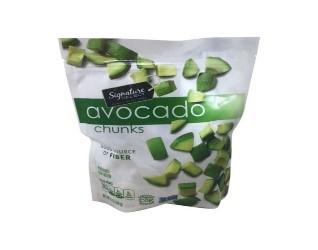
NATURE’S TOUCH FROZEN FOODS (WEST) INC. (“Nature’s Touch”) is voluntary recalling Signature Select Avocado Chunks, with a best before date of Oct 11, 20, due to potential contamination with Listeria monocytogenes (the “Product”).

Nature’s Touch is issuing this voluntary recall based on strict precautionary measures after the company was informed by the FDA that a routine sampling program found a positive result for Listeria monocytogenes in one sample bag of the Product.

Listeria monocytogenes is an organism which can cause serious and sometimes fatal infections in young children, frail or elderly people, and others with weakened immune systems. Although healthy individuals may suffer only short-term symptoms such as high fever, severe headache, stiffness, nausea, abdominal pain and diarrhea, Listeria infection can cause miscarriages and stillbirths among pregnant women.

To date, there have been no reported illnesses associated with the product that is the subject of this precautionary recall:

Signature Select avocado chunksm

UK – Lactalis McLelland recalls Galloway Coloured Medium Grated Cheddar because of possible contamination with Listeria monocytogenes

FSA

Lactalis McLelland Ltd has taken the precautionary step of recalling Galloway Coloured Medium Grated Cheddar because the product might contain Listeria monocytogenes.

Product details

Galloway Coloured Medium Grated Cheddar

Pack size 200g
Batch code 9154G53
Best before 26 August 2019

No other Lactalis McLelland products are known to be affected.

Risk statement

The product listed above might be contaminated with Listeria monocytogenes.

Symptoms caused by this organism can be similar to flu and include high temperature, muscle ache or pain, chills, feeling or being sick and diarrhoea. Some people are more vulnerable to listeria infections, including those over 65 years of age, pregnant women and their unborn babies, babies less than one month old and people with weakened immune systems.

Action taken by the company

Lactalis McLelland Ltd is recalling the above product. Point of sale notices will be displayed in all retail stores that are selling this product. These notices explain to customers why the product is being recalled and tell them what to do if they have bought the product. Please see the attached notice.

Our advice to consumers

If you have bought any of the above product do not eat it. Instead, return it to the store from where it was bought for a full refund.

Information – Management and operation of microbiological containment laboratories

HSA

Scope
1 This publication provides guidance on the general duties under the Health
and Safety at Work etc Act 1974 (the HSW Act) and the requirements
under the Control of Substances Hazardous to Health Regulations 2002
(COSHH) as they relate to those who deliberately work with biological
agents that pose a risk to human health, other than genetically modified
organisms (GMOs). It also describes the minimum containment
requirements that implement the minimum standards required by the
European Directive (Directive 2000/54/EC) on the protection of workers
from risks related to exposure to biological agents at work.
2 There is separate guidance covering work with GMOs
http://www.hse.gov.uk/pubns/books/l29.htm and pathogens covered by the
Specified Animal Pathogens Order (SAPO)
http://www.hse.gov.uk/pubns/books/hsg280.htm which should also be considered
in the context of other work related to biological agents.
3 In addition to COSHH, this guidance provides practical advice on applying
the relevant parts of the Management of Health and Safety at Work
Regulations 1999 (MHSWR) for deliberate work with biological agents and
how to assess and control the risks associated with working with biological
agents.
4 This guidance applies to contained use work in all types of laboratories
where biological agents are handled including research, teaching, clinical,
forensic, veterinary and environmental laboratories. It covers both
deliberate work with biological agents and work with material that contains
or may contain biological agents and describes in detail the minimum
containment measures required at containment level 2 (CL2) and 3 (CL3);
and should be used in conjunction with the control measures specified in
Schedule 3, COSHH. Further details on biosafety management in
containment level 4 (CL4) laboratories can be found in the Principles,
Design and Operation of Containment Level 4 Facilities
http://www.hse.gov.uk/pubns/web09.pdf.
5 There are no legal minimum containment requirements under COSHH for
containment level 1 laboratories. However, the practices, safety equipment
and facilities are similar to those for containment level 2, as required by an
assessment of the risks, and these should be used in addition to the more
general COSHH control measures.


Research – Vibrio spp. from Yesso scallop (Patinopecten yessoensis) demonstrating virulence properties and antimicrobial resistance

Wiley Online

Vibrio_vulnificus_01

Image CDC

Abstract

We report the prevalence and characterization of Vibrio spp. isolated from marketed Yesso scallop (Patinopecten yessoensis) in Korea. A total of 30 isolates including, V. parahaemolyticus (n = 2), V. alginolyticus (n = 9), V. fluvialis (n = 7), V. diabolicus (n = 7), V. anguillarum (n = 4) and V. aestuarianus (n = 1) were isolated and identified. The phenotypic pathogenicity tests demonstrated that, 18 (60%), 21 (70%), 18 (60%), 7 (23%), 22 (73%), 21 (70%), 9 (30%), and 11 (33%) of the isolates were positive for DNase, protease, gelatinase, lipase, phospho‐lipase, amylase, slime production, and haemolysis, respectively. PCR assays revealed the prevalence of toxR, tlh, VAC, vfh, hupO, and VPI genes among the isolates with varying combinations. A close genetic affinity among V. alginolyticus and V. diabolicus strains was observed. Also the virulence genes specific to one Vibrio species were detected among other species as well. In addition, 29/30 (97%) isolates were multidrug resistant, while higher resistance rates were shown for ampicillin, colistin, vancomycin, and cephalothin. The results imply that the scallops in Korean markets harbor Vibrio spp., which are potentially virulent and multidrug resistant, thus their public health implications should not be underrated.

Practical applications

For many decades, vibrios are known for its importance in seafoodborne illnesses. Yesso scallop is the most popular and extensively cultured scallop variety in Korea. Therefore, we sought to assess the marketed fresh Yesso scallops for the prevalence and molecular characterization of Vibrio species. A total of 30 strains were isolated and identified by a series of biochemical tests, subsequent gyrB gene sequencing and phylogenetic analyses. Six Vibrio spp. were identified with V. alginolyticus as the most prevalent. Interestingly, V. alginolyticus was genetically similar to V. diabolicus. Besides, the virulence genes specific to V. alginolyticus and V. parahaemolyticus were observed in other species as well. It suggests that the detection of the species‐specific genes does not ensure the correct identification of pathogenic vibrios. Further, the occurrence of V. parahaemolyticus‐specific virulence genes in other Vibrio spp. potentially complicates the correct tracking of V. parahaemolyticus infections. In addition, 73% of these Vibrio spp. isolates showed multiple antibiotic resistance (MAR) indices higher than 0.2, which signifies their high risk of infection. Collectively, these results provide important evidence that not only the well‐known pathogenic vibrios like V. parahaemolyticus, but also other Vibrio spp. can act alike because of their similar characteristics.

UK – Salmonella cases in UK from food on cruise ships confirmed with WGS

Food Safety News

The United Kingdom has reported 24 cases of Salmonella linked to travel on cruise ships.

Salmonella Enteritidis cases are from cruise ships visiting destinations in the Eastern Mediterranean and Middle East. The outbreak was detected through whole genome sequencing (WGS) analysis. They have sampling dates from May 6 to 21, 2019. Five other cases have sample dates ranging from 2014 to 2018.

Of the 24 cases in 2019, 12 are female and the median age is 64 years with a range of 40 to 84 years old. The most commonly reported cruise ship destinations are Croatia, Corfu, Greece, Israel, Italy, Jordan, Montenegro and Oman.

A total of 717 Salmonella infections were reported from April 29 to June 2 in England and Wales compared to 367 from April 1 to 28, according to Public Health England figures.

Investigations to date indicate there is more than one cruise holiday associated with the outbreak. Patients for whom information is available said they ate all meals on the cruise ship with many spending the entire incubation period on board.

Research -Study finds pathogen issues with ready-to-eat salad and sprouts

Food Safety News

A study by German researchers has raised concerns on the microbiological quality of ready-to-eat salad mixes and fresh sprouts.

The three-year research project by the Max Rubner Institute also found the microbiological quality of cucumbers, carrots and mushrooms was good. Mixed lettuce received a good to medium result and herbs were rated as medium.

The focus was on Listeria, Salmonella, E. coli, Staphylococcus aureus and Bacillus cereus.

Researchers said the microbiological quality of ready-to-eat (RTE) mixed salads was “inadequate” as 7 of 116 samples, or 6 percent, were contaminated with human pathogenic bacteria. This figure was 2.5 percent for lettuce, 1.3 percent for carrots, 1.2 percent for mushrooms, 1.1 percent for sprouts and zero for herbs and cucumbers.

The team sampled a total of 600 products sold in northern and southern Germany including 115 samples of herbs, 40 cucumbers, 79 carrots, 80 types of lettuce, 116 RTE salads, 81 edible mushrooms, and 89 samples of sprouts in the project from 2015 to 2018.

USA -Sprouts Farmers Market Recalls Frozen Cut Leaf Spinach and Frozen Organic Cut Leaf Spinach 16oz. Packages Because of Possible Health Risk

FDA

Summary

Company Announcement Date:
June 14, 2019
FDA Publish Date:
June 17, 2019
Product Type:
Food & Beverages
Produce
Reason for Announcement:
Listeria monocytogenes
Company Name:
Sprouts Farmers Market
Brand Name:
Sprouts Farmers Market
Product Description:
Frozen Cut Leaf Spinach

Company Announcement

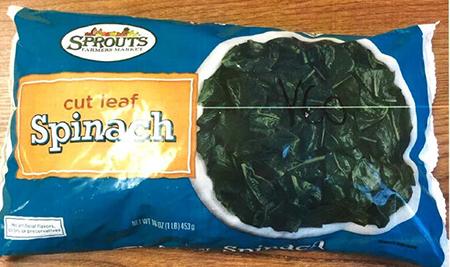
Sprouts Farmers Market of Phoenix, AZ is recalling Frozen Cut Leaf Spinach conventional and organic 16oz bags, manufactured by National Frozen Foods of Oregon, because it has the potential to be contaminated with Listeria monocytogenes, an organism which can cause serious and sometimes fatal infections in young children, frail or elderly people, and others with weakened immune systems. Although healthy individuals may suffer only short-term symptoms such as high fever, severe headache, stiffness, nausea, abdominal pain and diarrhea, Listeria infection can cause miscarriages and stillbirths among pregnant women.

Sprouts Recalls the following product:

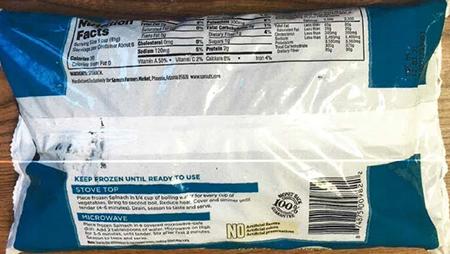
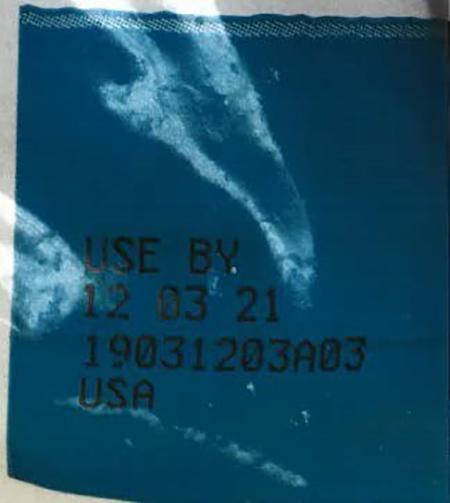
Sprouts Frozen Cut Leaf Spinach, 16oz. bag, UPC 87487500982, Lot 19031203A03, USE BY 12/03/21. Identifying information can be found on the back of the package.

Sprouts Frozen Organic Cut Leaf Spinach, 16oz. bag, UPC 87487500991, Lot 19031203A03, USE BY 12/03/21. Identifying information can be found on the back of the package

Product was distributed to retail locations in AZ, CA, NV, UT, NM, CO, TX, KS, OK, MO, TN, AL, GA, FL, SC, NC, PA, MD, and VA.

No illnesses have been reported in connection to this product to date.

The recall is due to random sampling which revealed the finished products contained the bacteria. Sprouts Farmers Market has removed all affected product from its retail stores. In addition, Sprouts is conducting an internal investigation with National Frozen Foods to ensure all food safety standards and being met and enforced.

Consumers who have purchased the products are urged to destroy or return it to the stores for a full refund of the product. Consumers with questions may contact the company at 1 (888) 577-7688 from 8am to 5pm PST


Company Contact Information

Consumers:
 1 (888) 577-7688

Product Photos

USA – Pillsbury Bread Flour Recalled For Possible E. coli Contamination

Food Poisoning Bulletin ecoli

Hometown Food Company is recalling specific lot codes of Pillsbury Bread Flour for possible E. coli contamination. This product was made by ADM Milling Company at the mill in Buffalo, New York. Some of the wheat used to make this product has been linked to an E. coli O26 outbreak that has sickened 17 people in 8 states. No illnesses have been associated with this specific recalled product.

Some lots of King Arthur all-purpose flour, and all lots of 5 pound bags of ALDI Baker’s Corner flour have been recalled in association with this issue. All of these products were manufactured at ADM Milling.

The recall is for 4,620 cases of Pillsbury Best Bread Flour in 5 pound bags. It was distributed to a limited number of retailers and distributors in these states: Connecticut, Delaware, Maryland, Maine, New Hampshire, New Jersey, New York, Ohio, Pennsylvania, and Virginia. The recalled product has one UPC number, 0 5150020031 5. One of the bags has lot code 8 342 and use by date of JUN 08 2020. The other has lot code 8 343, and use by date JUN 09 2020.

All other Pillsbury bread flour products with other UPC numbers, best by dates, and lot codes are not affected by this recall. Best if used by dates are  printed on the side of the package below the Nutrition Facts Panel.