Monthly Archives: May 2019

UK -Scottish survey looks at consumer perception of food safety risk

Food Safety News

Risks from undercooked chicken and unpasteurized cheese are of low concern to the public, according to a survey for Food Standards Scotland (FSS).

To help consumers in Scotland be aware of foodborne risks and how to control them, FSS needs to understand and measure the level of public knowledge, concern and awareness of such risks.

Results from the Food in Scotland consumer tracking survey show about three quarters of people are concerned about food poisoning but a significant proportion do not follow good food hygiene practices.

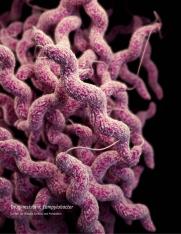
Information – Campylobacteriosis – Annual Epidemiological Report for 2017

ECDC

campy2

Image CDC

Campylobacteriosis is the most commonly reported gastrointestinal disease in the EU/EEA.  In 2017, 29 EU/EEA countries reported 250 161 confirmed cases of campylobacteriosis.

Research – Prevalence, Levels, and Viability of Salmonella in and on Raw Chicken Livers

Journal of Food Protection

ABSTRACT

We surveyed chicken livers from various sources for the presence and levels of Salmonella. The pathogen was recovered from 148 (59.4%) of 249 chicken livers purchased at retail stores in Delaware, New Jersey, and Pennsylvania over about a 9-month period. Positive samples harbored Salmonella at levels of 6.4 most probable number (MPN)/g to 2.4 log CFU/g. The percentage of Salmonella-positive livers purchased at retail outlets in New Jersey (72%, 59 of 82 livers) was significantly higher (P < 0.05) than the percentage for livers purchased in Delaware (48%, 36 of 75 livers); however, this percentage was not significantly different (P > 0.05) from that for livers purchased in Pennsylvania (57.6%, 53 of 92 livers). The pathogen was also recovered more often (P = 0.019) from livers that were packaged by retailers (81 of 121 livers, 66.9%) than from livers packaged directly by processors (67 of 128 livers, 52.3%). In related studies, 12 (5.8%) of 207 chicken livers harvested from birds on a research farm tested positive for Salmonella at levels of 0.4 to 2.2 MPN/g. The recovery rate of Salmonella was 4.4% (6 of 135 livers) from livers with the gall bladder attached and 8.3% (6 of 72 livers) from livers when the gall bladder was removed at harvest on the research farm. We also quantified the levels of a nine-strain cocktail (ca. 6.5 log CFU/g) of Salmonella strains inoculated externally onto or internally into livers both before and after extended cold storage. Storage for at least 2 days at 4°C or 15 days at −20°C resulted in a decrease of about 1.0 log CFU/g in pathogen levels. Given the relatively high recovery rate (ca. 6.0 to 60.0%) and high (possibly illness causing) levels (0.4 MPN/g to 2.4 CFU/g) of Salmonella associated with chicken livers in the present study, further interventions for processors are needed to lower the prevalence and levels of this pathogen on poultry liver.

USA -FDA Sampling Frozen Berries for Harmful Viruses

FDA


Some people use frozen berries without first cooking them, increasing their risk of exposure to harmful viruses. The U.S. Food and Drug Administration reported three hepatitis A virus outbreaks and one norovirus outbreak linked to frozen berries in the United States from 1997 to 2016. The FDA began sampling frozen berries for each hazard as part of the agency’s efforts to protect consumers and ensure food safety.

The sampling assignment began in November and is estimated to last approximately 18 months. The agency is collecting domestic samples of frozen berries in retail packaging from processors, distribution centers, warehouses, and retail locations. The agency is also collecting import samples from ports of entry, importer warehouses, or other storage facilities where foreign goods are cleared for entry into the country. The FDA plans to collect and test 2,000 samples in all.

Frozen berries are used as ingredients in many foods without being cooked; cooking would reduce or eliminate potential contamination. Strawberries, raspberries and blackberries are delicate and may become contaminated with bacteria or viruses if handled by an infected worker who does not use appropriate hand hygiene, or if exposed to contaminated agricultural water or a contaminated surface, like a harvesting tote. Freezing preserves berries but generally does not kill viruses, which can survive at low temperatures.

If the FDA detects hepatitis A virus or norovirus in a sample, the agency will notify the firm of the finding(s) and work with the firm to take appropriate action to protect the public health. Upon detecting a positive test result, the FDA may also take actions such as placing a firm on an import alert, overseeing a recall, or issuing public warnings.

The FDA will post the sampling results on its FY 19-20 Frozen Berries Assignment page on a quarterly basis and will publish an analytical report once the assignment is complete.

India -Food poisoning claims one in Lakhimpur, 50 undergoing treatment after consuming prasad at a ritualistic event

Sentinel

LAKHIMPUR: A food poisoning incident has come to light in Lakhimpur. The case took place at Na-Bhagania Boro Gaon under Boginadi Police Station of the district on May 5.

Meanwhile, an infected woman lost her life and 15 people are undergoing treatment at North Lakhimpur Civil Hospital while 35 people are undergoing treatment at Boginadi Model Hospital. As per the report, the food poisoning happened after the villagers consumed prasad at a ritualistic event held at the village naamghar on that day. They consumed a food item prepared with rice flour, banana and milk as prasad. More than 150 people suffered from severe stomach pain, fever, vomiting and loose motion on the next day –Monday.

India -Four children die of ‘food poisoning’

The Hindu

Four children belonging to the aboriginal Kolam tribe from Narnoor mandal in Adilabad district died after developing symptoms of food poisoning on Wednesday while 24 other children, all aged between six and seven years, were undergoing treatment for the same symptoms at Utnoor hospital. This happened after some children consumed chicken curry that had been cooked the previous day for a wedding feast at Kothapalli Kolamguda village.

USA -Mecox Bay Dairy, LLC Recalls “Mecox Sunrise” Cheese Because of Possible Health Risk – Listeria monocytogenes

FDA

Company Announcement

Out of an abundance of caution, Mecox Bay Dairy, LLC, is recalling their Mecox Sunrise washed-rind Tomme style cheese because it has the potential to be contaminated with Listeria monocytogenes, an organism which can cause serious and sometimes fatal infections in young children, frail or elderly people, and others with weakened immune systems. Although healthy individuals may suffer only short-term symptoms such as high fever, severe headache, stiffness, nausea, abdominal pain and diarrhea, Listeria monocytogenes infection can cause miscarriages and stillbirths among pregnant women.

This cheese was distributed and sold at seven retail locations and one restaurant on Eastern Long Island, NY, and served at one restaurant in Chicago, IL. The product comes in a clear plastic package marked with “Mecox Sunrise” cheese label. As of the date of this release, all affected Mecox Sunrise has been removed from all stores and restaurants.

No illnesses have been reported to date in connection with this problem. The potential for contamination was noted after routine testing by New York State Agriculture and Markets Division of Milk Control revealed the presence of Listeria monocytogenes in a sample of Mecox Sunrise cheese.

The production of the product has been suspended while FDA, New York State Agriculture and Markets, and Mecox Bay Dairy continue to investigate the source of the problem. Consumers who have purchased any “Mecox Sunrise” cheese are urged to return it to the place of purchase for a full refund. Consumers with questions may contact the company between 8:00am and 6:00pm EST at 631-537-0335.

USA -Outbreak Investigation of Salmonella Newport Linked to Frozen Ground Tuna

FDA

May 9, 2019

On May 9, 2019, JK Fish of Vietnam was added to Import Alert 16-120 for fish from foreign processors, allowing FDA to detain product from this firm without physical sampling and analysis.

Recommendation

Restaurants and retailers should check with their suppliers and not sell or serve the recalled ground tuna from Jensen Tuna. They should also be sure to wash and sanitize locations where the recalled ground tuna was stored or prepared.

It is unlikely that the recalled ground tuna was sold directly to consumers in grocery stores; rather, it was likely used in food dishes sold by restaurants or retailers. Consumers with concerns should ask their restaurants and retailers whether the tuna dish they are purchasing contains the recalled ground tuna.

RASFF Alerts – Salmonella – Black Pepper – Sesame Seeds – Whitish Sesame Seeds – Pepper – Chilled Chicken Escalopes – Chilled Chicken Fillets – Cooked Red Shrimps – Turkey Breast – Frozen Pork Cheeks

RASFF-Logo

RASFF – Salmonella (presence /25g) in black pepper from Brazil in Spain

RASFF – Salmonella enterica ser. Pensacola (present /25g) in sesame seeds with shell from India in Germany

RASFF – Salmonella enterica ser. Oranienburg (presence /25g) and Salmonella enterica ser. Rubislaw (presence /25g) in black pepper from Brazil in Germany

RASFF – Salmonella (presence /25g) in black pepper from Brazil in the Netherlands

RASFF – Salmonella (presence in 4 out of 5 samples /25g) in whitish sesame seeds from Nigeria in Greece

RASFF – Salmonella (presence /25g) in black pepper from Brazil in the Netherlands

RASFF – Salmonella (present /25g) in organic sesame seeds from Uganda in the Netherlands

RASFF – Salmonella (presence /25g) in pepper from Brazil in the Netherlands

RASFF – Salmonella enterica ser. Infantis (presence /25g) in chilled chicken escalopes from Italy in Austria

RASFF – Salmonella enterica ser. Infantis (presence /25g) in chilled chicken fillets from Slovakia, with raw material from Ukraine in the Czech Republic

RASFF – Salmonella (in 4 out of 5 samples /25g) in chilled cooked red shrimps (Hymenopenaeus muelleri) from Denmark in Denmark

RASFF – Salmonella (presence /25g) in sesame seeds from Nigeria in Greece

RASFF – Salmonella (presence /25g) in frozen turkey breast with pepper from Chile in Germany

RASFF – Salmonella (presence /25g) in sesame seeds from Nigeria in Greece

RASFF – Salmonella (presence /25g) in frozen pork cheeks from Poland, via Estonia in Finland


RASFF Alerts – Aflatoxin – Groundnuts – Almonds – Hazlenuts

RASFF-Logo

RASFF – aflatoxins (B1 = 20; Tot. = 38 µg/kg – ppb) in groundnuts from Argentina in the Netherlands

RASFF – aflatoxins (B1 = 7.5; Tot. = 10 µg/kg – ppb) in groundnut kernels from Argentina in the Netherlands

RASFF – aflatoxins (B1 = 7.0; Tot. = 10.8 µg/kg – ppb) in groundnuts from Argentina in the UK

RASFF – aflatoxins (Tot. = >24 µg/kg – ppb) in almonds from the United States in Spain

RASFF – aflatoxins (Tot. = 16.0 µg/kg – ppb) in hazelnut kernels from Georgia in Bulgaria

RASFF – aflatoxins (B1 = 23.1 / B1 = 20.0 µg/kg – ppb) in hazelnut kernels from Georgia in Bulgaria

RASFF – aflatoxins (B1 = 11.7 µg/kg – ppb) in blanched hazelnut kernels from Georgia in Bulgaria

RASFF – aflatoxins (B1 = 51.5 µg/kg – ppb) in blanched groundnuts from China in the UK

RASFF – aflatoxins (B1 = 15; Tot. = 34 µg/kg – ppb) in groundnut kernels from Argentina in the Netherlands