Monthly Archives: October 2018

Research – Use of Cold Plasma To Inactivate Escherichia coli and Physicochemical Evaluation in Pumpkin Puree

Journal of Food Protection 

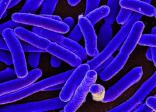
CDC E.coli

This work aimed to study the pumpkin puree processing by cold plasma corona discharge as an alternative to heat treatment to reduce Escherichia coli contamination and evaluate physicochemical alterations, using argon (Ar) as the process gas. The treatment time to verify E. coli inactivation was between 2 and 20 min, while physicochemical alterations were analyzed at 5, 10, 15, and 20 min. Cold plasma corona discharge technology to inactivate E. coli proved to be promising, reaching 3.62 log cycles of reduction at 20 min of treatment. The inactivation kinectics showed a tendency of higher decrease with time. Physicochemical characteristics indicate that plasma induces a decrease of pH; however, there is an indication that process gases have an important role and react with the environment and procedure reactive species. This technology may reduce the total carotenoid content of pumpkin puree and in color, mainly the a* parameter, which showed great reduction.
Research – Factors Affecting Microbiological Quality of Vegetable- and Meat-Based Meals Served at Cafeterias in the Republic of Korea

Journal of Food Protection ecoli

A total of 364 samples of vegetable- and meat-based meals were collected at three processing steps: step I, preparation of raw ingredients; step II, processing and cooking; and step III, finished meals. Microbiological quality was evaluated by using data for the prevalence and concentration of the aerobic plate counts, total coliforms (TC), fecal coliforms (FC), and Escherichia coli. The data were analyzed for differences between cafeterias, seasons, raw materials, and processing steps. Fourteen (15.2%) of the 92 finished meal samples were microbiologically unsatisfactory. Neither cafeteria nor season was significantly associated with microbiological quality (P > 0.05). However, the type of raw ingredients and processing steps were significantly associated with differences in microbiological quality. Vegetable-based meals had higher TC concentrations than meat-based meals because salad and seasoned and fermented vegetables are not cooked, unlike heat-processed meat products. Microbial counts tended to decrease through the processing steps, and E. coli, which could only be enumerated on uncooked chicken breast (1.6 log CFU/g) and sliced pork (2.6 log CFU/g), was totally eliminated by boiling and roasting. However, the presence of FC was not completely eliminated, even by cooking, and so this group of organisms should be considered as an important indicator of hygienic meal preparation in cafeterias. Although pathogenic E. coli was not isolated in this study, continuous microbiological monitoring of composite foods served in cafeterias should be performed as the presence of TC and FC in finished meals indicates the potential for contamination by pathogenic E. coli.

Research – Radio-Frequency Processing for Inactivation of Salmonella enterica and Enterococcus faecium NRRL B-2354 in Black Peppercorn

Journal of Food Protection

Several Salmonella outbreaks linked to black pepper call for effective inactivation processes, because current decontamination methods result in quality deterioration. Radio-frequency (RF) heating provides a rapid heating rate and volumetric heating, resulting in a shorter come-up time. This allows for choosing a high-temperature and short-time combination to achieve the desired inactivation with minimal quality deterioration. The objectives of this study were to evaluate RF heating for inactivation of Salmonella enterica and Enterococcus faecium in black peppercorn and evaluate quality changes of RF-treated black peppercorn. Black peppercorns were inoculated with a five-strain cocktail of Salmonella or E. faecium to attain initial population levels of 6.8 and 7.3 log CFU/g, respectively, and were then adjusted to a moisture content of 12.7% (wet basis) and a water activity of 0.60 at room temperature. A stability test was performed to quantify the microbial reduction during inoculation and equilibration before RF heating inactivation. During RF heating, the cold spot was determined to be at the center on the top surface of the treated sample. In addition to inoculating the entire sample, an inoculated packed sample was placed at the cold spot of the tray. An RF heating time of 2.5 min provided a 5.31- and 5.26-log CFU/g reduction in the entire sample contained in the tray for Salmonella and E. faecium, respectively. Color parameters (L*, a*, b*), piperine content, total phenolics, scavenging activity, and most of the volatile compounds of 2.5-min RF-treated samples were not significantly different from those of the control samples. These data suggest that RF heating is a promising thermal inactivation treatment for Salmonella without significant quality deterioration, and E. faecium seems to be a suitable surrogate for Salmonella to validate the efficacy of RF heating of black peppercorn.

Research – Composting To Inactivate Foodborne Pathogens for Crop Soil Application: A Review

Journal of Food Protection

Compost is organic material that has been degraded into a nutrient-stabilized humus-like substance through intense microbial activity, which can provide essential plant nutrients (nitrogen, phosphorus) to aid in the growth of fruits and vegetables. Compost can be generated from animal waste feedstocks; these can contain human pathogens, which can be inactivated through the heat and microbial competition promoted during the composting process. Outbreaks of infections caused by bacterial pathogens such as Escherichia coli O157:H7, Salmonella, and Listeria monocytogenes on fruit and vegetable commodities consumed raw emphasize the importance of minimizing the risk of pathogenic contamination on produce commodities. This review article investigates factors that affect the reduction and survival of bacterial foodborne pathogens during the composting process. Interactions with indigenous microorganisms, carbon:nitrogen ratios, and temperature changes influence pathogen survival, growth, and persistence in finished compost. Understanding the mechanisms of pathogen survival during the composting process and mechanisms that reduce pathogen populations can minimize the risk of pathogen contamination in the cultivation of fruits and vegetables.

Research – Probiotic Product Enhances Susceptibility of Mice to Cryptosporidiosis

AEM 

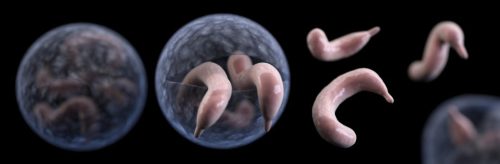
crypto

Image CDC

ABSTRACT

Cryptosporidiosis, a leading cause of diarrhea among infants, is caused by apicomplexan parasites classified in the genus Cryptosporidium. The lack of effective drugs is motivating research to develop alternative treatments. With this aim, the impact of probiotics on the course of cryptosporidiosis was investigated. The native intestinal microbiota of specific pathogen-free immunosuppressed mice was initially depleted with orally administered antibiotics. A commercially available probiotic product intended for human consumption was subsequently added to the drinking water. Mice were infected with Cryptosporidium parvum oocysts. On average, mice treated with the probiotic product developed more severe infections. The probiotics significantly altered the fecal microbiota, but no direct association between ingestion of probiotic bacteria and their abundance in fecal microbiota was observed. These results suggest that probiotics indirectly altered the intestinal microenvironment or the intestinal epithelium in a way that favored proliferation of C. parvum.

IMPORTANCE The results of our study show that C. parvum responded to changes in the intestinal microenvironment induced by a nutritional supplement. This outcome paves the way for research to identify nutritional interventions aimed at limiting the impact of cryptosporidiosis.

Sweden/Austria – Hepatitis A outbreak linked to imported frozen strawberries by sequencing, Sweden and Austria, June to September 2018

Eurosurveillance

Hepatitis A virus is an important cause of food-borne diseases and has been associated with several European outbreaks linked to berries [14]. Here, we describe an ongoing outbreak of hepatitis A virus (HAV) in Sweden and Austria and the confirmation of frozen strawberries imported from Poland as the source of infection. The aims are to highlight the importance of sequencing in outbreak investigations and, due to the long shelf-life of the food vehicle, to increase awareness and warnings towards HAV infections related to frozen strawberries in Europe

On 14 June 2018, the Public Health Agency of Sweden (PHAS) received a notification from the Regional Office of Communicable Disease Control and Prevention of a suspected local outbreak of HAV in County A with five cases. An epidemiological investigation was initiated by county A together with PHAS and the National Food Agency (NFA).

Between 11 June and 27 July 2018, 20 confirmed and probable cases were reported from six counties

USA – FDA Investigated Multistate Outbreak of Salmonella Enteritidis Linked to Shell Eggs from Gravel Ridge Farms

FDA

The U.S. Food and Drug Administration, along with the Centers for Disease Control and Prevention (CDC) and state and local partners, investigated a multi-state outbreak of Salmonella Enteritidis illnesses linked to shell eggs.

Update – October 25, 2018

As of October 25, 2018, there are 44 illnesses associated with shell eggs from Gravel Ridge Farms, in Cullman Alabama. The CDC has announced that this outbreak appears to be over.

Recommendations

The FDA advises consumers not to eat recalled shell eggs produced by Gravel Ridge Farms. Consumers who have purchased these products should discard the eggs or return them to the store for a refund. For a complete list of stores, visit the recall notice.

Consumers should always practice safe food handling and preparation measures. Wash hands, utensils, and surfaces with hot, soapy water before and after handling raw eggs and raw egg-containing foods. Dishes containing eggs should be cooked to 160° F. For recipes that call for eggs that are raw or undercooked when the dish is use either eggs that have been treated to destroy Salmonella, by pasteurization or another approved method, or pasteurized egg products.

USA – Recall Expanded: Now Includes All G & C Raw Dog and Cat Foods – Listeria monocytogenes

Petful

The expanded recall now covers every dog and cat food that G & C Raw made between Feb. 27 and July 20, 2018.

Maker: G & C Raw, LLC
Cause: Potential for listeria
Announcement: FDA report
What was recalled: The products listed in the link above; dog and cat foods produced by G & C Raw with lot numbers that end in “022718” through “072018”:

Europe -4 dead 8 sick in EU outbreak of Listeria linked to salmon products beginning in 2015

EFSA

A multi-country outbreak of 12 Listeriosis cases caused by Listeria monocytogenes sequence type (ST)

8 has been identified through whole genome sequencing (WGS) analysis in three EU/EEA countries: Denmark (6 cases), Germany (5) and France (1). Four of these cases have died due to or with the disease. It is likely that the extent of this outbreak has been underestimated since the outbreak was identified through sequencing and only a subset of the EU/EEA countries routinely use this advanced technique to characterise L. monocytogenes isolates. The first case was sampled in October 2015 in Denmark and the most recent case was reported in May 2018 in Germany. In August 2017, Denmark identified the first cluster of cases, which was investigated and linked to the consumption of ready-to eat cold-smoked salmon produced in Poland. Control measures were implemented and the Member States and competent authorities were informed. In October 2017, France reported the identification of a matching L. monocytogenes strain in food isolates from marinated salmon originating from the same Polish processing company as identified in the Danish outbreak investigation. This supports the hypothesis that contamination may have occurred at the processing company in Poland. However, due to the lack of WGS data on the isolates found in the environmental and food samples taken at the Polish processing plant, it is not possible at present to confirm the contamination with the L. monocytogenes ST8 outbreak strain at the suspected Polish plant. Moreover, until detailed information on the Norwegian primary producers of the salmon used in the contaminated batches is reported and assessed, possible contamination at primary production level cannot be excluded either. Although control measures were implemented following the Danish outbreak investigation in September 2017, the identification of the same strain in a salmon product in France and a new human case in Germany suggest that the source of contamination is still active and contaminated products have been distributed to other EU countries than Denmark. Until the source of infection has been eliminated, new invasive Listeriosis cases may still occur. Pregnant women, the elderly and immunocompromised individuals are at increased risk of invasive Listeriosis, which is associated with severe clinical course and potentially death.


UK – CSM Bakery Solutions recalls its 18 Chocolate Cornflake Cluster Mini Bites due to the possible presence of Salmonella

FSA

CSM Bakery Solutions has taken the precautionary step of recalling one batch of its 18 Chocolate Cornflake Cluster Mini Bites because the product might contain salmonella. This product has been distributed to Iceland Stores only.

Product details

18 Chocolate Cornflake Cluster Mini Bites

Pack size 18 pieces
Lot number 18 285
Best before 09 February 2019

Risk statement

The product listed above might be contaminated with salmonella. Symptoms caused by salmonella usually include fever, diarrhoea and abdominal cramps.

Action taken by the company

CSM Bakery Solutions is recalling the above product. Point of sale notices will be displayed in all Iceland stores that are selling this product. These notices explain to customers why the product is being recalled and tells them what to do if they have bought the product. Please see the attached notice.

Our advice to consumers

If you have bought the above product do not eat it. Instead, return it to the store from where it was bought for a full refund.

About product recalls and withdrawals

If there is a problem with a food product that means it should not be sold, then it might be ‘withdrawn’ (taken off the shelves) or ‘recalled’ (when customers are asked to return the product). The FSA issues Product Withdrawal Information Notices and Product Recall Information Notices to let consumers and local authorities know about problems associated with food. In some cases, a ‘Food Alert for Action’ is issued. This provides local authorities with details of specific action to be taken on behalf of consumers.

Ref: FSA-PRIN-55-2018