Tag Archives: science

Vietnam – Food Poisoning Incident – 107 Cases – Sandwich

Thanh Nien News

Ben Tre authorities concluded Sunday that a sandwich sold by a local bakery was responsible for the food poisoning of 107 people in the Mekong Delta province on May 23.

Cao Thi Diem Thuy, deputy director of the province’s Food Safety Agency, said Minh Tuyen Bakery has been shut down following the incident. Only four people have been discharged from hospital so far, with the other 103 still yet to recover.

All of them ate sandwiches at Minh Tuyen on the evening of May 22 and began to develop stomachache, diarrhea, vomiting, and high temperature by early the following day. More than 20 people were hospitalized immediately, while the others were taken in the next few days after self-medication failed to help.

Thuy said her agency has taken samples from the patients for testing, and the results would determine the action to be taken against the bakery

New Zealand – Food Outlet 9 Cases Salmonella Infantis

The New Zealand Herald Salmonella

An unnamed Northland food outlet is being investigated over nine confirmed cases of a rare type of Salmonella. In the past few weeks, Northland District Health Board has found a total of eleven cases of the food poisoning, which has been identified as salmonella infantis.

The Board’s medical officer Clair Mills says it was odd to have a cluster all at once and in a region where this type of bug is uncommon. She says nine of the eleven people had eaten at the same outlet in Whangarei.

“So then of course we look further at the premise and we take samples from food and we take stool samples from staff.”

Pakistan – Polluted Water – Culltivated Vegetables – Hepatitis A

Business Recorder

Cultivations of vegetables from polluted water in the outskirts of the city is posing serious public health hazard and authorities concerned are doing almost nothing to stop this practice. Experts believe that contaminated water, industrial waste and unhygienic food are causing a surge in the incidence of Hepatitis-A disease.

They said that different government and private hospitals reported that patients of Hepatitis-A were increasing. Experts feared that the situation was worsening in cities such as Karachi, Multan, Swat, and areas near Islamabad where the polluted water contaminated drinking water because of poor sanitation system.

The Environmental Protection Agency (EPA) had conducted tests in few areas and found them prone to Hepatitis-A. However, scores of areas are also affected with the same problem and continue to cause health hazards to people with infectious disease. Medical experts say that it is the responsibility of the government to providing clean drinking water to the citizens on a regular basis. Doctors advised patients to get vaccinated against Hepatitis-A as preventive measures.

USA – Campylobacter in Raw Milk Outbreak

Food Poisoning JournalimagesCAZ9J1WP

The Alaska Section of Epidemiology is investigating another outbreak of Campylobacter infection associated with the consumption of raw milk. This new outbreak is associated with raw milk distributed by the same Kenai Peninsula cow-share program that was linked to a Campylobacter outbreak sickened at least 31 people in February 2013.

In the current investigation, five cases of Campylobacter infection have been identified to date. Two of the five people sought medical attention. Testing by the Alaska State Public Health Laboratory identified the bacteria strain as Campylobacter jejuni. The exact same strain of C. jejuni was found in cow manure obtained earlier this year at the cow-share farm that distributed the raw milk. “The genetic fingerprint of the bacteria isolated from these two people and the cow is unique. It has never been seen before in the United States,” said Dr. Joe McLaughlin, State Epidemiologist. “These outbreaks are an unfortunate reminder of the inherent risks associated with raw milk consumption, and underscore the importance of pasteurization.”

Research – Retrospective Analysis of Salmonella, Campylobacter, Escherichia coli, and Enterococcus in Animal Feed Ingredients

Liebert Online

The presence and antimicrobial susceptibility of foodborne pathogens and indicator organisms in animal feed are not well understood. In this study, a total of 201 feed ingredient samples (animal byproducts, n=122; plant byproducts, n=79) were collected in 2002 and 2003 from representative rendering plants and the oilseed (or cereal grain) industry across the United States. The occurrence and antimicrobial susceptibility of four bacterial genera (Salmonella, Campylobacter, Escherichia coli, and Enterococcus) were determined. Salmonella isolates were further characterized by serotyping and pulsed-field gel electrophoresis (PFGE). None of the samples yielded Campylobacter or E. coli O157:H7, whereas Salmonella, generic E. coli, and Enterococcus were present in 22.9%, 39.3%, and 86.6% of samples, respectively. A large percentage (47.8%) of Salmonella-positive samples harbored two serovars, and the vast majority (88.4%) of Enterococcus isolates were E. faecium. Animal byproducts had a significantly higher Salmonella contamination rate (34.4%) than plant byproducts (5.1%) (p<0.05). Among 74 Salmonella isolates recovered, 27 serovars and 55 PFGE patterns were identified; all were pan-susceptible to 17 antimicrobials tested. E. coli isolates (n=131) demonstrated similar susceptibility to these antimicrobials except for tetracycline (15.3% resistance), sulfamethoxazole (7.6%), streptomycin (4.6%), ampicillin (3.8%), and nalidixic acid (1.5%). Enterococcus isolates (n=362) were also resistant to five of 17 antimicrobials tested, ranging from 1.1% to penicillin to 14.6% to tetracycline. Resistance rates were generally higher among isolates recovered from animal byproducts. Taken together, our findings suggest that diverse populations of Salmonella, E. coli, and Enterococcus are commonly present in animal feed ingredients, but antimicrobial resistance is not common. Future large-scale studies to monitor these pathogenic and indicator organisms in feed commodities is warranted.

Research – Salmonella and Campylobacter Prevalence and Concentration on Pasture-Raised Broilers

USDA

The small-scale, pasture-raised poultry production model is a growing niche in
the locally grown food movement. There is limited research that focuses on the
food safety of small-scale broiler processing methods. The objective of this
study was to compare Salmonella and Campylobacter prevalence and concentrations on pasture-raised broilers processed on-farm, in a small United States Department of Agriculture (USDA)-Inspected custom slaughter facility (U-IF), and in a Mobile Processing Unit (MPU) pilot plant. A total of 120, 100, and 50 post-chill, pasture-raised broiler carcasses were sampled from each processing method, respectively. Salmonella and Campylobacter concentrations in whole carcass rinses were determined using a 3-tube Most Probable Number (MPN) method for Salmonella and direct plating method for Campylobacter according to the USDA-Food Safety and Inspection Service (FSIS) protocols. Salmonella prevalence and concentrations on-farm (89% and 1.78 MPN/carcass [95% CI: 1.60-1.96]), USDA-IF (43% and 0.78 MPN/carcass [95%CI: 0.58-0.98]) were significantly (P <0.05) different. Campylobacter prevalence was not significantly (P >0.05) different on carcasses processed by the three methods (70% on-farm, 82% USDA-IF, and 100% MPU). The mean log10 Campylobacter concentrations in MPU processed carcasses (5.44 CFU/carcass [95% CI: 5.24-5.63]) was significantly higher (P < 0.05) compared to on-farm (2.32 CFU/carcass [95% CI: 2.06-2.80]) and USDA-IF (2.44 CFU/carcass (95% CI: 2.03-2.85]). Based on the results of this baseline study, most pasture-raised broilers processed by the three methods were contaminated with Salmonella and/or Campylobacter with the exception of MPU carcasses on which Salmonella was not detected. Further research is needed to assess other potential risk factors such as farm and regional differences.

China – 548 Students Food Poisoned

Global Times

A total of 548 students from multiple elementary and high schools have been affected by food poisoning in Northwest China’s Qinghai Province, local authorities said Wednesday.

Dozens of students from three schools in the Hui and Tu Autonomous County of Datong started to show symptoms of food poisoning such as vomiting and diarrhea after eating lunch at their schools on Wednesday.

The source that caused the mass food poisoning has been discovered, Wang Yubo, mayor of Xining, the provincial capital, said.

Local authorities added that the remaining lunch has been sealed for tests.

An investigation into the cause of the accident is under way.

Research – Campylobacter in Chicken Embryo’s

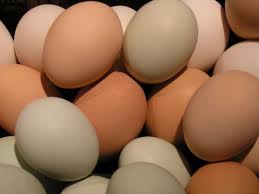
Poultry SiteEGGS

US – Evidence of Campylobacter has been found in all the seven-day-old chick embryos tested by researchers with the USDA Agricultural Research Service (ARS).

Campylobacter, a foodborne pathogen closely associated with poultry, is recognised as a leading bacterial aetiological agent of human gastroenteritis in the United States.

In a paper published in Poultry Science, Kelli Hiett and colleagues at USDA ARS Richard B. Russell Research Center in Athens, Georgia, report two trials in which tissues from seven-, 14/15- and 19-day-old commercial broiler chicken embryos were tested for the presence of Campylobacter using both culturing methodology and PCR.

Conventional culturing methods failed to detect Campylobacter from any samples tested during this investigation.

Canada – Hazlenuts Recall – Salmonella

CFIAEurofins

The public warning issued on May 16, 2013  has been updated to include additional product and distribution information.

The Canadian Food Inspection  Agency (CFIA) is warning the public not to consume certain in shell hazelnuts or  mixed nuts in shell described below because the  products may be contaminated with Salmonella.#

There have been no reported  illnesses associated with the consumption of these products.

These recalls are part of an  on-going food safety investigation associated with a recall of bulk hazelnuts  from USA. The CFIA is working with the recalling firms and distributors to  identify all affected products.

USA – E.coli O157:H7 Outbreak

Food Safety NewsEcoli Istock

At least seven people in Stephens County, Ga., have fallen ill with E. coli in the last several weeks, leading health officials in the area to begin investigating the source of the outbreak, local radio station WNEG reports.

Two of the patients were hospitalized and are now recovering. Most of the seven sickened have been confirmed to have E. coli O157:H7.