Tag Archives: science

New Zealand – Eight fast facts about toxic shellfish poisoning

MPI

With warmer weather on the way, Kiwis all over the motu will be heading to the beach to enjoy the sea’s bounty. But before you go gathering shellfish, New Zealand Food Safety deputy director-general Vincent Arbuckle has some fast facts to share about toxic shellfish poisoning and how to keep yourself, your whanau and friends safe.

1. New Zealand hasn’t had a toxic shellfish poisoning outbreak for a decade

Toxic shellfish poisoning can cause serious illness and can even be fatal. Fortunately, we haven’t had an outbreak of toxic shellfish poisoning since 2014, when 13 people fell ill.

New Zealand Food Safety works hard to keep it that way by monitoring key recreational shellfish harvesting areas around the country for biotoxins.

2. New Zealand Food Safety regularly tests water and shellfish for biotoxins to keep the public safe

New Zealand Food Safety has more than 40 monitoring sites, with water tested weekly for toxic algae and shellfish tested fortnightly for biotoxins. The commercial shellfish industry also provides their own biotoxin monitoring data from more than 30 sites, giving us even greater coverage.

If shellfish are found to contain biotoxins at unsafe levels, we issue public health warnings and post signs at affected beaches. In 2023 we issued 17 biotoxin alerts.

3. Cooking does not destroy biotoxins

It’s important to know that cooking will not make toxic shellfish safe to eat, because cooking doesn’t destroy biotoxins.

If anyone becomes ill after eating shellfish from an area where a public health warning has been issued, phone healthline for advice on 0800 61 11 16, or seek medical attention immediately. We advise that you also contact your nearest public health unit and keep any leftover shellfish for testing.

4. Shellfish become poisonous by feeding on toxic algae

Shellfish with 2 shells (bivalve shellfish) can each filter more than 200 litres of water a day. They do this to filter out microscopic algae (called phytoplankton) and other particles as a food source. If these algae are toxic, the biotoxins can build up in the shellfish, making them poisonous. Generally, the more toxic algae there are in the water, the more toxic the shellfish get.

5. Bivalve shellfish are the most affected by biotoxins

Shellfish affected by biotoxins usually include bivalves like mussels, oysters, tuatua, pipi, toheroa, cockles and scallops. But pūpū (cat’s eyes) and Cook’s turban and can also have elevated levels of some biotoxins.

Generally, you can still eat pāua, crab and crayfish, but only if you remove the gut before cooking, as biotoxins accumulate in the gut. Finfish are not affected by biotoxins from algal blooms, but we advise discarding the liver before cooking. 

6. Not all species of phytoplankton are toxic

Phytoplankton are photosynthetic microscopic algae, meaning that, just like plants, they use the sunshine to grow. And, like plants, they also need nutrients (which they get from the water) to grow.

If conditions are right, phytoplankton can multiply to high numbers and form algal blooms. Most species of phytoplankton are harmless, but some can naturally produce highly toxic chemicals we call marine biotoxins.

7. Algal blooms occur naturally under particular conditions

Algal blooms usually occur naturally when wind and water currents are favourable for their growth. Causes can include slow water circulation or unusually high water temperatures. Some blooms have happened after extreme weather events like cyclones, floods, or drought.

New Zealand Food Safety does extra monitoring during a toxic algal bloom to track its spread and see how it is affecting different kinds of shellfish.

8. There are 4 main types of toxic shellfish poisoning in New Zealand

Paralytic shellfish poisoning (PSP) is potentially the most serious of the 4 main types of toxic shellfish poisoning found in NZ.

PSP symptoms usually appear within 10 minutes to 3 hours of eating and may include:

  • numbness and tingling around the mouth, face, hands, and feet
  • difficulty swallowing or breathing
  • dizziness and headache
  • nausea and vomiting
  • diarrhoea
  • paralysis and respiratory failure
  • and, in severe cases, death.

If you suspect someone has PSP poisoning after eating shellfish from an area where we have issued a public health warning, seek medical attention immediately.

Research -Mycotoxin Producing Moulds

NeoGen BlogAspergillus

With the harvest underway, it’s important to keep a watchful eye out for mycotoxin-producing molds. These species include Aspergillus flavus, which causes Aspergillus ear rot and produces the carcinogenic toxin aflatoxin, as well as species of Fusarium molds. These toxins can lead to production losses as grain may be rejected, as well as leading to illness in humans or animals that consume the toxin in significant quantities. Here’s a quick primer on some molds of concern and the toxins they produce. For more information and regulatory thresholds for toxins, please see Neogen’s Mycotoxin Handbook.

Research – Clostridium difficile – Possibly not Only a Clinical Issue

New England Journal of MedicineClost

It has been thought that Clostridium difficile infection is transmitted predominantly within health care settings. However, endemic spread has hampered identification of precise sources of infection and the assessment of the efficacy of interventions.

Over a 3-year period, 45% of C. difficile cases in Oxfordshire were genetically distinct from all previous cases. Genetically diverse sources, in addition to symptomatic patients, play a major part in C. difficile transmission.

USA – Recall Kale – Listeria monocytogenes

Listeria Blog

Customers are advised to discard prepacked fresh kale that was purchased from the Roosevelt Square Whole Foods in Seattle.

The kale sold at 1026 Northeast 64th Street may be contaminated with Listeria moncytogene.

The produce was sold in rectangular plastic containers labeled Whole Foods Market Kales Mixed OG (Organic), PLU 0258622 with packed-on date of 9.15.13 through 9.20.13.

Listeria can cause serious and sometimes fatal infections in young children, elderly people or those with weakened immune systems.  Symptoms include high fever, severe headache, stiffness, nausea, and abdominal pain and diarrhea.

No illnesses have been reported, but notice was given after a routine test by Washington State Department of Agriculture.

Canada – CFIA Alert – Salmonella in Spinach

CFIA Eurofins Food Testing UK

Ottawa, September 23, 2013 – The Canadian Food Inspection Agency (CFIA) and Ippolito Fruit and Produce Ltd., are warning the public not to consume the Frisco’s, Queen Victoria and Metro brands spinach described in the link because they may be contaminated with Salmonella.

These products have been distributed in Ontario and Quebec. These products may also have been distributed to other provinces.

There have been no reported illnesses associated with the consumption of these products.

The manufacturer, Ippolito Fruit and Produce Ltd., Burlington, Ontario, is voluntarily recalling the affected products from the marketplace. The CFIA is monitoring the effectiveness of the recall.

Canada – E.coli O157 in Cheese Update

Food Poisoning Bulletin

The Public Health Agency of Canada says that now fourteen cases of E. coli O157:H7 are associated with contaminated raw milk cheese products manufactured by Gort’s Gouda Cheese Farm in Salmon Arm, British Columbia. There are four people who are ill in British Columbia; eight in Alberta; one in Saskatchewan; and one in Quebec. One person in British Columbia has died as a result of this infection.

Ill persons started getting sick between mid-July and early September. Some of Gort’s raw milk cheeses have been recalled as a result of this outbreak. The statement said that “there is currently no indication of widespread risk to Canadians. However, E. coli O157:H7 can pose a serious public health risk. Additional cases of illness may be identified and linked to this outbreak in the future.”

USA – Partnership for For Food Safety Education Website

Partnership for Food Safety Educationlogo-opt

This is website that may interest some of you;

For 5 years, we’ve been busting common food safety myths to help you protect your family from foodborne illness. From leftovers to lemon juice, you might think there’s nothing left to cover!

For National Food Safety Education Month 2013, we’re going where Home Food Safety Mythbusters has not gone before — to the kids!

Kids are more likely to get food poisoning than most adults are. Knowing fact from fiction when it comes to food safety risks could mean the difference between safe kids and sick kids.

Know what is fact and what is fiction. Check out this year’s myths and facts, and free downloads, here.

Research – Effect of Pickling on Pathogens in Hard Boiled Eggs

Journal of Food BiochemistryEGGS

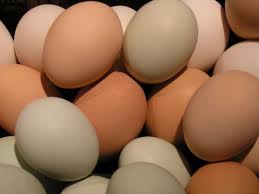
Traditional methods of food preservation, such as pickling, have reemerged as popular approaches for home and commercial food processing. The process of pickling hard-cooked eggs (HCE) can be an effective method of preventing the growth and survival of pathogenic microorganisms. Because of the variety of pickling processes, HCE manufacturers must validate their pickling process for Food and Drug Administration (FDA) approval and demonstrate 5-log reductions of pathogens associated with the product. In this study, a rapid one-step pickling process was evaluated for its ability to reduce Salmonella spp., Listeria monocytogenes, Staphylococcus aureus and Escherichia coli O157:H7 inoculated onto HCE for 14 days at room temperature. All pathogens inoculated onto HCE were reduced by (>5.0 logs) within 24 h and were undetectable following enrichment. The data obtained in this study may be of interest to regulatory officials and processors of HCE seeking pathogen reduction validation for their products.

UK – FSA Salmonella Outbreak investigation

FSASalmonella

An outbreak of an unusual type of salmonella infection, Salmonella Typhimurium, across England and Wales is being investigated by Public Health England, Public Health Wales, the FSA and local authority environmental health officers.

A total of 21 confirmed cases in Wales and 30 in England have been reported, with 9 cases known to have required hospitalisation. Other potential cases are being investigated in both countries.

The outbreak was first detected in Wales in August and centred mainly in North Wales (Conwy and Gwynedd), with additional clusters being investigated in England in the Thames Valley, Leeds, Cumbria and Stafford areas.

Cases are widely geographically distributed in patients aged 7 months to 87 years.

FSA – Loch Duart Artisan Smokehouse recalls a batch of their own Oak Smoked Salmon due to detection of Listeria monocytogenes

FSA

As a precautionary measure, Loch Duart Artisan Smokehouse is recalling a certain batch code of the above product due to detection of Listeria monocytogenes which may pose a risk to health. Listeria monocytogenes can cause illness in certain groups of people, such as pregnant women, unborn and newborn babies, and anyone with reduced immunity, particularly the over-60s.