Category Archives: Yeasts

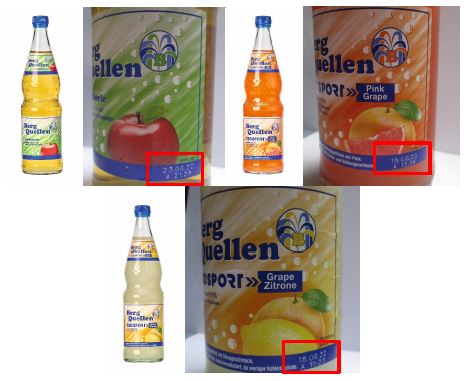
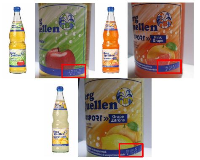
Germany – Berg Quellen Apfelschorle returnable glass bottle 0.7 l “with the best before date 06/23/22, Berg Quellen Iso Sport Pink Grape returnable glass bottle 0.7 l with the best before 06/18/22 and Berg Quellen Iso Sport Grape lemon returnable glass bottle 0.7 l” with the best before 06/18/22 -Secondary Fermentation

Warning type: Food
Date of first publication: 10/27/2021
Product name:

Berg Quellen Apfelschorle returnable glass bottle 0.7 l “with the best before date 06/23/22, Berg Quellen Iso Sport Pink Grape returnable glass bottle 0.7 l with the best before 06/18/22 and Berg Quellen Iso Sport Grape lemon returnable glass bottle 0.7 l” with the best before 06/18/22

Product pictures:

Image1.JPG

Press release

Manufacturer (distributor):

Branded drinks Schwollen GmbH

Reason for warning:

As part of quality assurance, it was found that individual bottles undergo fermentation, which can lead to alcohol formation and the bottles to burst.

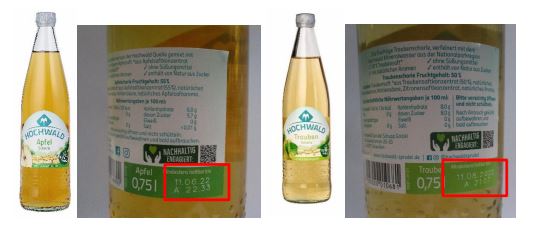
Germany – Hochwald apple spritzer returnable glass bottle 0.75 l with the best before 11.06.22 and Hochwald grape spritzer returnable glass bottle 0.75 l with the best before 11.08.22 – Secondary Fermentaition

LMW

Warning type: Food
Date of first publication:

10/27/2021

Product name:

Hochwald apple spritzer returnable glass bottle 0.75 l with the best before 11.06.22 and Hochwald grape spritzer returnable glass bottle 0.75 l with the best before 11.08.22

Product pictures:

Image1.JPG

Press release

Manufacturer (distributor):

Hochwald Sprudel Schupp GmbH

Reason for warning:

As part of quality assurance, it was found that individual bottles undergo fermentation, which can lead to alcohol formation and the bottles to burst.

Denmark – Fermentation in hot dog ketchup – Yeast

DVFA

Graasten Salads recalls a batch of hot dog ketchup, as there is a risk of fermentation in the product.

Recalled Foods , Published: July 26, 2021

What food:
Hotdog ketchup
Net weight: 375 grams 
Best before date: 07/10/2021
Package date: 09/06/2021
EAN barcode no .: 5704000486493
Sold in:
Rema1000 and Aldi stores throughout the country
Company recalling:
Graasten Salads, Teglværksvej 5-11, 6300 Graasten 
Cause:
Yeast growth has been found in bottles from this batch.
Risk:
Fermentation in the product makes it unsuitable as food.
Advice for consumers:
The Danish Veterinary and Food Administration advises consumers to deliver the product back to the store where it was purchased or to discard it.

USA – FDA Enforcement Report – Firm testing found trace levels of yeast in the product. Further investigation found the presence of Candida pelliculosa.

Product Details

Product Description:

Yakult Nonfat Probiotic Drink; Live and active Lactobacillus casei Shitota; 2.7 FL. OZ. (80 mL), 5 individual bottles per pack, 10 packs per case. Bottle UPC: 4520 8812 5 pack UPC: 6 99235 00100 7 Ingredients: Water, Sugar, Nonfat Milk, Glucose, Natural Flavors, Lactobacillus Casei Shirota.

Reason for Recall:

Firm testing found trace levels of yeast in the product. Further investigation found the presence of Candida pelliculosa.

Product Quantity: 16,073 cases

Recall Number: F-0771-2021

Code Information: Lot code 0601ST03; Best if used by Jul 07 and Jul 08, 2021

Classification: Class II

Event Details

Event ID: 88204

Voluntary / Mandated: Voluntary: Firm initiated

Product Type: Food

Initial Firm Notification of Consignee or Public: Letter

Status: Ongoing

Distribution Pattern: CA, MD, VA, WI, NC, NY, GA, FL, WA

Recalling Firm:

Yakult U.S.A. Inc.
17235 Newhope St Bldg B
Fountain Valley, CA 92708-4274
United States

Recall Initiation Date: 6/26/2021

Center Classification Date: 7/8/2021

Date Terminated:

Research – Behavior of Listeria monocytogenes and Other Microorganisms in Sliced Riojano Chorizo (Spanish Dry-Cured Sausage) during Storage under Modified Atmospheres

MDPI

Sliced ready-to-eat meat products packaged under modified atmospheres are often marketed since they cover consumer demands. The slicing process could be a potential risk for consumers since contamination with Listeria monocytogenes could occur during this stage. The current study evaluated the behavior of L. monocytogenes and other microorganisms in commercial sliced Riojano chorizo. This meat product was sliced and inoculated with L. monocytogenes (3.5 log CFU/g) before packaging under different atmospheres (air, vacuum, 100% N2, 20% CO2/80% N2 and 40% CO2/60% N2) and stored at 4 °C for up to 60 days. Samples were taken on days 0, 7, 21, 28 and 60 of storage. L. monocytogenes, mesophiles, Enterobacteriaceae, lactic acid bacteria, Micrococcaceae, molds and yeast counts were evaluated. Additionally, water activity, humidity and pH were determined. L. monocytogenes counts decreased in inoculated sliced chorizo during storage. Packaging conditions and day of storage influenced microbial counts. After 60 days, a significant reduction (p ≤ 0.05) in the initial Listeria contamination levels (3.5. log CFU/g) between 1.1 and 1.46 logarithmic units was achieved in the sausages packaged in modified atmosphere. The highest reductions were observed in slices packaged in 40% CO2/60% N2 after 60 days of storage at 4 °C. View Full-Text

Research – Expiration Date of Ready-to-Eat Salads: Effects on Microbial Load and Biochemical Attributes

MDPI

When minimally processed vegetables reach their expiration date, expose an increased microbial load. This includes mainly spoilage microorganisms but also foodborne pathogens, thus affecting the quality and safety of highly consumed ready-to-eat salads. A total of 144 ready-to-eat salads from the Cypriot market were analyzed in an attempt to determine the effects of the expiration date on the microbial load and plant metabolic variables of the salads. Possible correlations between them were also investigated for the first time. Furthermore, the impacts of the season (winter, summer), salad producing companies and type of salad and/or their interactions with the tested parameters were investigated. Results revealed that the microbial load (mainly spoilage microorganisms, such as Pseudomonas spp., yeasts and molds) increased towards the end of the shelf life. The microbial load was differentiated among the five salad producers and/or the salad types, highlighting the importance of a common and safe sanitation-processing chain in the preparation of ready-to-eat salads. Summer was the season in which Escherichia coli counts were found to be higher for plain lettuce, while Staphylococcus spp. was increased numbers for the lettuce+endive/radicchio, lettuce+rocket and lettuce+chives type of salads. Additionally, an increased Staphylococcus spp. was observed for plain rocket salads in winter. All samples examined were found negative for Salmonella enterica and Listeria monocytogenes. Moreover, carbon dioxide production and damage indexes (hydrogen peroxide and lipid peroxidation) increased on expiration date on both winter and summer seasons, indicating plant tissue stress at the end of shelf life. These findings indicate that the expiration date and relevant shelf life of processed vegetables are important parameters to be considered when postharvest management is applied to these products, ensuring safety and quality. View Full-Text

Research – Apple Juice Preservation Using Combined Nonthermal Processing and Antimicrobial Packaging.

Journal of Food Protection

This study investigated the effectiveness of pulsed electric fields (PEF) treatment (19, 23, 30 kV/cm), pulsed UV light (PL) treatment (5 to 50 s; 1.04 J/cm 2 /s), and antimicrobial packaging (AP) treatment, either individually or combined, in inactivating bacteria and in maintaining the quality of fruit juices. Apple juice samples, inoculated with Escherichia coli K12 or native mold and yeast (M&Y), were treated by a bench scale PEF and/or PL processing systems and stored in glass jars with antimicrobial caps containing 10 µl of carvacrol (AP). The reduction in microbial populations and the physicochemical properties of juice samples were determined after treatments and during storage at 10°C. The treatments included PL (5 to 50 s; 1.04 J/cm 2 /s ), PEF (19, 23, 30 kV/cm), PEF followed by PL (PEF+PL), PL followed by PEF (PL+PEF), and PEF+PL+AP. PEF treatments from 19 to 30 kV/cm (PEF19, PEF23, PEF30) achieved E. coli reduction by 2.0, 2.6 and 4.0 log CFU/ml, respectively; PL treatments for 10 to 50 seconds (PL10, PL20, PL30, PL40, PL50) achieved E. coli reduction by 0.45, 0.67, 0.76, 2.3, and 4.0 log CFU/ml, respectively. There were no significant (p>0.05) differences between the combined PL20+PEF19 and PEF19+PL20 treatments; both treatments reduced E. coli K12 populations to non-detectable levels (> 5 log reduction) after 7 days. Both PEF+PL and PEF+PL+AP treatments achieved over 5 log reduction of M&Y; however, juice samples subject to PEF+PL+AP treatment had lower M&Y counts (2.9 log) than samples subject to PEF+PL treatment (3.9 log) after 7 days. There were no significant (p > 0.05) differences in pH, acidity, total soluble solid contents among all samples after treatments. Increased PL treatment times reduced color a*, b* values, total phenolics and carotenoid contents. This study provides valuable information to juice processors for consideration and design of nonthermal pasteurization of juice products.

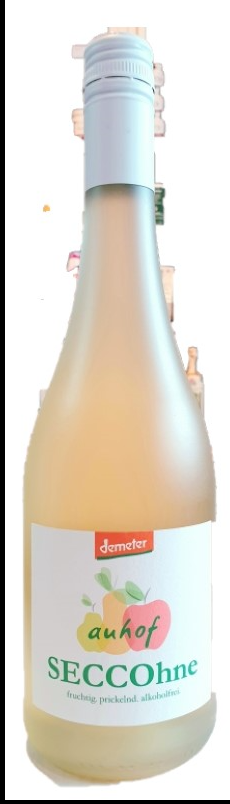
Germany – Seccohne – Fermentation

LMW

Warning type:Food
Date of first publication:02/23/2021
Product name:Seccohne
Product pictures:

Unnamed.PNG
Manufacturer (distributor):Auhof, Fam. Pfisterer & Hauser, 88719 Stetten
Reason for warning:

The drink will foam over strongly when opened because it ferments. The fermentation can break the bottle. The drink is no longer non-alcoholic.

Durability:06/30/2022
Further information:Reference is made to the company’s customer information sheet attached.
Contact to the responsible authorities:
Baden-Württemberg:poststelle@mlr.bwl.de
Bavaria:poststelle@lgl.bayern.de
Press releases and information
title Attachment or web link
Customer information

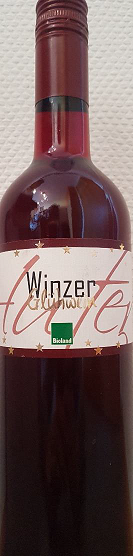
Germany – Organic country winery Huter – Risk of bursting of the bottle due to a fermentation process caused by yeast

LMW

Warning type: Food
Date of first publication:11/20/2020
Product name:Mulled wine made from red wine
Product images:

Produktbild.png
Manufacturer (distributor):

Organic country winery Huter

Reason for warning:

Risk of bursting of the bottle due to a fermentation process caused by yeast

Durability:

01/01/2022

Further information:

Reference is made to the attached recall information from the food company.

Contact to the responsible authorities:

Bavaria:poststelle@lgl.bayern.de
Saxony:poststelle@sms.sachsen.de
Press releases and information
title Attachment or web link
Press release

Australia – The Bubble Verse Pty Ltd t/as PS Soda — PS Blackstrap Ginger 330mL – Secondary Fermentation.

Product Safety Australia

Photo of PS Blackstrap Ginger 330ml

Product description

PS Blackstrap Ginger 330mL
Ginger flavoured soft drink

Best Before: BB 28 08 21
Batch number: 280821

The product was sold at BWS stores in NSW.

The recall is due to possible excess carbonation and the potential for the bottle to rupture due to a secondary fermentation.

What are the hazards?

Food products containing excess carbonation may cause illness/injury if consumed.

What should consumers do?

Consumers should not drink or open this product, and should contact The Bubble Verse Pty Ltd for safe disposal instructions and to arrange a refund.

For further information, contact The Bubble Verse Pty Ltd by phone on 0424 400 701 or via email at info@ps-soda.com

Traders who sold this product

BWS

Where the product was sold
New South Wales
Dates available for sale
  • 13 July 2020 – 13 November 2020

Recall advertisements and supporting documentation