Category Archives: Water

Australia – Tasmanian Scallops PSP and Unsafe Poultry

AFNSalmonella Campylobacter

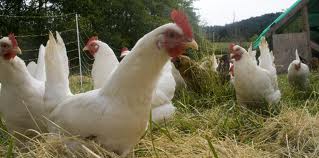
The Food Safety Information Council has released concerning national survey data this week that shows 60% of home cooks in Australia are putting themselves at additional risk of food poisoning from chicken.

The data showed that 60 per cent were at risk from washing whole poultry before it was cooked, which can spread bacteria around the kitchen. A further 16% of those surveyed incorrectly tasted chicken to see if it was cooked properly rather than using a safe meat thermometer.

The focus on cross-contamination of meats by the Food Safety Information Council (FSIC) comes as yesterday marked the start of Australian Food Safety Week. The FSIC week is specifically focusing on chicken and those most affected by food poisoning with the theme “vulnerable populations.”

Food Safety Information Council Chairman, Dr Michael Eyles said that chicken, as Australia’s most popular meat, was consumed by 8 in every ten home cooks.

”Home cooks are probably following what their parents or grandparents did in the past by washing poultry, not to mention probably patting it dry with a tea towel. Washing poultry splashes these bacteria around the kitchen cross contaminating sinks, taps, your hands, utensils, chopping boards and foods that aren’t going to be cooked like salads or desserts,” Dr Eyles said.

“Chicken is a healthy, convenient meal [but] other poultry is also becoming popular with just under half of those surveyed cooking whole turkey and 37% whole duck but these, too, are being washed before cooking, with 68% washing turkey and 74% duck,” he added.

According to a Food Standards Australia New Zealand survey referenced by the Food Safety Information Council, 84 per cent of raw chicken carcasses tested positive to the food poisoning bacteria Campylobacter and 22 per cent to Salmonella.

News Com Au

SCALLOPS from the east coast of Tasmania have joined the area’s mussels in being banned following a toxic algal bloom.

A scallop fishery in the White Rock area has been closed after the same paralytic shellfish toxin (PST) found in Spring Bay Seafood’s mussels was detected in samples taken on November 2.

“PST levels in tested scallops are currently either close to or slightly over the permitted level, but it’s possible the level will increase before it goes back down again,” a health department warning said.

The affected shellfish don’t look or taste different and the toxin is not destroyed by cooking or freezing, but there have been no reports of illness.

USA – Shellfish Vibrio Poisoning

Food Poisoning Bulletin Vibrio

The Cape Cod Times is reporting that eight cases of Vibrio food poisoning were reported in Massachusetts this year from oysters. Last summer the state designed new regulations to keep consumers safe from this bacteria, but they failed.  The eight cases were linked to oysters harvested from Wellfleet, Orleans, Edgartown, Duxbury, Kingston, Barnstable, and Dennis.

Vibrio populations double every 15 minutes, so keeping shellfish cool is critical to controlling bacterial growth.  

Vibrio was not seen in Massachusetts oysters until 2011 because the state’s colder water temperatures discouraged the growth of the bacteria. In every month in 2012, the mean air temperatures were higher than average, including the third-warmest April and the warmest August on record. Sea surface temperatures this year were the highest ever in the Northest.

CDC Letter – UK Shellfish Market and Viruses – Hepatitis E

CDC (full letter)

Bivalve mollusks (shellfish), such as mussels and oysters, are filter feeders; they concentrate microorganisms of human and animal origin (up to 100×) from the surrounding environment. Several recent reports have linked the incidence of human infection with hepatitis E virus (HEV) to consumption of undercooked pork, game products, and shellfish (1,2). Infectious HEV has been found in swine manure and wastewater (3); therefore, application of manure to land and subsequent runoff could contaminate coastal water, leading to contamination of shellfish and, subsequently, possible human infection. Because they are filter feeders, bivalve mollusks are biologically relevant sentinels and can indicate potential pathogens that are contaminating the environment. It is essential to ensure that this sustainable resource of coastal areas, where mussels and oysters are farmed or collected wild, is not subjected to environmental contamination that could lead to public health risks.

Risk management for bivalve mollusks, aimed at control of fecal pollution, relies heavily on the use of Escherichia coli as an indicator of fecal (sewage) contamination and is enacted under European food regulations (Regulation 854/2004, www.cefas.co.uk/media/455777/extract_reg_no_854_2004.pdf Adobe PDF file). However, although these regulations probably reduce the number of infections, especially bacterial infections, they are not viewed as adequately controlling the risk for viral infections. Specific risks are posed by the robustness of viruses in the environment and the different behavior of viruses within bivalve mollusks compared with behavior within bacterial fecal indicators.

UK – HPA – Legionnaires Information and Research

HPALeigionella


Around half (116) of the 235 cases of Legionnaires’ disease reported to the Health Protection Agency (HPA) in England and Wales in 2011 were in returning holiday makers. The annual number of Legionnaires’ cases has fallen from 355 cases in 2010, when around a third (114) were in returning travellers.

Legionnaires’ disease can be contracted by breathing in droplets of water or aerosols containing the legionella bacteria from water sources which may have had temperature problems, or where water has remained stagnant for a period of time. Spa pools, shower heads or taps can sometimes be the source of an outbreak.

The illness usually affects vulnerable people, such as the elderly and almost 70 per cent of the cases reported in 2011 were in people with an underlying health condition, including almost 30 per cent in people with heart disease. Smokers and people with diabetes or a weakened immune system were also at higher risk.


European Alerts – Recalls – Salmonella, Listeria, Vibrio, E.coli

RASFF – E.coli O103 in Bovine Lungs in Belgium

RASFF – Listeria monocytogenes in Ham from Belgium

RASFF – Salmonella in Crushed Spearmint in Denmark sourced in Egypt

RASFF – Listeria monocytogenes in Smoked Trout in France sourced in Spain

RASFF – Listeria monocytognes in Cheese from Belgium

RASFF – Vibrio cholerae in Black Tiger Prawns in Denmark sourced in Bangladesh

RASFF – Salmonella in Veal in the Netherlands sourced in Sweden

RASFF – Salmonella in Dog Chees in Belgium sourced from Thailand

RASFF – Salmonella in Chilled Mixed Salad in Sweden sourced in Denmark

Denmark  – Listeria monocytogenes in Ham Salad 

France – Listeria monocytogenes in Soft Cheese

Risk reduction assessment of waterborne Salmonella and Vibrio by a chlorine contact disinfectant point-of-use device

PubMed

Unsafe drinking water continues to burden developing countries despite improvements in clean water delivery and sanitation, in response to Millennium Development Goal 7. Salmonella serotype Typhi and Vibrio cholerae bacteria can contaminate drinking water, causing waterborne typhoid fever and cholera, respectively. Household water treatment (HWT) systems are widely promoted to consumers in developing countries but it is difficult to establish their benefits to the population for specific disease reduction. This research uses a laboratory assessment of halogenated chlorine beads treating contaminated water to inform a quantitative microbial risk assessment (QMRA) of S. Typhi and V. cholerae disease in a developing country community of 1000 people. Laboratory challenges using seeded well water resulted in log(10) reductions of 5.44 (±0.98 standard error (SE)) and 6.07 (±0.09 SE) for Salmonella serotype Typhimurium and V. cholerae, respectively. In well water with 10% sewage and seeded bacteria, the log(10) reductions were 6.06 (±0.62 SE) and 7.78 (±0.11 SE) for S. Typhimurium and V. cholerae, respectively. When one infected individual was contributing to the water contamination through fecal material leaking into the water source, the risk of disease associated with drinking untreated water was high according to a Monte Carlo analysis: a median of 0.20 (interquartile range [IQR] 0.017-0.54) for typhoid fever and a median of 0.11 (IQR 0.039-0.20) for cholera. If water was treated, risk greatly decreased, to a median of 4.1×10(-7) (IQR 1.6×10(-8) to 1.1×10(-5)) for typhoid fever and a median of 3.5×10(-9) (IQR 8.0×10(-10) to 1.3×10(-8)) for cholera. Insights on risk management policies and strategies for public health workers were gained using a simple QMRA scenario informed by laboratory assessment of HWT.

UK -Microbiology of Drinking Water Updates 2012

MDW Part 7 – Total Viable Count 2012

MDW Part 5 – Enterococci 2012

ECDC -Vibrio cholerae Outbreak Cuba

ECDC

On 3 July the Cuban Ministry of Health confirmed an outbreak of cholera in the south-western city of Manzanillo. It is the first time in almost 150 years that an outbreak of cholera is reported in the island. The heavy rains and the high temperatures during the previous weeks have likely influenced the occurrence of the disease. As of 3 July, 53 cases of Vibrio cholerae, including three deaths, have been officially confirmed.  

Since 7 July, several media sources report a higher number of cases and the disease has spread to other cities including the capital, Havana.

At this stage there is no information available about the outbreak strain, nor of the origin of the outbreak.

US – High E.coli Levels-Boil Water Notice- Aberdeen

Food Poisoning Bulletin

E.coli levels in the drinking water supply for the city of Aberdeen, SD have reached dangerous levels, prompting city officials to issue a boil water advisory.

Aberdeen residents should not drink tap water without boiling it first. Before it is safe to drink, the water needs to boil for a full minute. “Boiled or bottled water should be used for drinking, making ice, brushing teeth, washing dishes, and food preparation until further notice,” the advisory states

Boil Water Notice

“Garbage Juice” – Listeria

WYKC

NORTHEAST OHIO — Listeria, a potentially deadly food-borne bacteria, was found in high levels of fluids dripping from garbage trucks onto neighbourhood streets, a Channel 3 News investigation found.

The bacteria has a mortality rate of 20 percent and, according to microbiologist Roger Pryor, of Accra Labs in Twinsburg,  it poses an especially significant threat to the elderly, children and to pregnant women.

Channel 3 news collected samples of fluids spilling from garbage trucks in Cleveland, Cleveland Heights, Maple Heights and Brooklyn and had them tested.

In addition to listeria, Accra Labs found very high levels of bacteria and low levels of salmonella.

Cleveland City Councilman Mike Polensek says homeowners in the Collinwood neighbourhood he represents often complain about the filthy stains left behind by city trash haulers.

“It becomes a major problem because you don’t know what’s in it,” said Polensek.

Some experts say a single drop of listeria is enough to make you sick. Children playing ball in the streets can easily come in contact with the contaminated fluid.