Category Archives: Water

Ireland – EPA – Drinking Water Quality in Private Group Schemes and Small Private Supplies in 2020 – E.coli

EPA

Click to access DWQinPrivateGroupWaterSupplies-2022-02-21.pdf

Key Findings for 2020

➤The quality of drinking water in private supplies was not as good as it should be: one in 20 private water supplies were contaminated with E. coli.

➤93% of Private Group Schemes complied with the Trihalomethanes standard. However, 13 supplies are cited on EU infringement proceedings against Ireland for failing to take the measures necessary to ensure compliance.

➤Over a quarter of Small Private Supplies were not monitored by Local Authorities.

USA – FDA, growers agree on many points of water safety; consumer group has concerns

Food Safety News

The public and industry had the opportunity this week to hear FDA representatives talk about a proposed rule regarding how to make water used in the growing of fresh produce safer.

The session with the Food and Drug Administration officials included about 30 minutes for comments from the audience, which consisted of three-minutes each from industry spokespeople.

During one portion of the five-hour session a representative from the Center for Science in the Public Interest provided comments about public welfare issues concerning the proposed water safety rule. That portion of the session also included a presentation by a representative of Western Growers, which is a group of produce growers in western states. 

One thing the government speakers and other commenters had in common was the fact that the ag water rule is complicated. They all also said the proposed rule is more flexible than the one-size-fits-all proposal previously put forward by the Food and Drug Administration.

The agency has been working on the rule regarding agricultural water requirements under the Produce Rule since 2013. The rule is one of the mandates included in the federal Food Safety and Modernization Act of 2011. It covers water safety issues for fresh fruits and vegetables. It has a special section for the production of sprouts that is already in place.

Provisions of the proposed water rule do not include most small farmers, if their annual income generated by their sales of fresh produce is less than $25,000. Many of those growers use organic methods.

Turkey – Norovirus behind mass hospitalizations in Turkey’s Bilecik – Water Contamination

Daily Sabah

Authorities announced that norovirus is the culprit behind the hospitalization of hundreds of people in the western province of Bilecik in recent weeks. An investigation found out that the virus, whose symptoms include vomiting, diarrhea and stomachache, originated from city’s drinking water. Health Ministry crews discovered that unfiltered water from a spring had contaminated drinking water supplies to the city of more than 228,000 people.

Research – IFST – Building biofilm knowhow.

IFST

Mark Richardson outlines the aims and activities of the National Biofilms Innovation Centre (NBIC) and explains why the occurrence of foodborne pathogens in biofilms is a major concern.

The National Biofilms Innovation Centre (NBIC) is still a relatively young organisation but we are proud of what we have achieved since our formation in late 2017. We were funded through UKRI (UK Research and Innovation) by BBSRC (Biotechnology and Biological Sciences Research Council), Innovate UK and the Hartree Centre as an Innovation Knowledge Centre (IKC) to support and connect the biofilm community in industry and academia.

Foodborne pathogens within biofilms

Biofilms are communities of microorganisms (often multiple species) within an extracellular matrix associated with a surface; this allows them to communicate and collectively behave very differently to individual organisms. Biofilms have a role to play across multiple industrial sectors in terms of both the problems they present and opportunities they offer. In respect to human health and food they can, for example, potentiate the emergence of bacterial resistance to antibiotics, antiseptics and disinfectants. From farm to fork they have a role to play in the health of soils, plants and animals; in addition they impact on food processing and then subsequently on supply chain safety (particularly for ready to eat or chilled produce).

For example, Listeria monocytogenes, a pathogenic bacterium found in moist environments, soil, water, decaying vegetation and animals, can survive and even grow under refrigeration and other food preservation measures. It can cause food poisoning if ingested and due to the severity of infection and high case fatality rate, listeriosis is an important public health concern. A high level of vigilance is maintained in food manufacturing environments for the occurrence of this organism. There were 142 cases of food borne listeriosis in the UK in 2019 resulting in 23 deaths plus eight miscarriages or stillbirths.

Listeria monocytogenes typifies the problems that biofilm modality imparts to organisms in that when it grows within a biofilm, it is very difficult to detect, remove and destroy. When measures relating to its control go wrong, this can lead to significant human health issues, adverse impacts on the food sector’s reputation and significant economic costs. As recently as July 2021, Tyson Foods in the USA recalled nationally almost 4100 tonnes of ready-to-eat chicken products after finding they may have been contaminated with Listeria. The US Department of Agriculture announced the recall a month after two consumers reported falling ill with listeriosis. Further investigation revealed one death.

Research – Emerging Legionella species data

HPS

Legionella_Plate_01

08 February 2022

Article: 56/502

In July 2021, the Legionella Control Association (LCA), in conjunction with the Health and Safety Executive (HSE), Public Health England (PHE) and local authorities, held a webinar aimed at raising awareness of increasing Legionella positivity rates post lockdown.  The data demonstrated that the average positive rate in the UK had increased by around 2% following the lockdowns in response to COVID-19.

To investigate if there were particular species that could have led to this increase, LCA approached the three commercial laboratories in the UK that use MALDI-ToF to confirm down to species level, and asked if they would share their data. This information has now been returned by some laboratories, with findings from over 70,000 positive result samples in a two-year period revealing:

  • over 53% of the results were L.anisa
  • over 32% of the positives were L. pneumophilia, both SeroGroup 1 and SeroGroup 2-15
  • nearly 1% of positives were for L. rubilucens
  • over 6.5% of the results did not confirm a species type
  • there were over a dozen other species identified in results that accounted for less than 1% of the data set

The first line clinical diagnostic tool used to confirm Legionnaire’s disease in the UK is commonly a urinary antigen test (UAT), and this method looks predominantly for L. pneumophilia SeroGroup 1. Given the data LCA has provided so far, this could potentially mean missing over 70% of Legionella infections in patients. It should be highlighted that this data is in its infancy, and LCA state that further research needs to take place before any significant changes are considered or undertaken.

Source: LCA, January 2022

Research – Bacterial Antagonistic Species of the Pathogenic Genus Legionella Isolated from Cooling Tower

MDPI

Legionella pneumophila is the causative agent of Legionnaires’ disease, a severe pneumonia. Cooling towers are a major source of large outbreaks of the disease. The growth of L. pneumophila in these habitats is influenced by the resident microbiota. Consequently, the aim of this study was to isolate and characterize bacterial species from cooling towers capable of inhibiting several strains of L. pneumophila and one strain of L. quinlivanii. Two cooling towers were sampled to isolate inhibiting bacterial species. Seven inhibitory isolates were isolated, through serial dilution plating and streaking on agar plates, belonging to seven distinct species. The genomes of these isolates were sequenced to identify potential genetic elements that could explain the inhibitory effect. The results showed that the bacterial isolates were taxonomically diverse and that one of the isolates may be a novel species. Genome analysis showed a high diversity of antimicrobial gene products identified in the genomes of the bacterial isolates. Finally, testing different strains of Legionella demonstrated varying degrees of susceptibility to the antimicrobial activity of the antagonistic species. This may be due to genetic variability between the Legionella strains. The results demonstrate that though cooling towers are breeding grounds for L. pneumophila, the bacteria must contend with various antagonistic species. Potentially, these species could be used to create an inhospitable environment for L. pneumophila, and thus decrease the probability of outbreaks occurring. View Full-Text

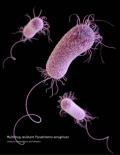
UK – Water quality – Risk assessments for Pseudomonas aeruginosa and other waterborne pathogens. Code of practice

BSI

CDC Pseudomonas

Overview

What is BS 8580-2 – Risk assessments for Pseudomonas aeruginosa about?

Our experts identified a lack of guidance on how to conduct risk assessments for Pseudomonas aeruginosa (PA) and other opportunistic waterborne pathogens other than Legionella. To fill that gap, BS 8580-2 is a new British Standard recommending a PA risk assessment process and supplying information and support on how to understand microbial hazards, prioritize actions and minimize risks.

Who is BS 8580-2 – Risk assessments for Pseudomonas aeruginosa for?

BS 8580-2 on risk assessments for pseudomonas aeruginosa applies in all types of healthcare provision, including hospitals, and care, nursing and residential homes, together with other settings where water systems and associated equipment can pose a risk. This can include in the educational, travel, industrial, leisure and beauty sectors, including health spas, nail bars and tattoo parlours.

Users of BS 8580-2 will be building and design engineers and architects; providers of fittings, outlets and components for water systems; installers and commissioners; risk assessors; regulatory bodies; building services engineers; water treatment consultants; travel, leisure and other relevant buildings owners and operators; and those responsible for the safe management of water systems, especially within leisure centres, schools, swimming pools, passenger vessels, spa pools, hot tubs etc.

BS 8580-2 will also interest clinicians, microbiologists, augmented care specialists and infection controllers in healthcare.

What does BS 8580-2 – Risk assessments for Pseudomonas aeruginosa cover?

BS 8580-2 gives recommendations and guidance on how to carry out risk assessments for pseudomonas aeruginosa (PA) and other waterborne pathogens whose natural habitat is within constructed water systems and the aqueous environment (autochthonous), rather than those present as a result of a contamination event. It includes those pathogens that can colonize and grow within water systems and the associated environment.

BS 8580-2 also covers risk assessments of distributed water systems and associated equipment, system components and fittings as well as above ground drainage systems. It covers PA risk assessment reviews and reassessments where a previous assessment has been undertaken and risk factors identified. It takes account of all relevant environmental and clinical factors and aspects of human behaviour leading to contamination events. It considers risk factors within the associated environment leading to conditions which can encourage the colonization and growth of waterborne pathogens and transfer of antibiotic resistance.

NOTE: BS 8580-2 does not cover risk assessments for Legionella spp.; these are covered in BS 8580-1, or risk assessments for enteric microorganisms derived from human or animal faecal contamination or sewage ingress.

Why should you use BS 8580-2 – Risk assessments for Pseudomonas aeruginosa?

You should use BS 8580-2 on risk assessments for pseudomonas aeruginosa because:

  • It plugs an information gap in relation to pseudomonas aeruginosa (PA) risk assessments, taking its unique additional considerations into account
  • It codifies the latest and most efficient approach to multidisciplinary PA risk assessments
  • Its recommended processes can be applied to other opportunistic waterborne pathogens
  • It can help healthcare providers demonstrate compliant risk management in respect of Dept of Health Guidance
  • It can help leisure sector organizations maintain compliance with their legal health and safety obligations
  • It can help users develop their expertise in risk assessment and strengthen organizational risk management

BS 8580-2 contributes to UN Sustainable Development Goal 3 on good health and well-being and Goal 6 on clean water and sanitation.

Research – Legionellosis: Diagnosis and Control in the Genomic Era

CDC

CDC legionella

Hundreds of books and textbook chapters, and thousands of journal review articles, have been published on Legionnaires’ disease and Legionella spp. bacteria over the past 45 years, making it important to decide whether this new and quite expensive compilation of reviews is worth acquiring (Figure). The field has become so specialized that even those who know one aspect of it may need a good review of other aspects to easily catch up on recent trends. The book contains chapters on the freshwater ecology of the bacterium; molecular and pathogenic aspects of virulence-associated bacterial secretion systems; very selected aspects of epidemiology; clinical aspects and treatment; laboratory diagnosis; and strain typing methods from serologic to whole-genome sequencing. Some chapters are more current than others. The most recent references for several chapters were published in 2016, and only 1 chapter cites references published in 2020. The book is lightly edited; some of the chapters contain overlapping material, but overall it has few typographical or spelling errors. Not all of the figures are properly labeled; for example, the figure legends in chapter 6 are reversed, and not all of the figure legends in chapter 3 fully explain the meanings of different colors and abbreviations.

I found that several of the chapters contained quite useful information that would be hard to find elsewhere, including a thorough review of L. pneumophila virulence secretory systems, as well as a review of the freshwater ecology of the bacterium, the clinical microbiology and clinical significance of Legionella spp. other than L. pneumophila, and regulatory and risk management strategies for control of the disease. Other readers, depending on their fields of interest and expertise, will find other chapters of particular interest. The chapter on non–whole-genome sequencing methods for strain typing for epidemiologic investigation is well done and could be of interest for those trying to dissect the older literature. Missing from the book, presumably by design, are a chapter reviewing in detail the ecology of the bacterium in the built environment, practical guidance on outbreak investigation, advanced techniques in epidemiologic source investigation, molecular and cellular pathogenesis other than secretion systems, and the molecular evolution of the bacterium, all of which can be found in other sources.

Is this book good value for money? Perhaps not for those who have a narrow interest in a specific field, because there are more up-to-date reviews on many of the topics in journal articles and some textbooks. For those who want to gain an overview of the topics covered in the book, some of which are more comprehensive than those found in textbooks or recent reviews, this may be a useful addition to their libraries.

Research -Surveillance of berries sold on the Norwegian market for parasite contamination using molecular methods

Science Direct

water contamination

The risk of foodborne parasite infection linked to the consumption of contaminated fresh produce has long been known. However, despite epidemiological links between the outbreaks and contaminated berries, few studies have assessed the magnitude of parasite contamination on fresh produce sold in Europe. The present study was aimed to address the knowledge gap on parasite contamination of berries sold in Norway. Samples of blueberries, strawberries, and raspberries were analysed by multiplex qPCR for detection of Echinococcus multilocularisToxoplasma gondii, and Cyclospora cayetanensis. In addition, a simplex qPCR method was employed for detecting contamination of the berries with Cryptosporidium spp. A total of 820 samples of berries, each of around 30 g (274 samples of blueberries, 276 samples of raspberries, and 270 samples of strawberries), were analysed. We found an overall occurrence of 2.9%, 6.6%, and 8.3% for T. gondii, C. cayetanensis, and Cryptosporidium spp., respectively, whereas E. multilocularis was not detected from any of the samples investigated. Strawberries and raspberries were most often contaminated with Cryptosporidium spp., whereas blueberries were contaminated mostly with C. cayetanensis. Detection of parasite contaminants on fresh berries indicates the need for a system to ensure the parasitological safety of fresh berries.

Research – Modelling the Potential Risk of Infection Associated with Listeria monocytogenes in Irrigation Water and Agricultural Soil in Two District Municipalities in South Africa

MDPI

Listeria monocytogenes (L. monocytogenes) is the etiologic agent of listeriosis which significantly affects immunocompromised individuals. The potential risk of infection attributed to L. monocytogenes in irrigation water and agricultural soil, which are key transmission pathways of microbial hazards to the human population, was evaluated using the quantitative microbial risk assessment modelling. A Monte Carlo simulation with 10,000 iterations was used to characterize the risks. High counts of L. monocytogenes in irrigation water (mean: 11.96 × 10² CFU/100 mL; range: 0.00 to 56.67 × 10² CFU/100 mL) and agricultural soil samples (mean: 19.64 × 10² CFU/g; range: 1.33 × 10² to 62.33 × 10² CFU/g) were documented. Consequently, a high annual infection risk of 5.50 × 10⁻² (0.00 to 48.30 × 10⁻²), 54.50 × 10⁻² (9.10 × 10⁻³ to 1.00) and 70.50 × 10⁻² (3.60 × 10⁻² to 1.00) was observed for adults exposed to contaminated irrigation water, adults exposed to contaminated agricultural soil and children exposed to agricultural soil, respectively. This study, therefore, documents a huge public health threat attributed to the high probability of infection in humans exposed to L. monocytogenes in irrigation water and agricultural soil in Amathole and Chris Hani District Municipalities in the Eastern Cape province of South Africa. View Full-Text