Category Archives: water microbiology

USA – FDA warns about fresh basil imported from Siga Logistics de RL de CV from Morelos in Mexico – Cyclospora

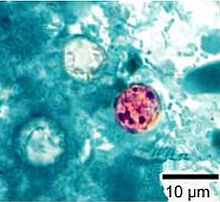
Food Safety News 220px-Cyclospora_cayetanensis_stained

Consumers should not buy, eat, or serve any fresh basil exported by Siga Logistics de RL de CV from Morelos, Mexico to the United States.

The fresh basil from Siga Logistics de RL de CV located in Morelos, Mexico is the subject of a multi-state outbreak investigation of Cyclospora illnesses potentially linked to fresh basil exported by Siga Logistics de RL de CV located in Morelos, Mexico.

As of July 9, health official found 132 illnesses in ten states that are attributed to the outbreak.   Four patients required hospitalization.   Restaurants in Florida, Minnesota, New York and Ohio exposed patrons to the parasite.

Cyclospora is a parasite typically transmitted by contaminated food.    Some areas, such as Massachusetts, are this year experiencing higher Cyclosproa case counts than normal. States with Cyclospora cases associated with the current outbreak are found in CT, FL, IA, MA, MN, NY, OH, RI, SC, and WI.

USA – Case Count Rises to 10 in Atlanta Sheraton Legionnaires Disease Outbreak

Outbreak News Today Legionella_Plate_01

The Georgia Department of Public Health reports that case counts are up to 10 now in the outbreak of Legionnaires’ Disease linked to the downtown Atlanta Sheraton hotel. The property remains closed amid the outbreak and its investigation. At this time, no definitive source at the property has been confirmed to have caused the illnesses. According to local media reports, the “investigators continued testing water in pools, fountains, hot tubs, faucets, chillers and other locations at the hotel.”

USA – Issues with Vibrio vulnifcus and Enterococcus

CBS Austin

The family of an elderly San Marcos man wants to spread a message after he died last month from a flesh-eating bacteria following a fishing trip on the Texas Gulf Coast.

His family took him to a Victoria hospital where he was immediately diagnosed with vibrio and underwent surgery. He did not survive.

According to the CDC, the infection often spreads very quickly. Early symptoms of necrotizing fasciitis can include:

  • A red or swollen area of skin that spreads quickly
  • Severe pain, including pain beyond the area of the skin that is red or swollen
  • Fever

See a doctor right away if you have these symptoms after an injury or surgery. Even though minor illnesses can cause symptoms like these, people should not delay getting medical care.

WJHG

The infection caused by Enterococcus is completely different from the infection caused by Vibrio Vulnificus or Group A Streptococcus, which is associated with what people refer to as “flesh-eating bacteria.”

“It’s very rare, Necrotizing Fasciitis is a complication from an infection, so, the most common bacteria that causes the Necrotizing Fasciitis is Group A Streptococcus, it can also be caused by Vibrio Vulnificus, which is a naturally occurring bacteria that lives in warm marine waters,” said Scully.

Unlike Vibrio Vulnificus, Group A Strep can be found in places other than saltwater, meaning you don’t have to enter the gulf to contract it.

Last week, it was reported an Alabama man had contracted Necrotizing Fasciitis in Panama City Beach. According to the report, it was a strand of strep, Group A Strep. FDOH-Bay County says it can’t be confirmed that case of Necrotizing Fasciitis was contracted in Panama City Beach due to it being caused by Group A Strep.

USA – New York City reports spike in Cyclospora infections

Outbreak News Today

New York City health officials are advising clinicians to be on the alert for patients with diarrhea due to Cyclospora infection.

From the beginning of the year through July 15, officials report 90 cases, including 40 cases since the beginning of the month. Approximately 30 percent of patients have reported travel outside of the United States in the two weeks prior to symptom onset, primarily to Latin America.

This compares with 56 cases in 2018, and 43 cases in 2017 during the same time period.

Epidemiologic investigations are ongoing to determine if there is a possible common food source for cases with no travel outside of NYC.

USA – Sixth Case of Legionnaires’ Linked to Sheraton Atlanta Hotel

Outbreak News Today

CDC legionella

Image CDC

As of today, 6 cases of Legionnaires’ disease have been linked to the Sheraton Downtown Atlanta Hotel. Following news of the hotel’s shut down last week, the Georgia Department of Health announced its involvement in the outbreak investigation.

The hotel said in a public statement that it could be several weeks before it reopens as health officials investigate. Meanwhile, guests of the hotel were relocated to the Hilton not far from the property.

Georgia Department of Public Health states it doesn’t know if the guests contracted the disease while actually staying at the hotel. The health agency believes the water system of the hotel could be to blame. “They have a beautiful swimming pool and it’s shut down right now. They say they’re working on the filtration system. Maybe they haven’t made the linkage,” Georgia State Epidemiologist Cherie Drenzek said.

But the pool isn’t the only suspect. “Showerheads, hot tubs, perhaps even some outbreaks in the past have been associated with decorative fountains,” Georgia Department of Health epidemiologist Cherie Drenzek said.

UK – England: Health officials warn of E. coli STEC infections in individuals returning from Egypt

Outbreak News Today

British health officials are advising travelers to Egypt of a number of Shiga toxin-producing Escherichia coli (STEC) infections reported in people who traveled to the Hurghada region of Egypt.

There have been 18 cases of STEC in individuals returning from Egypt in 2019, including one case of Hemolytic Uremic Syndrome (HUS).

E. coli can cause an unpleasant diarrhea illness with stomach cramps and occasionally fever. Most people will recover without the need for medical treatment, but younger and older people may go on to develop complications of the infection, leading to kidney failure. This rare condition is called hemolytic uremic syndrome (HUS), which in very rare circumstances can be fatal.

E. coli is caught through ingesting contaminated food or water.

PHE

PHE recommends travellers to the region to:

  • where possible, avoid eating salads and uncooked vegetables
  • only eat fruit they can peel
  • avoid unpasteurised milk, cheese and ice cream
  • avoid food that has been left uncovered in warm environments and exposed to flies
  • ensure all meat is cooked thoroughly before you eat it, avoiding any meat that is pink or cold
  • avoid ice, unless made with filtered or bottled water, and tap water, even when brushing teeth
  • only drink bottled water or use ice made from bottled/filtered water
  • wash your hands thoroughly after visiting the toilet, and always before preparing or eating food. Alcohol gel can be helpful (but not entirely effective) when hand washing facilities are not available
  • when swimming, try and avoid swallowing water where possible and supervise children when swimming.
  • don’t swim whilst ill

For more information, visit NHS.UK.

This advice also applies to other countries where E. coli infections are common, including Turkey and Spain.

Dr Nick Phin, Deputy Director, National Infection Service, Public Health England, said:

We are aware of people returning from Egypt with E. coli infections, some with a serious kidney complication called haemolytic uraemic syndrome (HUS). We are gathering information about those affected to better understand the cause.

There are simple precautions that travellers can take. These include ensuring meat is cooked thoroughly, not drinking tap water or ice made from tap water and trying to avoid swallowing water when swimming.

Anyone suffering from diarrhoea and vomiting should ensure they keep well hydrated and seek medical advice if their symptoms don’t improve within 48 hours. They should also avoid preparing or serving food while they have symptoms and thoroughly wash their hands after using the toilet to stop the bug being passed to others. Individuals with symptoms after returning from holiday should seek medical advice from their GP or NHS 111.

 

Research – Stainless Steel Sinks & Taps Linked to Legionnaires’ Disease

Legionella Control

CDC legionella

Image CDC

Recent research looking at the growth of Legionella bacteria on stainless steel sinks and taps has shown that under certain conditions, the use of this popular metal can increase the health risks associated with the potentially life-threatening Legionnaires’ disease.

Stainless steel sinks are a popular choice in kitchens throughout the UK… however, research has indicated it may not be the wisest choice when considering the associated risks presented by the potentially deadly Legionella bacteria.

The same applies to stainless steel taps – also a popular choice for many understandable reasons.

Ireland – Giardiasis in Ireland, 2018

HPSC

Key Facts
 Reported incidence of giardiasis in Ireland in 2018 is 5.7 per 100,000, similar to the
reported incidence at EU level
 Increase in recent yearsbelieved to be largely due to recent changes in laboratory
practice
 The ratio to male to female cases is 1.4:1
 More than two thirds of cases were reported to be acquired in Ireland, a change to our
historical understanding of giardiasis as a travel-acquired infection
 It is likely there is still under-ascertainment of giardiasis cases in several HSE-areas.
 Much remains to be done in Ireland and across Europe to better understand the
epidemiology and determinants of this disease


USA – E. coli Outbreak at Lake Minnetonka in Minnesota Sickens 30

Food Poisoning Bulletin

A rather strange E. coli outbreak has sickened 30 people who visited Lake Minnetonka in Minnesota over the Fourth of July weekend. According to news reports, people have contacted the Hennepin County Public Health after they were on the lake, especially in the Big Island area. Those 30 cases have been confirmed by the department.

USA – Vibrio vulnificus, ‘Flesh-eating bacteria’ cases, reported in Maryland, Florida

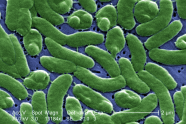
Outbreak News Today Vibrio_vulnificus_01

After a young boy was infected with Vibrio, a type of flesh-eating bacteria recently near Ocean City, health officials say this case is rare and local waterways are still safe to swim in.

The boy’s mother, Brittany Carey, described what happened to her son in a June 29 Facebook post. According to Carey, her son was swimming in the Sinepuxent Bay just north of the Harry Kelley Memorial Bridge between West Ocean City and downtown.