Category Archives: water microbiology

USA – Legionnaires’ Disease cases in people who attended NC Mountain State Fair

Outbreak News

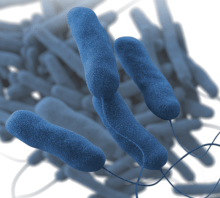
CDC legionella

Image CDC

North Carolina state and local health officials report investigating multiple cases of Legionnaires’ disease reported in individuals who attended the NC Mountain State Fair in Fletcher, NC, Sept. 6–15, 2019.

“We don’t yet know whether people might have been exposed to Legionella bacteria at the NC Mountain State Fair,” said State Epidemiologist Dr. Zack Moore. “As a precaution, we are recommending that anyone who went to the fair and has symptoms of pneumonia, like cough, fever or shortness of breath, see a doctor right away and talk with them about Legionnaires’ disease.”

Legionnaires’ disease is a form of bacterial pneumonia (lung infection). A person may develop Legionnaires’ disease when they breathe in mist or accidentally swallow water into the lungs that contains Legionella bacteria.

In North Carolina, more than 150 cases of Legionnaires’ disease are reported each year. Symptoms typically begin two to 10 days after exposure and can include cough, shortness of breath, fever, muscle aches and headaches. Legionnaires’ disease is a serious illness but can be treated effectively with antibiotics. Legionella bacteria can also cause a milder flu-like illness called Pontiac fever, which resolves without treatment.

Most healthy people exposed to Legionella bacteria do not get sick. The people at highest risk for Legionnaires’ disease include individuals 50 years or older, current or former smokers, and those who have a chronic lung disease or a weakened immune system.

HPS publishes annual surveillance reports for Cryptosporidium, Giardia and Cyclospora in Scotland, 2018

HPS


Article: 53/3701

On 17 September 2019, Health Protection Scotland (HPS) published annual surveillance reports for laboratory-confirmed cases of:

  • Cryptosporidium – In 2018, HPS received 536 laboratory reports of Cryptosporidium. This represents an increase of 27 reports (5.3%) when compared with 2017 (509 reports), but is within the year-on-year variation observed in Cryptosporidium as reported in the previous ten years.
  • Giardia – In 2018, HPS received 199 laboratory reports of Giardia, which represents a decrease of 70 reports (26.0%) when compared with 2017 (269 reports).
  • Cyclospora – A total of 12 laboratory reports of Cyclospora were received by HPS in 2018, compared with 46 in 2017, 167 in 2016, 24 in 2015 and two in 2014.

The Baltic – One more Person dies in the Baltic sea, Killer-bacteria – Vibrio

KXAN36

Computer Translation

died again a Person after a bath in the Baltic sea. Cause of death is supposed to be like before infection with Vibrios bacteria such as the “image” reported. It is Vibrio-bacteria – so-called rod bacteria, one of which is Cholera.

the course of The disease after an infection with the bacteria is on the route of infection. The bacteria are taken in through the food, it comes to symptoms, as in the case of a gastro-intestinal disease. If the bacteria are transmitted through a wound, this can lead to a serious infection and later to Sepsis.

Killer bacteria still in the water

according to Reports, the Killer bacteria are recorded for several weeks in the waters of the Baltic sea. Currently, these thrive particularly well because the water is over 20 degrees warm. At cooler temperatures the dangerous viruses live mainly on the ground of the sea. And virtually never in contact with people.

USA- Legionnaires’ disease confirmed in Batavia, Illinois Retirement Community

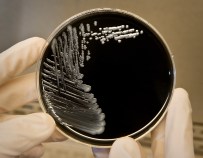
Outbreak News Today Legionella_Plate_01

Officials with the Kane County (IL) health department received reports of four cases of Legionnaires’ disease. Four residents at Covenant Living at the Holmstad in Batavia have been confirmed to have Legionnaires’ disease.

“Public health officials are testing for Legionella bacteria and continue to investigate to identify potential sources and additional individuals who may have been exposed during this period,” said Kane County Health Department Executive Director Barbara Jeffers. “Covenant Living is working closely with public health officials.”

USA – Lake Nokomis E. coli Outbreak Has Sickened 49

Food Poisoning Bulletin

The Lake Nokomis E. coli outbreak has now sickened 49 people, including the three confirmed cases of Shiga toxin-producing E. coli (STEC) in children that were announced earlier this week, according to a news release by the Minnesota Department of Health. That lake is located in Minneapolis.

Research -Toxin responsible for Legionella growth identified

Science Daily

Legionella A

Enter a caption

Pneumonia resulting from exposure to Legionella — although uncommon and affecting only 1 in 100,000 in Europe — has a higher than 10% fatality rate. The pathogenic bacterium Legionella pneumophila has more than 300 toxins that it uses to infect humans. Once the aerosols containing the bacteria are inhaled, Legionella enters the lungs where it starts infecting human cells, causing pneumonia.

Legionella toxins especially target the innate immune pathways facilitating the survival of the bacteria inside human cells and allowing the replication of the bacteria. Due to the large number of toxins it is difficult to see the effects of deleting one or multiple of these toxins on the Legionella infection capacities. This is further complicated by the fact that several toxins with similar functions exist inside the bacteria. This makes Legionella hard to target with specific drugs.

USA – E. coli hits South Dakota – Sisseton Area

Food Poison Journal

According to KSFY, the South Dakota Department of Health is investigating several cases of E. coli in northeastern South Dakota. The cases are in and around the Sisseton area.

Source not identified

USA – Sheraton Atlanta Legionnaires’ disease: 11 confirmed, 55 probable outbreak cases

Outbreak News Today

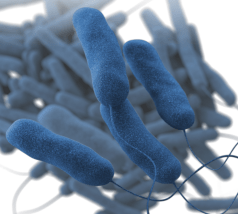
CDC legionella

Image CDC

In a follow-up on the Legionnaires’ disease outbreak linked to the Sheraton Atlanta Hotel, the Georgia Department of Public Health (DPH) reports 11 lab-confirmed cases of Legionnaires’ disease and 55 probable cases of Legionnaires’ disease related to this outbreak through July 29.

No deaths have been reported.

Probable cases are people who had illness consistent with Legionnaires’ disease, including pneumonia diagnosed by a clinician or chest X-ray, but without laboratory confirmation. The number of probable cases can change based on additional testing and lab results.

Since the first cases of Legionnaires’ disease were confirmed two weeks ago, epidemiologists from DPH and Fulton County Board of Health (FCBOH)  have been reviewing hundreds of survey responses from individuals who stayed at or visited the Sheraton Atlanta between June 12 and July 15, 2019. The surveys help identify people who may have been ill, especially those with severe illness like pneumonia.

New Zealand – Shellfish biotoxin alerts – Hawkes Bay

MPI

The Ministry for Primary Industries (MPI) today issued a public health warning advising the public not to collect or consume shellfish harvested from the Hawkes Bay Coast between Mahanga Beach south to Porangahau Beach.

Routine tests on shellfish samples taken from this region have shown levels of Paralytic Shellfish Poisoning (PSP) toxins above the safe limit of 0.8 mg/kg set by MPI. Anyone eating shellfish from this area is potentially at risk of illness.

Map highlighting in red the areas affected.

Mussels, oysters, tuatua, pipi, toheroa, cockles, scallops, catseyes, kina (sea urchin) and all other bivalve shellfish.

Note, cooking shellfish does not remove the toxin.

Pāua, crab and crayfish may still be eaten if the gut has been completely removed prior to cooking, as toxins accumulate in the gut. If the gut is not removed its contents could contaminate the meat during the cooking process.

USA – 10 Sick in Chesterfield Legionnaires’ Disease Outbreak

Outbreak News Today

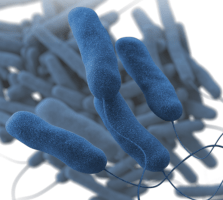
CDC legionella

Image CDC


press release from the Virginia Department of Health announced that 10 people are sick in Chesterfield, Virginia in a Legionnaires’ Disease outbreak. The 10 confirmed illnesses are more cases then the county sees during the summer, which is usually 3 cases. Due to this outbreak, a Chesterfield school was forced to close. The health department is working with the CDC to identify the outbreak source.