Category Archives: UV Microbiology

Research – Effects of UV-C Irradiation and Vacuum Sealing on the Shelf-Life of Beef, Chicken and Salmon Fillets

MDPI

Abstract

One-third of the world’s food supply is lost, with meat being a major contributor to this loss. Globally, around 23% of all meat and 35% of all seafood products are lost or wasted. Meats and seafood products are susceptible to microbial spoilage during processing, storage, and distribution, where microbial contamination causes significant losses throughout the supply chain. This study examined the efficacy of UV-C irradiation and vacuum-sealing in preventing microbiological deterioration in beef, chicken, and salmon fillets. The samples were sterilized using a constant UV-C irradiation dose of 360 J/m2 and stored under a reduced pressure of 40 kPa. A microbiological analysis was conducted daily to examine the microbial contamination, which included counting the colonies of Pseudomonas spp., aerobic bacteria, lactic acid bacteria (LAB), Salmonella, and Escherichia coli, as well as monitoring the increase in pH levels. The results demonstrated a statistically significant difference (p > 0.05) in the aerobic bacteria counts between the storage conditions and storage days in all samples, which is a primary indicator of microbial spoilage. In contrast, the differences varied in the Pseudomonas spp. and LAB counts between the storage conditions and storage days, and there was no significant difference (p < 0.05) in the pH levels between the storage conditions. The results indicate that the combination of UV-C irradiation and vacuum sealing effectively inhibits microbial growth and extends the shelf-life of beef, chicken, and salmon fillets by 66.6%.
Research – An excimer lamp to provide far-ultraviolet C irradiation for dining-table disinfection.

Nature.com

Abstract

Dining tables may present a risk to diners by transmitting bacteria and/or viruses. Currently, there is a lack of an environmental-friendly and convenient means to protect diners when they are sitting together. This investigation constructed far-UVC excimer lamps to disinfect dining-table surfaces. The lamps were mounted at different heights and orientations, and the irradiance on table surfaces was measured. The irradiation doses to obtain different inactivation efficiencies for Escherichia coli (E. coli) were provided. In addition, numerical modeling was conducted for irradiance and the resulting inactivation efficiency. The surface-to-surface (S2S) model was validated with the measured irradiance. The germicidal performance of far-UVC irradiation, the far-UVC doses to which diners were exposed, and the risk of exposure to the generated ozone were evaluated. The results revealed that an irradiation dose of 12.8 mJ/cm2 can disinfect 99.9% of E. coli on surfaces. By varying the lamp irradiance output, the number and positions of the lamps, the far-UVC irradiation can achieve a 3-log reduction for a dining duration of 5 min. Besides, the far-UVC lamp has a low damage risk to diners when achieving an effective inactivation rate. Moreover, there is virtually no ozone exposure risk in a mechanically ventilated dining hall.

Research Paper Sunlight Parameters Influence the Survival and Decline of Salmonella and Escherichia coli in Water

Journal of Food Protection

The effect of variations in temperature, ultraviolet (UV) radiation, and sunlight intensity on generic Escherichia coli , E. coli O157:H7, Salmonella Newport and antibiotic resistant (ABR) variants of E. coli O157:H7 and S . Newport exposed to sunlight was evaluated. Bacterial strains suspended in sterile deionized water at a concentration of 8 log CFU/ml were exposed to sunlight on three different days for 180 min; control treatments were stored in the dark. The mean temperature of 30.08 and 26.57℃ on day 1 and 3 were significantly different (p<0.05). The UV intensity was significantly different on all three days and sunlight intensity significantly differed on day 3 (p<0.05). Bacterial population decline positively correlated with temperature, sunlight and UV intensity. Differences in bacterial population declines differed among specie, antibiotic resistance (ABR) profile and day of exposure. (p<0.05). On days 1 and 2, the populations of generic E. coli dropped below the limit of detection (1 log CFU/ml) while the % of live cells was 67% and 6.6% respectively. The artificial neural network model developed to predict bacterial survival under different environmental conditions suggested that Salmonella cells were more resistant than E. coli . The ABR strains had significantly higher viable cells after sunlight exposure (p<0.05). Sunlight exposed cells resuscitated in TSB varied in maximum population density and maximum growth rate based on bacterial species and presence of antibiotic resistance. Morphological changes such as viable but non-culturable (VBNC) state transition and filament formation was detected in sub-populations of sunlight exposed bacteria. Daily fluctuations in UV and sunlight intensity can result in significant variations in bacterial decline and recovery.

Research – Efficacy of 405 nm Light-Emitting Diode Illumination and Citral Used Alone and in Combination for Inactivation of Vibrio parahaemolyticus on Shrimp

MDPI

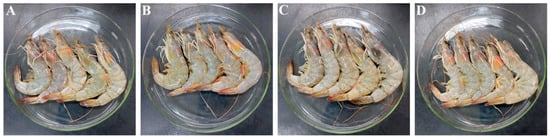
Vibrio parahaemolyticus is a widely distributed pathogen, which is frequently the lead cause of infections related to seafood consumption. The objective of the present study was to investigate the antimicrobial effect of the combination of 405 nm light-emitting diode (LED) and citral on V. parahaemolyticus. The antimicrobial effect of LED illumination and citral was evaluated on V. parahaemolyticus not only in phosphate-buffered saline (PBS) but also on shrimp. Quality changes of shrimp were determined by sensory evaluation. Changes in bacteria cell membrane morphology, cell membrane permeability, cell lipid oxidation level, and DNA degradation were examined to provide insights into the antimicrobial mechanism. The combination of LED treatments and citral had better antimicrobial effects than either treatment alone. LED combined with 0.1 mg/mL of citral effectively reduced V. parahaemolyticus from 6.5 log CFU/mL to below the detection limit in PBS. Combined treatment caused a 3.5 log reduction of the pathogen on shrimp within 20 min and a 6 log reduction within 2 h without significant changes in the sensory score. Furthermore, combined LED and citral treatment affected V. parahaemolyticus cellular morphology and outer membrane integrity. The profile of the comet assay and DNA fragmentation analysis revealed that combination treatment did not cause a breakdown of bacterial genomic DNA. In conclusion, LED may act synergistically with citral. They have the potential to be developed as novel microbial intervention strategies. View Full-Text

Research – Inactivation of Foodborne Pathogens on Inshell Walnuts by UV-C Radiation

Journal of Food Protection

Inshell walnuts could be contaminated with pathogens through direct contact or cross-contamination during harvesting and postharvest hulling, drying, or storage. This study aimed to assess the efficacy of ultraviolet–C (UV–C) radiation in inactivating foodborne pathogens on inshell walnut surfaces. Intact inshell walnut surfaces were inoculated separately with Salmonella spp., Escherichia coli O157:H7, Listeria monocytogenes , and Staphylococcus aureus , and then subjected to UV–C radiation at doses of 29.4, 147.0, 294.0, 588.0, and 882.0 mJ/cm 2 . UV–C radiation inactivated the inoculated pathogens in a dose-dependent manner, and a tailing effect was observed for the inactivation of pathogens. UV–C radiation at 29.4 mJ/cm 2 and 882.0 mJ/cm 2 reduced the populations of  S . Enteritidis PT 30, S . Typhimurium, E. coli O157:H7, L. monocytogenes , and S. aureus on inshell walnut surfaces by 0.82–1.25 and 1.76–2.41 log CFU/walnut, respectively. Scanning electron photomicrographs showed pathogenic bacterial cells in the cracks and crevices of the inshell walnut surface, and the shielding of microorganisms by the cracks and crevices may have contributed to the tailing effect observed during UV–C inactivation. No significant changes ( p  > 0.05) were found in walnut lipid oxidation following UV–C radiation at doses up to 882.0 mJ/cm 2 . Together, the results indicate that UV–C radiation could be a potential technology for reducing the populations of various foodborne pathogens on inshell walnut surfaces while maintaining the quality of walnuts.

Research – Enhanced antimicrobial activity against Alicyclobacillus acidoterrestris in apple juice by genome shuffling of Lactobacillus acidophilus NX2-6

Wiley Online

Food safety and quality are seriously compromised by the growth of spoilage bacteria in food. Various lactic acid bacteria (LAB) may inhibit the growth of spoilage bacteria in food and animal feed. In our study, the antibacterial activity of Lactobacillus acidophilus NX2-6 was improved by genome shuffling. The starting populations were obtained via 60Coγ-ray, diethyl sulfate mutagenesis, and UV mutagenesis of protoplasts. The optimal conditions for protoplast formation and regeneration were found to be 30 mg/ml of lysozyme at 37°C for 40 min. The protoplasts were inactivated by UV irradiation for 110 s or by heating at 58°C for 30 min. After two rounds of genome shuffling, the inhibitory activity of strain F50 was improved by 5.6-fold compared to the original strain. The shuffled strain has broad-spectrum antibacterial activity and is a promising candidate for bio-preservative. The antibacterial substances produced by L. acidophilus NX2-6 can be applied to the preservation of apple juice. The results showed that the growth of Alicyclobacillus acidoterrestris in apple juice was significantly inhibited by the addition of 0.1% culture supernatant with acidocin NX2-6 at 28°C and 0.2% culture supernatant with acidocin NX2-6 at 45°C for 30 days. The sugar−acid ratio, pH value, clarity, and fruit flavor of apple juice were well maintained during storage. This study showed that genome shuffling was an effective strategy to improve the bacterial inhibitory activity of LAB and that the shuffled LAB and their metabolites are expected to be used as bio-based food protectors for food safety.

Research – Illuminating Human Norovirus: A Perspective on Disinfection of Water and Surfaces Using UVC, Norovirus Model Organisms, and Radiation Safety Considerations

MDPI

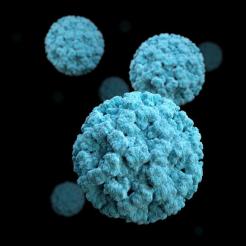
Food Borne Illness - Norovirus -CDC Photo

Human noroviruses (HuNoVs) are a major cause of gastroenteritis and are associated with high morbidity because of their ability to survive in the environment and small inoculum size required for infection. Norovirus is transmitted through water, food, high touch-surfaces, and human-to-human contact. Ultraviolet Subtype C (UVC) light-emitting diodes (LEDs) can disrupt the norovirus transmission chain for water, food, and surfaces. Here, we illuminate considerations to be adhered to when picking norovirus surrogates for disinfection studies and shine light on effective use of UVC for norovirus infection control in water and air and validation for such systems and explore the blind spot of radiation safety considerations when using UVC disinfection strategies. This perspective also discusses the promise of UVC for norovirus mitigation to save and ease life.

Research – Effects of Combined Aerosolization with Ultraviolet C Light-Emitting Diode on Enterohemorrhagic Escherichia coli and Staphylococcus aureus Attached to Soft Fresh Produce

MDPI

Washing soft fresh produce such as strawberries, baby leaves, and sliced onions with sanitizing agents is challenging due to their fragile texture. Thus, treatments like aerosolization using slightly acidic electrolyzed water (SAEW) and ultraviolet C light-emitting diode (UVC LED) irradiation may be good alternatives. In the present study, the reduction effects of a combined treatment of aerosolization using SAEW and UVC LED irradiation on enterohemorrhagic Escherichia coli (EHEC) and Staphylococcus aureus attached to strawberries, baby leaves, and sliced onions were investigated. The behaviours of EHEC and S. aureus, moisture loss, colour measurement, and visual appearance were also analyzed at 10 and 15 °C for 7 days. The reduction effect of the combined treatment with 100 SAEW and UVC LED was higher (0.53–0.92 log CFU g−1) than a single aerosolization treatment (0.11–0.41 log CFU g−1), regardless of samples or pathogens. A greater effect on EHEC and S. aureus reduction was observed in strawberries (0.74 and 0.92 log CFU g−1) than in baby leaves (0.62 and 0.53 log CFU g−1) and sliced onions (0.55 and 0.62 log CFU g−1). The combined treatment further reduced the EHEC and S. aureus populations in strawberries during 7 days of storage at 10 and 15 °C. However, the EHEC and S. aureus populations were maintained in baby leaves and sliced onions at 10 °C for 7 days. Additionally, the greatest effect on the maintenance of colour and appearance was obtained in the combined treatment. Since the combined treatment reduces EHEC and S. aureus populations and preserves visual quality, it could be expected to extend the shelf life of soft fresh produce at the retailer stage of the supply chain. View Full-Text

Research – Antimicrobial Efficacy and Spectrum of Phosphorous-Fluorine Co-Doped TiO2 Nanoparticles on the Foodborne Pathogenic Bacteria Campylobacter jejuni, Salmonella Typhimurium, Enterohaemorrhagic E. coli, Yersinia enterocolitica, Shewanella putrefaciens, Listeria monocytogenes and Staphylococcus aureus

MDPI

Yersinia p

Contamination of meats and meat products with foodborne pathogenic bacteria raises serious safety issues in the food industry. The antibacterial activities of phosphorous-fluorine co-doped TiO2 nanoparticles (PF-TiO2) were investigated against seven foodborne pathogenic bacteria: Campylobacter jejuniSalmonella Typhimurium, Enterohaemorrhagic E. coliYersinia enterocoliticaShewanella putrefaciens, Listeria monocytogenes and Staphylococcus aureus. PF-TiO2 NPs were synthesized hydrothermally at 250 °C for 1, 3, 6 or 12 h, and then tested at three different concentrations (500 μg/mL, 100 μg/mL, 20 μg/mL) for the inactivation of foodborne bacteria under UVA irradiation, daylight exposure or dark conditions. The antibacterial efficacies were compared after 30 min of exposure to light. Distinct differences in the antibacterial activities of the PF-TiO2 NPs, and the susceptibilities of tested foodborne pathogenic bacterium species were found. PF-TiO2/3 h and PF-TiO2/6 h showed the highest antibacterial activity by decreasing the living bacterial cell number from ~106 by ~5 log (L. monocytogenes), ~4 log (EHEC), ~3 log (Y. enterolcolitca, S. putrefaciens) and ~2.5 log (S. aureus), along with complete eradication of C. jejuni and S. Typhimurium. Efficacy of PF-TiO2/1 h and PF-TiO2/12 h NPs was lower, typically causing a ~2–4 log decrease in colony forming units depending on the tested bacterium while the effect of PF-TiO2/0 h was comparable to P25 TiO2, a commercial TiO2 with high photocatalytic activity. Our results show that PF-co-doping of TiO2 NPs enhanced the antibacterial action against foodborne pathogenic bacteria and are potential candidates for use in the food industry as active surface components, potentially contributing to the production of meats that are safe for consumption.

Research – Combined Hurdle Technologies Using UVC Waterproof LED for Inactivating Foodborne Pathogens on Fresh-Cut Fruits

MDPI

This study investigated the combined bactericidal efficacy of slightly acidic electrolyzed water (SAEW), fumaric acid (FA), and ultravioletC waterproof light-emitting diodes (UVC W-LED) for the control of Staphylococcus aureus and Listeria monocytogenes in fresh-cut fruits. Cherry tomato, grape, apple, and pineapple were inoculated with S. aureus and L. monocytogenes and then washed with 30 ppm SAEW containing 0.5% FA in a container equipped with two UVC W-LEDs. Behaviors of S. aureus and L. monocytogenes and quality properties of fresh-cut fruits were monitored after storage at 10 °C and 15 °C for 7 days. The most effective reductions of S. aureus (1.65 log CFU/g) and L. monocytogenes (2.63 log CFU/g) were observed in the group with the combined treatment of SAEW + FA and UVC W-LED. At 10 °C and 15 °C, populations of both pathogens in the combined treatment group were lower than those in a control. Combined treatment showed no negative effect on moisture retention in the fruit. Moreover, visual changes were less significant than in the control. These results demonstrate that the combined treatment can improve the microbial safety and the quality of fruits. If it is properly used in the sanitizing step of the fresh produce industry, a positive effect can be expected.