Category Archives: Uncategorized

USA – FDA Investigated Multistate Outbreak of Salmonella Infections Linked to Hy-Vee Spring Pasta Salad

FDA 

Salmonella

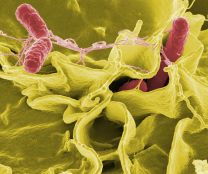
The U.S. Food and Drug Administration, along with the Centers for Disease Control and Prevention (CDC) and state and local partners, investigated a multi-state outbreak of Salmonella illnesses linked to Spring Pasta Salad sold at Hy-Vee locations in Iowa, Illinois, Kansas, Minnesota, Missouri, Nebraska, South Dakota, and Wisconsin.

Update – September 5, 2018

On September 5, 2018, the investigational activities related to this outbreak concluded.

Research – Pathogenic Escherichia coli biosensor detection on chicken food samples

Wiley Online

Abstract

Escherichia coli is an important pollution indicator and is the most important foodborne pathogens of public health concern. The chicken meat is one of the most important sources of good quality protein, and it is also susceptible to microbial contamination and often implicated in foodborne disease. In such context, the detection of E. coli K12 in frozen chicken meat was investigated by electrochemical impedance spectroscopy and surface plasmon resonance imaging techniques. The anti‐E. coli antibody was first immobilized onto gold surface by physisorption technique. The electrical and optical properties of the immobilized anti‐E. coli K12 antibody were studied. The binding of the E. coli K12 bacteria with the anti‐E. coli antibody layer was measured with a detection limit of 103 cfu/ml. This detection limit is better than those obtained with the enzyme‐linked immunosorbent assay (ELISA) technique. Moreover, the developed biosensor was used for E. coli K12 detection in inoculated frozen chicken meat.

Practical applications

Escherichia coli is an important pollution indicator and is the most important foodborne pathogens of public health concern. The present study deals with the development of bacteria biosensors based on electrochemical impedance spectroscopy and surface plasmon resonance imaging techniques for E. coli K12 detection in inoculated frozen chicken meat. A detection limit of 103 cfu/ml was obtained with the developed biosensors that was better than those obtained with classical methods such as ELISA (enzyme‐linked immunosorbent assay). This research work opens tremendous potential applications for the detection of pathogens in food at the early stage particularly with the development of miniaturized multiarrays platform based on impedance spectroscopy.

USA – Legionella bacteria detected in Sands Resort water system, Order issued

Outbreak News Today Legionella_Plate_01

New Hampshire health officials issued an order to the Sands Resort in Hampton this weekend after initial tests conducted by the Centers for Disease Control and Prevention (CDC) detected the presence of the Legionella bacteria from multiple sources within the water system, including, but not limited to the hot tub spa.

UK – Publication of survey of antimicrobial resistance in bacteria in chicken and pork

FSA

We have today published the results of a survey we commissioned to assess the amount of antimicrobial resistance (AMR) in bacteria in fresh pork mince and fresh and frozen chicken on sale in shops in the UK. These findings will help to establish a baseline of the occurrence, types and levels of AMR in bacteria found in these UK retail meats which will inform future surveillance on AMR in these foods.

This survey follows on from an authoritative report by a group established by the Advisory Committee on Microbiological Safety of Food (ACMSF) to advise us on research questions and potential approaches to AMR in the food chain.

The survey involved the testing of Campylobacter in chicken samples and Salmonella in pork mince samples for the occurrence of antimicrobial resistant bacteria. The survey also looked for AMR in other bacteria in both types of meat including Enterococci, Klebsiella and Escherichia coli.  Read the final report of the survey.

USA – Salmonella Honey Smacks now linked to 130 illnesses in 36 States

Food Poison Journal

As of August 30, 2018, 130 people infected with the outbreak strain of Salmonella Mbandaka have been reported from 36 states – AL, AZ, CA, CO, CT, DE, FL, GA, IL, IN, KY, LA, ME, MD, MA, MI, MN, MO, MT, NC, NH, NJ, NY, OH, OK, OR, PA, RI, SC, TN, TX, UT, VA, WA, WI, WV.

untitled.png

Illnesses started on dates from March 3, 2018, to August 7, 2018. Ill people range in age from less than one year to 95, with a median age of 57. Of ill people, 69% are female. Out of 98 people with information available, 34 (35%) have been hospitalized. No deaths have been reported. Illnesses that occurred after August 4, 2018, might not yet be reported due to the time it takes between when a person becomes ill and when their illness is reported. This takes an average of 2 to 4 weeks.

Information – Prevent Food Poisoning

Food Safety.Gov 

kswfoodworld mrsa


Anybody can get food poisoning, but some people are more likely to get seriously ill.

Every year, an estimated 1 in 6 Americans (or 48 million people) get sick, 128,000 are hospitalized, and 3,000 die of foodborne diseases. However, certain groups of people are more likely to get a foodborne illness (also called food poisoning) or get seriously ill. Learn why certain groups have a higher chance for food poisoning and what steps they can take to protect themselves.

People more likely to get a foodborne illness are:

  • Children younger than 5 years of age
  • Adults aged 65 and older
  • People with weakened immune systems from medical conditions or their treatment, such as cancer, HIV/AIDS, or diabetes
  • Pregnant women

Some People are at Higher Risk

Some people are more likely to get food poisoning because their ability to fight germs and sickness is not as effective as other people’s for a variety of reasons.

Young children have immune systems that are still developing, so their ability to fight germs and sickness isn’t as strong. Food poisoning can be particularly dangerous for them because illness can lead to diarrhea and dehydration. Children younger than 5 are three times more likely to be hospitalized if they get a Salmonella infection. And kidney failure strikes 1 out of 7 children under age 5 who are diagnosed with E. coli O157 infection.

Older adults have a higher risk because as people age, their immune systems and organs don’t recognize and get rid of harmful germs as well as they once did. Nearly half of people aged 65 and older who have a lab-confirmed foodborne illness from Salmonella, Campylobacter, Listeria or E. coli are hospitalized.

People with weakened immune systems can’t fight germs and sickness as effectively. People on dialysis are 50 times more likely to get a Listeria infection.

Pregnant women are more likely than other people to get sick from certain germs. For example, pregnant women are 10 times more likely to get a Listeria infection.

Europe – Rare Salmonella strain sickens 50 in five EU countries – Salmonella Mikawasima

Food Safety News

Around 50 people in five European countries have been struck down with a rare strain of Salmonella.

Salmonella Mikawasima has infected 15 people in Germany, 13 in Sweden, eight in both Denmark and the Czech Republic and six in Austria.

USA – FDA documents first Cyclospora contamination of U.S. fresh produce

Food Safety News 220px-Cyclospora_cayetanensis_stained

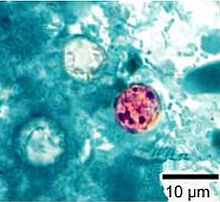
A special FDA testing program on fresh herbs has documented the first confirmed evidence of the Cyclospora parasite in U.S. produce.

The Food and Drug Administration found the microscopic parasite on fresh cilantro at a U.S. distribution facility in July. In a follow-up investigation, the FDA found Cyclospora on fresh cilantro at a farm. The federal agency worked with state and local officials to embargo the cilantro. Staff from FDA have been working with the farmer on “corrective actions geared toward common routes of contamination,” according to a constituent update from the agency. 

“Although this is the first confirmed evidence of the presence of Cyclospora in domestic produce, FDA is currently unaware of illnesses associated with the product, and traceforward efforts do not indicate there are any connections between this domestic finding of contaminated cilantro and multistate outbreaks of Cyclospora illnesses investigated this spring and summer,” the agency reported.

Those Cyclospora outbreaks were linked to Del Monte vegetable-dip trays and salads made with Fresh Express chopped lettuce and carrots that were served at McDonald’s restaurants.

New Zealand -Campylobacter in raw milk leads to recall in New Zealand

Food Safety News 

campy2

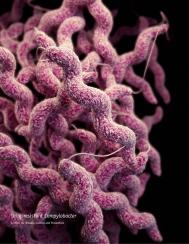
BOI Farming Ltd., trading as Bella Vacca Jerseys, is recalling raw, unpasteurized milk in New Zealand because of contamination with Campylobacter bacteria.

Bella Vacca brand unpasteurized, raw drinking milk is sold in 750-ml glass bottles.

Batch numbers 270818, 280818, 310818, 010918 and 030918 with use by dates Aug. 27, 28 and 31, and Sept. 1 and 3 are included in the recall. The product is delivered directly to customers or sold from the farm at 568 Pokapū Road, RD1 Kawakawa, Northland. It is not exported.

Consumers who have unused portions of Bella Vacca brand raw milk are urged to check the batch and date mark on stickers on the lids of bottles. Health officials say people should not to consume affected product. They should return the products for a full refund.

There have been no reports of illness but those who have consumed the product and have developed symptoms of infection from Campylobacter bacteria should seek medical advice.

Bella Vacca Jerseys representatives said until the next five tests are clear it is unable to sell raw milk.

Netherlands – Large increase in legionellosis in the Netherlands

RIVM

The Municipal Public Health Services (GGD) received 561 reports of legionellosis over the past year. Never before has RIVM registered as many reports of this disease as in the past year.