Category Archives: Uncategorized

Netherlands – Kipfilet Diepvries (Chicken breast – frozen) in Kipsatés diepvries (Chicken skewers – frozen). Problem: Possible presence of Salmonella.

FAVV

In agreement with the AFSCA, Vleeswaren Georges Mauriën is withdrawing from sale the frozen products “Kipfilet Diepvries” (Chicken breast) and “Kipsatés diepvries” (Chicken Skewers) and reminds them of this because of the possible presence of Salmonella.

Vleeswaren Georges Mauriën asks its customers not to consume these products and to bring them back to the point of sale where they were purchased. They will be refunded or exchanged.  


Product description

Kipfilet Diepvries (Chicken breast – frozen)

  • Date of minimum durability (DDM) (“Consume preferably before (or end)”): 03-10-2020
  • Lot (s) number: 027
  • Sales period: from 06/29/2020 to 03/07/2020
  • Type of packaging: plastic bag
  • Weight: 1kg – 1.5kg

Kipsatés diepvries (Chicken Skewers – frozen)

  • Date of minimum durability (DDM) (“Consume preferably before (or end)”): 03-10-2020
  • Lot (s) number: 027
  • Sales period: from 06/29/2020 to 03/07/2020
  • Type of packaging: plastic bag
  • Weight: 1kg – 1.5kg

The products have been distributed by: 

Name of the point of sale /

Distribution chain name

Street + number Postal code Commune (city)  
Vleeswaren Georges Mauriën Hollandstraat 1 A Heist – Goor 2220 Heist – op – den Berg

 For further information , contact:
Georges Mauriën Hollandstraat 1A Heist – Goor 015 / 24.16.72.
Research – Genomic epidemiology of domestic and travel-associated Vibrio parahaemolyticus infections in the UK, 2008–2018

Science Direct

CDC Vibrio

Image CDC

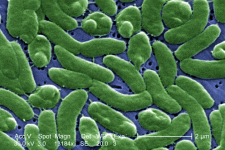
Globally, V. parahaemolyticus is the most prevalent food-poisoning bacterium associated with seafood consumption. To date, the epidemiology of Vibrio parahaemolyticus infections in the UK has remained unexplored. Here we analysed archived V. parahaemolyticus strains isolated from domestic infections and travellers into the UK from 2008 to 2018 and who had submitted clinical samples to Public Health England (PHE)’s Gastrointestinal Bacteria Reference Unit. A total of 48 strains were retrieved from the PHE strain collection, confirmatory tested by PCR and analysed by genome-wide phylogeny using a global collection of genomes with representative strains from the major epidemic clones. Most reported infections entering the UK originated from travellers returning from Southeast Asia, however cases were also reported to have potentially originated from the USA, Cuba, India, Turkey, Caribbean, France, Slovenia and also within the UK, highlighting the wide geographical spread of infections. A large genetic diversity of V. parahaemolyticus strains was observed, with sequence type 3 (ST3; pandemic group) strains the most common sequence type (23 of the 48 analysed strains, 47.9%). The majority of strains were tdh positive (25/48, 71%), with 5 isolates positive for both haemolysin genes (tdh and trh), with 2 isolates trh positive only (5.7%). Six isolates did not possess either haemolysin gene. We demonstrate that whole genome sequencing can be effective to type certain human pathogens entering a traditionally considered “non-endemic” county and this was captured via passive epidemiological surveillance systems. Such approaches may potentially provide a useful snapshot of the diversity of a given pathogen group circulating worldwide.

Research – Effect of Ploidy on Vibrio parahaemolyticus and Vibrio vulnificus Levels in Cultured Oysters

JFP Vibrio_vulnificus_01

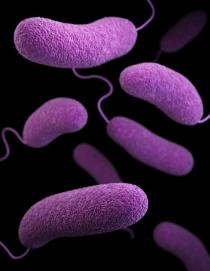
Vibrio parahaemolyticus and V. vulnificus are naturally occuring human pathogenic bacteria commonly found in estuarine environments where oysters are cultured. The use of triploid oysters has increased, due to their rapid growth rate and that they maintain a high quality throughout the year. Previous work suggested levels of Vibrio spp. may be lower in triploid oysters, as compared to diploids. Therfore, this study aimed to determine if there is a difference in the abundances of V. parahaemolyticus and V. vulnificus between half-sibling diploid and triploid oysters. In four trials, 100 individual oysters (either iced or temperature abused) were analyzed for V. parahaemolyticus and V. vulnificus using direct plating followed by colony hybridization. Mean levels of V. parahaemolyticus in iced and abused diploid oysters were 3.55 and 4.21 log CFU/g, respectively. Mean levels in iced and abused triploid oysters were 3.49 and 4.27 log CFU/g, respectively. Mean levels of V. vulnificus in iced and abused diploid oysters were 3.53 and 4.56 log CFU/g, respectively. Mean levels in iced and abused triploid oysters were 3.54 and 4.55 log CFU/g, respectively. The differences in Vibrio spp. abundances between diploid and triploid oysters was not significant (p>0.05). However, the differences across treatments were significant (p<0.05), with the exception of V. parahaemolyticus levels in trial 3 (p=0.83). Variation between individual oysters was also observed, with 12 of 808 measurements being outside of the 95 th percentile. This phenomenon of occasional statistical outliers (“hot” or “cold” oysters) has been previously described and supports the appropriateness of composite sampling to account for inherent animal variability. In summary, the data indicate that abundances of V. parahaemolyticus and V. vulnificus are not dependent on the ploidy of cultured oysters, but vary with the type of handling.


Research – Project to look at 2019 Spanish Listeria outbreak

Food Safety News Listeria cdc

Andalusian authorities have allocated €100,000 (U.S. $113,000) for research to learn from the region’s Listeria outbreak in 2019. The project will focus on the epidemiological, microbiological and clinical analysis of the listeriosis outbreak, according to the Ministry of Health and Families in Andalusia.

The outbreak from “La Mecha” brand chilled roasted pork produced by Magrudis affected more than 200 people. During the health alert between mid-August and mid-October three people died and there were five abortions.

Netherlands and France – Listeria Guidence

Netherlands

France

Page 1
1
Federal Agency for the Safety of the Food Chain
Circular relating to Listeria monocytogenes in cheese
farm produce
1. Objective
The purpose of this circular is to inform operators in the “milk processing at the
firm ”of what is acceptable to the Agency in applying the microbiological criterion for
Listeria monocytogenes , listed in Regulation (EC) No. 2073/2005, and in particular for
cheese made from raw milk and heat-treated milk produced on the farm. It follows the advice of
AFSCA Scientific Committee (Cfr 3.2). These opinions were given based in particular on
results of studies implemented by the Agency. These studies, funded by the FASFC, were carried out
to support operators in the “milk processing on the farm” sector. They aim to
determine whether or not their products allow the growth of Listeria monocytogenes or not and
on the other hand, if growth is possible, if the limit of 100 cfu / g can be applied
during self-checking


Netherlands -Fatal Listeria outbreak linked to trout in the Netherlands

Food Safety News

At least two people have died in a Listeria outbreak linked to chilled smoked trout fillets in the Netherlands.

All six sick people have been hospitalized and two died from their infections. Another person has died but no information about the cause of death was given.

Patients became ill between the beginning of February and mid-June. Their age range is 42 to 85 years old with a median of 78 years old.


USA – With over 500 with Cyclospora in the United States and Canada, what do consumers need to know?

Food Poison Journal

Cyclospora is a parasite composed of one cell, too small to be seen without a microscope. The organism was previously thought to be a blue-green alga or a large form of cryptosporidium. Cyclospora cayetanensis is the only species of this organism found in humans. The first known human cases of illness caused by Cyclospora infection (that is, cyclosporiasis) were first discovered in 1977. An increase in the number of cases being reported began in the mid-1980s, in part due to the availability of better diagnostic techniques. Over 15,000 cases are estimated to occur in the United States each year. The first recorded Cyclospora outbreak in North America occurred in 1990 and was linked to contaminated water. Since then, several cyclosporiasis outbreaks have been reported in the U.S. and Canada, many associated with eating fresh fruits or vegetables. In some developing countries, cyclosporiasis is common among the population and travelers to those areas have become infected as well.

More information at the link above.


Australia -Tasmanian Cheese Co Chilli Cheddar 150g – Listeria monocytogenes

FSANZ

Product information

Tasmanian Food Co Dairy is conducting a recall of The Tasmanian Food Co Chilli Cheddar Cheese 150g. The product has been available for sale in Tasmania at IGA Queenstown, IGA Express Beaconsfield, and Nigel’s Gourmet Meats Exeter.

Date markings

Best Before 25/11/2020

Chilli cheddar

Problem

The recall is due to microbial (Listeria monocytogenes) contamination.

Food safety hazard

Listeria may cause illness in pregnant women and their unborn babies, the elderly and people with low immune systems.

Country of origin

Australia.

What to do​

Any consumers concerned about their health should seek medical advice and should return the product to the place of purchase for a full refund.

For further information please contact:

Tasmanian Food Co Dairy
03 6331 6983
www.thetasmanianfoodco.com.au

Related links:

USA – Same Fresh Express processing plant in Streamwood, Illinois implicated in 2020 and 2018 Cyclospora Outbreaks

Food Poison Journal

In 2018, CDC was notified of 511 laboratory-confirmed cases of Cyclospora infections in people from 15 states and New York City who reported consuming a variety of salads from McDonald’s restaurants in the Midwest.

On July 26, 2018, the FDA completed final analysis of an unused package of romaine lettuce and carrot mix distributed to McDonald’s by the Fresh Express processor in Streamwood, IL. The analysis confirmed the presence of Cyclospora in that sample.

India -76 people from Andhra’s Visakha tribal area hospitalised with food poisoning

The News Minute

At least 76 residents of a village in the Paderu ITDA (Integrated Tribal Development Agency) limits suffered food poisoning on Wednesday after consuming contaminated meat. The incident occurred in Magatapalem village of Gaduturu panchayat, in Gangaraju Madugula mandal of the Paderu Agency region.

While it was ascertained that the meat was contaminated, he said that it was unclear whether it was because of the way the cow died, or because of the cooking process.

Paderu MLA Bhagyalakshmi Kottagulli, who visited the patients at the hospital, told the media that the exact cause of the food-borne illness was yet to be determined. “They unknowingly ate polluted food. We are requesting people to be careful with their health.”