Category Archives: Technology

Research – Controlling Campylobacter jejuni in vitro and in chicken using combinations of citrus-based and trisodium phosphate formulations

Wiley Online

Campylobacter kswfoodworld

Campylobacter frequently contaminates chicken. Trisodium phosphate (TSP) is used for chicken decontamination; however, reduction of chemical preservatives is desirable. This study analyzed the efficacy of two commercial citrus-based products (CitroSan [CS] and Citrol-K Ultra [CK]) alone and in combination with TSP for reduction of Campylobacter in vitro and in chicken. The minimum bactericidal concentration (MBC) of the preservatives alone or in combination was determined against Campylobacter jejuni. Their ability to reduce bacteria in raw chicken and their effect on the sensorial characteristics of the meat were determined. The MBCs obtained were 0.5 ± 0.04% for TSP, 0.05 ± 0.0006% for CS, and 0.0006 ± 0.0001% for CK. When combined, bactericidal concentrations varied. Following contact with TSP–CS and TSP–CK for 6 hr, C. jejuni was reduced from 106 to <100 CFU/g. Concentrations below those used in industry (2% TSP, 0.3% CS, and 0.05% CK) were added on the raw chicken skin before (B: treated with TSP and then inoculated) and after (A: inoculated and then treated with TSP) inoculation of Campylobacter. TSP (A) reduced C. jejuni by 92.6% after 24 hr, whereas TSP (B) caused a 36% reduction. TSP (A and B) in combination with both CS and CK caused 98.9 and 95.9% reduction, respectively, after 120 hr. The CS–CK combination (without TSP) reduced bacteria to undetectable levels after 48 hr. No significant differences were detected in the sensorial characteristics of treated wings. All the combinations tested, but especially 0.3% TSP + 0.0003% CK represent alternatives to control C. jejuni in chicken and reduce or avoid synthetic preservatives.
Research – The influence of organic load and free chlorine on Salmonella cross-contamination of tomatoes in a model flume system

Journal of Food Protection

The process of washing tomatoes in dump (flume) tanks has been identified as a potential source of cross-contamination. This study’s objective was to assess the potential for Salmonella enterica cross-contamination at various inoculation levels at the presence of 0 and 25 mg/L free chlorine (HOCl) and organic matter.  Uninoculated tomatoes were introduced into a laboratory-based model flume containing tomatoes inoculated with a cocktail of five rifampicin-resistant Salmonella enterica serovars at 104, 106, or 108 CFU/tomato in water containing 0 or 25 mg/L HOCl and 0 or 300 mg/L chemical oxygen demand (COD). Uninoculated tomatoes were removed from the water at after 5, 30, 60, 120 s and were placed in bags containing tryptic soy broth supplemented with rifampicin and 0.1% sodium thiosulfate. Following incubation, enrichments were plated on tryptic soy agar supplemented with rifampicin and xylose lysine deoxycholate agar to determine the presence of Salmonella. HOCl and pH were measured before and after each trial. The HOCl in water containing 300 mg/L COD significantly (P≤0.05) declined by the end of each 120 s trial, most likely due to the increased demand for the oxidant. Higher inoculum levels and lower HOCl concentrations were (P≤0.05) significant factors that contributed to increased cross-contamination seen in this study. When HOCl levels were at 25 mg/L, no Salmonella was recovered on non-inoculated tomatoes under all conditions when inoculum levels were at 104 CFU/tomato. When the inoculum was increased to 106 and 108 CFU/tomato, cross-contamination was observed, independent of COD levels. The results from this study show that the currently required sanitizer level (e.g., 100 or 150 mg/L) for flume water may be higher than necessary and warrants re-evaluation.

Research -Application of Whole Genome Sequencing to Aid in Deciphering the Persistence Potential of Listeria monocytogenes in Food Production Environments

MDPI

Listeria monocytogenes is the etiological agent of listeriosis, a foodborne illness associated with high hospitalizations and mortality rates. This bacterium can persist in food associated environments for years with isolates being increasingly linked to outbreaks. This review presents a discussion of genomes of Listeria monocytogenes which are commonly regarded as persisters within food production environments, as well as genes which are involved in mechanisms aiding this phenotype. Although criteria for the detection of persistence remain undefined, the advent of whole genome sequencing (WGS) and the development of bioinformatic tools have revolutionized the ability to find closely related strains. These advancements will facilitate the identification of mechanisms responsible for persistence among indistinguishable genomes. In turn, this will lead to improved assessments of the importance of biofilm formation, adaptation to stressful conditions and tolerance to sterilizers in relation to the persistence of this bacterium, all of which have been previously associated with this phenotype. Despite much research being published around the topic of persistence, more insights are required to further elucidate the nature of true persistence and its implications for public health.

Research – Thermosonication Combined with Natural Antimicrobial Nisin: A Potential Technique Ensuring Microbiological Safety and Improving the Quality Parameters of Orange Juice

MDPI

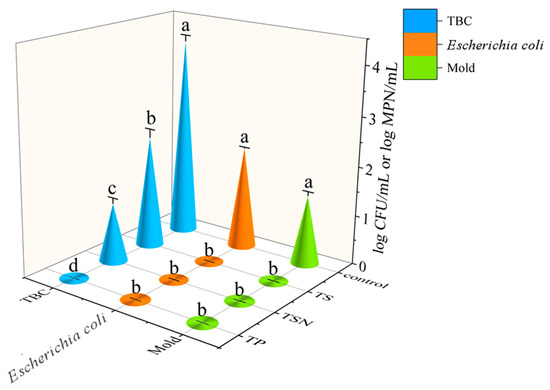
Currently, thermal pasteurisation (TP) remains the most widely applied technique for commercial orange juice preservation; however, a high temperature causes adverse effects on the quality attributes of orange juice. In order to explore a novel non-thermal sterilization method for orange juice, the impacts of thermosonication combined with nisin (TSN) and TP treatments on the quality attributes including microbial and enzyme inactivation and the physicochemical, nutritional, functional, and sensory qualities of orange juice were studied. Both TP and TSN treatments achieved desirable bactericidal and enzyme inactivation effects, and nisin had a significant synergistic lethal effect on aerobic bacteria in orange juice (p < 0.05). Additionally, TSN treatment significantly improved the color attributes of orange juice and well maintained its physicochemical properties and sensory quality. More importantly, TSN treatment significantly increased the total polyphenols content (TPC) and total carotenoids (TC) by 10.03% and 20.10%, increased the ORAC and DPPH by 51.10% and 10.58%, and the contents of total flavonoids and ascorbic acid were largely retained. Correlation analysis of antioxidant activity showed that the ORAC and scavenging ability of DPPH radicals of orange juice are mainly attributed to TC and TPC. These findings indicate that TSN shows great potential application value, which could guarantee the microbiological safety and improve the quality attributes of orange juice. View Full-Text

▼ Show Figures

Research – Application of chitosan microparticles against human Norovirus

Journal of Food Protection

Human norovirus (HuNoV) is the leading causative agent of foodborne outbreaks and is associated with the second most prevalent cause of waterborne infections in the United States. The goal of this research was to investigate the antiviral activity of chitosan microparticles (CM) against HuNoV GII.4 Sydney and its cultivable surrogate, Tulane virus (TuV), in suspensions mimicking fecally-contaminated water. CM was prepared by crosslinking chitosan molecules with sodium sulfate, and then its anti-noroviral activity was assessed using infectivity assay on TuV and RT-qPCR on TuV and HuNoV. A 3% CM suspension in PBS (pH 7.2) showed binding to TuV particles but with a negligible impact on virus infectivity (p>0.05). TuV and HuNoV suspended in fecal suspensions showed a 1.5-log10 reduction in genomic copies per ml following a 10-min contact time (p<0.05). Despite the negligible impact on viral infectivity, CM moderately binds to virus particles and helps purify environmental water by removing infectious virus particles. In this study, TuV served as a suitable surrogate for HuNoV by showing a similar log10 reduction in fecal suspension. Overall, the outcomes of thisresearch highlight the potential application of CM as a novel, natural treatment to minimize the spread of water-transmitted viral pathogens.


Research – Antimicrobial Efficacy and Spectrum of Phosphorous-Fluorine Co-Doped TiO2 Nanoparticles on the Foodborne Pathogenic Bacteria Campylobacter jejuni, Salmonella Typhimurium, Enterohaemorrhagic E. coli, Yersinia enterocolitica, Shewanella putrefaciens, Listeria monocytogenes and Staphylococcus aureus

MDPI

Contamination of meats and meat products with foodborne pathogenic bacteria raises serious safety issues in the food industry. The antibacterial activities of phosphorous-fluorine co-doped TiO2 nanoparticles (PF-TiO2) were investigated against seven foodborne pathogenic bacteria: Campylobacter jejuniSalmonella Typhimurium, Enterohaemorrhagic E. coliYersinia enterocoliticaShewanella putrefaciensListeria monocytogenes and Staphylococcus aureus. PF-TiO2 NPs were synthesized hydrothermally at 250 °C for 1, 3, 6 or 12 h, and then tested at three different concentrations (500 μg/mL, 100 μg/mL, 20 μg/mL) for the inactivation of foodborne bacteria under UVA irradiation, daylight exposure or dark conditions. The antibacterial efficacies were compared after 30 min of exposure to light. Distinct differences in the antibacterial activities of the PF-TiO2 NPs, and the susceptibilities of tested foodborne pathogenic bacterium species were found. PF-TiO2/3 h and PF-TiO2/6 h showed the highest antibacterial activity by decreasing the living bacterial cell number from ~106 by ~5 log (L. monocytogenes), ~4 log (EHEC), ~3 log (Y. enterolcolitcaS. putrefaciens) and ~2.5 log (S. aureus), along with complete eradication of C. jejuni and S. Typhimurium. Efficacy of PF-TiO2/1 h and PF-TiO2/12 h NPs was lower, typically causing a ~2–4 log decrease in colony forming units depending on the tested bacterium while the effect of PF-TiO2/0 h was comparable to P25 TiO2, a commercial TiO2 with high photocatalytic activity. Our results show that PF-co-doping of TiO2 NPs enhanced the antibacterial action against foodborne pathogenic bacteria and are potential candidates for use in the food industry as active surface components, potentially contributing to the production of meats that are safe for consumption. View Full-Text

Research – Combined Hurdle Technologies Using UVC Waterproof LED for Inactivating Foodborne Pathogens on Fresh-Cut Fruits

MDPI

This study investigated the combined bactericidal efficacy of slightly acidic electrolyzed water (SAEW), fumaric acid (FA), and ultravioletC waterproof light-emitting diodes (UVC W-LED) for the control of Staphylococcus aureus and Listeria monocytogenes in fresh-cut fruits. Cherry tomato, grape, apple, and pineapple were inoculated with S. aureus and L. monocytogenes and then washed with 30 ppm SAEW containing 0.5% FA in a container equipped with two UVC W-LEDs. Behaviors of S. aureus and L. monocytogenes and quality properties of fresh-cut fruits were monitored after storage at 10 °C and 15 °C for 7 days. The most effective reductions of S. aureus (1.65 log CFU/g) and L. monocytogenes (2.63 log CFU/g) were observed in the group with the combined treatment of SAEW + FA and UVC W-LED. At 10 °C and 15 °C, populations of both pathogens in the combined treatment group were lower than those in a control. Combined treatment showed no negative effect on moisture retention in the fruit. Moreover, visual changes were less significant than in the control. These results demonstrate that the combined treatment can improve the microbial safety and the quality of fruits. If it is properly used in the sanitizing step of the fresh produce industry, a positive effect can be expected.

Research – Interactions between Microbial Food Safety and Environmental Sustainability in the Fresh Produce Supply Chain

MDPI

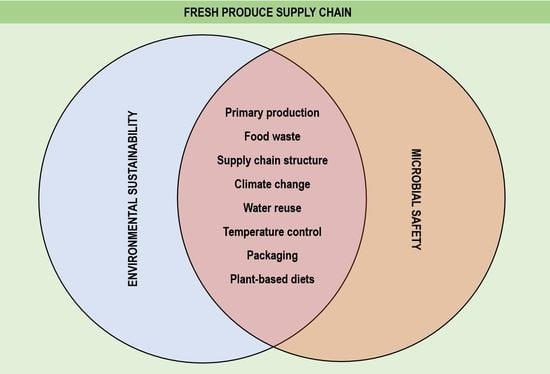
Improving the environmental sustainability of the food supply chain will help to achieve the United Nations Sustainable Development Goals (SDGs). This environmental sustainability is related to different SDGs, but mainly to SDG 2 (Zero Hunger), SDG 12 (Responsible Production and Consumption), SDG 13 (Climate Action), and SDG 15 (Life on Land). The strategies and measures used to improve this aspect of the food supply chain must remain in balance with other sustainability aspects (economic and social). In this framework, the interactions and possible conflicts between food supply chain safety and sustainability need to be assessed. Although priority must be given to safety aspects, food safety policies should be calibrated in order to avoid unnecessary deleterious effects on the environment. In the present review, a number of potential tensions and/or disagreements between the microbial safety and environmental sustainability of the fresh produce supply chain are identified and discussed. The addressed issues are spread throughout the food supply chain, from primary production to the end-of-life of the products, and also include the handling and processing industry, retailers, and consumers. Interactions of fresh produce microbial safety with topics such as food waste, supply chain structure, climate change, and use of resources have been covered. Finally, approaches and strategies that will prove useful to solve or mitigate the potential contradictions between fresh produce safety and sustainability are described and discussed. Upon analyzing the interplay between microbial safety and the environmental sustainability of the fresh produce supply chain, it becomes clear that decisions that are taken to ensure fresh produce safety must consider the possible effects on environmental, economic, and social sustainability aspects. To manage these interactions, a global approach considering the interconnections between human activities, animals, and the environment will be required. View Full-Text

Research – Bacteriophage Therapy to Reduce Colonization ofCampylobacter jejuniin Broiler Chickens before Slaughter

Click to access viruses-13-01428.pdf

Research – Reduction of Escherichia coli O157:H7, Listeria monocytogenes, or Salmonella on Whole Yellow Onions (Allium cepa) Exposed to Hot Water

Journal of Food Protection

In-home or food service antimicrobial treatment options for fresh produce are limited. Hot water treatments for whole (unpeeled) produce have been proposed but data to support this practice for onions are not available. Separate cocktails of rifampin-resistant Escherichia coli O157:H7, Listeria monocytogenes , or Salmonella were cultured on agar and suspended in sterile water. The outer papery skin at the equator or root or stem ends of the whole yellow onions was spot inoculated at 6 log CFU/onion. After drying for 30 min and, in some cases, storage at 4°C for 6 days, onions were immersed in water at ~100°C for 5 s or 85°C for 10 to 180 s. There was no significant difference ( P > 0.05) in the mean decline of Salmonella on onions that were exposed to hot water after drying the inoculum for 30 min or after storage at 4°C for 6 days. Exposure of whole onions at 100°C for 5 s reduced E. coli O157:H7 and L. monocytogenes populations by >5 log CFU/onion at all inoculum sites and Salmonella populations by >5 log CFU/onion at the stem end and equator but not consistently at the root end. Mean root-end reductions of ≥5 log CFU/onion of E. coli O157:H7, L. monocytogenes , or Salmonella were achieved consistently when the root end was fully immersed in 85°C hot water for 45 or 60 s, except in a small number of cases (4/57; 7%) when the root end oriented above the water line during treatment. When onions were held at 85°C for 180 s with the root end above the water line in an uncovered water bath, no significant declines in Salmonella populations were observed; significant mean declines of Salmonella were achieved (mean 5 log CFU/onion [range 3.49 to 6.25]) when the water bath was covered. Short exposure to hot water can significantly reduce pathogens on the surface of whole onions; reductions are more consistent when the root end is submerged, or when the water bath is covered.