Category Archives: Salmonella

RASFF Alerts – Animal Feed – Salmonella – Rape Seed Meal – Fish Meal – Pet Food

RASFF-Logo

RASFF – Salmonella enterica ser. Münster (presence /25g) and Salmonella enterica ser. Tennessee (presence /25g) in rape seed meal from Russia in Finland

RASFF – Salmonella enterica ser. Telelkebir (presence /25g) in fish meal from the United States in Greece

RASFF – Salmonella enterica ser. Haelsingborg (presence /25g) in fish meal from the United States in Greece

RASFF – Salmonella enterica ser. Derby (presence /25g), Salmonella enterica ser. Dublin (presence /25g) and Salmonella enterica ser. Typhimurium (presence /25g) in pet food from Germany in Sweden

USA – Gravel Ridge Farms Egg Salmonella Outbreak Details in FDA Warning Letter

Food Poisoning Bulletin Salmonella Eggs Food Poisoning Food Safety

The Gravel Ridge Farms shell egg Salmonella outbreak sickened 45 people in 12 states last year. The FDA sent the owners of that facility a warning letter on February 12, 2019, that gives us more information about the issues at the farm. Gravel Ridge Farms recalled more than 600,000 shell eggs in response to this outbreak.

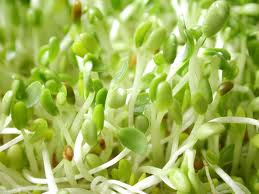
Research – Effects of Lactobacillus plantarum, Pediococcus acidilactici, and Pediococcus pentosaceus on the Growth of Listeria monocytogenes and Salmonella on Alfalfa Sprouts

Journal of Food Protection alfalfa

ABSTRACT

The germination conditions of sprouted vegetables consisting of relatively high temperatures and humidity, low light, and abundance of nutrients are ideal for pathogen survival and growth. The continual occurrence of outbreaks and recalls associated with sprout vegetables indicate additional measures are needed to improve product safety. The objective of this study was to evaluate the efficacy of a mixture of Lactobacillus plantarum, Pediococcus acidilactici, and Pediococcus pentosaceus (LPP) against Listeria monocytogenes and Salmonella on alfalfa sprouts during 5 days of sprouting at 20°C and its influence on sprout quality. Alfalfa seeds were inoculated with L. monocytogenes or Salmonella (each at 1 and 3 log CFU/g) and LPP (7 log CFU/g). Populations of LPP were maintained at 7.5 to 8.0 log CFU/g throughout sprouting. LPP had a significant effect on the growth of L. monocytogenes and Salmonella (P < 0.05). After 5 days of sprouting, populations of L. monocytogenes at an initial concentration of 1 and 3 log CFU/g of seeds treated with LPP were approximately 4.5 and 1.0 log CFU/g less than the untreated seeds, respectively. Populations of Salmonella at an initial concentration of 1 and 3 log CFU/g were 1.0 log CFU/g less than the control. LPP did not compromise the yield, seedling length, or pH of the sprouts.

HIGHLIGHTS
  • Listeria populations on LPP-treated sprouts were 4.5 log less than untreated seeds.

  • LPP treatment reduced Salmonella populations by 1 log compared with controls.

  • LPP did not influence sprout quality.

USA -Sunstone Organics Issues Voluntary Nationwide Recall of Select Kratom Products Due to Potential Contamination by Salmonella

FDA

Sunstone Organics is voluntarily recalling two lots of Sunstone Organics Kratom. These two lots include Sunstone Organics White Vein Kratom Lot 119 and Sunstone Organics Maeng Da Kratom Lot 124A in both capsules and powder form and in all sizes. The products have been found to potentially be contaminated with salmonella.

Risk Statement: The product potentially could result in contracting salmonella. Symptoms of salmonella can include illness, vomiting, and some cases even death. This risk is higher for users a compromised or weak immune system, including elderly and young children. Sunstone Organics has not received any reports of adverse events to date related to this recall.

The product is used as a tea or supplement and is packaged in kraft stand-up pouches in both capsule form and powder form, in 3 different size bags, for a total of 12 products. The affected Sunstone Organics Kratom lots include the following lot numbers: Sunstone Organics White Vein Lot 119 and Sunstone Organics Maeng Da Lot 124A in Powder form and package sizes 25 grams, 50 grams, and 100 grams, and in capsule form in sizes 20 count, 60 count, and 150 count.

USA – Like eggs over easy warning letters follow last year’s violations

Food Safety News


Shell egg farms in Alabama and New York inspected last year by the Food and Drug Administration were recently warned about the serious violations FDA discovered.

In the warning letters, FDA discloses more details about a previously reported outbreak and reports  that the  Salmonella Enteritidis or SE outbreak caused a cage-free egg producer to cease operations.

Alabama’s Gravel Ridge Farms in Cullman was the likely source of a multi-state SE outbreak that last year sickened 44 people in 11 states, FDA says in the recently released warning letter dated Feb. 12, 2019.

As consequence, Gravel Ridge recalled 660,000 shell eggs between May 22 and Aug. 29, 2018. It was one of two large shell egg recalls that occurred last year.   The other involved a Salmonella Braenderup outbreak.

FDA’s Coordinated Outbreak Response and Evaluation (CORE) Network and the federal Centers for Disease Control and Prevention investigated the outbreak. A match to the outbreak strain was turned up from an environmental swab in laying house 2 at Gravel Ridge Farms.

Canada – Breaded Chicken Salmonella Outbreak in Canada Has Sickened 534

Food Poisoning Bulletin

kswfoodworld salmonella

Image CDC

A breaded chicken Salmonella outbreak in Canada has sickened at least 534 people in 13 provinces. There are actually 15 national outbreaks linked to raw chicken, including raw breaded chicken products. Food recalls have been issued for twelve products that are linked to some of these outbreak investigations.

USA – FDA Investigated a Multistate Outbreak of Salmonella Concord Linked to Tahini Produced by Achdut Ltd. is over.

FDA

Update: February 27, 2019

The United States Food and Drug Administration, along with the Centers for Disease Control and Prevention (CDC), and state and local partners, investigated a multistate outbreak of Salmonella Concord illnesses linked to tahini imported from an Israeli manufacturer, Achdut Ltd., located in Ari’el, Israel.

As of February 27, 2019, there are eight illnesses associated with tahini products from Achdut Ltd. The CDC has announced that this outbreak appears to be over.

Recommendation

The FDA is advising consumers not to eat recalled Achva, Achdut, Soom, S&F, and Pepperwood brand tahini and Soom brand Chocolate Sweet Tahini Halva Spread (lot code 071318CH) with expiration dates ranging from April 7, 2020 to May 21, 2020 and Baron’s brand tahini with the expiration date of May 5, 2021. The product lot codes range from 18-097 to 18-141. Consumers should discard the product or return the product to the store for a refund.

Some brands of tahini manufactured by Achdut Ltd. may lack specific dates or may have labels that are written in Hebrew. Consumers who have purchased a tahini product and are uncertain of where the product was manufactured or cannot identify the brand by lot codes or expiration dates should discard the product or return the food to the store for a refund. More product information and pictures of the recalled product labels can be found in Achdut ‘s recall announcement. View Soom Foods’ recall announcement.

Retailers and restaurants should not use any of the recalled tahini manufactured by Achdut Ltd. at their establishments. Retailers and restaurants should throw the product out.

Firms that may have used the recalled tahini (either repacked or used as an ingredient in a food without a kill step) should consider recalling their products. Recalls should be reported to your local FDA office. A list of recall coordinators can be found in the firm’s recall announcement.

RASFF Alerts – Salmonella – Chicken Drumsticks – Chicken Broiler Wings – Cheese – Hazlenuts -Chicken Broiler Thighs – Chilled Chicken Meat MSM – Sesame Seeds – Black Pepper – Frozen Beef Kebab – Whitish Sesame Seeds – Clams – Sesame Paste – Minced Meat

RASFF-Logo

RASFF – Salmonella enterica ser. Enteritidis (in 4 out of 5 samples /25g) in frozen chicken drumsticks from Poland in Croatia

RASFF – Salmonella enterica ser. Infantis (in 4 out of 5 samples /25g) in chilled chicken broiler wings from Poland in Lithuania

RASFF – Salmonella (presence /25g) in cheese from Belgium in Belgium

RASFF – Salmonella (presence /25g) in organic hazelnuts from Turkey in the UK

RASFF – Salmonella enterica ser. Livingstone (presence /25g) in fresh chicken broiler thighs from Poland in Lithuania

RASFF – Salmonella enterica ser. Typhimurium (present /25g) in chilled chicken meat (MSM) from Germany in the Netherlands

RASFF – Salmonella (presence /25g) in sesame seeds from Sudan, via Bulgaria in the Netherlands

RASFF – Salmonella enterica ser. Typhimurium (presence /25g) in chilled chicken from the Netherlands in the Netherlands

RASFF – Salmonella enterica ser. Enteritidis (present /25g) in frozen chicken legs from Poland in the Czech Republic

RASFF – Salmonella (presence /25g) in sesame seeds from Nigeria in Poland

RASFF – Salmonella enterica ser. Gaminara (present /25g), Salmonella enterica ser. Minnesota (present /25g), Salmonella enterica ser. Saphra (present /25g) and Salmonella enterica ser. Schwarzengrund (present /25g) in black pepper from Brazil in Germany

RASFF – Salmonella (in 1 out of 5 samples /25g) in whitish sesame seeds from Sudan in Greece

RASFF – Salmonella enterica ser. Enteritidis (presence /25g) in frozen beef kebab from Poland in Croatia

RASFF – Salmonella (in 1 out of 5 samples /25g) in whitish sesame seeds from Sudan in Greece

RASFF – Salmonella enterica ser. Enteritidis (in 1 out of 5 samples /25g) in whitish sesame seeds from Sudan in Greece

RASFF – Salmonella (in one out of five units) in whitish sesame seeds from Sudan in Greece

RASFF – Salmonella (present /25g) in black pepper from Brazil in the UK

RASFF – Salmonella enterica ser. Infantis (presence /25g) in chicken legs from Poland in Lithuania

RASFF – Salmonella (presence /25g) in clams (venerupis decussata) from Italy in Italy

RASFF – Salmonella (presence /25g) in sesame paste from Lebanon, via the Netherlands in Germany

RASFF – Salmonella enterica ser. Typhimurium (in 5 out 5 samples /25g) in minced meat from Germany, via the Netherlands and packaged in Denmark in Finland

USA- Outbreak of Multidrug-Resistant Salmonella Infections Linked to Raw Chicken Products Final Update

CDC

Final Outbreak Information
At A Glance
  • As of February 21, 2019 this investigation is over.
  • A total of 129 people infected with the outbreak strain of Salmonella Infantis were reported from 32 states.
    • Twenty-five people were hospitalized. One death was reported from New York.
  • Epidemiologic and laboratory evidence indicated that many types of raw chicken products from a variety of sources are contaminated with Salmonella Infantis and are making people sick.
    • In interviews, ill people reported eating different types and brands of chicken products purchased from many different locations.
    • The outbreak strain was identified in samples taken from raw chicken products, raw chicken pet food, and live chickens.
  • Antibiotic resistance testing conducted by CDC on Salmonella bacteria isolated from ill people showed that the outbreak strain is resistant to multiple antibiotics. For more information read the advice to clinicians.
  • A single, common supplier of raw chicken products or of live chickens was not identified.
  • The outbreak strain of Salmonella Infantis is present in live chickens and in many types of raw chicken products, indicating it might be widespread in the chicken industry. CDC and USDA-FSIS shared this information with representatives from the chicken industry and requested that they take steps to reduce Salmonella contamination.

UK – UK investigates outbreak linked to mayonnaise; product distributed in Europe – Salmonella Risk

Food Safety News

Authorities in the United Kingdom are investigating a foodborne outbreak linked to avocado oil mayonnaise.

It is suspected to be caused by too low acidity due to a production error leading to absence of vinegar in the product prompting a mould and Salmonella risk.

The outbreak is linked to a recall made this week in the U.K. by The Condiment Company Ltd. of Hunter and Gather Avocado Oil Mayonnaise in 250-gram glass jars.

In the recall notice, the firm, based in the English city of Chichester, said a recipe error occurred, which means the product might contain mould and could be contaminated with Salmonella.