Category Archives: Salmonella

RASFF Alert- Animal Feed – Salmonella – Palm Kernel Cakes

RASFF-Logo

RASFF – Salmonella enterica ser. Ruiru (presence) in palm kernel cake from Indonesia, via Germany

Canada -Celebrate brand frozen profiteroles and eclairs recalled due to Salmonella

Canada Gov

Recall details

Ottawa, February 24, 2020 – Giant Tiger Stores Limited is recalling Celebrate brand frozen profiteroles and eclairs from the marketplace due to possible Salmonella contamination. Consumers should not consume and retailers, restaurants and institutions should not sell or use the recalled products described below.

The following products were sold at the Giant Tiger locations listed below:

  • 417 Wellington St., St. Thomas, Ontario
  • 350 Scott St., St. Catharines, Ontario
  • 29 Chambers St., Smith Falls, Ontario
  • 2480 Walkley Rd., Ottawa, Ontario
  • 6061 Hazeldean Rd. Stittsville, Ontario
  • 4501 Tecumseh Rd. East, Windsor, Ontario
  • 330 avenue St-Laurent, Louiseville, Quebec
  • 1254 boulevard Louis-XIV, Quebec City, Quebec
  • 46 Robie St., Truro, Nova Scotia

Recalled products

Brand Product Size UPC Codes
Celebrate Mini Chocolate Eclairs 365 g 8 858762 720047 All codes
Celebrate Classical Profiteroles / Classic Profiteroles 325 g 8 858762 720009 All codes

What you should do

If you think you became sick from consuming a recalled product, call your doctor.

Check to see if you have the recalled products in your home. Recalled products should be thrown out or returned to the store where they were purchased.

Food contaminated with Salmonella may not look or smell spoiled but can still make you sick. Young children, pregnant women, the elderly and people with weakened immune systems may contract serious and sometimes deadly infections. Healthy people may experience short-term symptoms such as fever, headache, vomiting, nausea, abdominal cramps and diarrhea. Long-term complications may include severe arthritis.

Background

This recall was triggered by findings by the Canadian Food Inspection Agency (CFIA) during its investigation into a foodborne illness outbreak. A Food Recall Warning was previously issued for these products on April 26, 2019. The CFIA is conducting a food safety investigation, which may lead to the recall of other products. If other high-risk products are recalled, the CFIA will notify the public through updated Food Recall Warnings.

The CFIA is verifying that industry is removing the recalled products from the marketplace.

Illnesses

The Public Health Agency of Canada investigated an outbreak of Salmonella infections associated with these products. The outbreak appears to be over, and the investigation has been closed. Please refer to the Public Health Notice for further details on this closed outbreak investigation.

Research – Predictive model for growth of Salmonella Newport on Romaine lettuce

Wiley Online


Cross‐contamination of ready‐to‐eat (RTE) salad vegetables with Salmonella from raw chicken followed by growth during meal preparation are important risk factors for human salmonellosis. To better predict and manage this risk, a model (general regression neural network) for growth of a chicken isolate of Salmonella Newport (0.91 log) on Romaine lettuce (0.18 g) at times (0–8 hr) and temperatures (16–40°C) observed during meal preparation was developed with Excel, NeuralTools, and @Risk. Model performance was evaluated using the acceptable prediction zones (APZ) method. The proportion of residuals in the APZ (pAPZ) was 0.93 for dependent data (n = 210) and 0.93 for independent data (n = 72) for interpolation. A pAPZ ≥0.70 indicates acceptable model performance. Thus, the model was successfully validated for interpolation and can be used with confidence to predict and manage this important risk to public health.

France – French Salmonella outbreak linked to horse meat from Romania

Food Safety News

A Salmonella outbreak linked to horse meat from Romania sickened 25 people in France this past year, according to a new report.

Eleven cases were men and 14 were women. They ranged from 2 to 90 years of age and the median was 68 years old.

In September 2019, the regional unit of Santé Publique France in the Hauts-de-France region was alerted to a spike in Salmonella Bovismorbificans notifications in Nord and Pas-de-Calais during the first two weeks of August, found by the National Reference Center for E. coli, Salmonella and Shigella at Institut Pasteur.

The 25 salmonellosis cases, belonging to the same genomic cluster, were identified between Aug. 4 and 26, 2019. Nine people needed hospital treatment and two had severe complications but none died.

Ghana – Poultry Farmers Condemn Salmonella Infested Gizzard

Modern Ghana

The Greater Accra Poultry Farmers Association (GAPFA) has condemned the importation of salmonella infested gizzard onto the Ghanaian market.

The GAPFA has since 2019, been advocating and campaigning for local poultry consumption, calling on government to assist and empower local poultry farmers to thrive.

The association has as well been strongly appealing to government for a regulated quota system to limit the almost 80 per cent of poultry products imported into Ghana annually.

GAPFA maintains that a well-structured quota system with market availability will encourage local poultry producers to fill the gap and produce enough to feed all citizens.


Canada -Fresh Sprouts brand Fresh Bean Sprouts recalled due to Salmonella

CFIA

Recall details

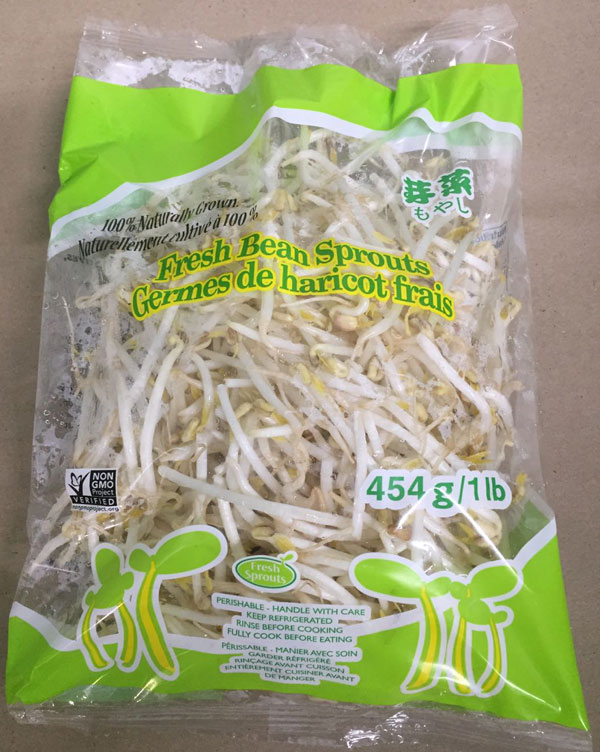
Ottawa, February 21, 2020 – Fresh Sprout International is recalling Fresh Sprouts brand Fresh Bean Sprouts from the marketplace due to possible Salmonella contamination. Consumers should not consume the recalled product described below.

Recalled product

Brand Product Size UPC Codes
Fresh Sprouts Fresh Bean Sprouts 454 g 8 27468 00100 0 20/FEB/28

What you should do

If you think you became sick from consuming a recalled product, call your doctor.

Check to see if you have the recalled product in your home. Recalled products should be thrown out or returned to the store where they were purchased.

Food contaminated with Salmonella may not look or smell spoiled but can still make you sick. Young children, pregnant women, the elderly and people with weakened immune systems may contract serious and sometimes deadly infections. Healthy people may experience short-term symptoms such as fever, headache, vomiting, nausea, abdominal cramps and diarrhea. Long-term complications may include severe arthritis.

Background

This recall was triggered by test results. The Canadian Food Inspection Agency (CFIA) is conducting a food safety investigation, which may lead to the recall of other products. If other high-risk products are recalled, the CFIA will notify the public through updated Food Recall Warnings.

The CFIA is verifying that industry is removing the recalled product from the marketplace.

Illnesses

There have been no reported illnesses associated with the consumption of this product.

Product photos

Printer ready version of photos

  • Fresh Sprouts – Fresh Bean Sprouts – 454 grams (front)
  • Fresh Sprouts – Fresh Bean Sprouts – 454 grams (back)

RASFF Alerts – Salmonella – Minced Beef Steak – Chilled Poultry Meat – Fresh Chicken Livers – Chilli Powder – Marinated Chicken Legs – Little Gem Lettuce – Black Pepper

RASFF-Logo

RASFF – Salmonella (presence /25g) in minced beef steak from Italy in France

RASFF – Salmonella (presence /25g) in chilled poultry meat from Poland in Romania

RASFF – Salmonella enterica ser. Enteritidis (present /25g) in fresh chicken livers from Poland in Lithuania

RASFF – Salmonella in chili powder from India in Spain

RASFF – Salmonella (present /25g) in frozen marinated chicken legs from Poland in France

RASFF – Salmonella (presence /25g) in sesame seeds from India in Cyprus

RASFF – Salmonella enterica ser. Mikawasima (presence /25g) in organic little gem lettuce from Spain in Norway

RASFF – Salmonella enterica ser. Javiana (presence /25g) and Salmonella enterica ser. Poona (presence /25g) in black pepper from Brazil in Germany

RASFF Alerts – Animal Feed – Salmonella – Dog Chews – Organic Soya Bean Cake – Straw

RASFF-Logo

RASFF – Salmonella (presence /25g) in dog chews from Poland in Germany

RASFF – Salmonella enterica ser. Tennessee (presence /25g) in organic soybean cake from India in Finland

RASFF – Salmonella enterica ser. Typhimurium (presence /25g) in straw from France in Luxembourg

Information – Patient Stories: Was It Something I Ate?

CDC

These people got sick with infections that came from food or animal contact. Watch or read their stories to learn how they got sick and what they’re doing now to stay safe.

CDC’s Division of Foodborne, Waterborne, and Environmental Diseases has produced a new video series, “Was It Something I Ate?,” which presents stories of people who developed serious enteric (intestinal) infections from food or animal contact.

The stories are from families with children who developed Salmonella infection from eating contaminated chicken or contact with backyard poultry, and from a CDC veterinarian who investigated an outbreak linked to working with farm animals.

We hope these stories will highlight the importance of preventing infections from food or animal contact through efforts by industry, government, and the public.

USA – Outbreak Investigation of Salmonella Javiana: Fruit Mix (December 2019)

FDA

Case Counts

Total Illnesses: 165
Hospitalizations: 73
Deaths: 0
Last illness onset: January 11, 2020
States with Cases: CA, CO, CT, DE (49), FL, GA, IL, MA, MN, NJ (50), NY (7), PA (49), VA, WA

February 18, 2020

Update

FDA, CDC and state and local partners investigated an outbreak of illnesses caused by Salmonella Javiana. Epidemiologic and traceback evidence indicated that fruit mix with cantaloupe, honeydew, pineapple, and grapes from Tailor Cut Produce of North Brunswick, New Jersey, was the source of this outbreak. CDC has announced this outbreak is over. The FDA’s investigational activities, including an inspection, are complete.

The firm recalled the fruit mix, called Fruit Luau, as well as cut honeydew, cut cantaloupe and cut pineapple products on December 7. The FDA recommended that food service and institutional food operators not sell or serve the recalled products.

In interviews, ill people reported eating cut fruit that was served in the week before illness started. Ill people reported eating cut fruit that was served in long-term care facilities, hospitals, hotels, schools, or universities. Several ill people also reported purchasing cut fruit from multiple locations of a grocery store chain. A review of records determined that these locations served or sold cut fruit from Tailor Cut Produce.

The FDA worked with CDC and state partners to trace back the cut fruit and learn more about the potential routes of contamination. Tailor Cut Produce was identified as the common processor, but the source of the contamination was not identified. When FDA did an inspection at Tailor Cut Produce, the inspectors observed these general deficiencies: the firm’s hazard analysis did not identify a known or reasonably foreseeable hazard that required a preventive control; the firm did not identify a preventive control for a hazard when one was needed; and the firm did not maintain the plant in a clean and sanitary condition and keep the plant in repair. The firm is working with the FDA to address the deficiencies.

As of February 14, 2020, CDC is reporting 165 illnesses were confirmed by Whole Genome Sequencing (WGS) in CA, CO, CT, DE, FL, GA, IL, MA, MN, NJ, NY, PA, VA, and WA. Illnesses were reported from states where Tailor Cut Produce distributes, including Pennsylvania, New York City, New Jersey, and Delaware. Ill people from other states reported traveling to these states in the week before their illness started.