Category Archives: Salmonella in Chicken

RASFF Alerts- Polish Poultry Products – Sesame Seeds – Chicken Thigh Satay – Walnuts – Laying Hen Farm – Sprouts – Ham with Parsley – Chicken Meat Preparation – Almond Kernels

RASFF

Salmonella in poultry meat from Poland in Bulgaria

RASFF

Salmonella spp in sesame seeds from Nigeria in Greece

RASFF

Salmonella in Chicken thigh satay from Romania in the Netherlands

RASFF

Salmonella in Walnut from United Status in the Netherlands and France

RASFF

Salmonella Enteritidis on a laying hen farm in Germany in the Netherlands

RASFF

Salmonella Agona in sprouts from Italy in Finland

RASFF

Detection of salmonella on the ham with parsley from France in Belgium

RASFF

Salmonella Infantis (in 4 out of 5 units) in fresh chicken thighs from Poland in Latvia

RASFF

Salmonella spp. in seasoned chicken meat preparation from Austria in Germany

RASFF

Salmonella spp. in almond kernels from the United States in Germany, Italy and the Netherlands

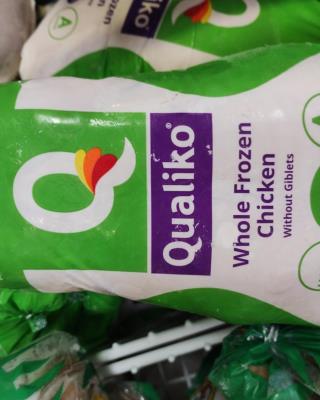
Czech Republic – QUALIKO – Chicken without giblets, deep frozen, quality class A – Salmonella

Potravinynapranyri

Illustrative photo #1

Place of inspection:
Hrdějovice ( 373 61 Hrdějovice 396 )
ID: 26450691
Food group: Meat and meat products Packaged meat

QUALIKO – Chicken without giblets, deep frozen, quality class A
Category: Dangerous foods
Invalid parameter:

Salmonella

The presence of the pathogenic bacterium Salmonella Infantis , which can cause a disease called salmonellosis, was detected in the food  .

SZPI has already informed about this product in a press release dated 9/10/2023.  The Food Inspection Agency draws attention to two more cases of salmonella in chicken meat from abroad.

Batch: DMT: 20/12/2024
Best before date: 20/12/2024
Packaging: PP Bag
Quantity of the product in the package: 1.2 kg
Manufacturer: Branch “Pererobniy Compleks” of Limited Liability Company “Vinnytska Ptahofabryka”, 2B, Khlibozavodska st., Ladyzhyn, Vinnyts´ka Oblast, 24320, Ukraine
Country of origin:  Ukraine
Date of sample collection: 8/16/2023
Reference number: 23-000918-SZPI-CZ
The sample was detected by the official control of the State Agricultural and Food Inspection.

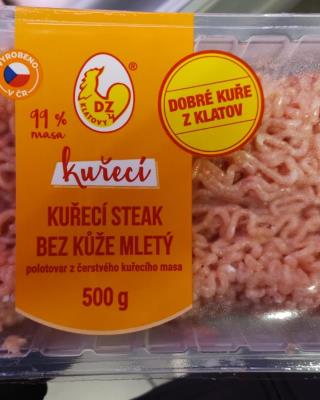
France – Minced skinless chicken steak – Salmonella

Potravinynapranyri

Illustrative photo #1

Place of inspection:
BILLA, spol. s.r.o.
Prague 9 (Freyova 945/33, 190 00 Prague 9)
ID: 00685976
Food group: Meat and meat products / Meat semi-finished product
Minced skinless chicken steak
Category: Dangerous foods
Invalid parameter:
Salmonella
The presence of pathogenic bacteria Salmonella Infantis was detected in the food, which can cause a disease called salmonellosis.

Batch: L:3289
Expiration date: 22.10.23
Packaging: plastic tub with foil and sticker
Quantity of the product in the package: 0.5 kg
Manufacturer: Poultry plant Klatovy a.s., ul. 5. května 112, 339 01 Klatovy
Date of sample collection: 17/10/2023
Reference number: 23-000908-SZPI-CZ

The sample was detected by the official control of the State Agricultural and Food Inspection.

Research – UK – FSA steps up response to Salmonella in Polish poultry products

Food Safety News

More information has been shared by the Food Standards Agency (FSA) about Salmonella in poultry meat and eggs from Poland.

There have been 200 cases of salmonellosis this year in the United Kingdom caused by different strains of Salmonella Enteritidis linked to such products.

FSA has investigated more than 90 incidents in the past two years, with two outbreaks linked to eggs and three to poultry meat from Poland this year.

The FSA, Food Standards Scotland (FSS), and the UK Health Security Agency (UKHSA) recently told consumers to take care when handling and cooking chicken, turkey, and duck products at home. Catering sites are using the majority of imported eggs.

RASFF Alert- Salmonella – Polish Poultry Products – Frozen Chicken Fillet – Macadamias – Minced Chicken Meat – Frozen Goose with Giblets – Almond Kernels – Minced Pork Meat – Fried Samosa Chicken

RASFF

Salmonella infantis in frozen chicken fillets from Northern Ireland, with raw material from the Netherlands in Ireland

RASFF

Salmonella in macadamias from Malawi in the Netherlands and UK

RASFF

Salmonella enteritidis, S. paratyphi B and S. infantis in minced chicken meat from the Netherlands in Italy

RASFF

Salmonella Enteritidis in raw material for chicken kebab from Poland in France

RASFF

Salmonella Senftenberg in frozen goose with giblets from Hungary, via Germany in the Czech Republic

RASFF

Salmonella spp. in almond kernels (raw goods) from the United States, via the Netherlands in Germany

RASFF

Salmonella Agona in minced pork meat from Poland in Slovakia

RASFF

Salmonella paratyphi B and Salmonella infantis in frozen chicken breast meat from the Netherland in Italy

RASFF

Salmonella in fried samosa chicken, from France in the Netherlands and Germany

Romania – Frozen Chicken Hind quarters Recall – Salmonella


ANSVA

Product name on label:
Frozen chicken hindquarters
Producer:
Cedrob S.A.

Gramaj: 10kg
Nr. Lot: 191/3/23
Data expirare: 10.07.2025

Research – New sanitiser kills Salmonella in seconds

Adelaide Edu

Food poisoning outbreaks caused by bacteria such as salmonella could be significantly reduced if a new sanitiser is proven to be successful in the next stage of trials.

University of Adelaide researchers are developing plasma-activated water as an environmentally friendly food sanitiser that can kill foodborne superbugs in seconds.

“The results of our prototype trials are really exciting and showed that our sanitiser destroyed salmonella on chicken meat and eggs in just five seconds,” said lead researcher Dr Katharina Richter, a Future Making Fellow from the University of Adelaide’s Institute for Photonics and Advanced Sensing and Adelaide Medical School.

“We envisage that this sanitiser could be used as a spray or dip for at-risk foods such as eggs, meats, poultry and plant-based products during the manufacturing process, potentially providing a chemical-free alternative to current sanitisers and preventing disease.”

More than four million cases of foodborne disease are estimated to occur in Australia each year. Symptoms can range from mild to severe and include diarrhoea, vomiting, fever, aches, and pains.

“Vulnerable people such as young children, the elderly, pregnant women and people with weakened immune systems are most at risk of severe consequences and could even die of foodborne illnesses,” said Dr Richter.

RASFF Alerts – Salmonella – Chicken Stomachs – Chicken Minced Meat – Beef Turkey Skewers -Polish Poultry Products -Frozen Goose Breast

RASFF

Salmonella infantis in frozen chicken stomachs from the Czech Republic in Slovakia

RASFF

Salmonella infantis and Salmonella paratyphi b in frozen chicken minced meat from the Netherlands in Italy

RASFF

Salmonella enteritidis in fresh chicken breast from Poland in Croatia

RASFF

Salmonella spp. in frozen veal and beef turkey skewers from Germany in Poland and the Netherlands

RASFF

Salmonella enteritidis in frozen chicken leg meat skin on, boneless from Poland in Croatia

RASFF

Salmonella detected in a batch of chicken meat preparations from the Netherlands in France

RASFF

Salmonella Agona and Salmonella Newport in frozen goose breast from Hungary, via Germany in Czech Republic

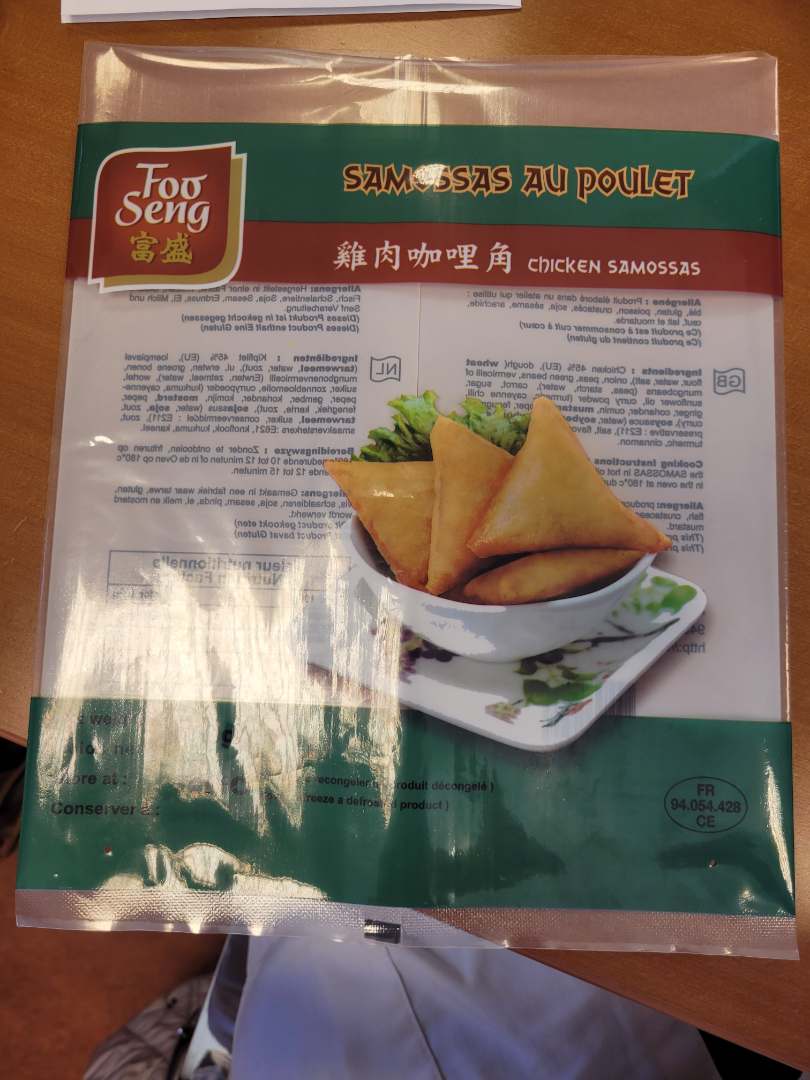
France – CHICKEN SAMOSSAS – Salmonella

Gov France

Product category
Food
Product subcategory
Prepared meals and snacks
Product brand name
FOOSENG
Model names or references
HALAL CHICKEN SAMOSSAS 1,450KG / 580G CHICKEN SAMOSSAS 580G
Product identification
GTIN Batch Date
3760195545225 CHICKEN SAMOSSAS 580G Minimum durability date 05/01/2025
3760195545553 HALAL CHICKEN SAMOSSAS 1,450G Minimum durability date 05/01/2025
3760195545553 HALAL CHICKEN SAMOSSAS 580G Minimum durability date 05/01/2025
Packaging
BAGS OF 580G AND 1450G
Start/end date of marketing
From 11/13/2023 to 12/05/2023
Storage temperature
Product to keep in the freezer
Geographical sales area
Departments: VAL-DE-MARNE (94)
Distributors
NGUYEN ORIENTAL FOODS/VILLETTE FOOD DISTRIBUTION/PARIS STORE CASH/TIA SARAN (ST45) / TIA TOURS / CHINA MARKET (CAMPAIGN PLAN) / BAO CERGY / BAO ST DENIS BASILIQUE / FLANDERS DISTRIBUTION / VENISSIEUX FOOD DISTRIBUTION (see list of sales points)

UK – FSA alerts consumers on Salmonella and Polish poultry

FSA

Following a rise in cases of Salmonella linked to poultry products imported from Poland, the FSA is reminding consumers of its safe handling and cooking advice.

The Food Standards Agency (FSA) along with Food Standards Scotland (Opens in a new window) (FSS) and the UK Health Security Agency (Opens in a new window) (UKHSA) is reminding consumers to take care when handling and cooking poultry products at home, including chilled and frozen chicken and turkey drumsticks, breasts, thighs and chicken pieces. This is because of a recent rise in cases of food poisoning caused by Salmonella Enteritidis linked to poultry products imported from Poland.

Our advice is to:

  • Follow cooking and storage instructions on the product label, including the cooking time and temperature – this is important to ensure that the food is safe when consumed
  • Use or freeze products by their use-by date
  • Wash hands thoroughly after handling raw poultry products
  • Never wash raw poultry products
  • Clean all surfaces and utensils with hot soapy water after contact with raw poultry
  • Only reheat cooked and frozen meat once

An investigation is ongoing into multiple strains of Salmonella linked to poultry products imported to the UK from Poland. There have been over 200 human cases of salmonellosis caused by specific genetic strains of Salmonella Enteritidis that have been linked to poultry products such as meat and eggs, this year.

The FSA is in discussion with officials in Poland and the EU to ensure all necessary steps are taken to improve the safety of poultry and eggs imported from Poland. The forthcoming import controls on food and feed coming into the UK from the EU will also allow us to check these controls are in place and help to uphold the UK’s high food and feed standards and to protect public health.

Our advice is to always take care when storing, handling, and cooking poultry products such as chicken, turkey and duck to help reduce the risk of food poisoning to you and your family.

You should always check the cooking instructions on food packaging, as different brands of the same type of product might have different instructions. Cooking food at the right temperature and for the correct length of time will ensure that any harmful bacteria are killed. At the same time, make sure that any surfaces and equipment that come into contact with food are clean to avoid risks from cross contamination and always wash your hands before and after handling food.

A number of the cases have involved the consumption of eggs produced in Poland and used in meals in restaurants and cafes. We are therefore asking local authorities to remind food businesses about the importance of good hygiene practices.

Tina Potter, Head of Incidents – Food Standards Agency

Salmonella is a type of stomach bug that causes stomach pain, vomiting and diarrhoea. Symptoms typically resolve themselves within a few days, however, they can be more severe with fever and dehydration, especially in young children, those who are pregnant and those with weakened immune systems.

Salmonella can be spread from person to person as well as from food, so anyone affected should follow good hygiene practices, such as washing hands thoroughly after using the bathroom and avoiding handling food for others where possible, if you have symptoms.

Lesley Larkin, Deputy Director for Gastrointestinal Infections – UKHSA

Salmonella is a common bacteria that can cause food poisoning. Salmonella can be found in a variety of different foods but raw meat (processed and unprocessed), undercooked poultry, eggs and unpasteurised milk are the most commonly reported foods causing salmonellosis. Inadequate cooking and cross-contamination in the kitchen during food preparation can lead to salmonellosis. The bacteria can also spread from person to person.

Babies, children, pregnant women, and older people should only eat runny or raw eggs if they have a British Lion mark (Opens in a new window) or are produced under the Laid in Britain egg assurance scheme (Opens in a new window). This advice does not apply to individuals who are severely immunocompromised.

Please see our Salmonella guidance and the NHS Choices page on food poisoning (Opens in a new window) for more information on this foodborne disease. Our Home food fact checker also has advice on how to store, cook and reheat food at home.