Category Archives: Research

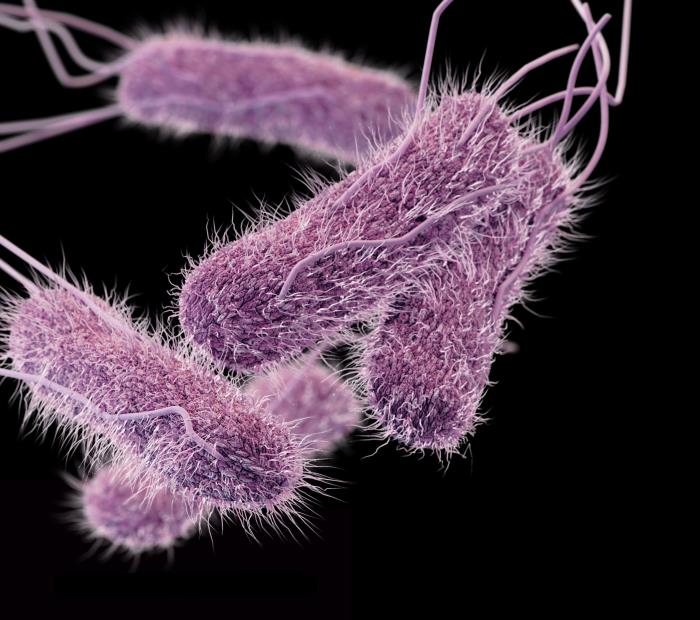
Research – Sporadic Occurrence of Enteroaggregative Shiga Toxin–Producing Escherichia coli O104:H4 Similar to 2011 Outbreak Strain

CDC

Abstract
We describe the recent detection of 3 Shiga toxin–producing enteroaggregative Escherichia coli O104:H4 isolates from patients and 1 from pork in the Netherlands that were genetically highly similar to isolates from the 2011 large-scale outbreak in Europe. Our findings stress the importance of safeguarding food supply production chains to prevent future outbreaks.

Shiga toxin–producing Escherichia coli (STEC) is a zoonotic pathogen that causes illness ranging from mild diarrhea to haemolytic uremic syndrome and death. During 2011, an exceptionally large outbreak caused by serotype O104:H4 STEC occurred in Europe, mainly in Germany and France, that was associated with sprouts grown from imported fenugreek seeds (1). Besides the ability to produce Shiga toxin, specifically stx2a, the strain had the genetic characteristics and phylogenetic backbone of an enteroaggregative E. coli (EAEC) pathotype (2) but lacked other classical STEC virulence markers eae and hlyA (3). In addition, the outbreak strain carried plasmid-borne blaCTX-M-15 and blaTEM-1 genes. The epidemiologic investigation revealed that a contaminated batch of fenugreek seeds imported into the European Union from Egypt was the most probable source of the pathogen causing the outbreak (4).

After the 2011 outbreak in Germany and France, only a few sporadic cases of infection with Shiga toxin–producing EAEC O104:H4 were reported, most related to travel to Turkey or North Africa (5–8). We describe the sporadic occurrence of Shiga toxin–producing EAEC O104:H4 isolates in the Netherlands, originating from 2 clinical cases from 2019 and 2020 and 1 food isolate from 2017. In addition, we report a clinical case from Austria in 2021.

Research – An outbreak of cryptosporidiosis associated with drinking water in north-eastern Italy, August 2019: microbiological and environmental investigations

Eurosurveillance

crypto

The enteric parasite , along with norovirus,  and rotavirus, is among the most frequent causes of waterborne disease [1,2]. In humans, transmission of  occurs via the faecal-oral route, either through direct exposure to infected people (person-to-person infection) or animals (animal-to-person infection), or through ingestion of water (drinking water, recreational water such as swimming pools, water parks, lakes, rivers) or consumption of raw or undercooked food contaminated with infectious oocysts [3]. Infection may remain asymptomatic or manifest as acute gastroenteritis (> 80% of infected individuals). Symptoms occur 1 to 12 days (mean: 7 days) after exposure and usually last 6 to 9 days. The severity and duration of symptoms are linked to the immune status of the host, and cryptosporidiosis can be life threatening in immunosuppressed individuals [4].

There are many  species that can infect humans, but the vast majority of cases are due to , a zoonotic species that also infects young ruminants, and , which is essentially only a human pathogen [5]. The environmental route of transmission is of high relevance for  [6]. This is due to several factors including: (i) the high survival rate of oocysts in water (more than 24 months at 20°C), (ii) high resistance to disinfection (30 mg/L of free chlorine are needed to achieve 99% inactivation at pH 7, with a recommended value of 0.2 mg/L for drinking water) [6], (iii) low infectious dose (10–132 oocysts in healthy adults [7]) and (iv) low host specificity [5]. Oocysts lose their infectivity when frozen, boiled or heated over 60°C [6].

The ability of  to survive at high chlorine concentrations [8] and, consequently, at the disinfectant concentrations commonly used in water treatment, has always been a challenge for water treatment plant operators. However, other disinfectants, such as chlorine dioxide, ozone, UV rays and filtration have proved to be rather effective in removing . Water safety mainly depends on the combination of different treatment stages, and a multi-barrier approach is a key paradigm for ensuring safe drinking water [6]. Nonetheless, in small water supplies managed by local communities that serve only few thousand people, multi-barrier treatment systems are usually not implemented. Thus, in order to ensure the safety of drinking water, more traditional treatments, e.g. disinfection, are used and water quality is checked against certain regulatory parameters.

During 2017–20, 60 waterborne outbreaks of cryptosporidiosis have been detected in Europe, the majority of which involving treated recreational water (swimming pools) as the vehicle of infection [9]. The number of outbreaks linked to contaminated drinking water has shown a notable decrease in the past decades, although, when occurring, large numbers of individuals may be involved, as exemplified by the outbreaks reported in 2010–11 in Sweden [10,11].

Israel – Strauss gets approval to reopen chocolate plant after Salmonella closure

Food Safety News

Strauss Group has been given permission to restart a factory in Israel that was shut months because of Salmonella findings.

The confectionery manufacturing site in Nof Hagalil will gradually return to production following a thorough clean-up of the plant and investments in infrastructure.

Food inspectors from the Israeli Ministry of Health allowed the resumption of operations after an audit. Agency officials will continue inspections of the plant as part of the return to full production. Strauss Group said this ramp up may take several months.

Approval was suspended in April after a recall of Elite brand products and link to an outbreak prompted an audit which found a number of issues at the factory including Salmonella on a production line and in the liquid chocolate used to make finished products. Elite products were recalled from United States, Canada, Australia, Brazil, Europe and the United Kingdom.

Research – Scientists blame Listeria’s low priority for regulatory support as the likely true cause for a low-burn listeria outbreak

Food Safety News

Government prosecutors wrapped conspiracy and fraud around the head of the former president of Blue Bell ice cream, but a hung jury did not buy it. That Texas jury was 10-to-2 in favor of acquittal.

But how then should be explained the illnesses and deaths associated with the 2015 listeriosis outbreak. Does science explain less human responsibility?

Nineteen expert researchers worked on that question, and they’ve produced a 22-page research paper with their answers. They point to an event beginning long before Blue Bell Creameries knew Listeria contamination was a threat.

Research – Persistence of Listeria monocytogenes ST5 in Ready-to-Eat Food Processing Environment

MDPI

Most human listeriosis is foodborne, and ready-to-eat (RET) foods contaminated by Listeria monocytogenes during processing are found to be common vehicles. In this study, a total of four L. monocytogens STs (ST5, ST121, ST120, and ST2) have been identified in two RTE food plants from 2019 to 2020 in Shanghai, China. The L. monocytogenes ST5 was predominant in one RTE food processing plant, and it persists in the RTE meat processing plant with continued clone transmission. The genetic features of the four STs isolates were different. ST5 and ST121 had the three genes clpLmdrL, and lde; however, ST120 and ST2 had two genes except for clpL. SSI-1was present in ST5, ST121, and ST120. Additionally, SSI-2 was present only in the ST121 isolates. ST120 had all six biofilm-forming associated genes (actAprfAlmo0673recOlmo2504 and luxS). The ST2 isolate had only three biofilm-forming associated genes, which were prfAlmo0673, and recO. The four ST isolates had different biofilm formation abilities at different stages. The biofilm formation ability of ST120 was significantly higher when grown for one day. However, the biofilm formation ability of ST120 reduced significantly after growing for four days. In contrast, the biofilm formation ability of ST5 and ST121 increased significantly. These results suggested that ST5 and ST121 had stronger ability to adapt to stressful environments. Biofilms formed by all four STs grown over four days can be sanitized entirely by a disinfectant concentration of 500 mg/L. Additionally, only ST5 and ST121 biofilm cells survived in sub-lethal concentrations of chlorine-containing disinfectant. These results suggested that ST5 and ST121 were more resistant to chlorine-containing disinfectants. These results indicated that the biofilm formation ability of L. monocytogenes isolates changed at different stages. Additionally, the persistence in food processing environments might be verified by the biofilm formation, stress resistance, etc. Alternatively, these results underlined that disinfectants should be used at lethal concentrations. More attention should be paid to ST5 and ST121, and stronger surveillance should be taken to prevent and control the clonal spread of L. monocytogenes isolates in food processing plants in Shanghai. View Full-Text

Research – Bacillus cereus in Dairy Products and Production Plants

MDPI

Spore-forming Bacillus cereus is a common contaminant of dairy products. As the microorganism is widespread in the environment, it can contaminate milk at the time of milking, but it can also reach the dairy products in each phase of production, storage and ripening. Milk pasteurization treatment is not effective in reducing contamination and can instead act as an activator of spore germination, and a potential associated risk still exists with the consumption of some processed foods. Prevalences and concentrations of B. cereus in milk and dairy products are extremely variable worldwide: in pasteurized milk, prevalences from 2% to 65.3% were reported, with concentrations of up to 3 × 10⁵ cfu/g, whereas prevalences in cheeses ranged from 0 to 95%, with concentrations of up to 4.2 × 10⁶ cfu/g. Bacillus cereus is also well known to produce biofilms, a serious concern for the dairy industry, with up to 90% of spores that are resistant to cleaning and are easily transferred. As the contamination of raw materials is not completely avoidable, and the application of decontamination treatments is only possible for some ingredients and is limited by both commercial and regulatory reasons, it is clear that the correct application of hygienic procedures is extremely important in order to avoid and manage the circulation of B. cereus along the dairy supply chain. Future developments in interventions must consider the synergic application of different mild technologies to prevent biofilm formation and to remove or inactivate the microorganism on the equipment. View Full-Text

Research – Toxoplasma gondii in Foods: Prevalence, Control, and Safety

MDPI

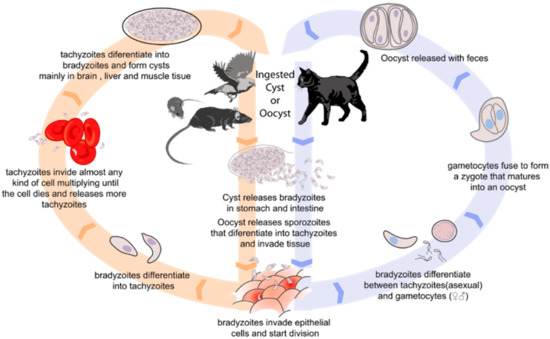
Toxoplasma gondii is an obligate intracellular parasite that causes toxoplasmosis, with approximately one third of the population around the world seropositive. The consumption of contaminated food is the main source of infection. These include meat products with T. gondii tissue cysts, and dairy products with tachyzoites. Recently, contamination has been detected in fresh products with oocysts and marine products. Despite the great health problems that are caused by T. gondii, currently there are no standardized methods for its detection in the food industry. In this review, we analyze the current detection methods, the prevalence of T. gondii in different food products, and the control measures. The main detection methods are bioassays, cell culture, molecular and microscopic techniques, and serological methods, but some of these do not have applicability in the food industry. As a result, emerging techniques are being developed that are aimed at the detection of multiple parasites simultaneously that would make their application more efficient in the industry. Since the prevalence of this parasite is high in many products (meat and milk, marine products, and vegetables), it is necessary to standardize detection methods, as well as implement control measures. View Full-Text

Research – Juglone Inhibits Listeria monocytogenes ATCC 19115 by Targeting Cell Membrane and Protein

MDPI

Foodborne disease caused by Listeria monocytogenes is a major global food safety problem. A potential solution is the antimicrobial development of the highly bioactive natural product juglone, yet few studies exist on its antibacterial mechanism against L. monocytogenes. Thus, we aimed to elucidate the antibacterial mechanism of action of juglone against L. monocytogenes by determining the resultant cell morphology, membrane permeability, membrane integrity, and proteome changes. The minimum inhibitory concentration of juglone against L. monocytogenes was 50 μg/mL, and L. monocytogenes treated with juglone had longer lag phases compared to controls. Juglone induced L. monocytogenes cell dysfunction, leakage of potassium ions, and membrane potential hyperpolarization. Confocal laser scanning microscopy and field-emission-gun scanning electron microscope assays revealed clear membrane damage due to juglone treatment. Fourier transform infrared analyses showed that L. monocytogenes responded to juglone by some conformational and compositional changes in the molecular makeup of the cell membrane. Sodium dodecyl sulfate-polyacrylamide gel electrophoresis analysis showed that juglone either destroyed proteins or inhibited proteins synthesis in L. monocytogenes. Therefore, our findings established juglone as a natural antibacterial agent with potential to control foodborne L. monocytogenes infections. View Full-Text

Research – Listeria monocytogenes Illness and Deaths Associated With Ongoing Contamination of a Multi-Regional Brand of Ice Cream Products, United States, 2010–2015 

Academia Edu

Abstract

Background

Frozen foods have rarely been linked to Listeria monocytogenes illness. We describe an outbreak investigation prompted both by hospital clustering of illnesses and product testing.

Methods

We identified outbreak-associated listeriosis cases using whole-genome sequencing (WGS), product testing results, and epidemiologic linkage to cases in the same Kansas hospital. We reviewed hospital medical and dietary records, product invoices, and molecular subtyping results. Federal and state officials tested product and environmental samples for L. monocytogenes.

Results

Kansas officials were investigating five cases of listeriosis at a single hospital when, simultaneously, unrelated sampling for a study in South Carolina identified L. monocytogenes in Company A ice cream products made in Texas. Isolates from four patients and Company A products were closely related by WGS, and the four patients with known exposures had consumed milkshakes made with Company A ice cream while hospitalized. Further testing identified L. monocytogenes in ice cream produced in a second Company A production facility in Oklahoma; these isolates were closely related by WGS to those from five patients in three other states. These ten illnesses, involving three deaths, occurred from 2010 through 2015. Company A ultimately recalled all products.

Conclusion

In this U.S. outbreak of listeriosis linked to a widely distributed brand of ice cream, WGS and product sampling helped link cases spanning five years to two production facilities, indicating longstanding contamination. Comprehensive sanitation controls and environmental and product testing for L. monocytogenes, with regulatory over

Research – New FSIS Webpage: Reducing Salmonella in Poultry

Food Safety Magazine

The U.S. Department of Agriculture (USDA) Food Safety and Inspection Service (FSIS) recently introduced a new webpage to help reduce Salmonella in poultry. The webpage was created as part of an effort by FSIS to reduce Salmonella illnesses by 25 percent nationwide.

FSIS is continuously gathering the data and information necessary to support future action. The new webpage will offer updated news, information, and resources on Salmonella in poultry as it is collected. Along with the webpage, FSIS opened a dedicated email address for all inquiries related to Salmonella in poultry: salmonella@usda.gov.