Category Archives: Research

Nontyphoidal Salmonella Outbreaks Associated With Chocolate Consumption: A Systematic Review

Journals LWW

Abstract

Background:

A large, cross-border outbreak of nontyphoidal salmonellosis connected to chocolate product consumption was recently reported. This occurrence motivated us to conduct a comprehensive review of existing literature concerning outbreaks of nontyphoidal salmonellosis associated with chocolate consumption.

Methods:

We performed a systematic review following the Preferred Reporting Items for Systematic Reviews and Meta-Analyses (PRISMA) guidelines (PROSPERO CRD42022369023) in 3 databases: U.S. National Library of Medicine, Web of Science and Excerpta Medica. Google Scholar and the bibliography of each identified report were also screened. Eligible were articles published after 1970, describing outbreaks of more than 10 patients with a nontyphoidal salmonellosis associated with chocolate consumption.

Results:

Twenty-three articles were included, which described 12 outbreaks involving a total of 3266 patients. All outbreaks occurred in high-income countries: 1 was limited to 1 city, 6 involved 1 country and the remaining 5 involved 2 or more countries. Six outbreaks peaked in winter, 3 in autumn, 2 in spring and 1 in summer. Children were mainly affected. No predominant serotype was identified.

Conclusions:

Our data documents that chocolate is an optimal medium for the transmission of nontyphoidal salmonellosis. A connected worldwide reporting system including high-income, middle-income and low-income countries is crucial to detect infectious diseases outbreaks in an early phase and avoid their spread.

Research – Controlling Clostridium sporogenes spoilage of “requeijão cremoso” processed cheese: Modelling the growth/no-growth probability as a function of pH, sodium chloride and nisin

Science Direct

Abstract

Predictive models were developed to assess the growth response of Clostridium sporogenes in “requeijão cremoso” processed cheese, as affected by pH and sodium chloride and nisin concentrations. A complete factorial design was performed using different formulations: pH (5.2, 5.6, and 6.0), sodium chloride (0.5, 0.75, 1.0, 1.25, and 1.5%), and nisin (0.0, 5.0, 7.5, 10.0 and 12.5 mg/kg), totalizing 75 conditions. Packs with 150g of “requeijão cremoso” were inoculated with 103 spores/g following storage at 10 °C for up to 60 days. The counts of C. sporogenes were performed on day zero and at the end of storage after a heat shock (80 °C for 12 min). The formulations that allowed an increase in the population >1 log CFU/g were assigned the value of 1 (growth), and the formulations in which the increase was <l log CFU/g were assigned 0 (no growth). Overall, the growth of C. sporogenes was affected by pH, salt concentration and nisin, e.g. at pH 5.2 the growth/no growth limit is 1.25% salt and no nisin, at pH 5.6 this limit is reduced to 0.75% salt, while at pH 6.0 only the effect of pH was sufficient to inhibit C. sporogenes even in the absence of salt and nisin. All isolated parameters and their combinations significantly affected spore germination, indicating that the model generated significantly contributes to the optimization of the processing and mitigation of the microbiological spoilage of “requeijão cremoso” processed cheese by Clostridia.

Research – Measures for the control of Campylobacter spp. in chicken meat.

FAO

Scope and objectives
In response to a request from the 52nd Session of the Codex Committee on Food
Hygiene (CCFH), the Joint FAO/WHO Expert Meeting on Microbiological Risk
Assessment (JEMRA) convened a meeting in Rome, Italy from 6 to 10 February
2023, to collate and assess the most recent scientific information relevant to the
control of thermotolerant Campylobacter species C. jejuni and C. coli (hereafter
Campylobacter) in broiler production and chicken meat, including a review of
the Codex Guidelines for the Control of Campylobacter and Salmonella in Chicken
Meat (CXG 78-2011).1
The scope was focused on aspects of broiler primary production from the point of
chick placement into production establishments to consumer handling.
The objectives were to identify and assess control measures for Campylobacter in
the broiler production chain. The expert committee reviewed the available data
on Campylobacter control including scientific literature published from 2008 to
October 2022 and data submitted in response to a call for data for this meeting. The
experts:

1) determined the quality and quantity of evidence of control measures
for Campylobacter,

2) evaluated the impact of measures to control Campylobacter
in the broiler production chain,

3) determined which hazard-based interventions
pertained specifically to Campylobacter and which were general to the control
of foodborne pathogens in the pre- and post-harvest broiler production chain,
and

4) reviewed and recommended revisions to the Guidelines for the Control of
Campylobacter and Salmonella in Chicken Meat (CXG 78-2011), paragraphs 1 to
115, based on the currently available scientific evidence (Annex 3).
Control measure evaluation began at the time of chick placement since there
is currently no evidence that parent flocks or hatchery practices contribute to
the colonization of broiler chicks. The available literature on interventions was
predominantly based on laboratory and pilot studies, with few commercial
scale applications; therefore, limited conclusions could be reached. The experts
recommend the use of a combination of multiple interventions approach) suitable to production and processing stages to lower Campylobacter contamination on chicken me

Research – Inhibition of Salmonella enteritidis in homemade mayonnaise using oregano essential oil (Origanum vulgare)

Research Gate

The potential of oregano essential oil (OEO) as a natural antimicrobial agent to mitigate Salmonella spp. contamination in homemade mayonnaise made from raw eggs should be explored. This study aimed to assess the viability of Salmonella Enteritidis in homemade mayonnaise supplemented with OEO while also examining key quality parameters, including pH, titratable acidity, and the count of mesophilic aerobic microorganisms. In vitro experiments determined the Minimum Inhibitory Concentration (MIC) and Minimum Bactericidal Concentration (MBC) of OEO against two strains of Salmonella Enteritidis and one of Salmonella Typhimurium. Subsequently, homemade mayonnaise, intentionally contaminated with a Salmonella Enteritidis strain, was prepared, and OEO was added at concentrations of 0.5% and 1.0%. Bacterial plate counts for Salmonella spp. and mesophilic microorganisms, as well as acidity levels, were assessed at 0, 4, 8, and 24 hours of incubation at 30°C. The results indicated the in vitro efficacy of OEO, with an MIC of 0.5% and an MBC of 0.0625% against all strains. However, in homemade mayonnaise, Salmonella counts averaged 6.0 log CFU/g over the 24 hours at 30°C. Mesophilic microorganism counts also averaged 6.0 log CFU/g over 24 hours, similar to those of Salmonella. The pH values ranged from 4.5 to 5.1, and acidity levels remained between 0.31% and 0.39% throughout the 24 hours. In conclusion, oregano essential oil exhibited a bacteriostatic effect, effectively limiting the growth of Salmonella Enteritidis in homemade mayonnaise at the evaluated concentrations and time intervals.

Ireland – Guidance on Management of Norovirus for Shellfish Producers

SFPA

Introduction:
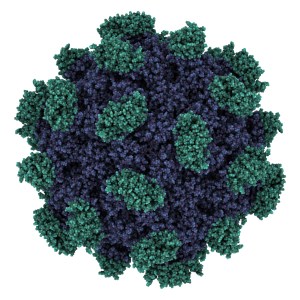
Norovirus (NoV), commonly known as the “winter vomiting bug”, is a significant cause of acute gastroenteritis often causing diarrhoea and vomiting. The virus is transmitted through the consumption of food or water contaminated with faecal matter or through contact with infected individuals or surfaces. It is prevalent in the community and can be present in discharges from even advanced wastewater treatment systems, which may not entirely eliminate NoV.
Bivalve molluscs such as oysters are known to accumulate and concentrate NoV. This poses a particular health risk as these shellfish are often consumed raw or lightly cooked, making them a potential source of infection.

USA – FDA Advises Restaurants and Retailers of a Recall of Certain Oysters from Westport, Connecticut Potentially Contaminated with Norovirus

FDA

Food Borne Illness - Norovirus -CDC Photo

March 14, 2024

Audience

  • Restaurants and food retailers in Connecticut (CT), Florida (FL), Georgia (GA), Maine (ME), Maryland (MD), Massachusetts (MA), Minnesota (MN), New Jersey (NJ), Ohio (OH), Rhode Island (RI), South Carolina (SC) and Texas (TX) that have recently purchased oysters from Norm Bloom and Son (CT-069-SS, AQ), harvested from Westport, CT, lot 207, with the harvest date 2/20/2024.
  • Consumers in CT, FL, GA, MA, MD, ME, MN, NJ, OH, RI, SC, and TX who have recently purchased oysters from Norm Bloom and Son (CT-069-SS, AQ), harvested from Westport, CT, lot 207, with the harvest date 2/20/2024.

Product

Recalled oysters are from Norm Bloom and Son (CT-069-SS, AQ), harvested from Westport, CT, lot 207, with the harvest date 2/20/2024. The oysters were distributed to restaurants and retailers in CT, FL, GA, MA, MD, ME, MN, NJ, OH, RI, SC, and TX, and may have been distributed to other states as well.

Purpose

The FDA is notifying restaurants, food retailers, and consumers that the Connecticut Department of Agriculture, Bureau of Aquaculture is conducting a recall of oysters harvested by Norm Bloom and Son (CT-069-SS, AQ) from Westport, CT, lot 207, with the harvest date 2/20/2024, because they are associated with a norovirus outbreak in Minnesota and may be contaminated with norovirus. The FDA is advising restaurants and food retailers not to serve or sell and consumers not to eat the recalled oysters.

Shellfish contaminated with norovirus can cause illness if eaten, and potentially severe illness in people with compromised immune systems. Food containing norovirus may look, smell, and taste normal. Consumers of these products who are experiencing symptoms of illness should contact their healthcare provider and report their symptoms to their local Health Department. Diarrhea, abdominal cramps, nausea, vomiting, and fever may be associated with gastroenteritis infections caused by this organism.

Symptoms of Norovirus

People of all ages can get infected and sick with norovirus. The most common symptoms of norovirus are diarrhea, vomiting, nausea, and stomach pain. Other symptoms include fever, headache, and body ache.

A person usually develops symptoms 12 to 48 hours after being exposed to norovirus. Most people with norovirus illness get better within 1 to 3 days.

If you have norovirus illness, you can feel extremely ill, and vomit or have diarrhea many times a day. This can lead to dehydration, especially in young children, older adults, and people with other illnesses. Symptoms of dehydration include decrease in urination, dry mouth and throat, and feeling dizzy when standing up. Children who are dehydrated may cry with few or no tears and be unusually sleepy or fussy.

If you think you or someone you are caring for is severely dehydrated, call your healthcare provider

Summary of Problem and Scope

The Connecticut Department of Agriculture, Bureau of Aquaculture is conducting a recall of oysters from Norm Bloom and Son (CT-069-SS, AQ), harvested from Westport, CT, lot 207, with the harvest date 2/20/2024, because they are associated with a norovirus outbreak in Minnesota and may be contaminated with norovirus. The oysters were distributed to restaurants and retailers in CT, FL, GA, MA, MD, ME, MN, NJ, OH, RI, SC, and TX, and may have been distributed to other states as well. The FDA is advising consumers not to eat, and restaurants and food retailers not to sell, and to dispose of these oysters.

Contaminated oysters can cause illness if eaten raw, particularly in people with compromised immune systems. Food contaminated with norovirus may look, smell, and taste normal. Consumers of these products who are experiencing symptoms of norovirus illness should contact their healthcare provider, who should report their symptoms to their local Health Department.

Research – Joint FAO/WHO Expert Meeting on microbiological risk assessment of viruses in foods Part 2: prevention and intervention measures – Summary

FAO

In the Part 1 Expert meeting, the virus-commodity combinations ranked of highest priority were human norovirus and hepatitis A virus in shellfish, fresh and frozen produce, prepared and ready-to-eat (RTE) foods, and hepatitis E virus in pork and wild game.

The Part 2 Expert meeting focused on these virus- commodity combinations and their associated contamination routes. Human faecal matter and vomit from infected individuals are the primary sources of contamination for norovirus and hepatitis A virus.
Across the food supply chain, the primary contamination routes are faecally-impacted waters, food handlers carrying foodborne viruses, and surfaces. Zoonotic hepatitis E virus is present in the meat, organ tissues, and excretions of infected swine and some game animals. Since that initial expert meeting report from 2008, awareness of the public health importance of these foodborne virus-commodity combinations has increased, resulting in additions or changes to some food supply chain management strategies and
research initiatives. Prevention remains the cornerstone of control of foodborne viruses. This is because these viruses are environmentally persistent and resistant to many treatments commonly used to inactivate foodborne pathogens. Effective inactivation methods continue to be necessary and are currently being evaluated.

Morocco – Food Safety Office: Moroccan Strawberries Cleared of Hepatitis A Virus – Norovirus

Morocco World News

Rabat – The National Office for Food Safety in Morocco (ONSSA) confirmed on Friday that Moroccan strawberries exported to Europe have been cleared of Hepatitis A virus contamination, following an extensive investigation.

The statement from the office comes after the Rapid Alert System for Food and Feed (RASFF) was triggered in Europe and raised concerns over the safety of Moroccan strawberries, alleging the presence of the Hepatitis A virus.

In the wake of the alert, ONSSA carried out extensive analysis. The results showed that strawberries tested negative for both Hepatitis A and Norovirus.

Research – Why You Should Avoid Eating Unprocessed Peanut Butter At All Costs – Salmonella – Aflatoxin

Health Digest

Buying peanut butter from a major manufacturer or U.S. retailer means the product and the manufacturer must adhere to strict food safety regulations. Developing countries and unregulated markets have issues with food safety, particularly with Salmonella and aflatoxins. That’s why you’ll want to avoid peanut butter made in developing countries or farms that aren’t subjected to safety testing.

Read More: https://www.healthdigest.com/1533331/avoid-eating-unprocessed-peanut-butter-health-risk-aflatoxin/


Research – USDA Develops Egg Pasteurization Technology That Rapidly Kills 99.999 Percent of Salmonella

Food Safety.com

Researchers at the U.S. Department of Agriculture’s Agricultural Research Service (USDA’s ARS) have developed a thermal pasteurization method based on Radio Frequency (RF) technology that effectively reduces the presence of Salmonella in intact eggs, in a fraction of the time required for traditional pasteurization.

Although thermal pasteurization is proven to inactivate pathogens in intact eggs, less than 3 percent of commercial eggs are pasteurized in the U.S., as the process can take more than 57 minutes, according to ARS. Conventional thermal pasteurization involves submerging the eggs fully in hot water.