
This article reviews the recent literature on studies relevant to hygiene practices of food service workers. A total of 32 articles were chosen for evaluation from a systematic search of the published literature from 2014 to 2019. For the assessment of hygiene practices, hand washing as a measurement item and observation as a method were most frequently used. Factors influencing hygiene practices were categorized as internal and external variables. Internal variables were knowledge; psychological factors such as attitude, risk perception, self-efficacy, and optimistic bias; and food handlers’ sociodemographic characteristics such as work experience and exposure to hygiene training. External variables were characteristics of food premises such as the size of the operation, number of people served, and organizational factors such as training. Regarding the recent training literature, attempts to bring in new methodologies and new technologies were found such as multimedia case studies, cognitive word association, behavior-focused training, wearable technology, and simulation games. Among the theories utilized, knowledge, attitude, and practices were applied most frequently to explain hygiene practices. In particular, this review highlights the important fact that internal and external factors that affect hygiene practices should be considered to maintain good hygiene practices.
Category Archives: Research
Research – Research Paper Use of a novel sanitizer to Inactivate Salmonella Typhimurium and spoilage microorganisms during flume washing of diced tomatoes
Research-BfR addresses risk of E. coli in flour
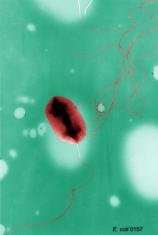
Image CDC
A German risk assessment agency has issued an opinion after STEC was frequently found in flour samples.
Shiga toxin-producing E. coli (STEC) was detected in multiple flour samples (wheat, spelt and rye) from mills during routine food monitoring in Germany in 2018.
The Federal Ministry of Food and Agriculture (BMEL) asked the German Federal Institute for Risk Assessment (BfR) to assess the sources, risk and prevention of STEC in flour.
Fifty STEC-positive samples were detected in 328 wheat, spelt and rye flour samples analyzed in 2018 as part of the Federal Monitoring Plan. A product recall in November 2019 of ready-made dough for short pastry biscuits shows STEC can occur in such a product.
Investigations of flour samples from mills in Germany for STEC have shown between 10 and 21 percent have positive samples. Viable STEC of different serogroups are detectable in flour for more than 50 weeks.
Research -Detection of Toxoplasma gondii in retail meat samples in Scotland

Toxoplasma gondii is a globally important zoonotic parasite ranked as one of the most significant causes of disease burden among the major foodborne pathogens. Consumption of undercooked meat is a well-known risk factor for infection so the aim of this study was to investigate the presence of T. gondii in meat samples from retail outlets in Scotland. In Sampling Period 1, 300 meat samples (39 beef, 21 chicken, 87 lamb, 71 pork and 82 venison) were purchased from butchers’, farmers’ markets, farm shops and supermarkets, and in Sampling Period 2, 67 pure venison samples only were purchased from farmers’ markets, farm shops and supermarkets. DNA was extracted and screened for T. gondii using a quantitative PCR targeting the 529 bp repeat element, and any positive samples were genotyped using PCR-RFLP targeting 10 markers. Meat juice was screened for T. gondii antibodies using a commercial ELISA or modified agglutination assay. Toxoplasma gondii DNA was detected in 0/39 (0%) beef samples, 1/21 (4.8%) chicken samples, 6/87 (6.9%) lamb samples, 3/71 (4.2%) pork samples and 29/82 (35.4%; Sampling Period 1) and 19/67 (28.4%; Sampling Period 2) venison samples. Partial PCR-RFLP genotyping revealed both clonal and non-clonal genotypes. Antibodies to T. gondii were detected in the meat juice of 2/38 (5.3%) beef samples, 3/21 (14.3%) chicken samples, 14/85 (16.5%) lamb samples, 2/68 (2.9%) pork samples and 11/78 (14.1%; Sampling Period 1) and 8/50 (16%; Sampling Period 2) venison samples. This is the first study to report the presence of T. gondii in retail meat products in Scotland and has highlighted venison as a potentially high risk meat. Further work is required to determine viability of parasites in this particular meat product.
Research – Effect of blanching on aflatoxin contamination and cross-contamination of almonds
Blanching of almonds was examined for reducing aflatoxin content of contaminated nuts. Almonds with intact pellicles were spiked with aflatoxin B 1 (AFB 1 ) and blanched at 85°C. Following blanching, almond kernels and pellicles contained 20% and 19% of spiked AFB 1 , respectively. Blanching water contained an additional 41% of spiked AFB 1 . In a separate study, post-blanching water was spiked with AFB 1 and used for subsequent blanching of uncontaminated almonds. The resulting blanched kernels acquired 3.3% of the AFB 1 from the spiked water, demonstrating a low level of cross-contamination from reused contaminated blanching water. The effect of blanching temperature on partitioning of AFB 1 from almonds to blanching water was significant at 20 ppb spiking level, but not at 100 ppb. AFB 1 levels that were unaccounted for in mass balance of blanching components were presumed to be lost due to binding to water-solubilized almond components, and were independent of pH and blanching time. Blanching reduced total aflatoxins in naturally contaminated almonds by 13-76%, depending on almond quality as well as blanching time and temperature. These results indicate that the association between almond components and aflatoxin generated through mold contamination is more complex than in spiking experiments.
Research – Stopping listeria reproduction ‘in its tracks’
Listeria contaminations can send food processing facilities into full crisis mode with mass product recalls, federal warnings and even hospitalization or death for people who consume the contaminated products. Destroying the bacterium and stopping its spread can be challenging because of the formation of biofilms, or communities of resistant bacteria that adhere to drains or other surfaces.
Researchers at the University of Houston are reporting in the Journal of Environmental Chemical Engineering that cobalt-doped titanium-dioxide (CoO-TiO2) stops the reproduction of listeria monocytogenes in both light and dark conditions. This bacteriostatic effect could lead to bacterial control in food products that are not only sealed but also protected from light such as tetra packs, cans and dark glass or plastic bottles.
“The addition of cobalt, a heavy metal, drastically improved the effectiveness of titanium-dioxide because now it works under regular human conditions — sunlight, fluorescent light such as light bulbs and even in ‘the absence of light,’ like in a freezer,” said Francisco Robles, lead author for the study and associate professor of mechanical engineering technology.
Titanium-dioxide has long been an effective catalyst in the chemical industry with many applications, but it has limitations because ultraviolet light is needed to make it work, according to Robles. “UV light sources are in short supply in sunlight and producing it is expensive and a health hazard (e.g. carcinogen), so we set out to find a solution. Making it effective under natural light conditions is significant, and free,” he said.
A naturally occurring mineral, titanium-dioxide is often used in the food industry as an additive or whitening agent for sauces, dressings and powdered foods and is considered safe by the U.S. Food and Drug Administration. It’s also used in sunscreen for its protective effects against UV/UVB rays from the sun.
Sujata Sirsat, study co-author and assistant professor at UH’s Conrad N. Hilton College of Hotel and Restaurant Management, believes cobalt-doped titanium-dioxide, whether manufactured directly into food packaging or added to food products, could potentially reduce the risk for large listeria outbreaks in food processing environments.
“Listeria is a rare foodborne pathogen that can survive in refrigerated conditions. So, if you had a contaminated bowl of potato salad, not only can listeria survive, it can increase in numbers potentially causing a serious health issue. The cobalt-doped titanium dioxide can potentially stop the spread in its tracks,” said Sirsat, an expert in food safety and public health, who said toxicity testing is needed to determine its safety in food products.
An estimated 1,600 people get listeriosis each year from eating foods contaminated with listeria monocytogenes, and about 260 people die, according to the U.S. Centers for Disease Control and Prevention. The CDC has led investigations on 19 multistate listeria monocytogenes outbreaks involving fruits, vegetables, deli meats, cheeses and more since 2011. The infection is most likely to sicken pregnant women and their newborns, adults over 65 and people with weakened immune systems.
The researchers believe cobalt-doped titanium-dioxide could have a wide range of applications beyond bacteria control. “You could coat hospital plates with it to make them incapable of forming bacteria or coat the packaging of milk and other dairy products. You could even add it to paint to make bacteria-controlled paint. The possibilities are tremendous,” said Robles, who has been studying the effects of the chemical compound for nearly 15 years.
Europe – Legionnaires’ disease – Annual Epidemiological Report for 2018

Legionnaires’ disease remains an uncommon and mainly sporadic respiratory infection with an overall notification rate of 2.2 per 100 000 for the EU/EEA in 2018. There is heterogeneity in notification rates between EU/EEA countries, with the highest rate reported by Slovenia (7.7 per 100 000). The annual notification rate increased continuously over the period 2014–2018, from 1.3 per 100 000 in 2014 to 2.2 in 2018. There was a 23% increase in the number of cases in 2018 compared with 2017.Four countries (France, Germany, Italy and Spain) accounted for 71% of all notified cases in 2018. Males aged 65 years and above were most affected (8.5 per 100 000).
Download
Legionnaires’ disease – Annual Epidemiological Report for 2018 – EN – [PDF-1.66 MB]
Research – Punicalagin Damages the Membrane of Salmonella Typhimurium
Salmonella , a bacterial, food-borne pathogen, can contaminate meat, milk, and vegetables. While appropriate measures are available to control Salmonella , the inhibitory phytochemicals from plants are gaining increased attention. Punicalagin, a natural antibiotic, is one of the main active tannins isolated from Punica granatum L . To obtain a broader understanding of the effect of punicalagin on the cell membranes of Salmonella typhimurium , the killing kinetics, extracellular potassium concentration, release of cell constituents, intracellular pH (pH in ), membrane potential, and morphological features were characterized to elucidate the mechanisms of action. Treatment with punicalagin induced an increase in the extracellular concentrations of potassium and a release of cell constituents. A higher pH gradient, an increase in the pH in and cell membrane depolarization were observed after punicalagin treatment. Electron microscopy observations showed that the cell membrane structures of S. typhimurium were damaged by punicalagin. It is concluded that punicalagin inhibits the proliferation of S. typhimurium and destroys the integrity of the cell membrane, leading to a loss of cell homeostasis. These findings indicate that punicalagin has the potential to be used as a food preservative in order to control S. typhimurium contamination in food and reduce the risk of salmonellosis.
Research – Researchers identify biofilm hotspots, document danger zones
Scientists in Austria have investigated where biofilms hide and what bacteria can be found in them.
Biofilms are proven sources of contamination in the food industry. They can cause additional costs in production and can be a danger to consumer health.
Researchers at the unit of food microbiology at Vetmeduni Vienna looked at biofilms in an Austrian meat processing environment that included pork, poultry and beef. Knowledge gained on presence and composition, published in the International Journal of Food Microbiology, could help to prevent and reduce biofilm formation within food processing environments.
Research -Spatial Trends in Salmonella Infection in Pigs in Spain


Salmonella is one of the most important foodborne pathogens worldwide. Its main reservoirs are poultry and pigs, in which infection is endemic in many countries. Spain has one of the largest pig populations in the world. Even though Salmonella infection is commonly detected in pig farms, its spatial distribution at the national level is poorly understood. Here we aimed to report the spatial distribution of Salmonella-positive pig farms in Spain and investigate the presence of potential spatial trends over a 17-year period. For this, data on samples from pigs tested for Salmonella in 2002–2013, 2015, 2017, and 2019 as part of the Spanish Veterinary Antimicrobial Resistance Surveillance program, representing 3,730 farms were analyzed. The spatial distribution and clustering of Salmonella-positive pig farms at the province level were explored using spatial empirical Bayesian smoothing and global Moran’s I, local Moran’s I, and the Poisson model of the spatial scan statistics. Bayesian spatial regression using a reparameterized Besag-York-Mollié Poisson model (BYM2 model) was then performed to quantify the presence of spatially structured and unstructured effects while accounting for the effect of potential risk factors for Salmonella infection at the province level. The overall proportion of Salmonella-positive farms was 37.8% (95% confidence interval: 36.2–39.4). Clusters of positive farms were detected in the East and Northeast of Spain. The Bayesian spatial regression revealed a West-to-East increase in the risk of Salmonella infection at the province level, with 65.2% (50% highest density interval: 70–100.0%) of this spatial pattern being explained by the spatially structured component. Our results demonstrate the existence of a spatial variation in the risk of Salmonella infection in pig farms at the province level in Spain. This information can help to optimize risk-based Salmonella surveillance programs in Spain, although further research to identify farm-level factors explaining this pattern are needed.

 FoodWorld