Category Archives: raw milk cheese

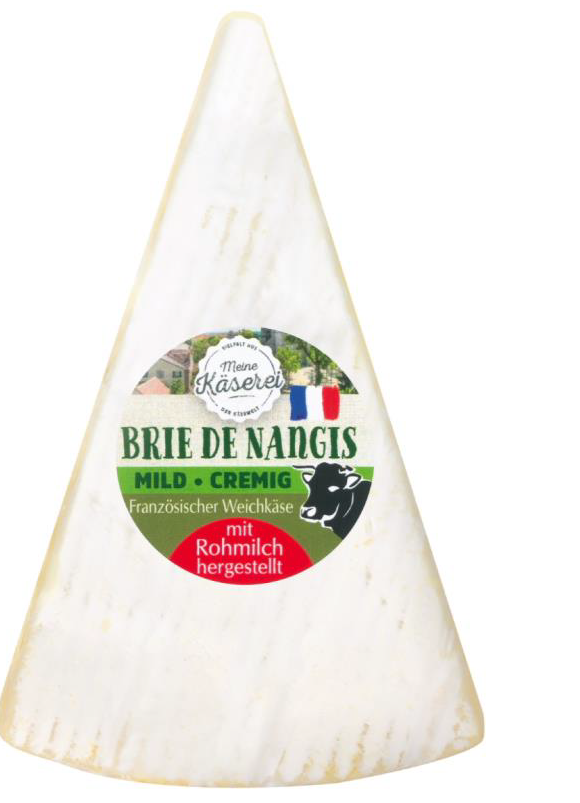
Netherlands – Important safety warning Milbona Selection Brie de Nangis 100 grams Lidl – E.coli

NVWA

Producer Jermi Käsewerk GmbH is recalling the product ‘Milbona Selection Brie de Nangis French soft cheese from raw milk, approx. 100 grams’ with an expiry date 31-10-2020. This product is sold in Lidl Netherlands stores. The E.coli bacteria has been found in the product. Customers are urged not to consume the brie, but to return it to a Lidl store.

Germany – French soft cheese made with raw milk, 100 g – STEC E.coli

LMW

Warning type:

Food

Date of first publication:

28.10.2020

Product name:

My cheese dairy Brie de Nangis, French soft cheese made with raw milk, 100 g

Product pictures:

Image Filialplakat.png

Branch poster

Manufacturer (distributor):

JERMI Käsewerk GmbH, distributed by Lidl

Reason for warning:

Detection of verotoxin-producing Escherichia (E.) coli

Packaging Unit:

100 g

Durability:

October 27, 2020

Lot identification:

Lot numbers 394 and 395 with identity mark DE BW 331 EG

Additional Information:

Reference is made to the company’s customer information sheet attached.

Contact to the responsible authorities:

Baden-Württemberg:

poststelle@mlr.bwl.de

Bavaria:

poststelle@lgl.bayern.de

Berlin:

poststelle@senjustva.berlin.de

Brandenburg:

Konsumenterschutz@Msgiv.Brandenburg.de

Bremen:

Schnellwarnung@gesundheit.bremen.de

Hamburg:

poststelle@bgv.hamburg.de

Hesse:

Schnellwarnung@rpda.hessen.de

Mecklenburg-Western Pomerania:

poststelle@lm.mv-regierung.de

Lower Saxony:

poststelle@ml.niedersachsen.de

North Rhine-Westphalia:

poststelle@mulnv.nrw.de

Rhineland-Palatinate:

Poststelle.Referat22@lua.rlp.de

Saarland:

poststelle-luv@lav.saarland.de

Saxony:

poststelle@sms.sachsen.de

Saxony-Anhalt:

poststelle@ms.sachsen-anhalt.de

Schleswig-Holstein:

poststelle@jumi.landsh.de

Thuringia:

LM-Ueberektiven@tlv.thueringen.de

RASFF Alert – STEC E.coli – Raw Goats Milk Cheese

European Food Alerts

RASFF

Escherichia coli (stx2 + eae) in raw goat’s milk cheese from France in France

Germany – Cheese Four Seasons Italy Sliced ​​cheese made from raw milk -Salmonella

LMW

Warning type:

Food

Date of first publication:

September 18, 2020

Product name:

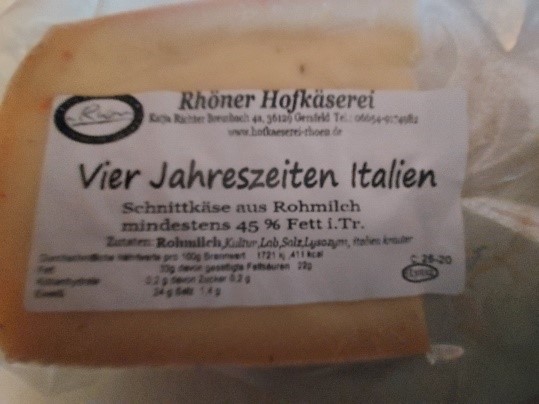
Cheese Four Seasons Italy Sliced ​​cheese made from raw milk, at least 45% fat in dry matter. Tr.

Product pictures:

Image.jpg

Rhön farm cheese dairy

Manufacturer (distributor):

Rhöner Hofkäserei – Katja Richter Brembach 4a 36129 Brembach – Gersfeld

Reason for warning:

Detection of salmonella

Packaging Unit:

180 g

Lot identification:

25-20

Further information:

See attached information from the manufacturer.

Salmonella disease manifests itself within a few days after infection with diarrhea, abdominal pain and occasionally vomiting and a slight fever. The symptoms usually subside on their own after several days. Infants, toddlers, senior citizens and people with a weakened immune system in particular can develop more severe disease processes. People who have eaten this food and develop severe or persistent symptoms should seek medical attention and advise them of a possible salmonella infection.

Seeking preventive medical treatment without symptoms does not make sense.

The cheese was sold in grocery stores in Hesse and Bavaria.

Contact to the responsible authorities:

Bavaria:

poststelle@lgl.bayern.de

Hesse:

Schnellwarnung@rpda.hessen.de

RASFF Alerts – Listeria monocytogenes – Chilled Roasted Chicken Breast Pieces – Frozen Caviar- Raw Milk Goats Cheese – Chilled Pate with Nuts

European Food Alerts

RASFF

Listeria monocytogenes (in 3 out of 5 samples /25g) in chilled roasted chicken breast pieces from Ireland in Ireland

RASFF

Listeria monocytogenes (presence /25g) in frozen caviar from Poland in Poland

RASFF

Listeria monocytogenes in raw milk goat’s cheese from Belgium in Belgium

RASFF

Listeria monocytogenes (presence /25g) in chilled paté with nuts from Belgium in Belgium

Research – Microbiological quality of raw drinking milk and unpasteurised dairy products: results from England 2013–2019

cambridge.org

The aim of this study was to review microbiology results from testing >2500 raw drinking milk and dairy products made with unpasteurised milk examined in England between 2013 and 2019. Samples were collected as part of incidents of contamination, investigation of infections or as part of routine monitoring and were tested using standard methods for a range of both pathogens and hygiene indicators. Results from testing samples of raw cow’s milk or cheese made from unpasteurised milk for routine monitoring purposes were overall of better microbiological quality than those collected during incident or investigations of infections. Results from routine monitoring were satisfactory for 62% of milks, 82% of cream, 100% of ice-cream, 51% of butter, 63% of kefir and 79% of cheeses, with 5% of all samples being considered potentially hazardous. Analysis of data from cheese demonstrated a significant association between increasing levels of indicator Escherichia coli with elevated levels of coagulase positive staphylococci and decreased probability of isolation of Shiga toxin-producing E. coli. These data highlight the public health risk associated with these products and provide further justification for controls applied to raw drinking milk and dairy products made with unpasteurised milk.

UK – Cliftons Farm recalls raw milk and raw cream due to contamination with campylobacter

FSA

Cliftons Farm is recalling raw milk and raw cream because campylobacter has been found in the products.

Product details

Cliftons Farm raw milk

Pack size 2 pints
Use by any products purchased on or after 20th June 2020
Cliftons Farm raw cream

Pack size 230 ml
Use by any products purchased on or after 20th June 2020

Risk statement

The presence of campylobacter in the products listed above. The usual symptoms caused by campylobacter are fever, diarrhoea and abdominal cramps.

Action taken by the company

Cliftons Farm is recalling the above products. Point of sale notices are displayed in their shop, on their website and Facebook page. These notices explain to customers why the products are being recalled and tell them what to do if they have bought the product. Please see the attached notice.

Our advice to consumers

If you have bought the above products do not eat them. Instead, dispose of them and contact Cliftons Farm for a full refund at https://cliftonsfarm.com/contact/.

Information – France allows changes to raw milk regulations because of coronavirus

This is very interesting in the light of this week RASFF Alert recall for raw milk cheese with Listeria monocytogenes present.

Food Safety News Raw Milk Food Safety KSW Foodworld

French authorities have eased rules around the sale of raw milk because of the coronavirus pandemic.

The country’s Ministry of Agriculture has temporarily adopted measures making it easier for producers to market their unpasteurized, raw milk for direct sale. The agency also made it clear it was the operator’s responsibility to ensure the safety of any product placed on the market.

Sale of raw milk directly to the consumer can happen by completing an online declaration. Normally, the cow, goat or sheep milk producer must request authorization from authorities to be able to sell raw milk and then be subject to an inspection. At the end of the coronavirus crisis, the producer will have to apply if they wish to keep this status.

RASFF Alert – Listeria monocytogenes

RASFF-Logo

RASFF – Listeria monocytogenes (<10 CFU/g) in raw milk cheese (Morbier) from France in France

Research – Raw Milk – Study upholds age-old belief that drinking raw milk is bad

IB Times

Some may disagree!

People these days are giving up the idea of pasteurization – the heating process used to kill harmful bacteria in milk – as it reduces several vitamins and “good” bacteria in the drink, and advocating for “raw” milk as unpasteurized milk can “heal the gut”, boost the immune system, prevent allergies, give an individual healthier skin and even contribute to bodybuilding.

Several reports in the media have created a growing demand for raw milk, but scientific evidence suggests that going for unpasteurized milk can even be more harmful as drinking raw milk comes with the risk of contracting serious and potentially lethal infections.

According to the Centre for Disease Control, at least 144 outbreaks of illness have been reportedly linked to raw milk consumption in the US between 2007 and 2016.

The UK’s Food Standards Agency (FSA) last year advised pregnant women, infants and small children, elderly people and people with compromised immune systems such as cancer patients not to consume raw milk.