Category Archives: Pseudomonas

RASFF Alert – Mould – Pseudomonas – Mozzarella

RASFF

Deviating taste and high content of moulds and pseudomonads in buffalo mozzarella from Italy in Germany

Research – Biofilm Formation of Listeria monocytogenes and Pseudomonas aeruginosa in a Simulated Chicken Processing Environment

MDPI

This study aims to investigate the mono- and dual-species biofilm formation of Listeria monocytogenes and Pseudomonas aeruginosa incubated in different culture mediums, inoculum ratios, and incubation time. The planktonic cell population and motility were examined to understand the correlation with biofilm formation. The results showed that chicken juice significantly inhibited the biofilm formation of L. monocytogenes (p < 0.05). Pseudomonas aeruginosa was the dominant bacteria in the dual-species biofilm formation in the trypticase soy broth medium. The dynamic changes in biofilm formation were not consistent with the different culture conditions. The growth of planktonic L. monocytogenes and P. aeruginosa in the suspension was inconsistent with their growth in the biofilms. There was no significant correlation between motility and biofilm formation of L. monocytogenes and P. aeruginosa. Moreover, scanning electron microscopy (SEM) results revealed that the biofilm structure of L. monocytogenes was loose. At the same time, P. aeruginosa formed a relatively dense network in mono-species biofilms in an initial adhesion stage (24 h). SEM results also showed that P. aeruginosa was dominant in the dual-species biofilms. Overall, these results could provide a theoretical reference for preventing and controlling the biofilm formation of L. monocytogenes and P. aeruginosa in the food processing environment in the future. View Full-Text

Research – Spanish study finds organic produce contamination

Food Safety News

Early findings from researchers in Spain has found organic produce can be contaminated with a range of bacteria.

The study suggests that amoebas that live on organic leafy vegetables can shelter human pathogens like Pseudomonas, Salmonella, and Helicobacter.

Details are based on a poster presentation at the European Congress of Clinical Microbiology and Infectious Diseases (ECCMID) in Lisbon, Portugal, from April 23 to 26. All abstracts were peer reviewed by a congress committee. There is no paper yet, but the research has been submitted to a medical journal for publication.

However, other scientists warned that while conclusions are interesting, the fact that data has not yet been peer reviewed means they cannot be put into context.

Research – Plant Extract and Essential Oil Application against Food-Borne Pathogens in Raw Pork Meat

MDPI

Herbal and plant extracts are being applied for a wide range of foods against different types of food-borne pathogens. In the present study, ethanolic and aqueous extracts (2% w/v) from cranberry (Vaccinium macrocarpon) and pomegranate (Punica granatum L.) plants were applied alone or in combination with two essential oils (thyme and oregano in a concentration of 0.150 μg/g) in pork meatballs and their antimicrobial activity was estimated. The extracts exhibited promising results (aqueous and ethanolic extracts of pomegranate and cranberry in a food-compatible concentration of 2% w/v) were applied to raw pork meatball production and their antimicrobial activity was recorded versus Enterobacteriaceae, total mesophilic bacteria, yeasts/molds, Staphylococcus spp., Pseudomonas spp. and lactic acid bacteria (LAB). The outcome demonstrated that meatballs containing aqueous extracts of pomegranate were more resistant to spoilage compared to all the other samples since they were preserved for more days. The chemical profiles of plant extracts were determined through LC-QTOF/MS and the chemical composition of the essential oils applied was determined with the use of GC/MS in order to identify the substances involved in the observed antimicrobial activity. Phenolic acids (quinic acid, chlorogenic acid), monoterpenes (p-cymene, carvacrol, thymol, limonene), organic acids (citric acid) and phenols were the main constituents found in the plant extracts and essential oils applied. These extracts of plant origin could be used as natural preservatives in meat products, even in low concentrations. View Full-Text

RASFF Alert – Pseudomonas fluorescens

RASFF

Burrata – Pseudomonas fluorescens – Italie in France

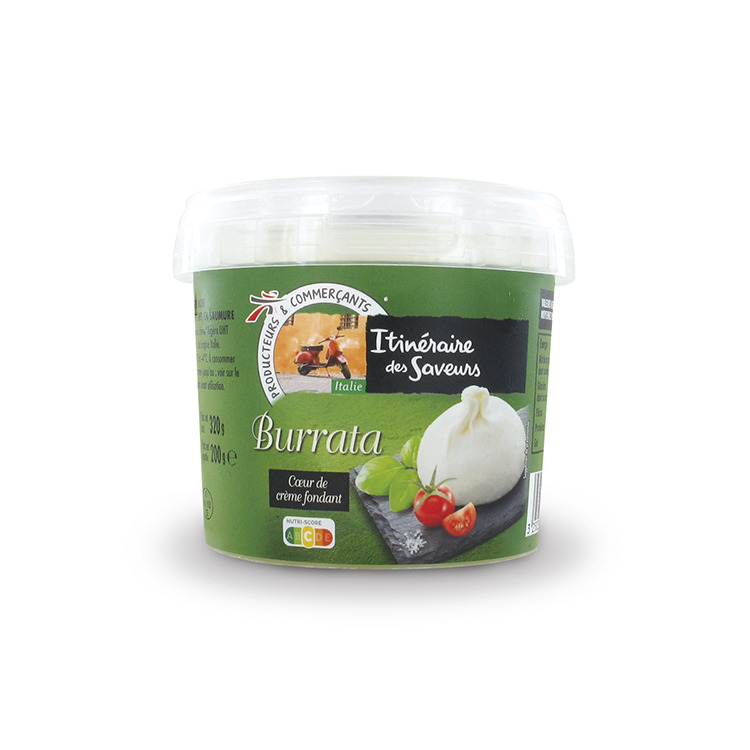
France – BURRATA ROUTE OF FLAVORS 200G – Pseudomonas fluorescens

Gov france

Identification information of the recalled product

  • Product category Food
  • Product subcategory Milk and dairy products
  • Product brand name ITINERARY OF FLAVORS
  • Model names or references BURRATA 200G
  • Identification of products
    GTIN Lot Dated
    3250392341695 L713 Use-by date 03/12/2022
    3250392341695 L423 Use-by date 05/03/2022
    3250392341695 L323 Use-by date 06/03/2022
    3250392341695 L903 Use-by date 20/03/2022
    3250392341695 L413 Use-by date 03/15/2022
    3250392341695 L613 Use-by date 03/13/2022
    3250392341695 L013 Use-by date 03/19/2022
    3250392341695 L123 Use-by date 08/03/2022
  • Packaging GREEN PRINTED PLASTIC POT
  • Marketing start/end date From 02/15/2022 to 03/03/2022
  • Storage temperature Product to be stored in the refrigerator
  • Health mark IT 16/153 CE
  • Geographic area of ​​sale Whole France
  • Distributors INTERMARCHE

Practical information regarding the recall

  • Reason for recall PRESENCE OF PSEUDOMONAS FLUORESCENS
  • Risks incurred by the consumer Pseudomonas
  • Additional description of the risk NO PATHOGENIC RISK – BUT PRODUCT DEGRADATION

France – BURRATA 100G – 120G – 200G – Pseudomonas fluorescens

Gov france

Identification information of the recalled product

  • Product category Food
  • Product subcategory Milk and dairy products
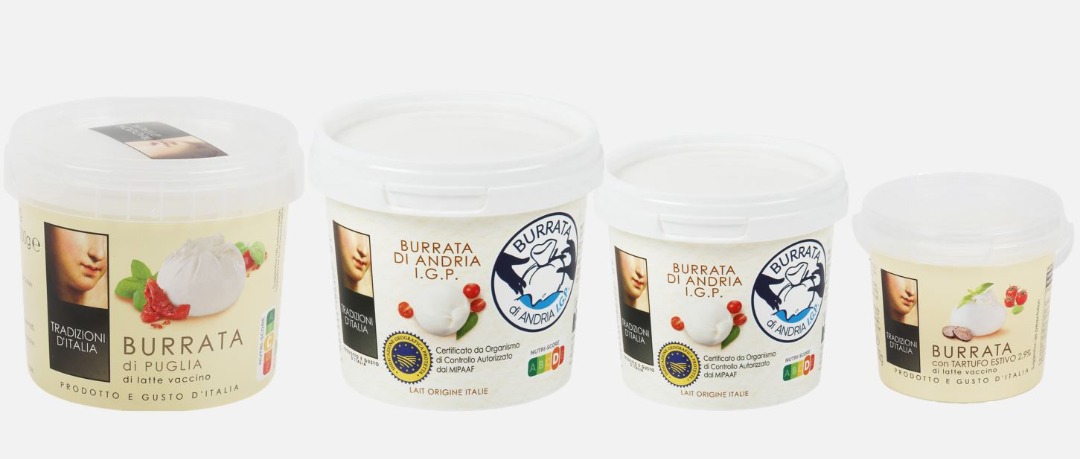
  • Product brand name TRADITIONI D’ITALIA
  • Model names or references BURRATA DI PUGLIA 200G – BURRATA DI ANDRIA IGP 120G and 200G – BURRATA CON TARTUFO ESTIVO 100G
  • Identification of products
    GTIN Lot Dated
    3760113766282 All lots Use-by date between 05/03/2022 and 19/03/2022
    3664335100322 All lots Use-by date between 05/03/2022 and 19/03/2022
    3760113768866 All lots Use-by date between 05/03/2022 and 19/03/2022
  • Packaging JARS OF 100G – 120G – 200G
  • Marketing start/end dateFrom 02/15/2022 to 03/03/2022
  • Storage temperature Product to be stored in the refrigerator
  • Health mark IT 16 153 EC
  • Geographic area of ​​sale Whole France
  • Distributors E.LECLERC

Practical information regarding the recall

  • Reason for recall Risk of presence of Pseudomonas fluorescens
  • Risks incurred by the consumer Pseudomonas
  • Additional description of the risk This bacterium is likely to degrade the product and give it a bad taste and a bluish color, making it inedible.

Research – Pathogenesis of the Pseudomonas aeruginosa Biofilm: A Review

MDPI

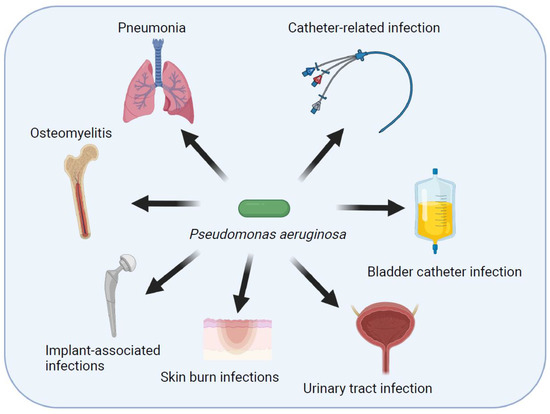
Pseudomonas aeruginosa is associated with several human infections, mainly related to healthcare services. In the hospital, it is associated with resistance to several antibiotics, which poses a great challenge to therapy. However, one of the biggest challenges in treating P. aeruginosa infections is that related to biofilms. The complex structure of the P. aeruginosa biofilm contributes an additional factor to the pathogenicity of this microorganism, leading to therapeutic failure, in addition to escape from the immune system, and generating chronic infections that are difficult to eradicate. In this review, we address several molecular aspects of the pathogenicity of P. aeruginosa biofilms. View Full-Text

Research – Characterization of Microbiological Quality of Whole and Gutted Baltic Herring

MDPI

There is growing interest in Baltic herring (Clupea harengus membras) and other undervalued, small-sized fish species for human consumption. Gutting or filleting of small-sized fish is impractical; hence, the aim of this study was to explore the suitability of the whole (ungutted) herring for food use. The microbiological quality of commercially fished whole and gutted herring was analysed with culture-dependent methods combined with identification of bacterial isolates with MALDI-TOF Mass Spectrometry and culture-independent 16S rRNA gene amplicon sequencing. Whole and gutted herring had between 2.8 and 5.3 log10 CFU g−1 aerobic mesophilic and psychrotrophic bacteria and between 2.2 and 5.6 log10 CFU g−1 H₂S-producing bacteria. Enterobacteria counts remained low in all the analysed herring batches. The herring microbiota largely comprised the phyla Proteobacteria, Firmicutes, and Actinobacteria (71.7% to 95.0%). ShewanellaPseudomonas, and Aeromonas were the most frequently isolated genera among the viable population; however, with the culture-independent approach, Shewanella followed by Psychrobacter were the most abundant genera. In some samples, a high relative abundance of the phylum Epsilonbacteraeota, represented by the genus Arcobacter, was detected. This study reports the bacterial diversity present in Baltic herring and shows that the microbiological quality was acceptable in all the analysed fish batches. View Full-Text

UK – Water quality – Risk assessments for Pseudomonas aeruginosa and other waterborne pathogens. Code of practice

BSI

CDC Pseudomonas

Overview

What is BS 8580-2 – Risk assessments for Pseudomonas aeruginosa about?

Our experts identified a lack of guidance on how to conduct risk assessments for Pseudomonas aeruginosa (PA) and other opportunistic waterborne pathogens other than Legionella. To fill that gap, BS 8580-2 is a new British Standard recommending a PA risk assessment process and supplying information and support on how to understand microbial hazards, prioritize actions and minimize risks.

Who is BS 8580-2 – Risk assessments for Pseudomonas aeruginosa for?

BS 8580-2 on risk assessments for pseudomonas aeruginosa applies in all types of healthcare provision, including hospitals, and care, nursing and residential homes, together with other settings where water systems and associated equipment can pose a risk. This can include in the educational, travel, industrial, leisure and beauty sectors, including health spas, nail bars and tattoo parlours.

Users of BS 8580-2 will be building and design engineers and architects; providers of fittings, outlets and components for water systems; installers and commissioners; risk assessors; regulatory bodies; building services engineers; water treatment consultants; travel, leisure and other relevant buildings owners and operators; and those responsible for the safe management of water systems, especially within leisure centres, schools, swimming pools, passenger vessels, spa pools, hot tubs etc.

BS 8580-2 will also interest clinicians, microbiologists, augmented care specialists and infection controllers in healthcare.

What does BS 8580-2 – Risk assessments for Pseudomonas aeruginosa cover?

BS 8580-2 gives recommendations and guidance on how to carry out risk assessments for pseudomonas aeruginosa (PA) and other waterborne pathogens whose natural habitat is within constructed water systems and the aqueous environment (autochthonous), rather than those present as a result of a contamination event. It includes those pathogens that can colonize and grow within water systems and the associated environment.

BS 8580-2 also covers risk assessments of distributed water systems and associated equipment, system components and fittings as well as above ground drainage systems. It covers PA risk assessment reviews and reassessments where a previous assessment has been undertaken and risk factors identified. It takes account of all relevant environmental and clinical factors and aspects of human behaviour leading to contamination events. It considers risk factors within the associated environment leading to conditions which can encourage the colonization and growth of waterborne pathogens and transfer of antibiotic resistance.

NOTE: BS 8580-2 does not cover risk assessments for Legionella spp.; these are covered in BS 8580-1, or risk assessments for enteric microorganisms derived from human or animal faecal contamination or sewage ingress.

Why should you use BS 8580-2 – Risk assessments for Pseudomonas aeruginosa?

You should use BS 8580-2 on risk assessments for pseudomonas aeruginosa because:

  • It plugs an information gap in relation to pseudomonas aeruginosa (PA) risk assessments, taking its unique additional considerations into account
  • It codifies the latest and most efficient approach to multidisciplinary PA risk assessments
  • Its recommended processes can be applied to other opportunistic waterborne pathogens
  • It can help healthcare providers demonstrate compliant risk management in respect of Dept of Health Guidance
  • It can help leisure sector organizations maintain compliance with their legal health and safety obligations
  • It can help users develop their expertise in risk assessment and strengthen organizational risk management

BS 8580-2 contributes to UN Sustainable Development Goal 3 on good health and well-being and Goal 6 on clean water and sanitation.