
RASFF – Escherichia coli, Pseudomonas aeruginosa (>100 CFU/250ml) and Enterococcus in still and sparkling bottled water from Ireland in Ireland

RASFF – Escherichia coli, Pseudomonas aeruginosa (>100 CFU/250ml) and Enterococcus in still and sparkling bottled water from Ireland in Ireland
Pseudomonas aeruginosa, Enterococci or E. coli bacteria were detected in a range of batches of water bottled by Celtic Pure. Please see tables of implicated brands and batches that do not comply with the legal requirements. These implicated batches are unsafe or potentially unsafe and are subject to recall.
Update 1, 22.10.2019: Please note that the recall was extended to include additional batches of bottled waters bottled by Celtic Pure, see FSAI Food Alert 2019.42 Update 1 for further details.
Update 2, 23.10.2019: Please note that the recall was extended to include an additional batch of bottled water bottled by Celtic Pure, see FSAI Food Alert 2019.42 Update 2 for further details.
For more information, please see statement: https://www.fsai.ie/news_alert/bottled_water_21102019.html.
Pseudomonas aeruginosa poses a higher risk of complications if consumed by severely immunocompromised people such as those who have undergone transplants or chemotherapy. It rarely causes illness in healthy individuals.
Enterococci and E. coli – their presence in water is considered an indicator that the water has been contaminated with faecal material, however, this does not mean that it will make people sick.
Retailers are requested to remove the implicated batches from sale. Retailers are also advised to display a point-of-sale recall notice in stores where the implicated batches were sold.
Consumers are advised not to drink the implicated bottled waters.
Malaysia health officials reported on the recall of Malaysian Starfresh packaged beverage (AMB) water products from the Singapore market because they are tainted with Pseudomonas aeruginosa bacteria.
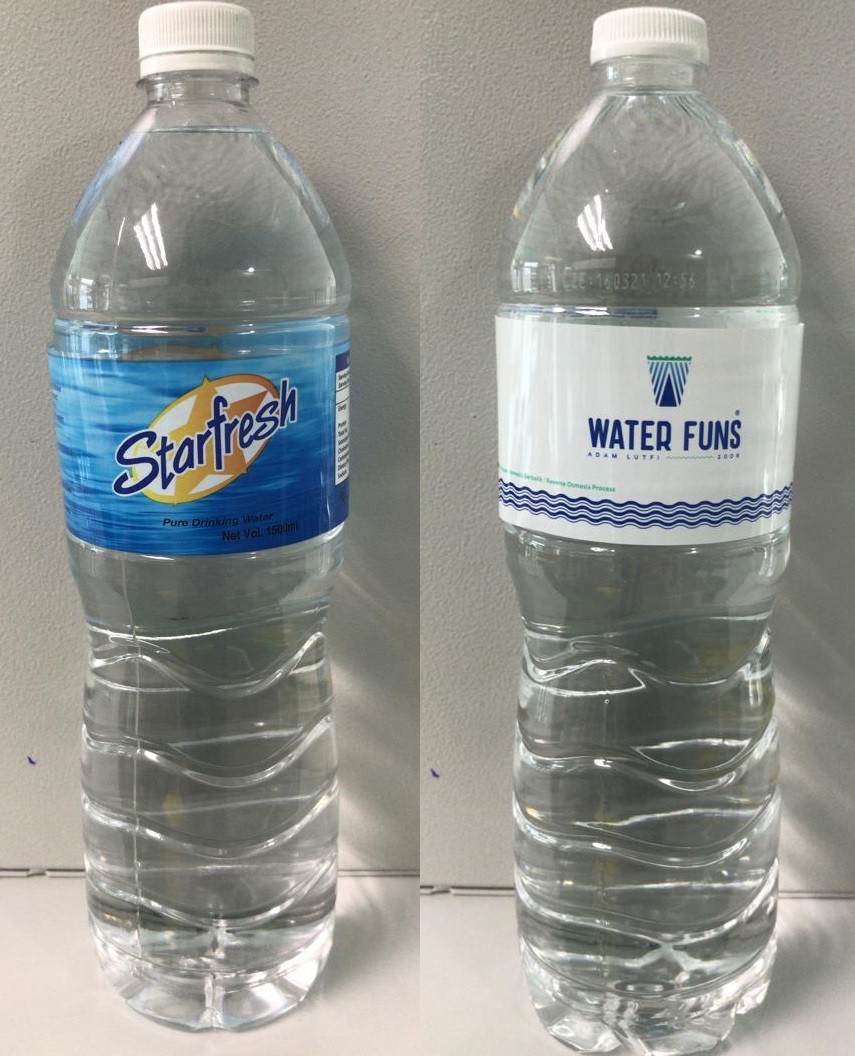 AMB products involved in 500ml and 1500ml with the final date on May 11, 2021 and May 13, 2021, respectively.
The Ministry of Health of Malaysia (KKM) through the Food Safety and Quality Division (BKKM) has carried out verification on the refinery and a food safety guarantee program has been found that is not implemented effectively . In addition, the results of an analysis of Starfresh names exported to Singapore and the Waterfuns brand sold on the local market did not comply with the Food Deed 1983 and Food Regulations 1985 because they were found to be contaminated with Pseudomonas aeruginosa bacteria . This product may be identified by the final date on the label. KKM has also directed the refineries to withdraw AMB products involved in the local market.
Thyme oil nanoemulsions (TONa and TONb), having 219 nm and 163 nm diameters, were successfully prepared by using sonication technique. Zeta potential (ZP) and polydispersity indexes (PDI) of TONa and TONb were defined to be 19.77, 0.24 and −24.80, 0.054, respectively. It was determined that zeta size values of TONs might have played a role on the inhibition of Pseudomonas aeruginosa, Escherichia coli, Salmonella typhimurium. All bacteria tested by agar diffusion method were gram‐negative bacteria that could be mostly found in fish fillets. Within 9 days cold storage period, TMAB growth in fish fillets treated with TONb was successfully reduced from 6.42 to 4.62 log CFU/g (change: 28%). In addition, as compared with control group samples, TPB growth of the same group was limited by 1.51 log CFU/g (from 7.93 to 6.42 log CFU/g). The results suggested that treatment of the fish fillets with the TONs would be a useful and practical nano application to delay microbial growth in fish fillets.
Thyme oil nanoemulsions (TONa and TONb) with a lower diameter than 219 nm have been successfully obtained. Antibacterial effects of TONa and TONb nanoemulsions have been revealed before treatment with fish fillets. The results revealed that TONs could be successfully used for the limitation of microbial spoilage of fish fillets stored at 4°C for 9 days. In this respect, the nano application with rapid and cost‐effective has been presented for the fishery processing industry.
Bioactive edible coatings were developed and applied to blueberries as a natural treatment. E. coli O157:H7, L. innocua, S. aureus, and P. aeruginosa were subjected to four bioactive compounds and to three film‐forming solutions (FFS). Vanillin and geraniol at low concentrations (1.2–1.8 mg/mL and 0.4–1 μL/mL) demonstrated significant inhibitory effects on all pathogens counts. Chitosan (Ch) showed a high antimicrobial activity (final counts below 2 log CFU/mL). The effectiveness of Ch plus vanillin (Ch‐Va) and geraniol (Ch‐Ge) in improving the safety were tested against pathogens inoculated on blueberries. Ch, Ch‐Va, and Ch‐Ge coatings exerted a bactericidal effect on all pathogens (from 1.24 to more than 2 log reductions). Significant reduction in yeast and mold counts was achieved with Ch (1.09 log) and Ch + Va (1.74 log). Sensory attributes of blueberries remained acceptable. Ch‐Va and Ch‐Ge were an alternative to improve the quality and safety and could be effective in extending the shelf life of ready‐to‐eat blueberries.
The present study proposes the use of natural coatings enriched with biopreservatives as a technological alternative to enhance the quality and safety of minimally processed fruits. According to the results obtained, the application of chitosan plus vanillin/geraniol coatings on fresh blueberries would allow to offer a safe product and respond the growing demand of consumers for fresh, environmentally friendly and chemical preservatives‐free foods. These findings and those obtained by the sensory evaluation support the practical application of this alternative in the minimally processed fruit industry.


A common bacterial pathogen called Pseudomonas aeruginosa produces a virus that substantially increases the pathogen’s ability to infect us, according to a study by investigators at the Stanford University School of Medicine.
P. aeruginosa weaponizes its resident virus to exploit the immune system’s distinct responses to bacterial versus viral infections.
This marks the first time a bacteria-infecting virus, otherwise known as a bacteriophage or just phage, has been observed inducing the immune system to mount an antiviral response and, in doing so, causing it to ignore the bacterial infection. When the scientists generated a vaccine directed at the virus, they showed that it dramatically lowered the bacteria’s ability to infect wounds in mice.
McDaniel Life-Line LLC is voluntarily recalling all lots of Life-Line Water to the consumer level. This product is being recalled because FDA analysis found the product to be contaminated with Pseudomonas aeruginosa.
Use of the contaminated product has a remote probability of necessitating medical or surgical intervention to preclude or reverse permanent damage to a body structure or function. To date, McDaniel Life-Line LLC has not received any reports of adverse events related to this recall.
The product can be taken internally or applied externally to the skin. The product is packaged in 1-gallon bottles. The affected Life-Line Water recall includes all lots.
The product was distributed in the United States and Canada to individuals via internet sales@lifelinewater.com.
McDaniel Life-Line LLC is notifying its customers, by press release, of the recalled product. Consumers that have product which is being recalled should stop using and discard.
Consumers with questions regarding this recall can contact McDaniel Life-Line by phone 806-647-1741, Monday thru Friday 8 AM-5 PM, Central Time or by e-mail lifeline@amaonline.com. Consumers should contact their physician or healthcare provider if they have experienced any problems that may be related to taking or using this product.
Previous short-duration depuration studies with the eastern oyster (Crassostrea virginica) demonstrated difficulty in achieving significant naturally incurred Vibrio vulnificus population count reductions. The present study used long-duration depuration (14 days) at controlled temperatures (10 or 22°C) and salinities (12, 16, or 20 mg/g). All depuration temperature–salinity combinations significantly reduced V. vulnificus counts, with greatest reductions seen in 12 mg/g, 10°C seawater (2.7-log CFU/g reduction) and in 20 mg/g, 22°C seawater (2.8-log reduction). Mesophilic vibrios dominated the overall microflora of freshly harvested oysters, whereas refrigerated storage selected for psychrotrophic bacteria (Pseudomonas spp., Aeromonas spp., Shewanella spp., Psychrobacter spp.) as well as did depuration at 10°C (Pseudoalteromonas spp., Shewanella spp., Vibrio spp.). Depuration at 22°C retained dominance of mesophilic vibrios, including pathogenic species, followed by Shewanella spp., Pseudoalteromonas spp., and Photobacterium spp. Although aerobic plate counts were lower in 22°C depurated oysters (5.0 log versus 6.0 log) compared with 10°C, depuration at 10°C offered greater V. vulnificus population reductions than depuration at 22°C. This advantage was only seen at 12 mg/g salinity, with no impact at 16 and 20 mg/g salinities. No depuration treatment reduced V. vulnificus counts to nondetectable levels. Use of prolonged depuration may be a helpful intervention to control V. vulnificus populations in oysters.
Posted in food contamination, Food Hygiene, Food Inspections, Food Micro Blog, Food Microbiology, Food Microbiology Blog, Food Pathogen, Food Poisoning, Food Safety, Food Technology, Food Testing, Pseudomonas, Pseudomonas aeruginosa, Uncategorized, Vibrio, Vibrio cholera, Vibrio parahaemolyticus, Vibrio vulnificans
An antibiotic called thanatin attacks the way the outer membrane of Gram-negative bacteria is built. Researchers at the University of Zurich have now found out that this happens through a previously unknown mechanism. Thanatin, produced naturally by the spined soldier bug, can therefore be used to develop new classes of antibiotics.
The global emergence of multi-drug resistant bacteria is posing a growing threat to human health and medicine. “Despite huge efforts from academic researchers and pharmaceutical companies, it has proven very difficult to identify effective new bacterial targets for antibiotic discovery,” says John A. Robinson from the Department of Chemistry at UZH. “One of the major challenges is identifying new mechanisms of antibiotic action against dangerous Gram-negative bacteria.” This group of bacteria includes a number of dangerous pathogens, such as Pseudomonas aeruginosa, which causes life-threatening lung infections, and pathogenic Escherichia coli strains.
Bacterial biofilms can cause serious health care complications associated with increased morbidity and mortality. There is an urge to discover and develop new biofilm inhibitors from natural products or by modifying natural compounds or understanding the modes of action of existing compounds. Cinnamaldehyde (CAD), one of the major components of cinnamon oil, has been demonstrated to act as an antimicrobial agent against a number of Gram-negative and Gram-positive pathogens, including Pseudomonas aeruginosa, Helicobacter pylori and Listeria monocytogenes. Despite the mechanism of action of CAD against the model organism P. aeruginosa being undefined, based on its antimicrobial properties, we hypothesized that it may disrupt preformed biofilms of P. aeruginosa. The minimum inhibitory concentration (MIC) of CAD for planktonic P. aeruginosa was determined to be 11.8 mM. Membrane depolarization assays demonstrated disruption of the transmembrane potential of P. aeruginosa. CAD at 5.9 mM (0.5 MIC) disrupted preformed biofilms by 75.6 % and 3 mM CAD (0.25 MIC) reduced the intracellular concentrations of the secondary messenger, bis-(3′–5′)-cyclic dimeric guanosine monophosphate (c-di-GMP), which controls P. aeruginosa biofilm formation. The swarming motility of P. aeruginosa was also reduced by CAD in a concentration-dependent manner. Collectively, these findings show that sub-MICs of CAD can disrupt biofilms and other surface colonization phenotypes through the modulation of intracellular signalling processes.

 FoodWorld