Category Archives: Pathogen

RASFF Alerts – Shigatoxin E.coli – Beef – Deer Meat

RASFF -Shigatoxin-producing Escherichia coli (presence /25g) in chilled boneless beaf meat from Argentina in the Netherlands

RASFF – Shigatoxin-producing Escherichia coli in chilled boneless beef meat from Argentina in the Netherlands

RASFF -Shigatoxin-producing Escherichia coli (presence /25g) in chilled boneless beef meat from Argentina in the Netherlands

RASFF -Shigatoxin-producing Escherichia coli (presence /25g) in frozen boneless beef meat from Brazil in Italy

RASFF -Shigatoxin-producing Escherichia coli in chilled boneless beef from Argentina in the Netherlands

RASFF -Shigatoxin-producing Escherichia coli in frozen deer meat from Austria in Italy

RASFF -Shigatoxin-producing Escherichia coli in chilled beef from Argentina in the Netherlands

RASFF – Shigatoxin-producing Escherichia coli (presence /25g) in chilled boneless beef from Brazil in the Netherlands

RASFF Alerts – Aflatoxin -Chilli Powder – Peanuts – Seed Mix – Groundnuts – Peanut Butter

RASFF – Aflatoxins (B1 = 4.79; Tot. = 5.48 µg/kg – ppb) in groundnuts with shell from China in Spain

RASFF – Aflatoxins (Tot. = 18 µg/kg – ppb) in peanuts in shell from China in France

RASFF – Aflatoxins (B1 = 12.7 µg/kg – ppb) in dried figs from Turkey in France

RASFF -Aflatoxins (B1 = 22; Tot. = 65 µg/kg – ppb) in cayenne pepper powder from Ethiopia in Finland

RASFF -Aflatoxins (B1 = 10.2 µg/kg – ppb) in chilli powder from India in France

RASFF -Aflatoxins (Tot. = 8.3 µg/kg – ppb) in shelled peanuts from the United States in the UK

RASFF – Aflatoxins (B1 = 24; Tot. = 38 µg/kg – ppb) in barley sunflower seed groundnut mix from Ethiopia in Findland

RASFF – Aflatoxins (B1 = 13; Tot. = 34 µg/kg – ppb) in crushed chilli from Ethiopia in Finland

RASFF – Aflatoxins (B1 = 8.5; Tot. = 13 µg/kg – ppb) in blanched groundnut kernels from China in the Netherlands

RASFF -Aflatoxins (B1 = 10; Tot. = 12.2 µg/kg – ppb) in groundnuts from Senegal in Belgium

RASFF – Aflatoxins (B1 = 73; Tot. = 96.6 / B1 = 2; Tot. = 4 µg/kg – ppb) in peanut butter from Senegal in Belgium


RASFF Alerts – Salmonella – Feed – Chicken

RASFF – Salmonella spp. (presence /25g) in feed for food-producing animals from Morocco in Greece

RASFF -Salmonella spp. (presence /25g) in rape seed meal from Belgium

RASFF -Salmonella spp. (presence /25g) in frozen whole chicken from France

RASFF – Salmonella enteritidis (presence /25g) in chilled hens without offals from Poland, with raw material from the Czech Republic in Poland

RASFF – Salmonella enteritidis (presence /25g) in frozen chicken legs from Brazil in Spain

RASFF – Salmonella enteritidis (presence /25g) in frozen whole chicken from Brazil in the Netherlands

RASFF – Salmonella Heidelberg (presence /25g) in frozen salted chicken breast fillets from Brazil in the Netherlands

Research – Listeria monocytogenes – Inhibition – Prevalence

Ingenta Connect

The objective of this study was to identify ingredients that inhibit Listeria monocytogenes in natural, organic, or clean-label ready-to-eat meat and poultry products. Fourteen ingredients were screened in uncured (no-nitrate-or-nitrite-added), traditional-cured (156 ppm of purified sodium nitrite), cultured (alternative cured, natural nitrate source, and Staphylococcus carnosus), or preconverted (alternative cured, natural nitrite source) turkey slurries. Slurries were cooked, cooled, inoculated to yield 3 log CFU/ml L. monocytogenes, stored at 4°C, and tested weekly for 4 weeks. Three antimicrobial ingredients, 1.5 % vinegar-lemon-cherry powder blend, 2.5 % buffered vinegar, and 3.0 % cultured sugar-vinegar blend, were incorporated into alternative-cured ham and uncured roast beef and deli-style turkey breast. Controls included all three meat products without antimicrobial ingredients and a traditional-cured ham with 2.8 % sodium lactate-diacetate. Cooked, sliced products were inoculated with 3 log CFU/g L. monocytogenes, vacuum packed, and stored at 4 or 7°C, for up to 12 weeks. For control products without antimicrobial agents stored at 4°C, a 2-log L. monocytogenes increase was observed at 2 weeks for ham and turkey and at 4 weeks for roast beef. Growth (>1-log increase) in the sodium lactate-diacetate was delayed until week 6. Compared with the control, the addition of either vinegar-lemon-cherry powder blend or buffered vinegar delayed L. monocytogenes growth for an additional 2 weeks, while the addition of cultured sugar-vinegar blend delayed growth for an additional 4 weeks for both ham and turkey. The greatest L. monocytogenes delay was observed in roast beef containing any of the three antimicrobial ingredients, with no growth detected through 12 weeks at 4°C for all the treatments. As expected, L. monocytogenes grew substantially faster in products stored at 7°C than at 4°C. These data suggest that antimicrobial ingredients from a natural source can enhance the safety of ready-to-eat meat and poultry products, but their efficacy is improved in products containing nitrite and with lower moisture and pH.

Science Direct

The aim of this study was to obtain data from refrigerated ready-to-eat seafood products at retail in Spain (young eels, crabstick and smoked salmon), regarding prevalence and levels of Listeria monocytogenes, storage temperatures and the impact of transport conditions (type of bag) on the temperature of the product. The one-year surveillance period was carried out according to the EC Regulation No. 2073/2005, taking 5 units/batch and analyzing 250 samples following ISO 11290-1/A1 and ISO 11290-2/A methodologies. Low prevalence of L. monocytogenes was observed in surimi products, while 4.8% of smoked salmon samples were positive for Listeria with low levels (<10 cfu/g) and uneven pathogen distribution. A single company was responsible for 80% of the positive lots. All purchased products showed values higher than 4 °C at retail and an average increase of 2.5 °C or up to 6.2 °C was recorded when isothermal or plastic shopping bags were used for transport, respectively. To avoid noncompliance of the Food Safety Objective for L. monocytogenes in seafood RTE products more efforts from all stakeholders are needed, with special attention so as to improve control and maintenance of refrigerators at retail and to enhance consumer education regarding food safety practices.

FSA Letter on EU Discussions on Norovirus Controls in Shellfish

Dear Interested Party                                                                      30 July 2013


Norovirus in shellfish – an update on status of EU negotiations


Following my letter dated 08 May 2013 I would like to provide you with an update on the EU discussion on norovirus controls in shellfish.

The EU Commission gathered views from Member States at a Working Group meeting on 27th June 2013.  Following detailed and constructive discussions, during which many different views were expressed, it was agreed that no limits should be set at this stage due to the limitations of the current methodology and the gaps in current knowledge about norovirus. However, it was agreed that there is a need to address food safety risks associated with norovirus in raw shellfish and the Commission, together with Member States, will continue to explore risk management options, identifying areas where harmonised practices could be introduced.  There was also support for a harmonised EU baseline study, as recommended by EFSA, to help fill gaps in the data that have been identified.

The FSA is continuing to explore the feasibility and effectiveness of alternative approaches which could be applied, such as buffer zones and alert systems to facilitate active management of harvesting.  I would welcome any evidence based information and/or suggestions in the coming months to inform these considerations.

Information Clostridium botulinum

Food Poisoning JournalClost

Botulism is a rare, life-threatening paralytic illness caused by neurotoxins produced by an anaerobic, gram-positive, spore-forming bacterium, Clostridium botulinum. Unlike Clostridium perfringens, which requires the ingestion of large numbers of viable cells to cause symptoms, the symptoms of botulism are caused by the ingestion of highly toxic, soluble exotoxins produced by C. botulinum while growing in foods.

Canada – Gorgonzola Cheese Recall – Listeria monocytogenes

CFIAEurofins Food Testing UK

The Canadian Food Inspection Agency (CFIA) and Jan K Overweel Ltd. are warning the public not to consume the Ballarini brand Gorgonzola cheese products described in the link above because the products may be contaminated with Listeria monocytogenes.

Also affected by this alert are the below products which may have been sold in smaller packages, cut and wrapped by some retailers. Consumers are advised to contact the retailer to determine if they have the affected products.

There have been no reported illnesses associated with the consumption of these products.

The importer, Jan K Overweel Ltd., Woodbridge, ON, is voluntarily recalling the affected products from the marketplace.  The CFIA is monitoring the effectiveness of the recall.

USA – Cyclospora Updates – Salad Mix the Source

Food Poisoning BulletinEurofins Food Testing UK

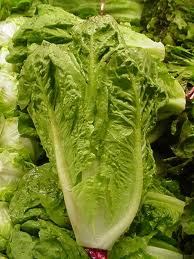
Taylor Farms de Mexico food service salad served at Olive Garden and Red Lobster restaurants is the source of the Cyclospora outbreak that sickened at least 232 people in Iowa and Nebraska. Health officials from those states announced July 30 that a salad mix containing iceberg and romaine lettuces, carrots and red cabbage was the source of the illnesses, but did not release the name of the company that produced it as the tainted salad was no longer in circulation in those states.

CDC

Food Poisoning Bulletin

Cyclospora illnesses that have sickened more than 400 people across the country in an outbreak have been linked to packaged salad greens. These products have been linked to many outbreaks over the years.

In fact, a study conducted by the Centers for Disease Control and Prevention (CDC), released in January of this year, said that leafy greens were responsible for the majority of foodborne illness outbreaks from 1998 to 2008. Last year, the seventh largest food poisoning outbreak in the U.S. was linked to a spinach and spring mix.

FDA Investigation

On July 30, 2013, the states of Iowa1 disclaimer icon 2 and Nebraska3 announced that their analysis indicated that the outbreak in those states was linked to a salad mix. In follow-up to that announcement, the U.S. Food and Drug Administration is providing an update on its investigation.

The FDA traceback investigation has confirmed that the salad mix identified by Iowa and Nebraska as being linked to the outbreak of cyclosporiasis in those states was supplied to restaurants in those states by Taylor Farms de Mexico, S. de R.L. de C.V., a processor of foodservice salads.    The FDA traceback investigation found  that illness clusters at restaurants were traced to a common supplier,  Taylor Farms de Mexico, S. de R.L. de C.V. The restaurants in Iowa and Nebraska include Olive Garden and Red Lobster, both of which are owned by Darden Restaurants.

FDA’s investigation has not implicated consumer packages sold in grocery stores.


New Zealand – Whey Protein – Clostridium botulinum

Safe Food Blog

Fonterra, New Zealand’s largest dairy manufacturer, last week issued a warning that Clostridium botulinum had been found in three batches of whey protein, (approximately 40 tonnes), which can be used to boost the protein content of many foods, including infant feeding formula.

The warning caused a New Zealand manufacturer of infant feeding formula to recall certain batches of product.  Fonterra Chief Executive, Theo Spierings also flew to China to discuss the issue with Chinese food safety authorities.

Apparently, the source of the bacteria has been traced to a dirty pipe in a processing factory.  If this is true, it’s a serious lapse in process control and obviously should not have occurred.

FSANZ Statement

Food Standards Australia New Zealand is aware of the announcement by Fonterra regarding several batches of its whey protein concentrate possibly contaminated with Clostridium botulinum and subsequent recalls of two Nutricia products as a precautionary measure. 

Please see the following joint media statement issued by the Department of Agriculture, Fisheries and Forestry and Food Standards Australia New Zealand.

USA – Cyclospora Outbreak Still Going Up

Food Poisoning Journal

  • As of July 29, 2013 (5pm EDT), CDC has been notified of 372 cases of Cyclospora infection from the following 16 health departments: Iowa, Texas, Nebraska, Florida, Wisconsin, Illinois, New York City, Georgia, Missouri, Arkansas, Connecticut, Kansas, Minnesota, New Jersey, New York, and Ohio.
  • Most of the illness onset dates have ranged from mid-June through early July.
  • At least 21 persons reportedly have been hospitalized in three states

Food Posioning Journal

Lincoln – Prepackaged salad mix is the source of the state’s cyclospora outbreak which has sickened 78 Nebraskans since mid-June according to the Nebraska Department of Health and Human Services. Cyclospora is a rare parasite that causes a lengthy gastrointestinal illness.

“Our goal is to protect Nebraskans, pinpoint the source of the illness and make sure the risk is eliminated,” said Dr. Joseph Acierno, Chief Medical Officer and Director of Public Health for DHHS. “Our investigation implicated prepackaged, prewashed, salad mix as the cause of this outbreak.”

DHHS’ investigation also shows the salad mix which includes iceberg and romaine lettuce along with red cabbage and carrots came through national distribution channels. Locally grown produce is not part of this outbreak.

DHHS and local health departments are currently working with the U.S. Food and Drug Administration to identify exactly where the contamination came from along the food production chain and where the product was distributed. Nebraska public health officials believe the bulk of the contaminated salad mix already worked its way through the system due to limited shelf life.

Fresh vegetables and fruit are usually associated with cyclospora outbreaks. People become sick when they consume food contaminated with the parasite. Washing fruits and vegetables is always recommended but it can be difficult to wash cyclospora off all types of produce.