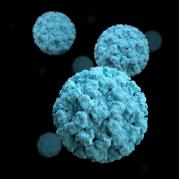
Category Archives: Norovirus

France – Picard brand frozen whole raspberries 1 kg – Norovirus

Oulah

Product recall: Picard brand frozen whole raspberries 1 kg

ENCOUNTERED PROBLEM

Possible presence of Norovirus

PROPOSED SOLUTION

Do not consume and return to the point of sale for reimbursement.

FURTHER INFORMATION

▸ Article code
1535

▸ Lot
EC 072-1-20

▸ Consumer service contact
An information center is available for consumers to answer their questions at the following number 0800 091 091 (free service & calls) from Monday to Saturday from 9 am to 6 pm.

▸ Source
https://www.picard.fr/

Belgium – PICARD – Whole frozen raspberries 1 kg. – Norovirus

AFSCA

Recall of PICARD
Product: Whole frozen raspberries 1 kg.
Problem: possible presence of Norovirus.


In agreement with the AFSCA, Picard is withdrawing frozen whole raspberries from sale and is recalling them to consumers due to the possible presence of Norovirus.
Picard asks its customers not to consume this product and to return it to the point of sale where it was purchased in order to be reimbursed.

Product description

– Product name: Whole frozen raspberries
– Brand: Picard
– Best before end: 12/2021
– Lot number: EC072-1-20
– Sale period: from 23/06/2020 to 16 / 09/2020
– Type of packaging: plastic bag
– Weight: 1 kg


The product was sold through the following Picard stores:

Picard, 120 Chaussée de Bruxelles, 1410 WATERLOO
Picard, 166 Avenue Georges Henri, 1200 WOLUWE-SAINT-LAMBERT
Picard, 41 Rue de Rixensart, 1332 GENVAL

For any further information, contact: info@picard.be .

Research – Human Norovirus strains differ in sensitivity to the body’s first line of defense

Science Daily

Interferon (IFN) responses are one of the first defenses the body mounts against viral infections, and research has shown that it plays a role controlling viral replication. But when researchers at Baylor College of Medicine investigated whether IFN restricted human norovirus (HuNoV) infection in human intestinal enteroids (HIEs), a cultivation system that recapitulates many of the characteristics of the human infection, they unexpectedly discovered that endogenous IFN responses by HIEs restricted growth of HuNoV strain GII.3, but not of GII.4, the most common strain worldwide.

RASFF Alert – Foodborne Outbreak -Norovirus – Frozen Tellins (Donax trunculus)

European Food Alerts

RASFF

foodborne outbreak suspected to be caused by and norovirus (GI, GII) in frozen tellins (Donax trunculus) from Turkey in Spain

RASFF Alert – Norovirus – Red Currents

European Food Alerts

RASFF

norovirus (presence /25g) in frozen red currants from Poland in Belgium

RASFF Alerts – Norovirus – Frozen Berry Mix

European Food Alerts

RASFF

norovirus (GI /25g) in frozen berry mix from the Netherlands in Germany

RASFF

norovirus (GI /25g) in frozen red berry mix from Germany in Italy

Research – Estimating the distribution of norovirus in individual oysters

Science Direct

Food Borne Illness - Norovirus -CDC Photo

Image CDC

Norovirus in oysters is a significant food safety risk. A recent ISO detection method allows for reliable and repeatable estimates of norovirus concentrations in pooled samples, but there is insufficient data to estimate a distribution of copies per animal from this. The spread of norovirus accumulated across individual oysters is useful for risk assessment models. Six sets of thirty individual Crassostrea gigas oysters were tested for norovirus concentration levels by reverse-transcription quantitative PCR (RT-qPCR): three from a commercial harvest site, and three post-depuration. Five sets had norovirus GII means above the limit of quantification (LOQ), and one below the LOQ, but above the limit of detection. No norovirus GI was detected in pooled tests, and individual oysters were not tested for norovirus GI. Depuration was shown to reduce the mean concentration of GII copies, but not to affect the shape of the distribution around the mean. Deconvoluting the uncertainty of the method, the coefficient of variation was stationary (0.45 ± 0.2). The best fit distribution was either a lognormal distribution or a gamma. Multiplying these distributions by the weight of oyster digestive tissues gave an estimate for the count mean. This was used as the parameter λ in three compound Poisson distributions: Poisson-lognormal, Poisson-gamma, and Poisson-K. No model was found to fit better than the others, with advantages for each. All three could be used in future risk assessments. Preliminary validation of sampling uncertainty using repeated testing data from a previous study suggests that these results have predictive power.


Research – Fingerprinting of human noroviruses co-infections in a possible foodborne outbreak by metagenomics

Science Direct

Human noroviruses (HuNoVs) are the primary non-bacterial pathogens causing acute gastroenteritis worldwide. Here we reported a co-infection of HuNoVs with different genotypes during an outbreak of gastroenteritis in travelers. The aim was to trace the source and transmission patterns of the infections using next-generation sequencing (NGS). An investigation was conducted on a cross-border travel group who came back to China from Thailand for symptoms of gastroenteritis. Anal swabs were collected from 23 people and samples were analyzed using RT-qPCR. A total of 11 samples tested positive for HuNoVs. All samples tested negative for bacterial pathogens in the surveillance list. Positive samples for HuNoVs were further analyzed using NGS. Seven out of 11 positive samples were sequenced and 16 viral genome sequences for 10 different strains of HuNoVs were obtained. We demonstrated that the outbreak was associated with co-infection of multiple genotypes of HuNoVs and the source of infections was probably contaminated water or food. Besides, four different HuNoVs genotypes (GI.5[P12], GIX.1[GII·P15], GI.7[P7] and GII.8[P8]) were identified in one patient. Co-infection with both genogroup GI and GII, and co-infection with two different P types ([P10] and [P13]) of genotype GI.3 were identified in different patients. Findings from this study show that individuals can be simultaneously infected with multiple strains of HuNoVs and NGS can help investigating these issues. Further, this study shows that food and water are potential vehicles for transmission of multiple foodborne viruses.

Taiwan – Norovirus found in mass food poisoning case at Taiwan’s Chiaohsi hotel

Taiwan News

Food Borne Illness - Norovirus -CDC Photo

Image CDC

The Yilan County Public Health Bureau said Wednesday (Aug. 12) that several customers and employees in the mass food poisoning case at Hotel Royal Chiaohsi (礁溪老爺酒店) had tested positive for norovirus, though it has not been confirmed as the official cause.

Earlier this month, news broke out that 164 people who dined at the Hotel Royal Chiaohsi’s buffet restaurant had experienced symptoms of food poisoning, including a group of Chailease Finance Co. employees that were on a company retreat. Of all the afflicted individuals, 92 have sought medical assistance, according to the health bureau.

The bureau said that a few customers and hotel staff members, including two restaurant workers, have received a positive result for the norovirus test, but no traces of the virus have been found on any of the kitchenware so far. Since the investigation results will determine the hotel’s responsibility and its follow-up settlement, the bureau said more clarification is needed on the true cause of the incident.

The bureau said the investigation report will come out as soon as October, and the hotel will be penalized under the Act Governing Food Safety and Sanitation if norovirus is found to be linked to the mass food poisoning. Meanwhile, the bureau said it had requested the hotel to sanitize the entire building and enhance the health management of its employees, reported CNA.

In a released statement, Hotel Royal Chiaohsi apologized for neglecting the safety of its customers and failing to provide a comfortable environment. It emphasized that it will take full responsibility of the incident regardless of the final investigation results, promising that all affected customers will be compensated, reported CTWANT.

According to Taiwan Centers for Disease Control (CDC), norovirus is a very contagious virus that causes vomiting and diarrhea. People of all ages can contract the disease from contaminated food or water, as well as from an infected person, with symptoms usually lasting one to three days.

RASFF Alert – Norovirus – Live Clams

RASFF-Logo

RASFF – norovirus (GII /2g) in live clams (Ruditapes philippinarum) from Portugal, purified in Spain in Spain