Category Archives: Microbiology

Research – Italy sees most HUS cases for decades – STEC E.coli

Food Safety News

Italy has reported the highest annual total of Hemolytic Uremic Syndrome (HUS) cases since records began.

From January to December 2022, 91 cases were recorded. This is the most observed in a single year since the start of surveillance in 1988. HUS is a severe complication associated with E. coli infection that causes kidney failure and can result in lifelong, serious health problems and death.

The number is still lower than in France, which recorded 128 HUS cases in 2021. This was the lowest figure since 2017 and was down from 167 in 2020. Data for 2022 is not yet available but a rise is expected due to an outbreak linked to Nestlé Buitoni Fraîch’Up brand frozen pizzas.
India- Manipur: 500 hospitalised after suspected food poisoning in Kangpokpi

Nenow

Imphal: At least 500 people, most of them children and women, were hospitalised on Sunday after suspected food poisoning in the Chalwa Kuki villa area of Manipur‘s Kangpokpi district.

According to preliminary reports from health officials, around 1000 villagers had taken part in a grand feast as part of a local ritual and traditional festival at around 6.30 pm on Saturday.

Seventy individuals taken ill were given injections and life-saving drugs.

Two medical camps have also been opened to treat the patients. The cause of the food poisoning is still being investigated.

Food Safety News – USA- Publisher’s Platform: It’s time to deal with hepatitis A and food service workers

Food Safety News

The Advisory Committee on Immunization Practices (ACIP) provides advice and guidance to the Director of the CDC regarding use of vaccines and related agents for control of vaccine-preventable diseases in the civilian population of the United States. Recommendations made by the ACIP are reviewed by the CDC Director and, if adopted, are published as official CDC/HHS recommendations in the Morbidity and Mortality Weekly Report (MMWR).

Presently, approximately 5% of all hepatitis A outbreaks are linked to infected food-handlers.

Here is what the CDC continues to say about vaccinating food-handlers:

Why does CDC not recommend all food handlers be vaccinated if an infected food handler can spread disease during outbreaks?

Research – Survey shows Germans underestimate the risk of raw foods

Food Safety News

People in Germany often eat raw or unheated food and are not fully aware of the related risks, according to a survey.

Findings come from a special edition of the consumer monitor by the German Federal Institute for Risk Assessment (BfR) that focused on raw foods.

“The health risks of raw foods are often underestimated. Diseases can be avoided with simple kitchen hygiene rules. Sensitive groups of people in particular should only eat raw animal food that has been sufficiently heated,” said Andreas Hensel, BfR president.

The survey of 1,004 people in September 2022 aimed to find out which food groups are eaten raw and how often, how Germans assessed their benefits and health risks, and which pathogens are associated with which foods.

Many respondents did not feel well informed about the health risk of raw flour but more people were comfortable with hygiene recommendations and storage advice for raw food.

Greece – Catered food linked to school outbreak in Greece – Clostridium perfringens

Food Safety News

A suspected Clostridium perfringens outbreak affected 30 people in Greece in 2021, according to a study.

In May 2021, several gastroenteritis cases were reported among students and staff of a high school on a Greek island. Daily hot lunches were delivered by a catering company and consumed in classrooms.

In late May, the Hellenic National Public Health Organization was informed by a regional unit of the Hellenic Food Authority (EFET) about a cluster of gastroenteritis cases among 12 to 18-year-old students and teachers. The school is in a small town on a remote north-eastern Aegean Greek island, which had limited capacity for specific laboratory testing.

Study Link

USA – More than 100 students home sick due to suspected Norovirus-related illnesses

ABC15

PHOENIX — More than 100 students at Hopi Elementary School in Arcadia stayed home due to illness this week, and norovirus could be the cause.

Norovirus, which is also called food poisoning, stomach flu, or stomach bug, is the leading cause of foodborne illness, according to the Centers for Disease Control and Prevention (CDC).

ABC15 learned an email was sent to parents at Hopi Elementary School, urging children experiencing nausea, vomiting, diarrhea, stomach pains, and low-grade fever to stay at home.

The email also noted, “Per the CDC the most common cause of these symptoms is the norovirus.”

New Zealand – Sick for days: Consumers report food poisoning after eating hummus – Salmonella

Stuff NZ

Hummus products subject to a recall due to salmonella contamination concerns could have been on shelves for weeks.

And while the Ministry for Primary Industries has not had any reports of illness, some consumers say they have been affected.

Have you been affected? Contact brianna.mcilraith@stuff.co.nz

Shaina Petersen said she became unwell on Monday and had eaten some of the affected hummus at the weekend.

She went to the doctor on Thursday and was tested but had not yet received the results. “The doctor said given my symptoms I’m a probable case. My symptoms have been flu-like with fatigue, chills, aches, headache, nausea and diarrhoea but with painful stomach cramping, loss of appetite and a curdling feeling.”

USA – Ruby Princess: More than 200 sickened on the Princess Cruises voyage

Outbreak News Today

Federal health officials are reporting that some 219 passengers and crew suffered with symptoms of  vomiting and diarrhea during a recent Princess Cruises’ Ruby Princess voyage (RU305P  from February 26–March 5, 2023).

To date, the etiology of the illness has not been discovered.

In response to the outbreak, Princess Cruises and the crew aboard the ship reported the following actions:

  • Increased cleaning and disinfection procedures according to the ship’s outbreak prevention and response plan.
  • Collected stool specimens from gastrointestinal illness cases to send to the CDC lab for pathogenic identification.

Vessel Sanitation Program (VSP) epidemiologists and environmental health officers will board the ship in Galveston, Texas, on March 5 to conduct a formal outbreak investigation.

Research- Development of an Extraction Method to Detect Hepatitis A Virus, Hepatitis E Virus, and Noroviruses in Fish Products

MDPI

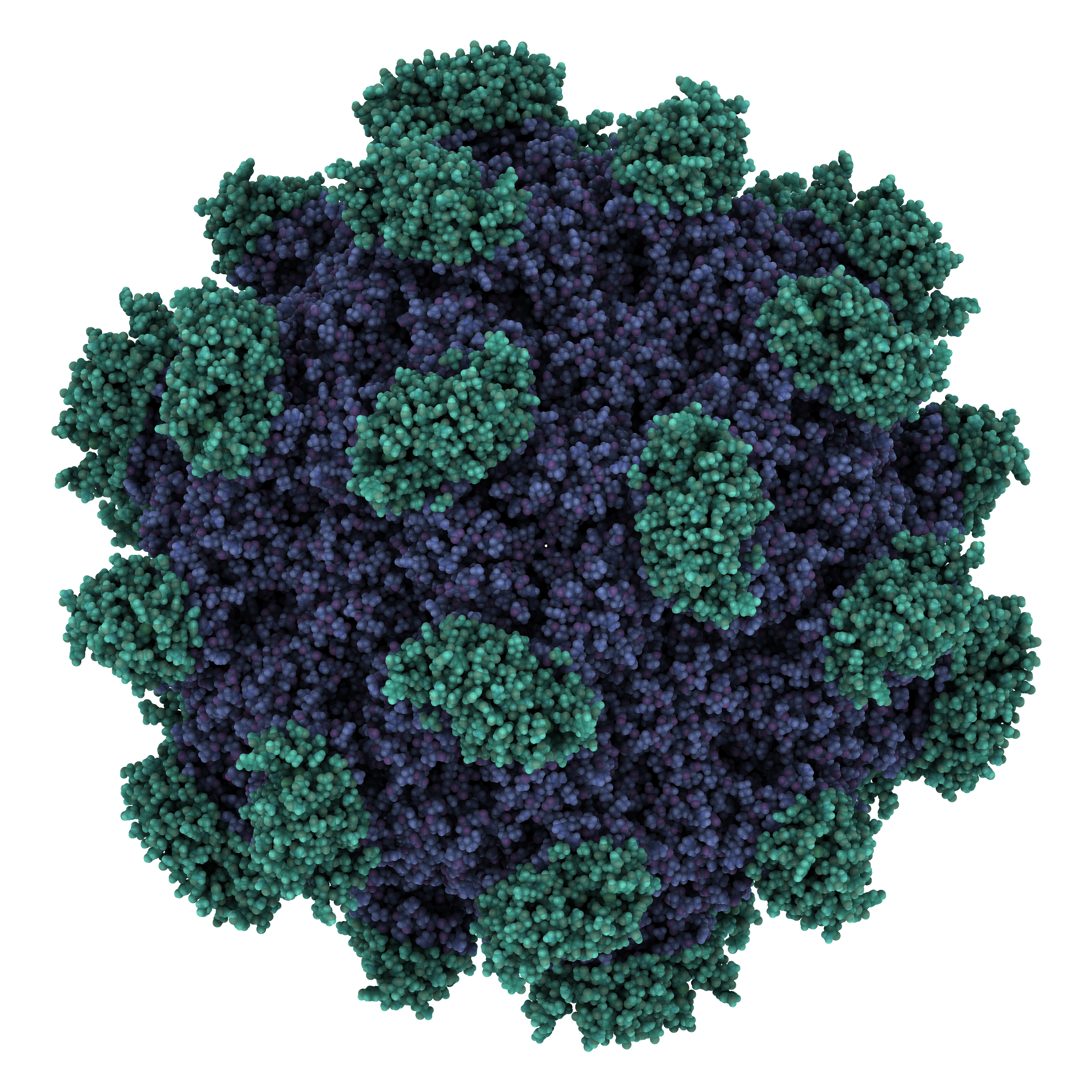
Hepatitis E virus capsid structure. HEV infection causes viral hepatitis. Atomic-level structure.

Abstract

Viruses are a leading cause of foodborne disease worldwide. Hepatitis viruses (hepatitis A (HAV) and hepatitis E (HEV)) and human norovirus are recognized as the main viruses of public health concern in food hygiene. ISO 15216 approved procedures are not validated for detection of HAV and human norovirus in foodstuffs, such as fishes, leading to an inability to ensure the safety of these products. This study aimed to provide a rapid and sensitive method for detecting these targets in fish products. An existing method that includes proteinase K treatment was selected for further validation using artificially contaminated fish products, according to the recent international standard ISO 16140-4. Recovery efficiencies in pure RNA extracts of viruses ranged from 0.2% to 66.2% for HAV, 4.0% to 100.0% for HEV, 2.2% to 100.0% for norovirus GI, and 0.2% to 12.5% for norovirus GII. LOD50 values were between 144 and 8.4 × 10⁴ genome copies/g for HAV and HEV, and 104 and 2.0 × 10³ copies/g for norovirus GI and norovirus GII, respectively. LOD95 values were between 3.2 × 10³ and 3.6 × 10⁵ genome copies/g for HAV and HEV, and between 8.8 × 10³ and 4.4 × 10⁴ genome copies/g for norovirus GI and norovirus GII, respectively. The method developed here was successfully validated in various fish products and can be applied for routine diagnostic needs.

EU – Risk Ranking of Chemical and Microbiological Hazards in Foods ‐ Research Project and International Workshop

EFSA

Abstract

The purpose of this project was to improve the ability to perform risk ranking of current chemical and microbiological hazards in foods. The work was performed in three work packages (WPs) comprising an overview of chemical and microbiological risk assessment (WP1), development of methods for risk ranking (WP2), and the organisation of an international workshop (WP3). The developmental work consisted of 1) a method for chemical hazards that was also adapted for newer toxicological effect data, and 2) an exposure model applicable to both types of hazards in its design. Conclusions at the workshop included that risk ranking fundamentally would provide added support to risk management and risk communication. Both probability and severity of a health effect was regarded to be relevant to incorporate in the metric used for risk ranking. Measures of health burden were regarded as useful by many participants but there was no consensus on the most preferable metric. The value of other metrics, including less data intensive ones, was also noted. While risk ranking should be based on risk assessment principles, management aspects would ultimately need to be considered on top of this. Participants were positive to a joint framework for both chemical and microbiological hazards, but several challenges were identified. In the face of a general lack of desired data it was regarded to be important to make efficient use of the available information, and it may be advantageous if methods are compatible with different sets of evidence. It is recommended that the common metric for risk ranking is further resolved in terms of what aspects it should account for, the usefulness of particular or different metrics, as well as the concept of a tiered approach. Development of an overarching guidance for risk ranking addressing the many types of rankings possible is proposed.