Category Archives: microbial contamination

Research -New Detection Tools for Clostridium Perfringens, Total Viable Bacteria in Poultry Production

Food Safety

Ancera has unveiled the release of two new microbial detection tools designed to identify and enumerate Clostridium perfringens and total viable bacteria (TVB) in poultry. The assays are designed to address critical challenges within the poultry industry, from live operations to processing, and help companies increase productivity, food safety, and interventional efficacy.

Ancera’s TVB assay is the first true non-enrichment, microbial quantitation assay focused on same-shift process improvement and quality control at the plant. The tool provides quantifiable microbial information enabling integrators to understand whether their processes are working to reduce microbial load. Once fully commercialized, the technology will produce results within a single working shift, unlocking real-time trend analysis and decision-making for improved compliance and sanitation. The new assay represents a significant reduction from traditional 48–72 hour turnaround times, decreasing the risk of compliance and recall risk.

Research – Process Hygiene Criterion for Campylobacter and Number of Campylobacter Enteritis Cases in Northwest Germany

MDPI

Abstract

Campylobacteriosis is the most commonly reported bacterial foodborne disease in the European Union. Its transmission is often associated with the consumption of poultry meat. In 2018, Regulation (EC) No. 2017/1495 introduced a process hygiene criterion and with this, the testing requirements for Campylobacter. The results of microbiological testing for Campylobacter of chicken carcass neck skin samples from several slaughter lines in Northwest Germany collected by the food business operators and contamination levels (cfu/g Campylobacter) of these samples were analysed from 2018 to 2021. Classification into three different categories was made based on contamination levels. The proportion of highly contaminated (category three) neck samples (>1000 cfu/g) decreased from 2018 to 2021. Our analysis showed a relationship between the number of neck samples with high Campylobacter contamination levels (>1000 cfu/g) and human cases in Northwest Germany. Spearman’s rank test (p < 0.01) showed a higher correlation in 2018 (0.66) and 2019 (0.58) compared to 2020 and 2021. Campylobacter enteritis cases in Northwest Germany stayed at a low level in 2020 and 2021. It remains unclear whether the decrease in reported Campylobacter enteritis cases is related to a decrease in Campylobacter levels on chicken carcasses or due to other reasons like underreporting during the COVID-19 pandemic, and therefore must be investigated in further analyses.

Research – Prevention and controlof microbiological hazardsin fresh fruits and vegetables Parts 1 & 2: General principle

FAO

FAO & WHO. 2023. Prevention and control of microbiological hazards in fresh fruits and vegetables – Parts 1 & 2: General principles. Meeting report. Microbiological Risk Assessment Series, No. 42. Rome.
https://doi.org/10.4060/cc8490

Executive summary
Introduction
The purpose of the meetings was to collect, review and discuss relevant measures
for control of microbiological hazards from primary production to point of sale in
fresh, ready-to-eat (RTE), and minimally processed fruits and vegetables, including
leafy vegetables.
The scope of the meetings included aspects of primary production in open fields
or in protected facilities (such as high and low tunnels, production under cover,
greenhouses and net houses, and address hydroponic and aquaponic systems,
and other systems as required) and post-harvest activities, including activities
performed prior to packing, minimal processing, distribution, maintenance of
the cold chain where applicable, transportation, and handling at point of sale.
Emphasis was placed on the identification and evaluation of solutions to reduce
microbiological risks that result in foodborne illnesses associated with fresh fruits
and vegetables produced in various regions of the world, taking into consideration
their effectiveness and sui

Research – Lactic acid bacteria and spoilage bacteria: Their interactions in Escherichia coli O157:H7 biofilms on food contact surfaces and implications for beef contamination

Wiley Online

Abstract

This research explores the interaction between Shiga toxin-producing Escherichia coli (STEC) O157:H7 and bacteria species commonly found in beef processing environments, specifically CarnobacteriumLactobacillusComamonasRaoultella, and Pseudomonas. The study investigated how various environmental conditions impact the formation of biofilms and the ability of O157:H7 to transfer from multispecies biofilm onto beef surfaces. For this purpose, a mixture of lactic acid bacteria (LAB), spoilage bacteria (106 CFU/mL), and E. coli O157 (103 CFU/mL) were combined as follows: LAB (T1)Carnobacterium piscicola + Lactobacillus bulgaricus + O157:H7, an spoilage bacteria (T2)Comamonas koreensis + Raoultella terrigena + O157:H7, an spoilage bacteria (T3)Pseudomonas aeruginosa + C. koreensis strain + O157:H7 and only O157:H7 as control (T4). Multispecies biofilms were developed on thermoplastic polyurethane (TPU) and stainless steel (SS) coupons at 10 and 25°C for 6 days, washed and stored for 6, 30, and 60 days at wet (60%–90% RH) and dry (20%–50%, RH) conditions. To evaluate O157:H7 transfer, beef cubes (3 × 3 × 1 cm) were placed on the coupons, followed by a 50-g weight (7.35 kPa). The experiment was repeated three times in triplicate for each strain combination. Results demonstrate that biofilms formed at 10°C were generally weaker (less biomass) than those at 25°C. Regardless of temperature, more viable O157:H7 cells were transferred to beef from moist biofilms on TPU surfaces. At 25°C, T3 biofilm exhibited the lowest O157:H7 transfer to beef by 1.44 log10 CFU/cm2 (p < 0.01). At 10°C, none of the multispecies biofilm (T1–T3) affected the number of O157:H7 transfers to beef (p > 0.05). Notably, O157:H7 was not detected on food contact surfaces with 30 and 60-day-old dry biofilms (T1–T4). Through enrichment, E. coli O157:H7 was recovered from multispecies biofilms T1, T2, and T3. Findings from this study imply that multispecies biofilms contribute to the persistence of O157:H7 under dry conditions, regardless of temperature. These results underscore the intricate influence of multiple environmental factors—including surface type, biofilm age, humidity, temperature, and the presence of other bacterial species—on the risk of beef contamination facilitated by biofilms.

New Zealand – Source and Supply Food Co Ltd – Recall –

MPI

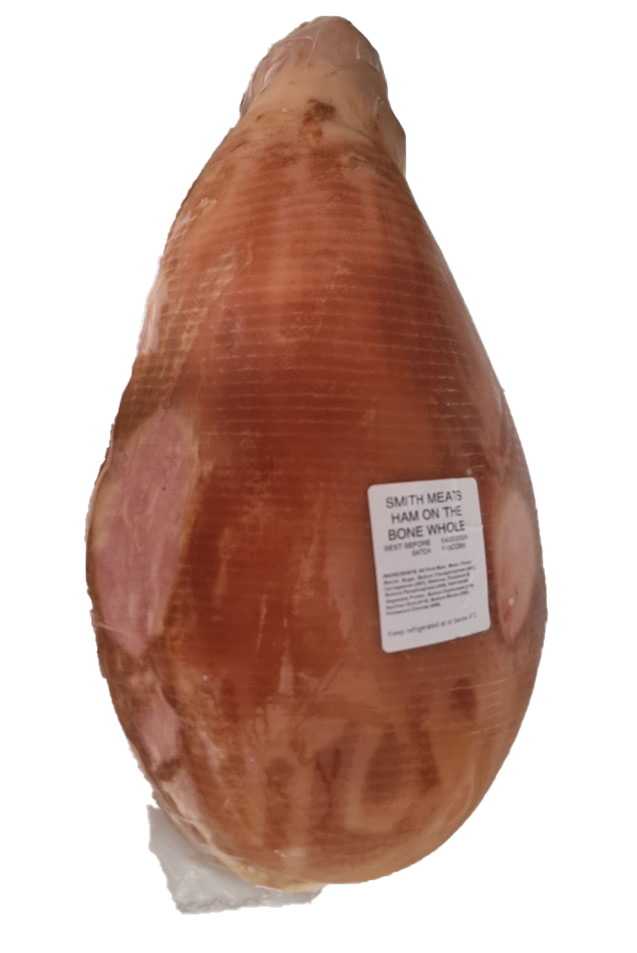
25 December 2023: The recall has been updated to include additional affected best before date of Smith Meats Brand Cooked on Bone Hams (Whole and Half) as the product may be undercooked.

23 December 2023: Source and Supply Food Co. Ltd is recalling specific batches of Smith Meats Brand Cooked on Bone Hams (Whole and Half) as the product may be undercooked.

Product identification
Product type Ready-to-eat ham
Name of product (size) Smith Meats Branded Cooked on Bone Hams (Whole and Half)
Batch marking 11SCOB1, 11SCOB2, 11SCOB3, 11SCOB4, and 11SCOB5
Date marking Best before 26/01/24, 27/01/24, 28/01/24, 09/02/24, 14/02/24, 01/02/2024
Package size and description The product is sold in sealed plastic.
Distribution The affected product is sold at Matamata Butchers, Starfood (Taupo) and sold to some corporate companies.
Notes This recall does not affect any other Smith Meats brand products or any other products from Source and Supply Food Co. Ltd.

Point of sale notice for retailers

If you are a retailer of the product in this recall, download a copy of the point of sale notice. You need to display it in your store for one month.

Point of sale notice – Source and Supply Food Co Ltd [PDF, 85KB]

Consumer advice

Customers are asked to check the batch and date mark on the product.

Affected product should not be consumed. There have been no reports of associated illness, however if you have consumed any of this product and have any concerns about your health, seek medical advice.

Customers should return the product to their retailer for a full refund.

Who to contact

If you have questions, contact Source and Supply Food Co. Ltd:

Canada – Factor brand Parmesan Pesto Chicken with Steamed Spinach, Roasted Green Beans & Grape Tomatoes may be unsafe due to undercooking – Microbial Contamination

CFIA

Product
Parmesan Pesto Chicken with Steamed Spinach, Roasted Green Beans & Grape Tomatoes
Issue
Food – Microbial Contamination – Other
What to do

Do not consume, use, sell, serve or distribute recalled products

Distribution
New Brunswick
Nova Scotia
Ontario
Prince Edward Island
Quebec

EU – Nestle recalls infant formula due to Cronobacter risk

Food Safety News

Nestlé has recalled infant formula in several countries because of the potential presence of Cronobacter sakazakii.

The affected product is EXPERT PRO HA 1, which has different batch numbers depending on the country it was marketed.

Infant formula from Germany was sent to Bulgaria, Croatia, Czech Republic, Denmark, Finland, Greece, Hungary, Norway, Poland, Romania, Slovakia, and Sweden, according to a notice on the EU’s Rapid Alert System for Food and Feed (RASFF).

In Denmark, it was sold to a few stores and online webshops from Nov. 29 to Dec. 13, 2023. The Danish version NAN EXPERTPRO HA 1 800-grams has article number 12489069, batch number 33120742C2, and an expiration date of 11.2025.

In Norway, the recall applies to 90 units sold to pharmacies, including online pharmacies. NAN EXPERTPRO HA 1 has article number 12468459, batch number 33120742C1, and a best-before date of 11.2025. Products were distributed between Dec. 7 and 12, 2023.

In the Czech Republic and Slovakia, BEBA EXPERT PRO HA 1, 800-gram with batch number 33140742F3 is involved.

The product’s batch number and expiration date are at the bottom of the can. No other products or batches are affected.

No positive products or illnesses

Research – The Use of Predictive Microbiology for the Prediction of the Shelf Life of Food Products

MDPI

Abstract

Microbial shelf life refers to the duration of time during which a food product remains safe for consumption in terms of its microbiological quality. Predictive microbiology is a field of science that focuses on using mathematical models and computational techniques to predict the growth, survival, and behaviour of microorganisms in food and other environments. This approach allows researchers, food producers, and regulatory bodies to assess the potential risks associated with microbial contamination and spoilage, enabling informed decisions to be made regarding food safety, quality, and shelf life. Two-step and one-step modelling approaches are modelling techniques with primary and secondary models being used, while the machine learning approach does not require using primary and secondary models for describing the quantitative behaviour of microorganisms, leading to the spoilage of food products. This comprehensive review delves into the various modelling techniques that have found applications in predictive food microbiology for estimating the shelf life of food products. By examining the strengths, limitations, and implications of the different approaches, this review provides an invaluable resource for researchers and practitioners seeking to enhance the accuracy and reliability of microbial shelf life predictions. Ultimately, a deeper understanding of these techniques promises to advance the domain of predictive food microbiology, fostering improved food safety practices, reduced waste, and heightened consumer confidence.

UP researchers caution against parasites in raw vegetables, seafood – Toxoplasma

UPD

Scientists from the University of the Philippines (UP) are gently reminding the public to thoroughly wash and cook their market-bought fresh produce and seafood as a precautionary measure against parasites.

The parasite that causes toxoplasmosis, called Toxoplasma gondii (T. gondii), is one of the most infectious parasites in the world: it affects almost a third of the world’s population, most especially vulnerable groups such as the pregnant and immunocompromised. While most people infected with the disease do not present any symptoms, some may suffer flu-like symptoms, such as fever, headache, and muscle aches. But in severe cases, toxoplasmosis can cause inflammation of the brain and blurry vision. Infected parents’ newborn infants may suffer from excessive fluid in the brain and developmental issues. Fortunately, treatments are available for toxoplasmosis, hence symptomatic individuals are advised to seek timely medical attention.

Cielo Emar M. Paraoan, Ren Mark D. Villanueva, and Marie Christine M. Obusan of the UP Diliman College of Science’s Institute of Biology (UPD-CS IB) found that T. gondii is fairly common in vegetables and oysters that they sampled from local markets in Central Luzon. Among the vegetables tested were lettuce, cabbage, carrots, cauliflower, and mung bean sprouts.

Research – New sanitiser kills Salmonella in seconds

Adelaide Edu

Food poisoning outbreaks caused by bacteria such as salmonella could be significantly reduced if a new sanitiser is proven to be successful in the next stage of trials.

University of Adelaide researchers are developing plasma-activated water as an environmentally friendly food sanitiser that can kill foodborne superbugs in seconds.

“The results of our prototype trials are really exciting and showed that our sanitiser destroyed salmonella on chicken meat and eggs in just five seconds,” said lead researcher Dr Katharina Richter, a Future Making Fellow from the University of Adelaide’s Institute for Photonics and Advanced Sensing and Adelaide Medical School.

“We envisage that this sanitiser could be used as a spray or dip for at-risk foods such as eggs, meats, poultry and plant-based products during the manufacturing process, potentially providing a chemical-free alternative to current sanitisers and preventing disease.”

More than four million cases of foodborne disease are estimated to occur in Australia each year. Symptoms can range from mild to severe and include diarrhoea, vomiting, fever, aches, and pains.

“Vulnerable people such as young children, the elderly, pregnant women and people with weakened immune systems are most at risk of severe consequences and could even die of foodborne illnesses,” said Dr Richter.